What role do secondary annealing and intermediate grinding play in Mn2Ga2S5 synthesis? Enhance Phase Purity & Quality
Updated 3 months ago
Secondary annealing and intermediate grinding are essential procedural interventions used to overcome the kinetic limitations of solid-state synthesis. During the production of $Mn_2Ga_2S_5$ at 1173 K, grinding physically disrupts product barriers to expose fresh reactants, while secondary annealing provides the thermal energy required for deep atomic diffusion, resulting in a high-quality, single-phase polycrystalline structure.
The synthesis of complex polycrystalline phases like $Mn_2Ga_2S_5$ requires a dual-stage approach of mechanical homogenization and thermal soaking to eliminate compositional gradients and ensure complete phase transformation.
Overcoming Kinetic Barriers in Solid-State Reactions
The Purpose of Intermediate Grinding
In high-temperature synthesis, a "product layer" often forms at the interface where the initial reactants meet. This layer acts as a physical barrier that slows down further reaction by increasing the distance atoms must travel to meet.
Intermediate grinding mechanically breaks these layers, effectively "resetting" the reaction interface. This process significantly increases the contact area between reactants, ensuring that no precursor material remains isolated or unreacted.
Eliminating Compositional Inhomogeneity
Without grinding, the final material often suffers from compositional inhomogeneity, where various regions of the sample have different chemical ratios. Grinding ensures a uniform distribution of manganese, gallium, and sulfur throughout the powder.
By creating a homogenous mixture, the researcher prevents the formation of unwanted secondary phases. This step is the primary defense against a "mixed phase" final product that would otherwise lack the desired electronic or magnetic properties.
The Role of Secondary Annealing
Facilitating Atomic Diffusion
Once the reactants are thoroughly mixed and ground, secondary annealing at 1173 K provides the necessary thermal kinetic energy. At this elevation, atoms gain the mobility required to migrate through the solid lattice.
This atomic diffusion is the mechanism by which the final crystal structure is organized. It allows the atoms to settle into their most stable, lower-energy positions, which is critical for forming the specific $Mn_2Ga_2S_5$ lattice.
Promoting Single-Phase Formation
The ultimate goal of secondary annealing is to facilitate a complete phase transformation. Just as annealing refined $BiVO_4$ into a monoclinic phase in other systems, it helps $Mn_2Ga_2S_5$ transition from a crude mixture into a high-quality, single-phase polycrystalline sample.
Superior crystallinity is a direct result of this extended heat treatment. By maintaining high temperatures, the system can "heal" defects and maximize the grain size of the polycrystalline material.
Understanding the Trade-offs and Pitfalls
The Risk of Grinding Contamination
While grinding is necessary, it introduces the risk of mechanical contamination. Over-grinding or using abrasive tools can introduce impurities from the mortar and pestle into the sulfide mixture.
Furthermore, excessive mechanical energy can lead to amorphization. This is where the long-range order of the crystal is destroyed, potentially making the subsequent annealing step more difficult or time-consuming.
Balancing Thermal Energy
Secondary annealing requires precise temperature control. If the temperature exceeds 1173 K significantly, you risk the volatilization of sulfur, which can lead to non-stoichiometric phases or sulfur vacancies.
Conversely, if the annealing time is too short, the thermal kinetic energy may be insufficient to complete the phase transformation. This leaves the user with a material that lacks the robust charge transfer efficiency or structural integrity required for advanced applications.
How to Optimize Your Synthesis Strategy
To achieve the highest quality $Mn_2Ga_2S_5$ phases, your processing steps should be tailored to your specific material requirements.
- If your primary focus is phase purity: Increase the frequency of intermediate grinding steps to ensure no unreacted precursor "pockets" remain trapped within the product shells.
- If your primary focus is high crystallinity: Extend the duration of the secondary annealing phase at 1173 K to allow maximum time for atomic diffusion and crystal grain growth.
- If your primary focus is interface quality: Ensure the cooling rate after the final annealing is controlled to prevent thermal stress or the formation of cracks at the grain boundaries.
Mastering the synergy between mechanical homogenization and thermal diffusion is the definitive key to producing high-performance $Mn_2Ga_2S_5$ polycrystalline phases.
Summary Table:
| Process Step | Primary Mechanism | Impact on Material Quality |
|---|---|---|
| Intermediate Grinding | Mechanical Homogenization | Disrupts product barriers, increases contact area, and ensures stoichiometry. |
| Secondary Annealing | Atomic Diffusion | Provides thermal energy for lattice organization and complete phase transformation. |
| Synergistic Effect | Kinetic Optimization | Eliminates secondary phases while maximizing crystallinity and grain size. |
Achieve Unmatched Synthesis Precision with THERMUNITS
Producing high-purity polycrystalline phases like $Mn_2Ga_2S_5$ requires the perfect balance of mechanical processing and precise thermal control. THERMUNITS is a leading manufacturer of high-temperature laboratory equipment dedicated to material science and industrial R&D. Our advanced thermal solutions are designed to help you overcome kinetic barriers and achieve superior crystallinity.
Our comprehensive product range includes:
- Muffle, Vacuum, Atmosphere, and Tube Furnaces
- Rotary, Hot Press, and Dental Furnaces
- CVD/PECVD Systems and Vacuum Induction Melting (VIM) Furnaces
- Electric Rotary Kilns and High-Quality Thermal Elements
Whether you are performing secondary annealing or complex heat treatments, our equipment provides the stability and uniformity your research demands. Contact THERMUNITS today to discover how our thermal processing solutions can elevate your laboratory results!
References
- Ivan V. Chernoukhov, Valeriy Yu. Verchenko. Mn2Ga2S5 and Mn2Al2Se5 van der Waals Chalcogenides: A Source of Atomically Thin Nanomaterials. DOI: 10.3390/molecules29092026
Mentioned Products
- High Temperature 1700C Vertical Tube Furnace for Powder Spherification and Material Sintering
- High Temperature Dual Zone Rotating Tube Furnace 1500C Silicon Carbide Heating for Advanced Material Synthesis
- High Temperature Tube Furnace 1500C with Sliding Flanges and 50mm OD for Rapid Thermal Processing Fast Heating and Cooling
- 1500C Max Dual Zone Rotary Tube Furnace with 60 mm OD Alumina Tube for High Temperature Material Synthesis
- 1100C High Pressure Rocking Tube Furnace with 2 Inch Super Alloy Processing Tube for Material Synthesis
People Also Ask
- What role does a high-temperature vertical tube furnace play in simulating high-carbon ferromanganese slag formation?
- What functions does a vertical high-temperature tube furnace perform? Master Industrial Sintering & R&D Simulation
- What is the primary function of a high-temperature tube furnace in Cu1-N-C synthesis? Precision Thermal Control.
- High-Temp Tube Furnace Role in Converting Microbial Proteins to Iron Single-Atom Sites: Expert Synthesis Guide
- What impact does the heating rate of a tube furnace have on biochar microstructure? Optimize Your Material R&D.

Tech Team · ThermUnits
Last updated on Jun 03, 2026
Related Products

High Temperature 1700C Vertical Tube Furnace for Powder Spherification and Material Sintering
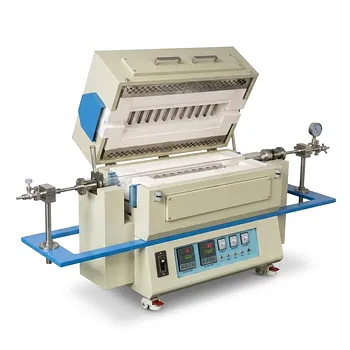
High Temperature Dual Zone Rotating Tube Furnace 1500C Silicon Carbide Heating for Advanced Material Synthesis

High Temperature Tube Furnace 1500C with Sliding Flanges and 50mm OD for Rapid Thermal Processing Fast Heating and Cooling
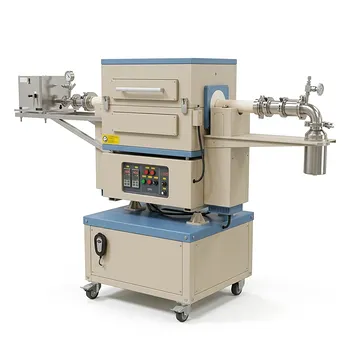
1500C Max Dual Zone Rotary Tube Furnace with 60 mm OD Alumina Tube for High Temperature Material Synthesis
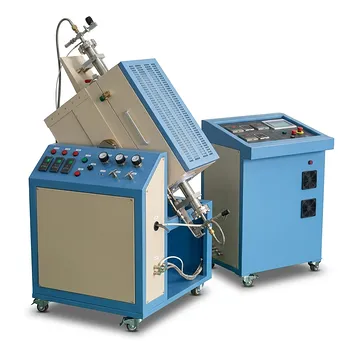
1100C High Pressure Rocking Tube Furnace with 2 Inch Super Alloy Processing Tube for Material Synthesis
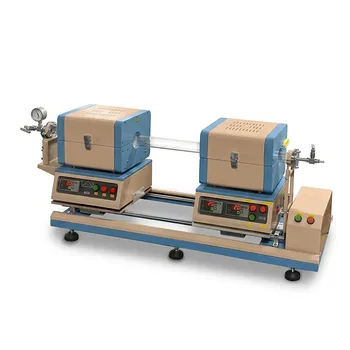
High Temperature 1200C Automatic Sliding Dual Zone Tube Furnace for 2D Transition Metal Dichalcogenides Growth and Material Sublimation Research

1800C High Temperature Compact Vacuum Tube Furnace with 60mm OD Alumina Tube and Kanthal MoSi2 Heating Elements
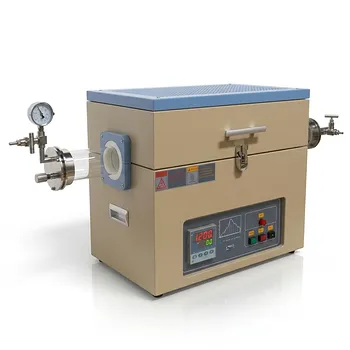
High Temperature 1200C Split Tube Furnace with Optional Quartz Tube Sizes and Vacuum Sealing Flanges for Material Science Research

High Temperature 1700C Tube Furnace with High Vacuum Turbomolecular Pump System and Multi Channel Mass Flow Controller Gas Mixer
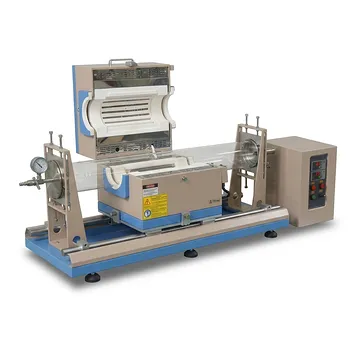
1200C High Temperature 5 Inch Sliding Tube Furnace for Rapid Thermal Processing RTP and Wafer Annealing

High Temperature 1700C Benchtop Tube Furnace with 5 Inch Heating Zone High Purity Alumina Tube and Vacuum Sealing Flanges

High Temperature Automated 5 Inch Tube Furnace for Autonomous Material Research and Advanced Laboratory R&D
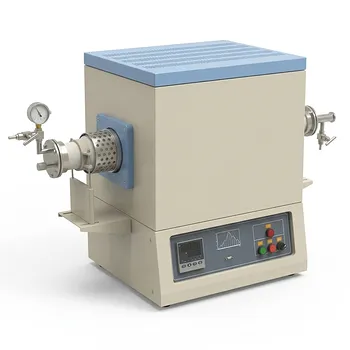
1750°C High Temperature Benchtop Vacuum Atmosphere Tube Furnace with Kanthal Super 1800 Heating Elements and 60mm Alumina Processing Tube
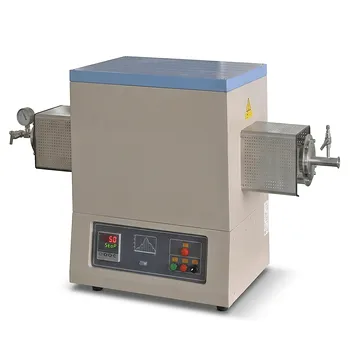
High Temperature 1700C Tube Furnace with 4 Inch OD Alumina Tube and Vacuum Sealing Flanges
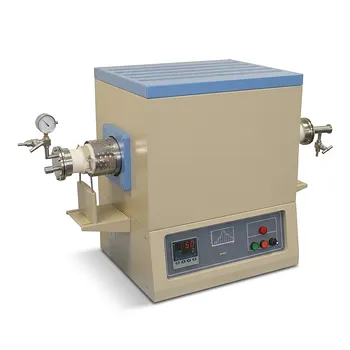
1700C High Temperature Alumina Tube Furnace with 18 Inch Heated Zone and Vacuum Sealing Flanges
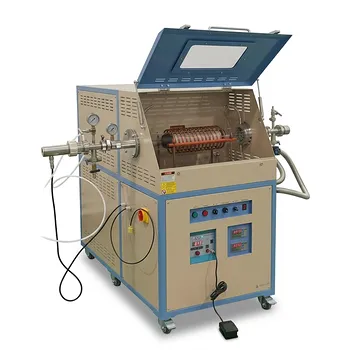
Ultra High Temperature 2300C Induction Heated Graphite Tube Furnace with Infrared Control
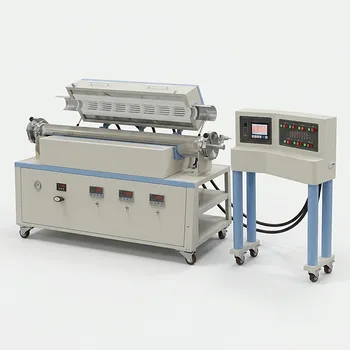
1100C Eight Zone High Pressure Super Alloy Tube Furnace with Integrated High Pressure Gas Control System

1100C Tube Furnace with Vacuum Flange and Programmable Temperature Controller for Material Science and Industrial Heat Treatment
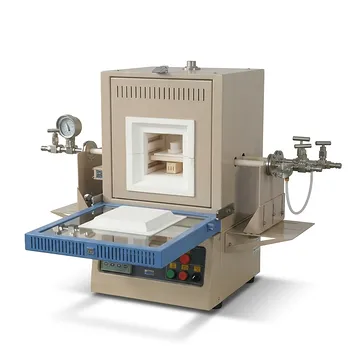
1700C Compact Hybrid Furnace with Dual Layer Box Sintering and Controlled Atmosphere Alumina Tubes
