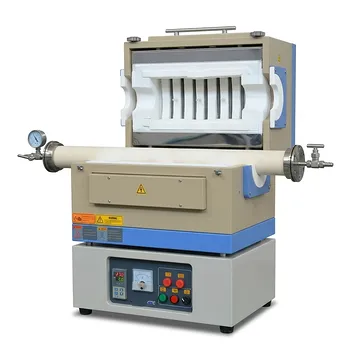
What role does a tube furnace play in MFX:Sm2+ synthesis? Essential for Valence Control & Thermal Stability
Updated 3 months ago
A high-temperature tube atmosphere furnace is the foundational tool for synthesizing MFX:Sm2+ materials, providing the dual-functionality of precise thermal regulation and valence state control. Its primary role is to create a stable, reducing environment (typically using a hydrogen and argon gas mixture) that ensures samarium ions are incorporated into the host lattice specifically as divalent samarium (Sm2+). This precise chemical state is mandatory, as only $Sm^{2+}$ provides the unique 4f-4f and 4f-5d energy level transitions required for accurate fluorescence temperature sensing.
Core Takeaway: The furnace serves as a specialized reactor that simultaneously drives solid-state diffusion through high-temperature heat and prevents the oxidation of Samarium via a controlled reducing atmosphere, directly determining the material's final sensing performance.
The Criticality of Atmospheric Control
Ensuring the Divalent State of Samarium
The most vital function of the atmosphere furnace is maintaining a reducing environment. In a standard oxygen-rich environment, Samarium naturally tends toward a trivalent state ($Sm^{3+}$), which lacks the specific luminescent properties needed for this application. By introducing a hydrogen and argon ($H_2/Ar$) mixture, the furnace forces the Samarium elements to enter the host lattice in the $Sm^{2+}$ state.
Managing Energy Level Transitions
The sensing capability of MFX:Sm2+ relies on specific 4f-4f and 4f-5d energy level transitions. The atmosphere furnace ensures these electronic structures are preserved by preventing unintended chemical reactions during the heating process. Without this strict atmospheric management, the material would fail to exhibit the temperature-dependent fluorescence necessary for its intended use.
Controlling Oxygen Partial Pressure
The tube furnace allows for the precise regulation of oxygen partial pressure within the heating chamber. This prevents the re-oxidation of transition metals or rare-earth elements during the cooling phase. By excluding oxygen and removing reaction byproducts like water vapor, the furnace maintains the stoichiometric integrity of the MFX host.
Thermal Dynamics in Solid-State Synthesis
Promoting Atomic Diffusion
The synthesis of MFX:Sm2+ requires the diffusion of atoms between solid precursors at high temperatures. The furnace provides a stable thermal field that allows ions to migrate and occupy their correct positions within the crystal lattice. This high-temperature environment is essential for overcoming the kinetic barriers of solid-phase reactions.
Achieving High Crystallinity
A uniform thermal field, provided by high-quality heating elements, reduces lattice defects in the final phosphor. Precise temperature control ensures that the material undergoes full phase transition without melting or decomposing. High crystallinity directly translates to higher thermal stability and better signal-to-noise ratios in temperature sensing applications.
Regulating Phase Transition Gradients
Using programmed heating curves, the furnace can manage different stages of the reaction, such as the initial decomposition of precursors followed by crystal growth. This staggered heating prevents the formation of secondary, unwanted phases that could interfere with fluorescence. Stable heating and cooling rates are vital for preserving the structural integrity of the resulting MFX:Sm2+ powder.
Understanding the Trade-offs and Risks
Safety and Handling of Reducing Gases
Using hydrogen-based reducing atmospheres introduces significant safety risks, including the potential for combustion or explosion. Operators must implement strict purging protocols with inert gases like Argon before and after the heating cycle. This adds complexity to the synthesis process compared to standard air-fired muffle furnaces.
Equipment Maintenance and Contamination
High-temperature tube furnaces are susceptible to tube degradation over time, especially when exposed to corrosive reaction byproducts. If the tube integrity is compromised, oxygen leakage can occur, instantly ruining the $Sm^{2+}$ valence state. Regular calibration of thermocouples is also required to ensure that the internal temperature matches the programmed settings.
How to Optimize Your Synthesis Process
Implementing Effective Protocols
- If your primary focus is Maximum Luminescence Intensity: Prioritize the purity of the $H_2/Ar$ gas mixture and ensure a high flow rate to maintain a strictly reducing environment throughout the cooling phase.
- If your primary focus is Structural Stability: Use slow, programmed cooling rates (e.g., 2-5°C/min) to minimize internal stress and lattice strain in the MFX host crystal.
- If your primary focus is Batch Consistency: Regularly verify the uniform thermal zone of your furnace using a secondary reference thermocouple to ensure all samples experience identical conditions.
The success of MFX:Sm2+ synthesis depends entirely on the furnace's ability to balance aggressive reduction with precise thermal stability.
Summary Table:
| Key Role | Technical Mechanism | Impact on Sensing Material |
|---|---|---|
| Valence Control | Reducing Atmosphere (H2/Ar) | Ensures Sm2+ state for necessary 4f transitions |
| Phase Purity | Precise Thermal Gradients | Promotes high crystallinity and reduces lattice defects |
| Stoichiometry | Oxygen Partial Pressure Regulation | Prevents re-oxidation and maintains chemical integrity |
| Kinetic Drive | High-Temperature Stable Field | Overcomes energy barriers for solid-state diffusion |
Achieve Scientific Precision with THERMUNITS
In the delicate synthesis of fluorescence materials like MFX:Sm2+, the difference between a breakthrough and a failed experiment lies in atmospheric integrity and thermal precision. THERMUNITS is a leading manufacturer of high-temperature laboratory equipment dedicated to supporting material science and industrial R&D.
We provide a comprehensive range of thermal processing solutions tailored for advanced research, including:
- Atmosphere & Vacuum Tube Furnaces for precise valence state management.
- CVD/PECVD Systems for sophisticated thin-film and powder synthesis.
- Muffle, Rotary, and Hot Press Furnaces for diverse heat treatment needs.
- Vacuum Induction Melting (VIM) and specialized Dental Furnaces.
Maximize your lab's research potential and ensure batch consistency.
Contact THERMUNITS Today to consult with our experts on the ideal thermal solution for your specific material synthesis requirements.
References
- L. Cui, Andries Meijerink. High-sensitivity luminescent temperature sensors: MFX:1%Sm <sup>2+</sup> (M = Sr, Ba, X = Cl, Br). DOI: 10.1126/sciadv.ado7737
Mentioned Products
- Compact High Temperature 1600C Tube Furnace with 50mm Alumina Tube and Vacuum Flanges for Material Sintering
- High Temperature Vertical Atmosphere Controlled Furnace with Automatic Bottom Loading and 1700°C Capacity for Advanced Material Research
- 1750°C High Temperature Benchtop Vacuum Atmosphere Tube Furnace with Kanthal Super 1800 Heating Elements and 60mm Alumina Processing Tube
- 1500C Max Dual Zone Rotary Tube Furnace with 60 mm OD Alumina Tube for High Temperature Material Synthesis
- High Temperature 1700C Vertical Tube Furnace for Powder Spherification and Material Sintering
People Also Ask
- What is the role of a high-temperature tube furnace in the calcination process of ZnO/In2O3 nanocomposites?
- Why is a high-temperature tube furnace required for CuAlO2 heat treatment? Master Phase Transformation Today
- Function of tube furnaces in cellulose aerogel carbonization? Achieve High-Performance Materials
- What role does a high-temperature tube furnace play in the carbonization? Mastering Precision Carbon Synthesis
- What role does a high-temperature tube furnace play in executing nitrogen absorption kinetic experiments? Expert Insights

Tech Team · ThermUnits
Last updated on Jun 03, 2026
Related Products

Compact High Temperature 1600C Tube Furnace with 50mm Alumina Tube and Vacuum Flanges for Material Sintering
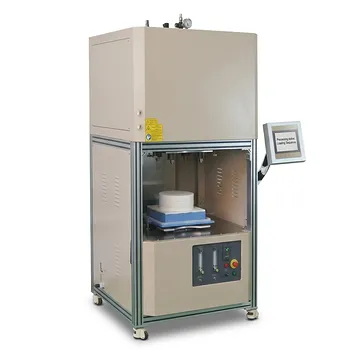
High Temperature Vertical Atmosphere Controlled Furnace with Automatic Bottom Loading and 1700°C Capacity for Advanced Material Research
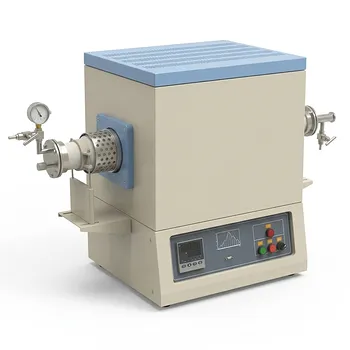
1750°C High Temperature Benchtop Vacuum Atmosphere Tube Furnace with Kanthal Super 1800 Heating Elements and 60mm Alumina Processing Tube
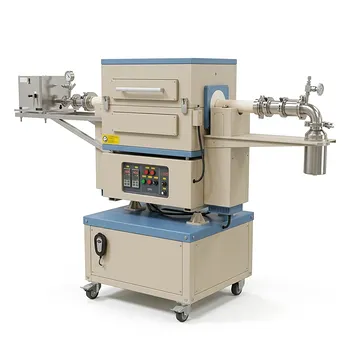
1500C Max Dual Zone Rotary Tube Furnace with 60 mm OD Alumina Tube for High Temperature Material Synthesis

High Temperature 1700C Vertical Tube Furnace for Powder Spherification and Material Sintering
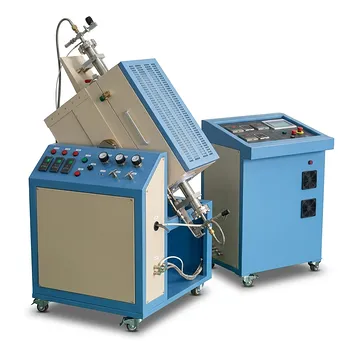
1100C High Pressure Rocking Tube Furnace with 2 Inch Super Alloy Processing Tube for Material Synthesis
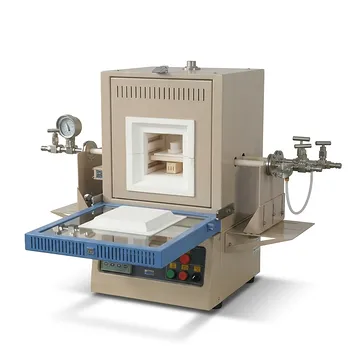
1700C Compact Hybrid Furnace with Dual Layer Box Sintering and Controlled Atmosphere Alumina Tubes
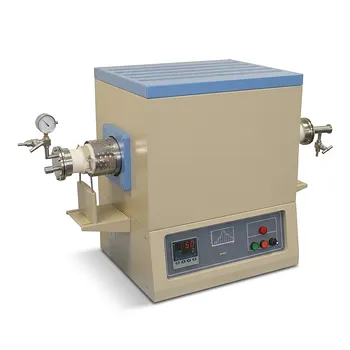
1700C High Temperature Alumina Tube Furnace with 18 Inch Heated Zone and Vacuum Sealing Flanges
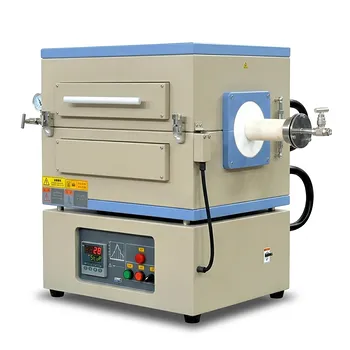
1500°C Split Tube Furnace with Alumina Tube and Vacuum Sealing Flanges for Material Research

High Temperature Tube Furnace 1500C with Sliding Flanges and 50mm OD for Rapid Thermal Processing Fast Heating and Cooling

Vertical 1700C Vacuum and Atmosphere Tube Furnace with 80mm Alumina Tube

High Temperature 1700C Tube Furnace with High Vacuum Turbomolecular Pump System and Multi Channel Mass Flow Controller Gas Mixer
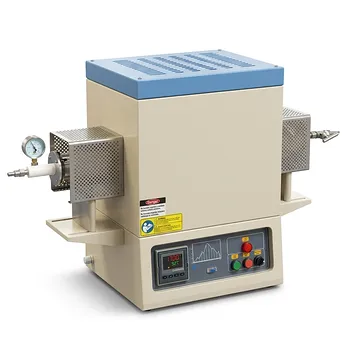
High Temperature Three Zone Tube Furnace 1700C with Alumina Tube and Water Cooled Flanges
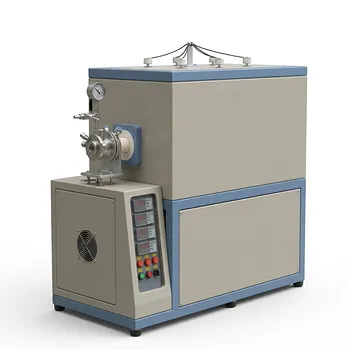
High Temperature 1700C Three Zone Tube Furnace with Alumina Tube 50mm 60mm 80mm OD for Material Research and Industrial Heat Treatment
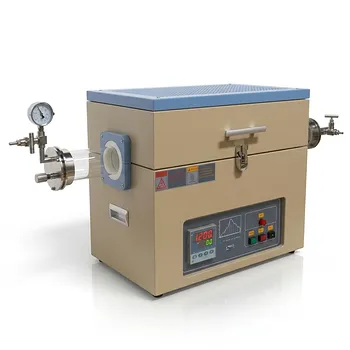
High Temperature 1200C Split Tube Furnace with Optional Quartz Tube Sizes and Vacuum Sealing Flanges for Material Science Research

High Temperature Automated 5 Inch Tube Furnace for Autonomous Material Research and Advanced Laboratory R&D
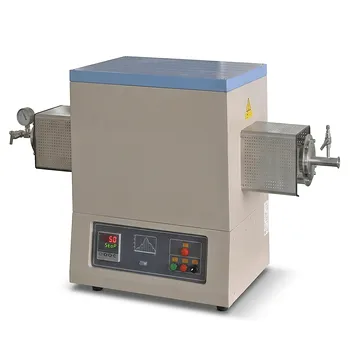
High Temperature 1700C Tube Furnace with 4 Inch OD Alumina Tube and Vacuum Sealing Flanges

High Temperature 1700C Benchtop Tube Furnace with 5 Inch Heating Zone High Purity Alumina Tube and Vacuum Sealing Flanges

1800C High Temperature Compact Vacuum Tube Furnace with 60mm OD Alumina Tube and Kanthal MoSi2 Heating Elements