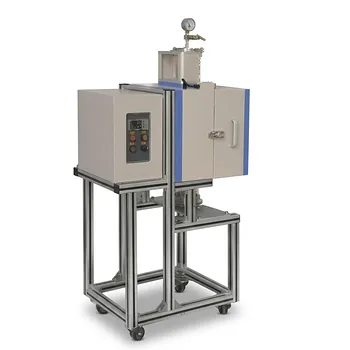
What role does a high-temperature tube furnace play in the carbonization of biomass? Master Precision Pyrolysis
Updated 3 months ago
The high-temperature tube furnace is the critical vessel for controlled anaerobic pyrolysis. It facilitates the thermal decomposition of biomass by excluding oxygen and regulating heat to remove volatile components like water and organic vapors. This process leaves behind a carbon skeleton with a preliminary pore structure, which serves as the essential foundation for producing high-efficiency activated carbon or electrocatalytic materials.
Core Takeaway: A high-temperature tube furnace enables the precise conversion of raw biomass into a stable carbon precursor by maintaining an inert atmosphere and specific heating profiles. This control is vital for establishing the initial porosity and chemical composition required for advanced material applications.
Engineering a Controlled Environment
Maintaining an Anaerobic Atmosphere
The primary role of the tube furnace is to provide a strictly inert environment, typically using high-purity nitrogen or other noble gases. By excluding oxygen, the furnace prevents the biomass from simply burning (combustion) and instead forces it to undergo pyrolysis.
This anaerobic state is essential for preserving the carbon content of the coconut shells while the non-carbon elements are driven off.
Precise Temperature Regulation
Tube furnaces allow for the setting of programmed temperature increases, such as specific heating rates (e.g., 10 K/min) and final dwell temperatures ranging from 500°C to 800°C. This precision ensures that the biomass reaches the exact thermal threshold required for carbonization without damaging the delicate developing microstructures.
Uniform heating across the material ensures that the resulting biochar has consistent properties throughout the batch.
The Physical and Chemical Transformation
Removal of Volatiles and Degassing
As the furnace heats the coconut shells, it facilitates dehydration and degassing, stripping away moisture and volatile organic compounds. This "cleaning" of the material is what enriches the fixed carbon content, transforming raw organic matter into a dense, stable carbon framework.
The removal of these impurities is the first step in unlocking the material's potential for high thermal stability.
Formation of the Initial Pore Structure
The escape of volatile gases during heating creates a preliminary network of pores within the carbon skeleton. While this structure is not yet "activated" to its full potential, the tube furnace establishes the architecture that subsequent chemical or physical activation will expand.
The quality of this initial pore structure is a direct result of the furnace’s ability to maintain a steady, controlled thermal environment.
Advanced Functionalization and Doping
Beyond simple carbonization, high-temperature tube furnaces allow for heteroatom doping, where elements like boron or nitrogen are integrated into the carbon framework. This is crucial for creating active sites for electrocatalysis or enhancing the material's electrical conductivity.
The furnace can also drive chemical reduction reactions, such as converting iron precursors into zero-valent iron crystals within the carbon matrix during a single-step pyrolysis process.
Understanding the Trade-offs
Complexity and Gas Consumption
Unlike a standard muffle furnace, a tube furnace requires a continuous flow of inert gas and a complex sealing system to maintain its atmosphere. This increases the operational cost and setup time required for each carbonization run.
Throughput and Scalability
Tube furnaces are often designed for batch processing and may have a limited internal volume compared to industrial kilns. While they offer superior control for research and high-precision manufacturing, they may face challenges in high-volume production scenarios.
Thermal Stress on Equipment
Repeatedly cycling to temperatures as high as 800°C can lead to thermal fatigue in the work tube and heating elements. Regular maintenance and careful ramping of temperatures are necessary to prevent equipment failure and ensure consistent results.
How to Apply This to Your Project
When utilizing a high-temperature tube furnace for biomass carbonization, your approach should be dictated by your end-material requirements.
- If your primary focus is maximizing surface area: Prioritize a slower heating rate (e.g., 5-10 K/min) to allow volatiles to escape gradually without collapsing the pore walls.
- If your primary focus is electrocatalytic activity: Use the furnace to perform one-step pyrolysis with chemical precursors to facilitate the doping of nitrogen or metals into the carbon framework.
- If your primary focus is structural stability: Aim for higher processing temperatures (700°C-800°C) to ensure the complete removal of organics and the formation of a highly stable carbon skeleton.
By mastering the thermal and atmospheric variables of the tube furnace, you can precisely engineer the properties of biomass-derived carbon for virtually any technical application.
Summary Table:
| Feature | Role in Carbonization | Key Benefit |
|---|---|---|
| Inert Atmosphere | Prevents combustion via oxygen exclusion | Preserves carbon skeleton & skeleton integrity |
| Thermal Precision | Programmed heating rates (e.g., 10 K/min) | Uniform pore network & consistent biochar quality |
| Volatile Removal | Facilitates dehydration and degassing | Increases fixed carbon content and thermal stability |
| Functionalization | Enables heteroatom doping (B, N, etc.) | Creates active sites for electrocatalysis/conductivity |
Elevate Your Material Research with THERMUNITS
Are you looking to achieve precise pore structures and superior carbon yields in your biomass research? THERMUNITS is a leading manufacturer of high-temperature laboratory equipment specifically designed for material science and industrial R&D.
We provide a comprehensive range of high-performance thermal solutions, including:
- Furnaces: Muffle, Vacuum, Atmosphere, Tube, Rotary, and Hot Press Furnaces.
- Advanced Systems: CVD/PECVD systems, Vacuum Induction Melting (VIM) furnaces, and Electric Rotary Kilns.
- Specialized Equipment: Dental Furnaces, Thermal Elements, and custom laboratory heat treatment tools.
Whether you are performing one-step pyrolysis or complex heteroatom doping, our engineering expertise ensures your research is backed by stable, uniform, and controllable thermal environments.
Ready to optimize your carbonization process?
Contact our technical experts today to find the perfect solution for your lab!
References
- Ping Cao, Jingli Shao. Experimental Study on the Preparation of Lignin-Based Activated Carbon and the Adsorption Performance for Phenol. DOI: 10.1021/acsomega.4c00352
Mentioned Products
- High Temperature Dual Zone Rotating Tube Furnace 1500C Silicon Carbide Heating for Advanced Material Synthesis
- High Temperature 1500C Benchtop Muffle Furnace 3.6L Alumina Fiber Chamber Programmable Controller Sintering Annealing Carbonization Thermal Processing System
- High Temperature 1700C Vertical Tube Furnace for Powder Spherification and Material Sintering
- Compact High Temperature 1600C Tube Furnace with 50mm Alumina Tube and Vacuum Flanges for Material Sintering
- High Temperature Tube Furnace 1500C with Sliding Flanges and 50mm OD for Rapid Thermal Processing Fast Heating and Cooling
People Also Ask
- What is the function of CVD furnaces in graphene prep? Enhancing Photodetector Charge Transport
- Why use CVD and a tube furnace for Pd3P0.95/NC catalyst phosphidation? Ensure high phase purity and performance.
- CVD Tube Furnace Advantages for Pd-P Catalyst Durability: Precision Control for 40,000+ Cycles
- How does a rotary tube furnace improve the processing of granular materials? Enhance Uniformity and Reaction Kinetics
- How does a Chemical Vapor Deposition (CVD) tube furnace facilitate synchronized nitridation? Precision Nano-Engineering.

Tech Team · ThermUnits
Last updated on Jun 02, 2026
Related Products
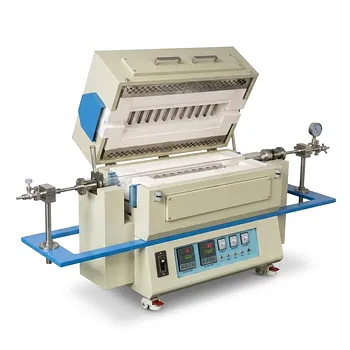
High Temperature Dual Zone Rotating Tube Furnace 1500C Silicon Carbide Heating for Advanced Material Synthesis
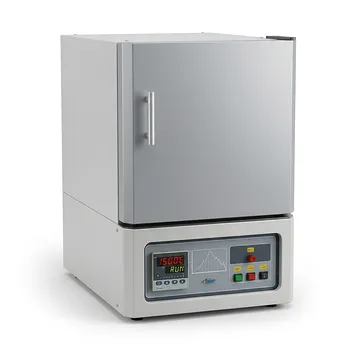
High Temperature 1500C Benchtop Muffle Furnace 3.6L Alumina Fiber Chamber Programmable Controller Sintering Annealing Carbonization Thermal Processing System

High Temperature 1700C Vertical Tube Furnace for Powder Spherification and Material Sintering

Compact High Temperature 1600C Tube Furnace with 50mm Alumina Tube and Vacuum Flanges for Material Sintering
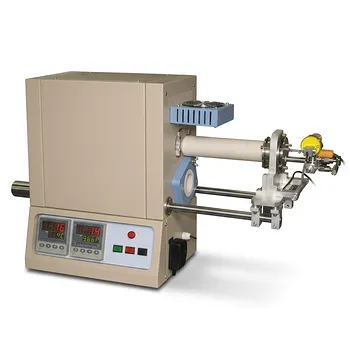
High Temperature Tube Furnace 1500C with Sliding Flanges and 50mm OD for Rapid Thermal Processing Fast Heating and Cooling

High Temperature 1700C Tube Furnace with High Vacuum Turbomolecular Pump System and Multi Channel Mass Flow Controller Gas Mixer
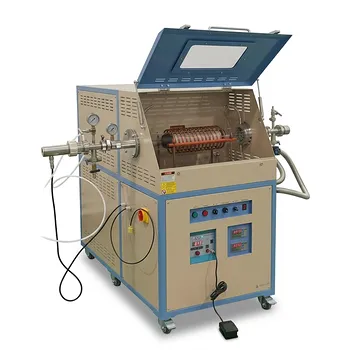
Ultra High Temperature 2300C Induction Heated Graphite Tube Furnace with Infrared Control

1800C High Temperature Compact Vacuum Tube Furnace with 60mm OD Alumina Tube and Kanthal MoSi2 Heating Elements
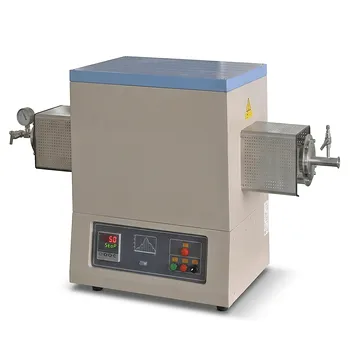
High Temperature 1700C Tube Furnace with 4 Inch OD Alumina Tube and Vacuum Sealing Flanges
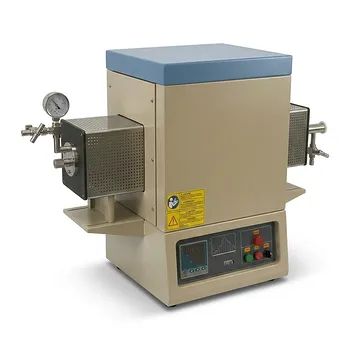
High Temperature 1700C Benchtop Tube Furnace with 5 Inch Heating Zone High Purity Alumina Tube and Vacuum Sealing Flanges
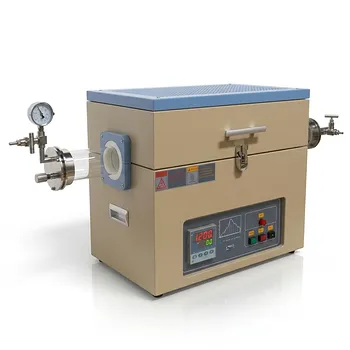
High Temperature 1200C Split Tube Furnace with Optional Quartz Tube Sizes and Vacuum Sealing Flanges for Material Science Research
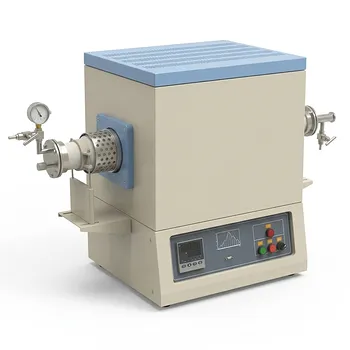
1750°C High Temperature Benchtop Vacuum Atmosphere Tube Furnace with Kanthal Super 1800 Heating Elements and 60mm Alumina Processing Tube
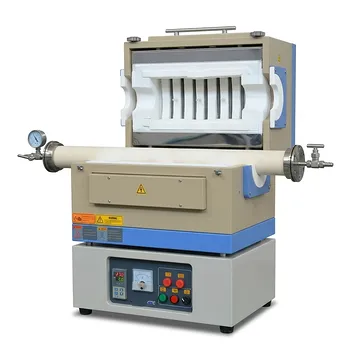
High Temperature 1600C Split Tube Furnace Vacuum Flanges Valves Optional 60mm 80mm Alumina Tube

High Temperature Automated 5 Inch Tube Furnace for Autonomous Material Research and Advanced Laboratory R&D
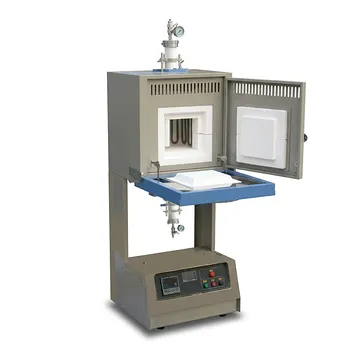
Vertical Hybrid High Temperature Furnace 1500C Alumina Tube SOFC Fuel Cell Testing Laboratory Heat Treatment Research Equipment
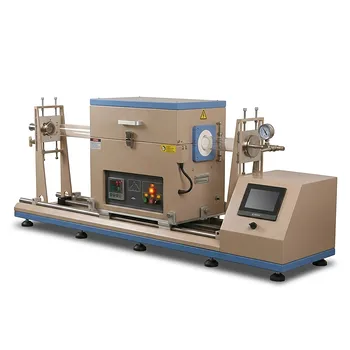
1200C Sliding Tube Furnace for Rapid Thermal Processing and CVD Graphene Growth with 100mm OD Capacity
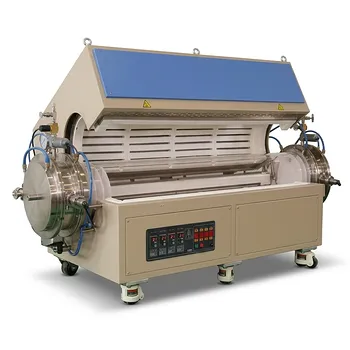
1200C Max Four Zone Split Tube Furnace with Optional Large Diameter Quartz Tubes

1100C Tube Furnace with Vacuum Flange and Programmable Temperature Controller for Material Science and Industrial Heat Treatment
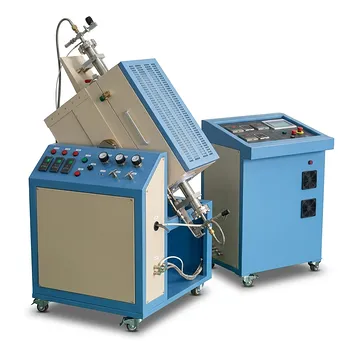
1100C High Pressure Rocking Tube Furnace with 2 Inch Super Alloy Processing Tube for Material Synthesis