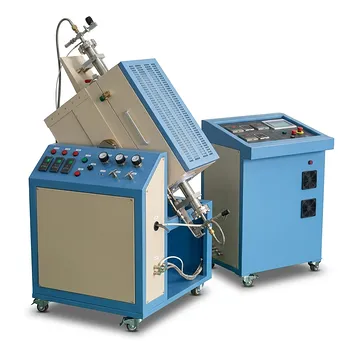
What role does a high-temperature tube furnace play in the preparation of self-supporting selenium paper (Se-P)?
Updated 5 months ago
A high-temperature tube furnace acts as the primary reaction environment for synthesizing self-supporting selenium paper (Se-P) through Chemical Vapor Deposition (CVD). It provides the precise thermal field required to vaporize selenium powder at 260 °C and establishes a critical temperature gradient that allows the vapor to recrystallize into a uniform film. This controlled process transforms raw powder into a structured network of selenium nanobelts, creating the porous foundation necessary for high-performance electronic applications.
Core Takeaway: The tube furnace functions as a precision architect in Se-P production, utilizing a strictly controlled thermal gradient to facilitate the transition of selenium from a vapor state into a structured, self-supporting nanobelt film with specific porosity.
The Mechanics of Vaporization and Deposition
Facilitating Precise Vaporization
The tube furnace provides a concentrated heat zone, typically at the center, to reach the specific vaporization temperature of 260 °C for selenium powder. This precise temperature control ensures a steady and predictable supply of selenium vapor, which is the precursor for the final paper structure.
Leveraging Natural Thermal Gradients
Beyond simple heating, the tube furnace utilizes the natural temperature decay from the center to the cooler ends of the quartz tube. This gradient is essential for the transition of selenium from a gas back into a solid, dictating where and how the material deposits onto the tube walls or substrates.
Controlling the Chemical Environment
The furnace allows for the introduction of inert carrier gases, such as argon or nitrogen, which transport the selenium vapor through the tube. This controlled atmosphere prevents unwanted oxidation and ensures that the chemical reaction remains pure throughout the growth cycle.
Engineering the Nanostructural Foundation
Synthesis of Uniform Nanobelt Films
The stability of the thermal field within the furnace directly influences the crystal morphology of the selenium. Under these optimized conditions, selenium atoms organize into high-quality nanobelts rather than irregular particles.
Creating Porous Self-Supporting Structures
The furnace environment promotes the interlacing of these nanobelts into a uniform porous structure. This porosity is not accidental; it is a direct result of the deposition rate and temperature stability maintained by the furnace's control systems.
Establishing the Substrate for Heterojunctions
By producing a consistent and self-supporting film, the furnace creates the essential substrate foundation. This selenium paper is then robust enough to serve as a platform for more complex heterojunctions used in advanced material science.
Understanding the Trade-offs and Challenges
Sensitivity to Temperature Fluctuations
Small deviations in the furnace's temperature can lead to non-uniform grain growth or secondary phase formation. If the temperature gradient is not perfectly calibrated, the selenium may deposit as a thick, brittle layer rather than the desired flexible, porous nanobelt "paper."
Positioning and Scalability Limits
The quality of the Se-P is highly dependent on the physical placement of the substrate within the tube. Because the thermal gradient varies by centimeter, achieving large-area uniformity can be difficult compared to industrial-scale batch processing.
Maintenance of the Quartz Environment
High-temperature selenium vapor is highly mobile and can coat the interior of the quartz tube. Over time, this buildup can alter the thermal characteristics of the furnace, requiring frequent cleaning and recalibration to ensure repeatable results.
Applying Furnace Precision to Your Objectives
The role of the tube furnace is central to achieving the specific physical properties of Se-P, but your focus will dictate how you manage the equipment.
- If your primary focus is material purity: Prioritize the use of high-purity carrier gases and lead-time for furnace "bake-outs" to remove volatile impurities before starting the deposition.
- If your primary focus is mechanical flexibility: Focus on the cooling rate and gradient control to ensure the nanobelts interlock without becoming overly dense or fused.
- If your primary focus is high-performance heterojunctions: Ensure the furnace provides maximum thermal stability at the 260 °C setpoint to guarantee a consistent porous foundation for subsequent layers.
By mastering the thermal field of the tube furnace, researchers can reliably transform elemental selenium into a sophisticated, self-supporting nanomaterial.
Summary Table:
| Feature | Role in Se-P Preparation | Key Benefit |
|---|---|---|
| Temperature Control | Precision heating at 260 °C | Ensures steady selenium vaporization |
| Thermal Gradient | Controlled cooling zones | Facilitates nanobelt recrystallization |
| Atmosphere Control | Inert gas (Argon/Nitrogen) delivery | Prevents oxidation and ensures purity |
| Thermal Stability | Consistent heating environment | Creates uniform, porous structures |
Optimize Your Material Synthesis with THERMUNITS
THERMUNITS is a leading manufacturer of high-temperature laboratory equipment designed specifically for material science and industrial R&D. To achieve the precise thermal gradients required for self-supporting selenium paper (Se-P) and other advanced nanomaterials, our state-of-the-art Tube Furnaces and CVD/PECVD systems offer unparalleled stability and control.
Our comprehensive range of thermal processing solutions includes:
- Muffle, Vacuum, and Atmosphere Furnaces
- Tube, Rotary, and Hot Press Furnaces
- Vacuum Induction Melting (VIM) & Dental Furnaces
- High-Quality Thermal Elements
Elevate your research efficiency and ensure repeatable results with equipment trusted by global experts.
Ready to find the perfect thermal solution for your lab?
Contact THERMUNITS today and let our technical specialists assist you!
References
- Xuewei Yu, Pingping Yu. Self-Powered Photodetectors with High Stability Based on Se Paper/P3HT:Graphene Heterojunction. DOI: 10.3390/nano14231923
Mentioned Products
- High Temperature Tube Furnace 1500C with Sliding Flanges and 50mm OD for Rapid Thermal Processing Fast Heating and Cooling
- High Temperature 1700C Tube Furnace with High Vacuum Turbomolecular Pump System and Multi Channel Mass Flow Controller Gas Mixer
- 1750°C High Temperature Benchtop Vacuum Atmosphere Tube Furnace with Kanthal Super 1800 Heating Elements and 60mm Alumina Processing Tube
- High Temperature 1700C Benchtop Tube Furnace with 5 Inch Heating Zone High Purity Alumina Tube and Vacuum Sealing Flanges
- High Temperature Split Tube Furnace 1500C for Material Research Vacuum and Atmosphere Thermal Processing
People Also Ask
- How are high-temperature tube furnaces utilized to repair etching damage? Precision Lattice Restoration Solutions
- What role does a high-temperature tube furnace play in the sulfidation heat treatment of CoS@C/MXene nanocomposites? Guide
- What core conditions does a high-temperature tube furnace provide for rGO aerogels? Mastering Precision Synthesis.
- How does precision tube furnace control influence CoFe nanoparticle formation? Master Your Bimetallic Synthesis.
- What role does a high-temperature tube furnace play in CVD synthesis of silicon nanowires? Master VLS Growth Precision.

Tech Team · ThermUnits
Last updated on Apr 14, 2026
Related Products
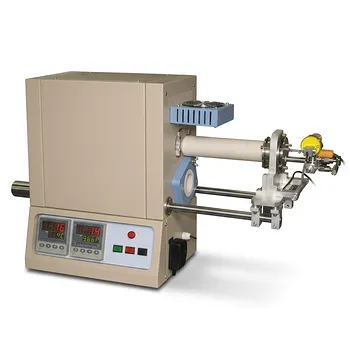
High Temperature Tube Furnace 1500C with Sliding Flanges and 50mm OD for Rapid Thermal Processing Fast Heating and Cooling

High Temperature 1700C Tube Furnace with High Vacuum Turbomolecular Pump System and Multi Channel Mass Flow Controller Gas Mixer
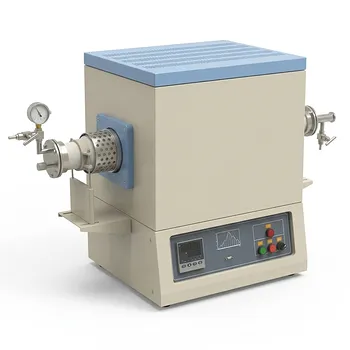
1750°C High Temperature Benchtop Vacuum Atmosphere Tube Furnace with Kanthal Super 1800 Heating Elements and 60mm Alumina Processing Tube

High Temperature 1700C Benchtop Tube Furnace with 5 Inch Heating Zone High Purity Alumina Tube and Vacuum Sealing Flanges
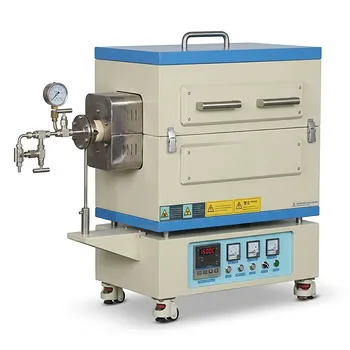
High Temperature Split Tube Furnace 1500C for Material Research Vacuum and Atmosphere Thermal Processing
1700C High Temperature Alumina Tube Furnace with 18 Inch Heated Zone and Vacuum Sealing Flanges

1800C High Temperature Compact Vacuum Tube Furnace with 60mm OD Alumina Tube and Kanthal MoSi2 Heating Elements

Compact High Temperature 1600C Tube Furnace with 50mm Alumina Tube and Vacuum Flanges for Material Sintering
High Temperature Three Zone Tube Furnace 1700C with Alumina Tube and Water Cooled Flanges
High Temperature Rocking Tube Furnace 1700°C Alumina Processing Tube with Precision Oscillation for Material Synthesis
High Temperature 1700C Tube Furnace with 4 Inch OD Alumina Tube and Vacuum Sealing Flanges

High Temperature 1700C Vertical Tube Furnace for Powder Spherification and Material Sintering
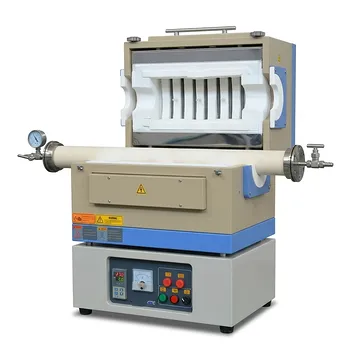
High Temperature 1600C Split Tube Furnace Vacuum Flanges Valves Optional 60mm 80mm Alumina Tube
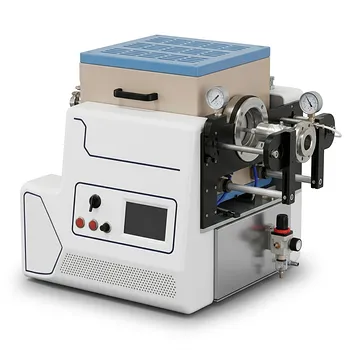
High Temperature Automated 5 Inch Tube Furnace for Autonomous Material Research and Advanced Laboratory R&D
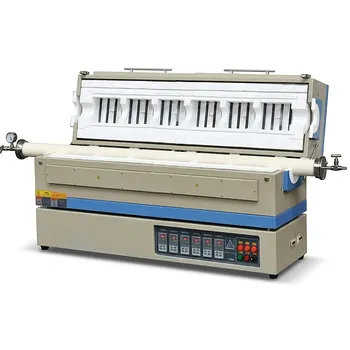
High Temperature 1700C Six Zone Split Tube Furnace with Alumina Tube and Water Cooled Flanges
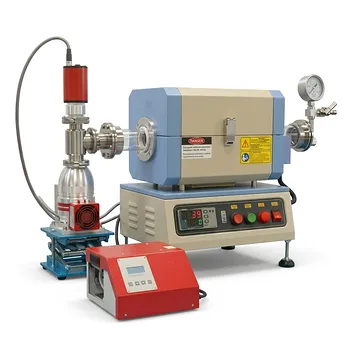
High Vacuum Compact Tube Furnace 1200C with Integrated Turbo Pump System and 8 Inch Heating Zone
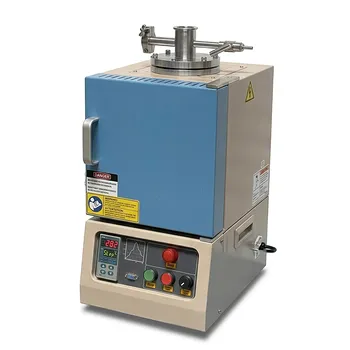
High Temperature Hybrid Muffle and Tube Furnace with Vacuum Capability and PID Control
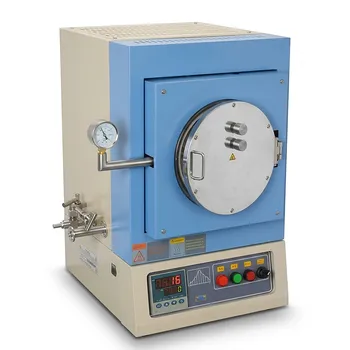
1100°C High Temperature Quartz Chamber Furnace 8 Inch OD with 7.6 Liter Capacity and Vacuum Atmosphere Capability
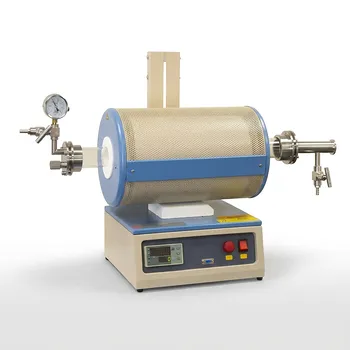
1100C Tube Furnace with Vacuum Flange and Programmable Temperature Controller for Material Science and Industrial Heat Treatment