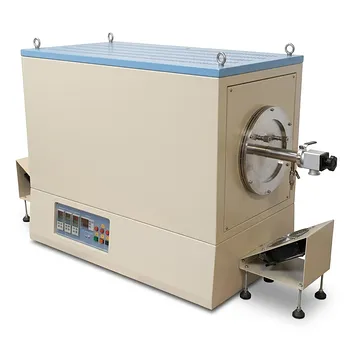
What role does a Tube Furnace play in HfO2/ZnO heat treatment? Master Defect Engineering for Neuromorphic Devices
Updated 3 months ago
The tube furnace serves as the critical environment for precise thermal and atmospheric control during the annealing of $HfO_2/ZnO$ bilayers. Specifically, it provides a stable Nitrogen ($N_2$) or vacuum environment at temperatures between 400°C and 700°C to facilitate the crystallization of the ZnO layer, reorganize grain boundaries, and redistribute oxygen vacancies.
Core Takeaway: A high-vacuum or atmosphere-controlled tube furnace is essential for engineering the microstructural and defect properties of $HfO_2/ZnO$ structures. By strictly regulating the thermal field and gas environment, it transforms amorphous or semi-crystalline precursors into optimized analog resistive switching devices.
Facilitating Structural Transformation and Crystallization
Inducing ZnO Grain Reorganization
The primary role of the furnace is to provide a uniform thermal field that promotes the crystallization of ZnO thin films. Within the 400°C to 700°C range, the heat allows atoms to migrate, leading to grain merging and reorganization.
Managing Grain Boundary Density
As the tube furnace maintains a steady temperature, it reduces the overall grain boundary density within the ZnO layer. This structural refinement is vital for ensuring stable electrical paths and improving the reliability of the bilayer device.
Ensuring Phase Purity
By providing a precisely controlled heating rate, the furnace prevents the formation of competitive phases or unwanted intermediate structures. This ensures that the $HfO_2$ and ZnO layers maintain their intended chemical identities while improving their interface quality.
Engineering Defect States for Device Performance
Modifying Oxygen Vacancy Distribution
The atmosphere-controlled nature of the furnace allows for the precise manipulation of oxygen vacancies. In an inert $N_2$ environment, the furnace prevents uncontrolled oxidation, allowing these vacancies to redistribute in a way that optimizes analog resistive switching behavior.
Enhancing Neuromorphic Characteristics
The redistribution of defects directly impacts the device's ability to simulate biological functions. Specifically, the furnace treatment optimizes long-term potentiation (LTP) and long-term depression (LTD), which are critical for artificial synaptic applications.
Precise Atmosphere Regulation
A high-precision furnace uses flow regulation systems to maintain a constant pressure of inert or reducing gases. This prevents the sample from reacting with ambient oxygen, which would otherwise "heal" the necessary vacancies and degrade the device's switching capabilities.
Protecting Material Integrity
Preventing Surface Oxidation and Contamination
The airtight design and vacuum capabilities of the furnace isolate the $HfO_2/ZnO$ structure from external contaminants. This is crucial for maintaining the high purity of the active materials and ensuring that the electrical results are governed by internal diffusion kinetics rather than surface oxide layers.
Controlling Volatile Components
High-temperature treatment ensures the thorough removal of organic impurities and volatile components left over from the deposition process. This results in a cleaner heterojunction with clearer crystal facets and more predictable electrical properties.
Understanding the Trade-offs
Thermal Budget Constraints
While higher temperatures (up to 700°C) improve crystallinity, they also increase the risk of interdiffusion between the $HfO_2$ and ZnO layers. Excessive heat can blur the interface, potentially leading to a loss of the bilayer's unique resistive switching properties.
Atmosphere Sensitivity
If the vacuum level or gas purity is insufficient, residual oxygen can significantly alter the oxygen vacancy concentration. This makes the device performance highly sensitive to the furnace's sealing integrity and the precision of its gas flow controllers.
Grain Size vs. Switching Speed
Larger grains generally improve film stability but can change the dynamics of filament formation. Finding the balance between thermal energy for grain growth and the maintenance of a high-density defect network is a constant challenge in furnace-based annealing.
How to Apply This to Your Project
When utilizing a tube furnace for $HfO_2/ZnO$ heat treatment, your parameters should align with your specific performance targets.
- If your primary focus is Neuromorphic Accuracy: Prioritize $N_2$ annealing between 400°C and 600°C to optimize oxygen vacancy distribution for linear potentiation and depression.
- If your primary focus is Device Stability: Utilize higher temperatures (near 700°C) and longer holding times to maximize grain size and minimize grain boundary interference.
- If your primary focus is Interface Sharpness: Use a high-vacuum environment (at least $5 \times 10^{-4}$ mbar) with rapid heating and cooling rates to minimize unwanted interdiffusion between layers.
The successful implementation of $HfO_2/ZnO$ bilayers relies on treating the tube furnace not just as a heater, but as a high-precision chemical reactor for defect engineering.
Summary Table:
| Role of Tube Furnace | Material Impact | Key Process Parameters |
|---|---|---|
| Structural Transformation | Induces ZnO grain reorganization and reduces boundary density | 400°C – 700°C Heat Treatment |
| Defect Engineering | Redistributes oxygen vacancies for analog resistive switching | Inert Nitrogen (N2) Atmosphere |
| Purity Management | Prevents surface oxidation and removes volatile organic impurities | High-Vacuum Environment |
| Interface Control | Minimizes interdiffusion while ensuring layer phase purity | Precision Ramp and Cooling Rates |
Elevate Your Research with Precision Thermal Solutions
At THERMUNITS, we understand that advanced material science requires uncompromising control. As a leading manufacturer of high-temperature laboratory equipment, we provide the tools necessary for critical defect engineering in $HfO_2/ZnO$ and other semiconductor structures.
Our comprehensive range of thermal processing solutions includes:
- Atmosphere & Vacuum Tube Furnaces for precise oxygen vacancy control.
- CVD/PECVD Systems for high-quality thin film deposition.
- Muffle, Rotary, and Hot Press Furnaces for diverse industrial R&D needs.
- Vacuum Induction Melting (VIM) and Dental Furnaces.
Ready to optimize your heat treatment protocols? Contact THERMUNITS today to discover how our high-performance equipment can enhance your laboratory's efficiency and device performance.
References
- Yeong-Jin An, Hyuk-Min Kwon. Effects of thermal annealing on analog resistive switching behavior in bilayer HfO<sub>2</sub>/ZnO synaptic devices: the role of ZnO grain boundaries. DOI: 10.1039/d3nr04917e
Mentioned Products
- 1200°C Atmosphere Controlled Automatic Bottom Loading Furnace with 6 Inch Quartz Tube
- Compact Vertical Split Quartz Tube Furnace with Stainless Steel Vacuum Flanges for Rapid Thermal Quenching and Controlled Atmosphere Material Processing
- Compact Hybrid Muffle and Tube Furnace for 1000C Controlled Atmosphere Laboratory Material Sintering
- 1700C High Temperature Alumina Tube Furnace with 18 Inch Heated Zone and Vacuum Sealing Flanges
- Vertical 1700C Vacuum and Atmosphere Tube Furnace with 80mm Alumina Tube
People Also Ask
- Why is a tube furnace required for FGM-PhG structural color ceramics? Key to Carbon Preservation & Vibrant Color
- Why is an atmosphere-controlled tube furnace required for the pre-sulfidation of NiMo/gamma-Al2O3 catalysts?
- Why is an atmosphere-controlled tube furnace required for 800 °C CNF annealing? Essential for Oxidative Protection.
- Why is an atmosphere-controlled tube furnace required for [email protected]/C preparation? Key for Purity & Structure
- Why is an atmosphere-controlled tube furnace required for single-atom sensor calcination? Ensure Atomic Dispersion.

Tech Team · ThermUnits
Last updated on Jun 03, 2026
Related Products
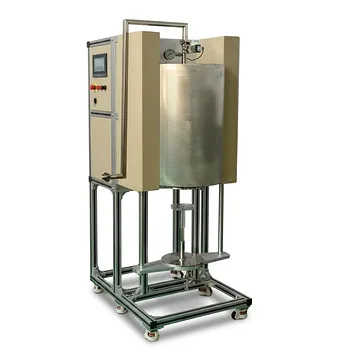
1200°C Atmosphere Controlled Automatic Bottom Loading Furnace with 6 Inch Quartz Tube

Compact Vertical Split Quartz Tube Furnace with Stainless Steel Vacuum Flanges for Rapid Thermal Quenching and Controlled Atmosphere Material Processing
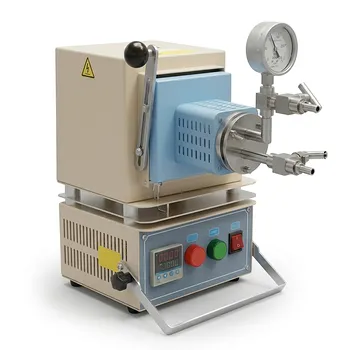
Compact Hybrid Muffle and Tube Furnace for 1000C Controlled Atmosphere Laboratory Material Sintering
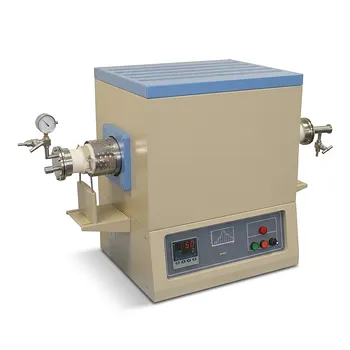
1700C High Temperature Alumina Tube Furnace with 18 Inch Heated Zone and Vacuum Sealing Flanges

Vertical 1700C Vacuum and Atmosphere Tube Furnace with 80mm Alumina Tube
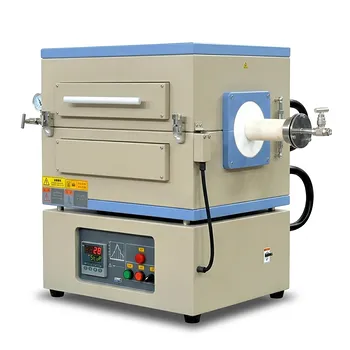
1500°C Split Tube Furnace with Alumina Tube and Vacuum Sealing Flanges for Material Research
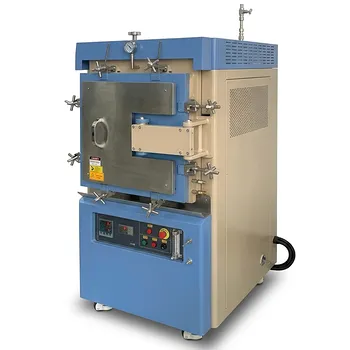
Atmosphere Controlled Muffle Furnace 1700C Maximum Temperature 80L High Capacity Vacuum Inert Gas Box Furnace
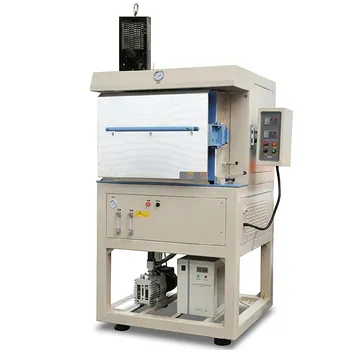
1200C Hydrogen Atmosphere Box Furnace with 5 Heated Sides and 64L Chamber
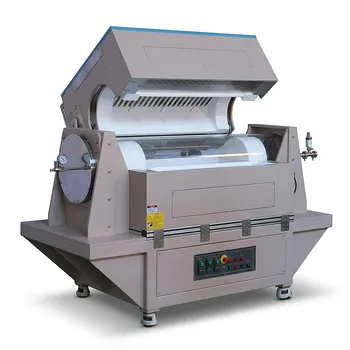
Three Zone Tube Furnace with 11 Inch or 15 Inch Quartz Tube and Hinged Flanges for Vacuum Atmosphere Heat Treatment
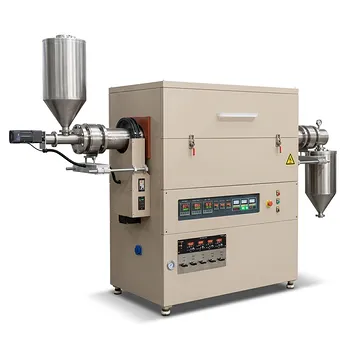
High Temperature Tilting Rotary Tube Furnace with Integrated Mass Flow Control and Multi Zone Heating
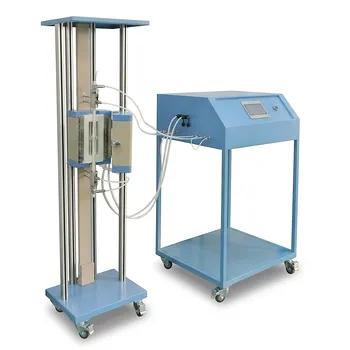
High Temperature Vertical Tube Furnace for Small Solid Oxide Fuel Cell Testing with Four Channel Gas Control
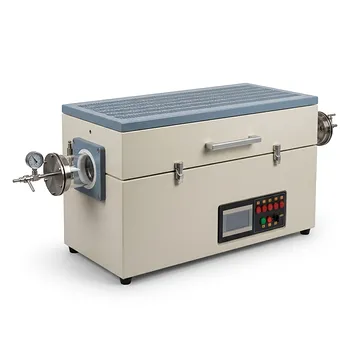
Five Zone 1200C High Temperature Split Tube Furnace with Touch Screen Controller and Multiple Quartz Tube Options
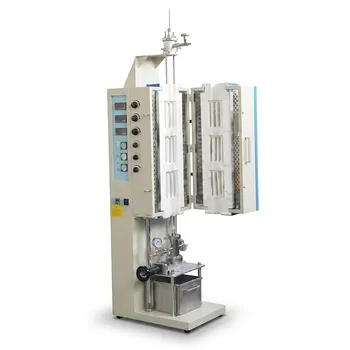
High Temperature Dual Zone Tube Furnace for Material Science Research and Professional Thermal Processing

High Temperature 1700C Tube Furnace with High Vacuum Turbomolecular Pump System and Multi Channel Mass Flow Controller Gas Mixer

High Temperature 1700C Vertical Tube Furnace for Powder Spherification and Material Sintering
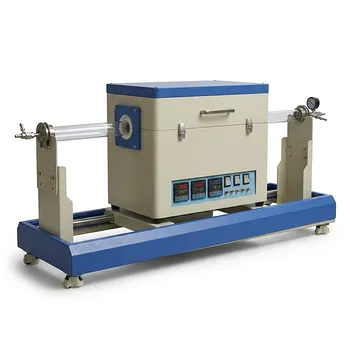
Double Temperature Zone Double Cover Tube Furnace for High Temperature CVD and Vacuum Annealing

High Temperature Automated 5 Inch Tube Furnace for Autonomous Material Research and Advanced Laboratory R&D

High Temperature 1700C Six Zone Split Tube Furnace with Alumina Tube and Water Cooled Flanges
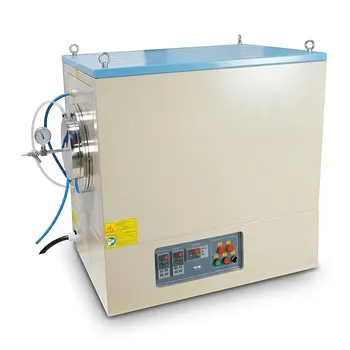
Dual Zone Tube Furnace 1100C with 11 Inch Quartz Tube and Vacuum Flanges for 8 Inch Wafer Processing