What role does a steady-state tube furnace play in evaluating the toxicity of modified UPR? Precise Toxic Gas Analysis.
Updated 5 months ago
The steady-state tube furnace (SSTF) serves as the primary instrument for quantifying toxic gas emissions under controlled, repeatable combustion conditions. It allows researchers to measure the specific output of hazardous gases, such as carbon monoxide (CO) and hydrocarbons, from modified unsaturated polyester resin (UPR). This data is essential for determining if flame retardant additives, such as copper oxide or nickel-based nanomaterials, actually reduce the chemical toxicity of the smoke produced during a fire.
The SSTF enables the precise collection and quantitative analysis of toxic combustion products by maintaining constant high temperatures and specific ventilation levels, providing a benchmark for safety improvements in flame-retardant materials.
Simulation of Controlled Combustion Environments
Maintaining Constant Temperature
The SSTF provides a stable, high-temperature environment that mimics specific fire scenarios. This thermal consistency ensures that the degradation of the modified UPR occurs uniformly, allowing for accurate comparison between different material formulations.
Controlling Ventilation Rates
Fire toxicity is highly dependent on oxygen availability. By controlling the airflow, the SSTF can simulate both well-ventilated and under-ventilated fire conditions, which significantly impacts the volume and type of gases produced.
Quantitative Analysis of Toxic Byproducts
Measuring Carbon Monoxide and Hydrocarbons
The furnace is specifically designed to capture and analyze the concentration of carbon monoxide (CO) and unburned hydrocarbons. These are the primary markers used to evaluate the lethal potential of smoke from burning polyester resins.
Evaluating Nano-Flame Retardant Efficacy
Researchers use the SSTF to see how additives like copper oxide or nickel-based nanoparticles change the chemical profile of smoke. It helps determine if these additives effectively suppress smoke or merely change the rate of material consumption.
Understanding the Trade-offs
Scale vs. Reality
While the SSTF provides high precision and repeatability, it operates on a small laboratory scale. Results from a tube furnace may not always perfectly predict how large-scale structures made of modified UPR will behave in a real-world, complex fire environment.
Gas Phase Focus
The SSTF is excellent for analyzing volatile gases, but it provides less information about the physical characteristics of solid soot particles. A comprehensive safety evaluation often requires pairing SSTF data with other testing methods, such as cone calorimetry, to understand the full fire profile.
Applying SSTF Data to Material Development
Using SSTF data effectively requires aligning the testing parameters with the intended application of the polyester resin.
- If your primary focus is meeting safety standards: Use the SSTF to generate precise CO emission data to prove that modified UPR remains within legal toxicity limits for human occupancy.
- If your primary focus is optimizing nano-additive concentrations: Compare the hydrocarbon output of various formulations in the SSTF to identify the most efficient balance between flame retardancy and smoke suppression.
Ultimately, the steady-state tube furnace transforms the complex process of resin combustion into measurable data, ensuring that "flame retardant" materials are genuinely safer for human exposure.
Summary Table:
| Feature | Role in SSTF Evaluation | Key Research Benefit |
|---|---|---|
| Temperature Control | Maintains constant thermal environment | Ensures repeatable degradation & accurate comparisons |
| Ventilation Control | Simulates varied oxygen availability | Models both well-ventilated and under-ventilated fires |
| Quantitative Capture | Measures CO and hydrocarbon output | Provides precise data on lethal smoke toxicity |
| Additive Testing | Evaluates nano-particle performance | Benchmarks efficacy of flame-retardant smoke suppressants |
Elevate Your Material Research with THERMUNITS High-Precision Furnaces
Are you developing advanced flame-retardant materials or analyzing combustion toxicity? THERMUNITS is a leading manufacturer of high-temperature laboratory equipment specifically designed for material science and industrial R&D. We provide the precision tools necessary to transform complex chemical processes into measurable, actionable data.
Our comprehensive thermal processing solutions include:
- Tube & Rotary Furnaces for steady-state analysis and material synthesis.
- Muffle, Vacuum, and Atmosphere Furnaces for diverse heat treatments.
- CVD/PECVD Systems and Vacuum Induction Melting Furnaces (VIM).
- Hot Press Furnaces, Dental Furnaces, and high-quality Thermal Elements.
Ensure the safety and performance of your modified resins with equipment engineered for accuracy and durability. Contact us today to find your ideal solution!
References
- Adriana Dowbysz, Piotr Koperniak. Recent Developments of Nano Flame Retardants for Unsaturated Polyester Resin. DOI: 10.3390/ma17040852
Mentioned Products
- 24 Inch Three Zone Split Tube Furnace with Optional Quartz Tube and Vacuum Flange System for High Temperature Material Synthesis
- High Temperature Rocking Tube Furnace 1700°C Alumina Processing Tube with Precision Oscillation for Material Synthesis
- 1200°C 5 Inch Vertical Quartz Tube Furnace with Stainless Steel Vacuum Flanges
- Three Zone Tube Furnace with 11 Inch or 15 Inch Quartz Tube and Hinged Flanges for Vacuum Atmosphere Heat Treatment
- 1200C High Throughput Multi Channel Tube Furnace with 50mm Quartz Tubes for Annealing and Material Phase Diagram Research
People Also Ask
- What is the primary engineering purpose for using a customized ventilation hood when operating a split tube furnace? RCF Safety
- How does a split tube furnace facilitate debinding of ceramic green bodies? Master Precise Thermal & Atmosphere Control
- How does a split tube furnace contribute to the thermal stabilization of Clignin@H-TiO2? Achieve Structural Precision
- What are the specific advantages and use cases for a split tube furnace? Optimize Lab Efficiency & Material Research
- What are the advantages of using a split tube furnace for heating a catalytic reactor? Boost Efficiency and Precision

Tech Team · ThermUnits
Last updated on Apr 14, 2026
Related Products
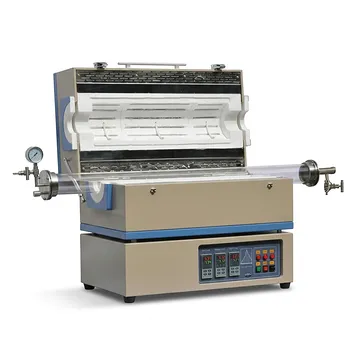
24 Inch Three Zone Split Tube Furnace with Optional Quartz Tube and Vacuum Flange System for High Temperature Material Synthesis
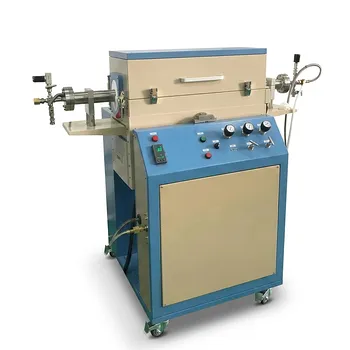
High Temperature Rocking Tube Furnace 1700°C Alumina Processing Tube with Precision Oscillation for Material Synthesis

1200°C 5 Inch Vertical Quartz Tube Furnace with Stainless Steel Vacuum Flanges

Three Zone Tube Furnace with 11 Inch or 15 Inch Quartz Tube and Hinged Flanges for Vacuum Atmosphere Heat Treatment

1200C High Throughput Multi Channel Tube Furnace with 50mm Quartz Tubes for Annealing and Material Phase Diagram Research

Vertical 1700C Vacuum and Atmosphere Tube Furnace with 80mm Alumina Tube
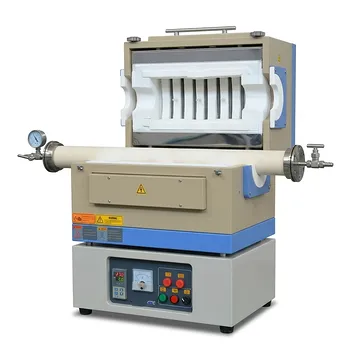
High Temperature 1600C Split Tube Furnace Vacuum Flanges Valves Optional 60mm 80mm Alumina Tube
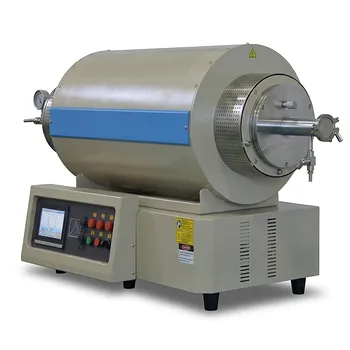
1200C Max Three Zone Tube Furnace 6 Inch OD Max with Tube and Flange

High Temperature 1700C Tube Furnace with High Vacuum Turbomolecular Pump System and Multi Channel Mass Flow Controller Gas Mixer

High Temperature 1700C Six Zone Split Tube Furnace with Alumina Tube and Water Cooled Flanges

1100C Tube Furnace with Vacuum Flange and Programmable Temperature Controller for Material Science and Industrial Heat Treatment
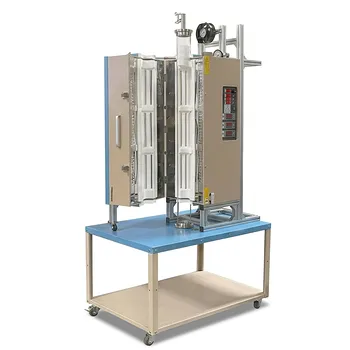
1200C Three Zone Split Vertical Tube Furnace 4 Inch Quartz Tube Stainless Steel Vacuum Flanges

Compact High Temperature 1600C Tube Furnace with 50mm Alumina Tube and Vacuum Flanges for Material Sintering

High Temperature 1700C Vertical Tube Furnace for Powder Spherification and Material Sintering
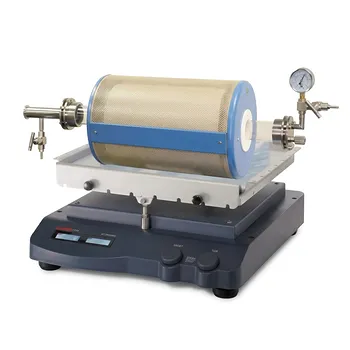
High Temperature Rocking Tube Furnace with Quartz Tube and Vacuum Flange for Materials Synthesis

High Vacuum Compact Tube Furnace 1200C with Integrated Turbo Pump System and 8 Inch Heating Zone
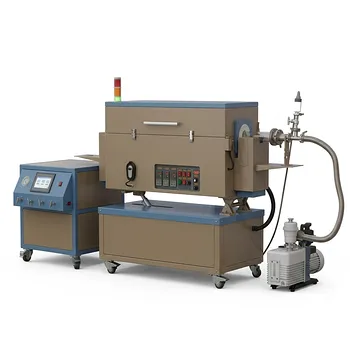
5 Inch Three Zone Rotary Tube Furnace with Integrated Gas Delivery System and 1200C Capability for Advanced Material CVD Processing
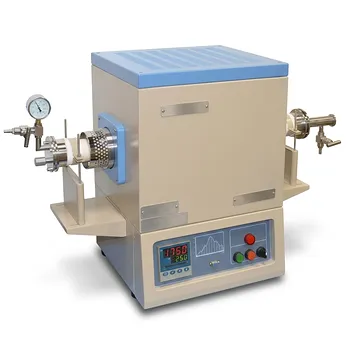
High Temperature Compact Vacuum Tube Furnace 1750C Max 60mm OD Alumina Tube
900°C Max Rotary Tube Furnace with 8 Inch 310S Alloy Tube and Optional Multi Zone Heating for Industrial Material Calcination
