What role does a tube furnace play in the surface restoration of Violet Phosphorus? Achieve Precise Atomic Cleaning
Updated 6 months ago
The tube furnace serves as a precision thermal cleaning chamber that facilitates the removal of photodegradation layers from Violet Phosphorus (VP). By maintaining a constant 200 °C environment under high-purity nitrogen flow, the furnace evaporates $HPO_x$-type adsorbate films, effectively stripping away surface contaminants to reveal the material's intrinsic atomic structure.
The tube furnace is the indispensable tool for restoring the surface integrity of Violet Phosphorus, utilizing controlled thermal annealing to non-destructively volatilize degradation products. This process is essential for transitioning the material from a degraded state back to its original, observable morphology.
The Mechanics of Surface Restoration
Evaporation of $HPO_x$ Adsorbates
During photodegradation, Violet Phosphorus develops a film of $HPO_x$-type adsorbates that masks its true surface. The tube furnace provides the specific thermal energy required to break the bonds of these films and volatilize them, effectively "boiling off" the impurities without damaging the underlying phosphorus structure.
Maintaining an Inert Nitrogen Atmosphere
Restoration requires a strictly controlled, oxygen-free environment to prevent further oxidation during the heating process. The furnace’s ability to provide a continuous flow of high-purity nitrogen ensures that as contaminants evaporate, they are swept away and replaced by an inert shield that protects the freshly cleaned VP surface.
Stable Thermal Field Distribution
The restoration of VP relies on a stable and uniform thermal field at 200 °C. Because the tube furnace provides a consistent temperature gradient throughout the heating zone, the annealing process occurs uniformly across the sample, preventing localized overheating that could lead to material sublimation or structural damage.
Achieving Atomic-Level Morphology
Revealing Intrinsic Surface Features
Once the $HPO_x$ films are removed, the furnace allows researchers to observe the intrinsic morphology of the material. This includes the ability to clearly visualize laser-etched pits and other fine structural details under a microscope that were previously obscured by degradation products.
Precision at Low-Temperature Annealing
While tube furnaces are capable of extreme temperatures (up to 1600 °C), their role in VP restoration highlights their low-temperature precision. Maintaining a steady 200 °C for prolonged periods is critical for "gentle" cleaning, ensuring the thermal energy is sufficient for evaporation but below the threshold for phase transitions in the VP itself.
Hermetic Sealing for High Purity
The hermetic design of the furnace tube is vital for maintaining the integrity of the high-purity nitrogen environment. By preventing the ingress of atmospheric moisture or oxygen, the furnace ensures that the surface cleaning process is not compromised by new chemical reactions during the annealing cycle.
Understanding the Trade-offs
Annealing Time vs. Temperature
There is a critical balance between the duration of the annealing and the temperature used. While prolonged thermal annealing at 200 °C effectively cleans the surface, increasing the temperature to speed up the process risks altering the phosphorus crystal structure or inducing unwanted phase changes.
Gas Flow Rate Sensitivity
The rate of nitrogen flow must be carefully managed. If the flow is too low, evaporated adsorbates may redeposit on the VP surface; however, excessively high flow rates can cause temperature fluctuations within the tube, leading to inconsistent restoration results across the sample.
Surface Sensitivity Post-Restoration
While the tube furnace successfully achieves atomic-level surface cleaning, the restored VP remains highly sensitive. Once removed from the protective nitrogen atmosphere of the furnace, the material will begin to degrade again if exposed to ambient air and light, making the timing of subsequent analysis critical.
How to Apply This to Your Process
Recommendations for Material Restoration
- If your primary focus is maximum surface purity: Ensure the nitrogen source is ultra-high purity and maintain the annealing process for an extended duration at 200 °C to ensure total evaporation of $HPO_x$.
- If your primary focus is observing laser-etched features: Prioritize a stable thermal field to avoid "blurring" the edges of the pits through excessive thermal agitation of the surface atoms.
- If your primary focus is high-throughput analysis: Use a furnace with a rapid cooling function or atmosphere switching capabilities to minimize the time between restoration and microscopic observation.
By precisely balancing temperature and atmospheric purity, the tube furnace transforms degraded Violet Phosphorus back into a pristine subject for atomic-level characterization.
Summary Table:
| Feature | Description | Benefit for VP Restoration |
|---|---|---|
| Temperature Control | Precise 200 °C stability | Volatilizes $HPO_x$ without damaging VP structure. |
| Atmospheric Management | Continuous high-purity $N_2$ flow | Sweeps away contaminants and prevents oxidation. |
| Thermal Uniformity | Stable thermal field distribution | Ensures consistent cleaning across the entire sample. |
| Hermetic Sealing | Airtight high-purity furnace tubes | Protects sample integrity from ambient moisture and oxygen. |
Precision Thermal Solutions for Material R&D
Achieving atomic-level surface integrity requires a furnace built for precision. THERMUNITS is a leading manufacturer of high-temperature laboratory equipment, specializing in advanced solutions for material science and industrial R&D. We offer a comprehensive range of thermal processing equipment, including Tube, Muffle, Vacuum, and Atmosphere Furnaces, as well as CVD/PECVD systems, Dental Furnaces, and Vacuum Induction Melting (VIM) furnaces.
Our high-performance thermal solutions provide the stable environments and precision control necessary for sensitive processes like high-purity nitrogen annealing and surface restoration.
Contact our experts today to optimize your heat treatment workflow!
References
- Xiangzhe Zhang, Shiqiao Qin. Photodegradation and van der Waals Passivation of Violet Phosphorus. DOI: 10.3390/nano14050422
Mentioned Products
- High Temperature 1700C Vertical Tube Furnace for Powder Spherification and Material Sintering
- Vertical Openable Tube Furnace 0-1700c High Temperature Laboratory System for CVD and Vacuum Heat Treatment
- 1200C Tube Furnace with Internal Magnetic Sample Sliding for Direct Vaporizing Deposition and Rapid Thermal Processing
- High Temperature 1700C Vertical Split Tube Furnace for Material Quenching and Single Crystal Growth
- 1100°C Split Vertical Tube Furnace with 80mm Quartz Tube and Stainless Steel Vacuum Flanges
People Also Ask
- What role does a high-temperature vertical tube furnace play in simulating high-carbon ferromanganese slag formation?
- What functions does a vertical high-temperature tube furnace perform? Master Industrial Sintering & R&D Simulation
- High-Temp Tube Furnace Role in Converting Microbial Proteins to Iron Single-Atom Sites: Expert Synthesis Guide
- What impact does the heating rate of a tube furnace have on biochar microstructure? Optimize Your Material R&D.
- What is the primary function of a high-temperature tube furnace in Cu1-N-C synthesis? Precision Thermal Control.

Tech Team · ThermUnits
Last updated on Apr 14, 2026
Related Products
High Temperature 1700C Vertical Tube Furnace for Powder Spherification and Material Sintering
Vertical Openable Tube Furnace 0-1700c High Temperature Laboratory System for CVD and Vacuum Heat Treatment
1200C Tube Furnace with Internal Magnetic Sample Sliding for Direct Vaporizing Deposition and Rapid Thermal Processing
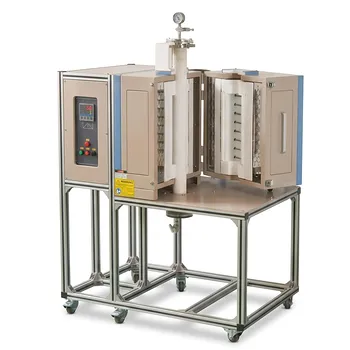
High Temperature 1700C Vertical Split Tube Furnace for Material Quenching and Single Crystal Growth
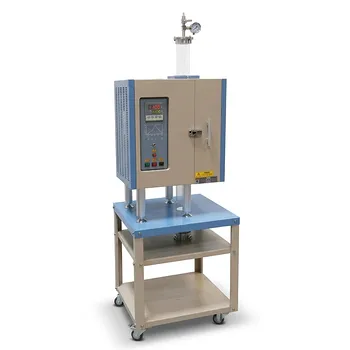
1100°C Split Vertical Tube Furnace with 80mm Quartz Tube and Stainless Steel Vacuum Flanges
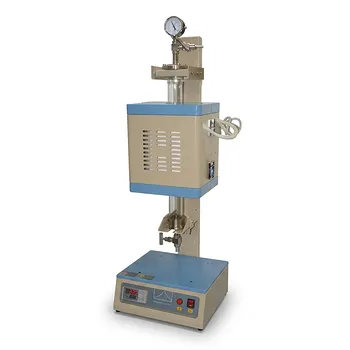
Compact Vertical Split Quartz Tube Furnace with Stainless Steel Vacuum Flanges for Rapid Thermal Quenching and Controlled Atmosphere Material Processing
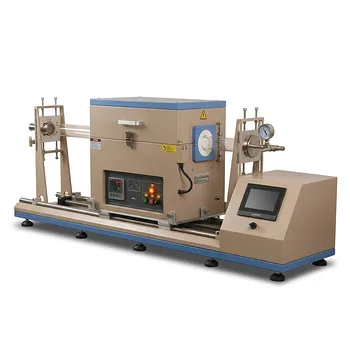
1200C Sliding Tube Furnace for Rapid Thermal Processing and CVD Graphene Growth with 100mm OD Capacity
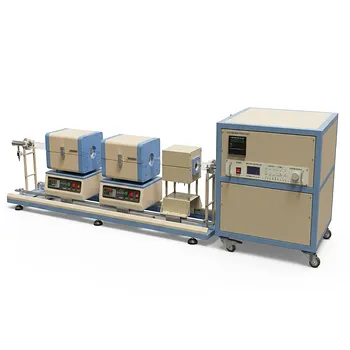
1200C Dual Sliding Tube Furnace with Dual Tubes and Flanges for PECVD Processes
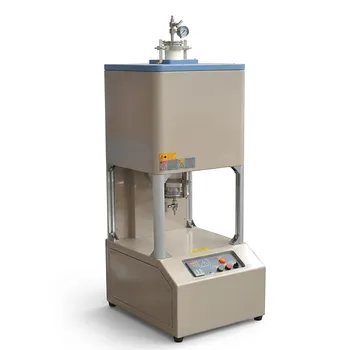
Vertical 1700C Vacuum and Atmosphere Tube Furnace with 80mm Alumina Tube
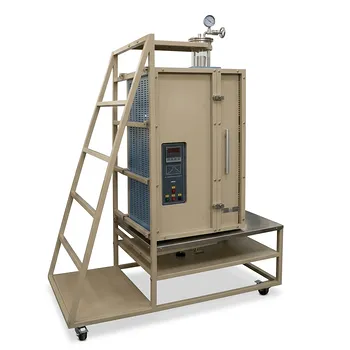
Split Vertical Tube Furnace with 1200C Quartz Tube and Stainless Steel Vacuum Flanges for Rapid Thermal Processing
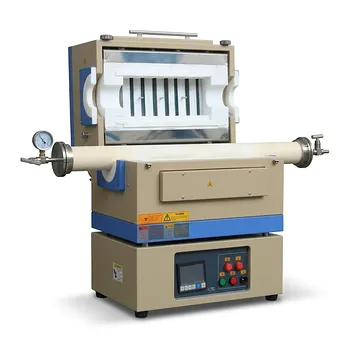
1500C Eight Zone Split Tube Furnace for Thermal Gradient Processing and Advanced Material Research
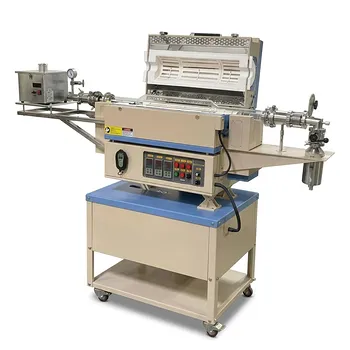
5 Inch Rotary Tube Furnace with Automatic Feeding and Receiving System 1200C Three Zone CVD Powder Processing
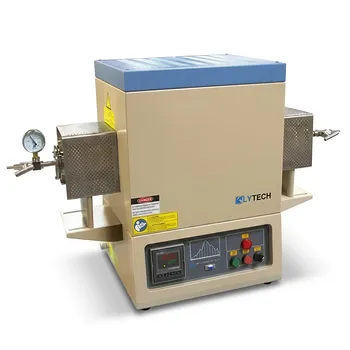
1800C High Temperature Compact Vacuum Tube Furnace with 60mm OD Alumina Tube and Kanthal MoSi2 Heating Elements
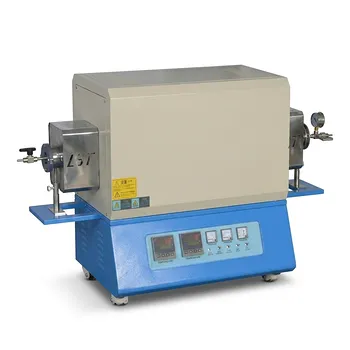
High Temperature Dual Zone Vacuum Tube Furnace for Material Research and CVD Processing
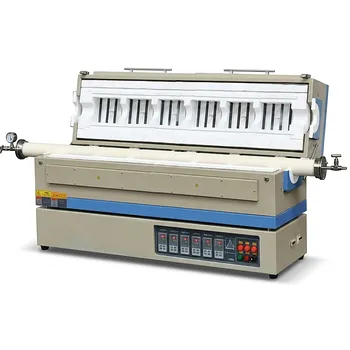
High Temperature 1700C Six Zone Split Tube Furnace with Alumina Tube and Water Cooled Flanges
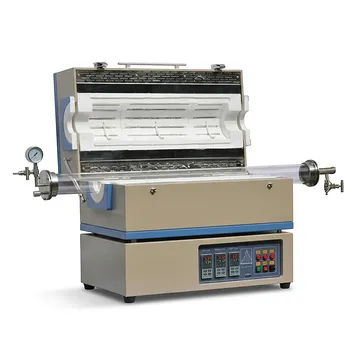
24 Inch Three Zone Split Tube Furnace with Optional Quartz Tube and Vacuum Flange System for High Temperature Material Synthesis
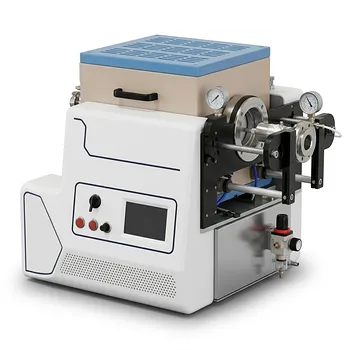
High Temperature Automated 5 Inch Tube Furnace for Autonomous Material Research and Advanced Laboratory R&D
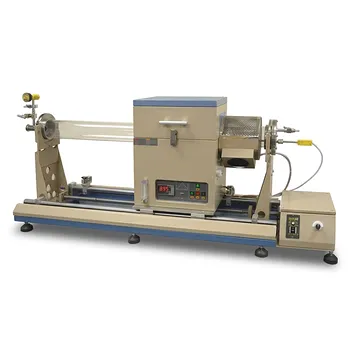
900 ºC Max Sliding RTP Tube Furnace with Rapid IR Heating and 4 Inch OD Quartz Tube
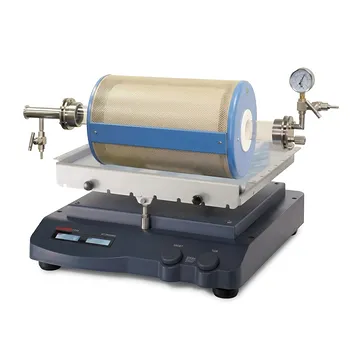
High Temperature Rocking Tube Furnace with Quartz Tube and Vacuum Flange for Materials Synthesis