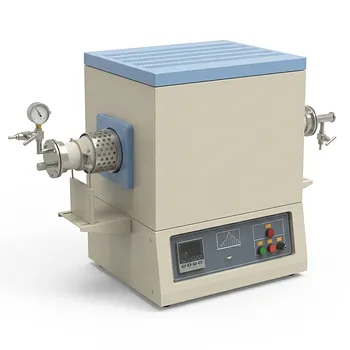
What role does an industrial-grade tube furnace play in atmosphere control during carbonization? Ensure Material Purity.
Updated 6 months ago
The industrial-grade tube furnace serves as the primary vessel for creating the anaerobic environment required for carbonization. It functions by isolating the polymer precursor from oxygen and replacing it with a continuous flow of high-purity inert gas, such as nitrogen or argon. This precise atmosphere control enables the thermal decomposition of organic materials into carbon structures at high temperatures, typically ranging from 400°C to 1000°C, while preventing the material from undergoing oxidative burnout.
Core Takeaway: The tube furnace acts as a controlled chemical reactor that eliminates oxygen to facilitate pyrolysis, ensuring that polymer precursors transform into stable carbon frameworks rather than combusting into ash.
Establishing an Oxygen-Free Environment
The Role of Inert Gas Purging
High-purity nitrogen (N2) or argon (Ar) is continuously circulated through the furnace tube to displace atmospheric oxygen. This inert shield is essential for maintaining the chemical stability of the precursor as it reaches temperatures where carbon would otherwise react with oxygen.
Prevention of Oxidative Burnout
At temperatures exceeding 800°C, carbon materials are highly susceptible to oxidative loss, where the carbon atoms react with trace oxygen to form carbon dioxide. The furnace’s sealed environment prevents this "burnout," which is critical for maintaining the yield and structural integrity of the final carbon product.
Evacuation of Volatile Impurities
As the polymer framework breaks down, it releases non-carbon elements and volatile organic compounds. The controlled flow of the furnace atmosphere effectively carries these impurities away from the sample, preventing unwanted side reactions and ensuring a higher purity of elemental carbon.
Driving the Pyrolytic Transformation
Reorganization of Carbon Chains
The furnace provides a stable thermal field that allows for the rearrangement of polymer molecules into high-strength carbon fibers or amorphous skeletons. This molecular reorganization is what transforms a flexible polymer precursor into a rigid, electrically conductive carbon structure.
Development of Porous Microstructures
In the preparation of activated carbons or aerogels, the furnace atmosphere facilitates the thermal degradation of sacrificial templates. This process creates nanopores and microporous structures that are essential for applications in filtration, energy storage, and catalysis.
Formation of Composite Materials
Tube furnaces allow for the simultaneous carbonization of polymers and the conversion of additives, such as loading titanium sources into titanium dioxide (TiO2). This multi-functional environment ensures that complex composite membranes or photocatalytic materials are synthesized in a single, cohesive thermal step.
Precision Thermal Management
The Importance of PID Control Systems
Industrial furnaces utilize PID (Proportional-Integral-Derivative) control to manage precise heating rates, often as slow as 3°C per minute. This level of control prevents "thermal overshoot," ensuring the precursor self-assembles into a stable structure without being damaged by sudden temperature spikes.
Multi-Stage Heating Programs
Many carbonization processes require a two-step heating approach: a stabilization phase at a lower temperature followed by a final carbonization phase. The tube furnace’s ability to hold constant temperatures at specific intervals allows for the gradual breaking of chemical bonds, which preserves the microscopic morphology of the precursor.
Protection of Complex Geometries
For advanced applications like 3D-printed pyrolytic carbon electrodes, the furnace ensures that complex geometric structures do not warp or collapse. Precise thermal management allows the polymer to shrink uniformly into a stable carbon replica of the original design.
Understanding the Trade-offs and Risks
Gas Purity vs. Material Quality
Using lower-grade nitrogen can introduce trace oxygen or moisture, leading to surface defects or reduced electrical conductivity. While high-purity gases increase operational costs, they are non-negotiable for achieving high-performance carbon materials.
Seal Integrity and Mechanical Failure
The effectiveness of atmosphere control relies entirely on the integrity of the tube seals. Even a microscopic leak at high temperatures can lead to total sample loss, as oxygen ingress causes an immediate and catastrophic exothermic reaction with the carbon.
Flow Rate Balance
If the inert gas flow is too low, volatile byproducts may accumulate and contaminate the sample. Conversely, an excessively high flow rate can create thermal gradients across the furnace tube, leading to non-uniform carbonization and structural weaknesses in the final product.
Applying Furnace Control to Your Project
How to Select Your Process Parameters
- If your primary focus is maximum carbon yield: Prioritize a high-purity nitrogen shield and a slow heating rate to ensure complete pyrolysis without oxidative loss.
- If your primary focus is structural precision (e.g., 3D printing): Use a multi-stage PID heating program to stabilize the polymer framework before reaching peak carbonization temperatures.
- If your primary focus is the development of porosity: Ensure consistent gas flow to effectively remove volatile impurities and sacrificial templates during the thermal degradation phase.
Effective atmosphere control within a tube furnace is the bridge between a raw organic precursor and a high-value, functional carbon material.
Summary Table:
| Feature | Physical/Chemical Role | Key Benefit |
|---|---|---|
| Inert Gas Purging | Displaces oxygen with N2 or Argon | Prevents oxidative burnout and sample loss |
| Volatile Removal | Carries away organic byproducts | Ensures high purity of elemental carbon |
| PID Thermal Control | Manages precise heating rates (e.g., 3°C/min) | Prevents thermal overshoot and maintains morphology |
| Hermetic Sealing | Maintains anaerobic environment | Critical for structural integrity and carbon yield |
| Multi-stage Heating | Enables stabilization and carbonization phases | Facilitates controlled molecular reorganization |
Elevate Your R&D Precision with THERMUNITS
As a global leader in high-temperature laboratory equipment for material science, THERMUNITS provides the advanced thermal processing solutions required for high-performance carbonization. From developing 3D-printed electrodes to synthesizing high-strength carbon fibers, our equipment ensures the precise atmosphere control and thermal stability your project demands.
Our comprehensive product range includes:
- Tube & Atmosphere Furnaces: Optimized for inert gas purging and pyrolysis.
- Specialized Systems: Vacuum, Muffle, Rotary, and Hot Press furnaces.
- Advanced R&D Tools: CVD/PECVD systems, Vacuum Induction Melting (VIM), and Dental Furnaces.
Contact our engineering team today to discuss how THERMUNITS can optimize your heat treatment workflows and guarantee superior material yield and structural integrity.
References
- Paul N. Smith, Zhe Qiang. Accurate additive manufacturing of lightweight and elastic carbons using plastic precursors. DOI: 10.1038/s41467-024-45211-4
Mentioned Products
- 1100C Tube Furnace with Vacuum Flange and Programmable Temperature Controller for Material Science and Industrial Heat Treatment
- 900°C Max Rotary Tube Furnace with 8 Inch 310S Alloy Tube and Optional Multi Zone Heating for Industrial Material Calcination
- Ten Zone Multi Orientation Laboratory Tube Furnace for 1200C High Temperature Gradient Thermal Processing
- Compact High Temperature 1600C Tube Furnace with 50mm Alumina Tube and Vacuum Flanges for Material Sintering
- High Temperature Tube Furnace 1500C with Sliding Flanges and 50mm OD for Rapid Thermal Processing Fast Heating and Cooling
People Also Ask
- What are the advantages of 1100°C tube furnaces for ORR catalysts? Boost Conductivity and Structural Stability.
- What role does a tube furnace play in PS template removal? Ensure ZnO/SiO2 Structural Integrity & High Performance.
- What core functions does a high-temperature vacuum tube furnace provide? Optimize np-CuSn Sintering & Joint Integrity
- What is the role of a high-temperature tube furnace in the calcination process of ZnO/In2O3 nanocomposites?
- What impact does the heating rate of a tube furnace have on biochar microstructure? Optimize Your Material R&D.

Tech Team · ThermUnits
Last updated on Apr 14, 2026
Related Products
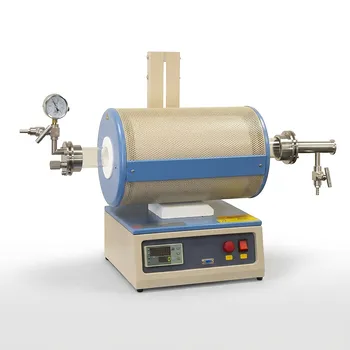
1100C Tube Furnace with Vacuum Flange and Programmable Temperature Controller for Material Science and Industrial Heat Treatment
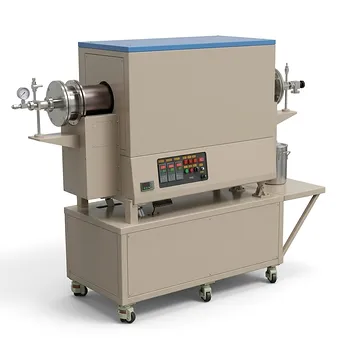
900°C Max Rotary Tube Furnace with 8 Inch 310S Alloy Tube and Optional Multi Zone Heating for Industrial Material Calcination
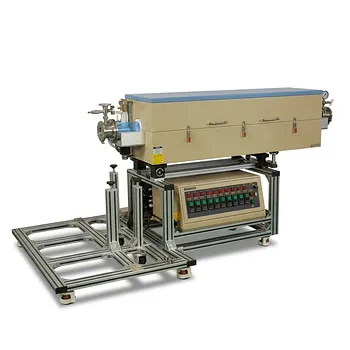
Ten Zone Multi Orientation Laboratory Tube Furnace for 1200C High Temperature Gradient Thermal Processing
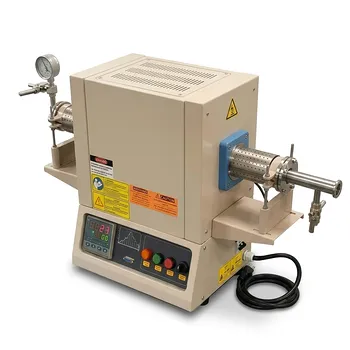
Compact High Temperature 1600C Tube Furnace with 50mm Alumina Tube and Vacuum Flanges for Material Sintering
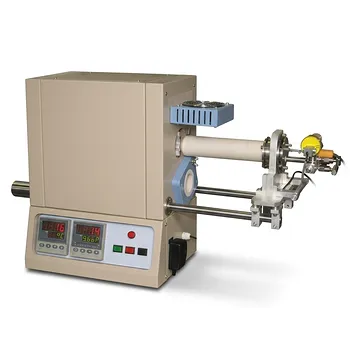
High Temperature Tube Furnace 1500C with Sliding Flanges and 50mm OD for Rapid Thermal Processing Fast Heating and Cooling
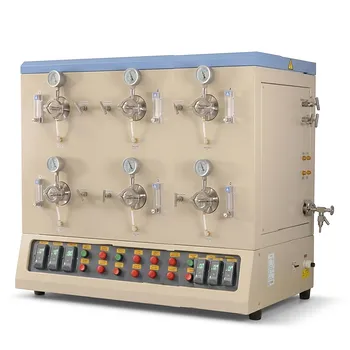
1200C High Throughput Multi Channel Tube Furnace with 50mm Quartz Tubes for Annealing and Material Phase Diagram Research
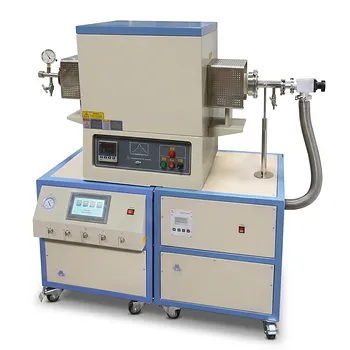
High Temperature 1700C Tube Furnace with High Vacuum Turbomolecular Pump System and Multi Channel Mass Flow Controller Gas Mixer
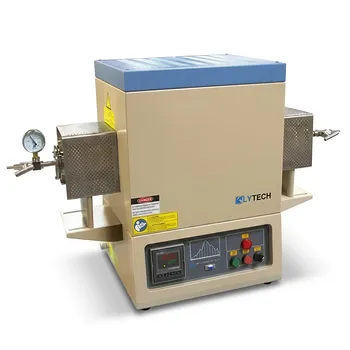
1800C High Temperature Compact Vacuum Tube Furnace with 60mm OD Alumina Tube and Kanthal MoSi2 Heating Elements
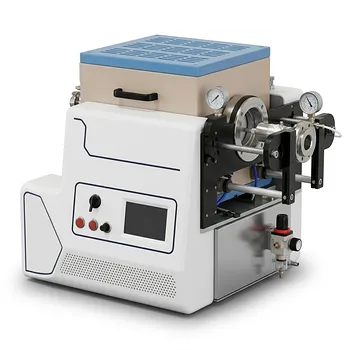
High Temperature Automated 5 Inch Tube Furnace for Autonomous Material Research and Advanced Laboratory R&D
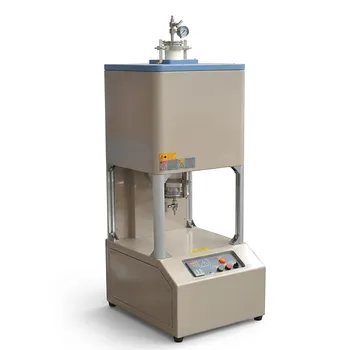
Vertical 1700C Vacuum and Atmosphere Tube Furnace with 80mm Alumina Tube
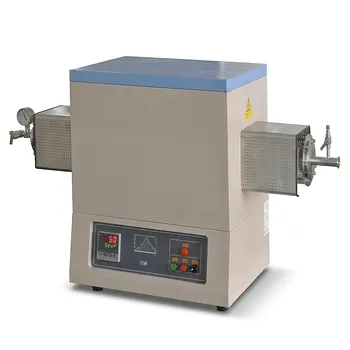
High Temperature 1700C Tube Furnace with 4 Inch OD Alumina Tube and Vacuum Sealing Flanges
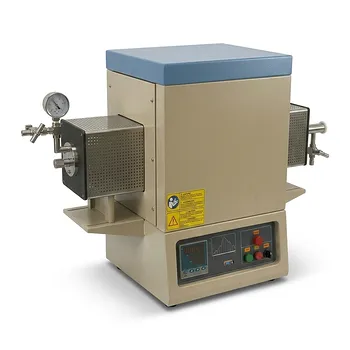
High Temperature 1700C Benchtop Tube Furnace with 5 Inch Heating Zone High Purity Alumina Tube and Vacuum Sealing Flanges
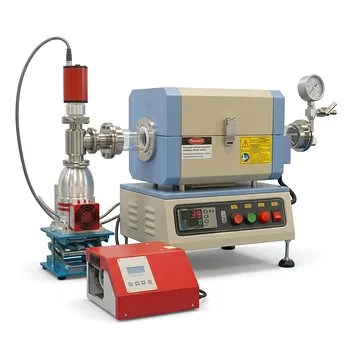
High Vacuum Compact Tube Furnace 1200C with Integrated Turbo Pump System and 8 Inch Heating Zone
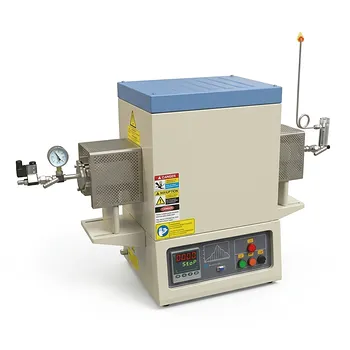
1700C Hydrogen Gas Tube Furnace with 60mm Alumina Process Tube and Integrated Hydrogen Safety Detector
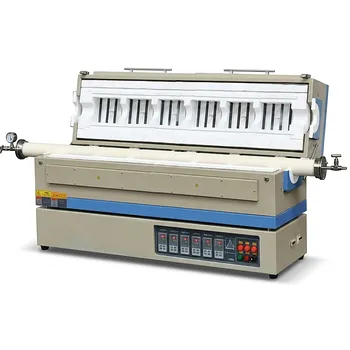
High Temperature 1700C Six Zone Split Tube Furnace with Alumina Tube and Water Cooled Flanges
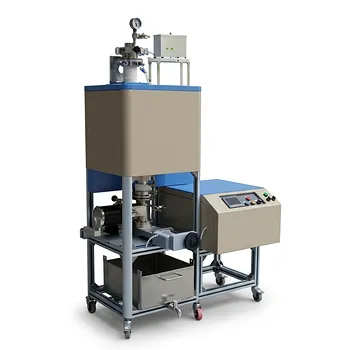
High Temperature 1700C Vertical Tube Furnace for Powder Spherification and Material Sintering
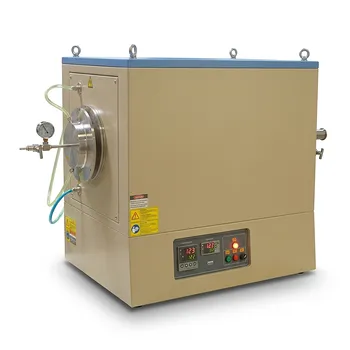
1100°C Large Diameter Quartz Tube Furnace with 24 Inch Heating Zone and Water Cooled Flanges
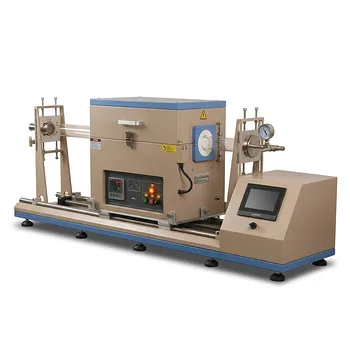
1200C Sliding Tube Furnace for Rapid Thermal Processing and CVD Graphene Growth with 100mm OD Capacity
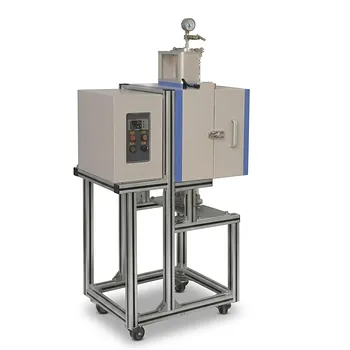
1200°C 5 Inch Vertical Quartz Tube Furnace with Stainless Steel Vacuum Flanges