What role does the Drop Tube Furnace play in the initial preparation stage of Hollow Carbon Nanospheres (HCNS)? - Core-Shell Synthesis
Updated 3 months ago
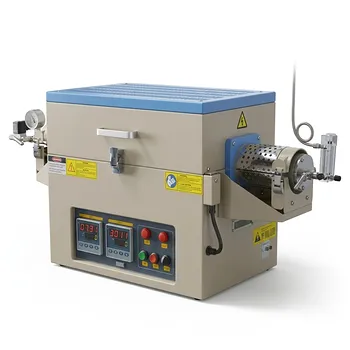
In the synthesis of Hollow Carbon Nanospheres (HCNS), the Drop Tube Furnace (DTF) acts as the primary reactor for transforming waste tire pyrolysis oil into a core-shell carbon black precursor. It provides a specialized high-temperature environment that facilitates the partial oxidation of the oil, ensuring rapid heating and precise control over the chemical reaction duration. This initial stage is critical because it establishes the unique core-shell structure required to subsequently create the hollow interior of the nanospheres.
The Drop Tube Furnace is the foundational hardware that converts liquid precursors into structured solid intermediates. By balancing extreme heat with precise residence time, it creates the "template" morphology necessary for hollow sphere formation.
The Role of High-Temperature Rapid Heating
The DTF is designed to provide a high-temperature reaction zone that precursors enter almost instantaneously.
Facilitating Rapid Thermal Transformation
Unlike standard tube furnaces that may use slower heating rates (e.g., 10 °C/min), the DTF subjects the waste tire pyrolysis oil to an immediate high-temperature shock. This rapid increase in temperature is essential to initiate the partial oxidation process before the precursor can aggregate into bulk material.
Maintaining a Stable Reaction Zone
The furnace ensures that the thermal environment remains consistent throughout the reaction. This stability is vital for the uniform treatment of the oil droplets, ensuring that each nanosphere-to-be experiences the same chemical conditions.
Precision Control of Residence Time
In the preparation of HCNS, the duration that the material spends inside the furnace—the "residence time"—is as important as the temperature itself.
Chemical Kinetic Management
The DTF allows for the precise calculation and control of how long the pyrolysis oil remains in the high-heat zone. This timing dictates the extent of the partial oxidation, preventing the material from fully combusting while ensuring enough reaction occurs to form a solid structure.
Formation of the Core-Shell Architecture
The controlled residence time specifically allows for the generation of primary carbon black with a unique core-shell structure. This architecture is the "blueprint" for the final product; without this specific internal differentiation, the subsequent creation of a hollow center would be impossible.
Establishing the Structural Foundation
The DTF does more than just heat material; it serves as the site for the initial morphological "programming" of the carbon.
Transitioning from Liquid to Structured Solid
The furnace environment facilitates the transition of organic precursors into a solid carbon matrix. This is similar to how tube furnaces are used in other applications to drive the aromatization and structural reorganization of biomass or polymer frameworks.
Creating the Basis for "Hollowness"
The core-shell structure generated within the DTF is the defining feature of this preparation stage. This structure allows researchers to later remove or modify the core, leaving behind the hollow carbon shell that characterizes HCNS.
Understanding the Trade-offs and Challenges
While the Drop Tube Furnace is highly effective, it requires rigorous parameter management to avoid synthesis failure.
The Risk of Over-Oxidation
If the residence time is too long or the temperature is too high, the partial oxidation can quickly turn into complete combustion. This results in the loss of carbon yield and the destruction of the desired nanosphere morphology.
Uniformity and Particle Aggregation
If the precursor "drop" or flow rate is not perfectly synchronized with the furnace atmosphere, the resulting carbon black may suffer from non-uniform shell thickness. Additionally, improper temperature gradients can lead to particle aggregation, resulting in bulk carbon rather than discrete nanospheres.
How to Apply This to Your Project
When utilizing a furnace for carbon nanomaterial synthesis, your specific goal determines your operational parameters.
- If your primary focus is creating hollow architectures: Prioritize the precise calibration of residence time to ensure a core-shell structure is formed rather than a solid, uniform sphere.
- If your primary focus is material purity and yield: Focus on maintaining a strictly controlled partial oxidation atmosphere to prevent the "burning off" of your carbon source.
- If your primary focus is structural uniformity: Ensure the precursor delivery system into the Drop Tube Furnace is optimized for consistent droplet size and entry velocity.
The Drop Tube Furnace is the indispensable engine of HCNS production, turning raw chemical precursors into the sophisticated structural templates required for advanced carbon applications.
Summary Table:
| Key Feature | Functional Role | Impact on HCNS Preparation |
|---|---|---|
| Rapid Thermal Transformation | Instantaneous high-temperature shock | Initiates partial oxidation without precursor aggregation. |
| Residence Time Control | Precise management of reaction duration | Creates the critical core-shell architecture and prevents combustion. |
| Partial Oxidation | Controlled chemical kinetic zone | Converts waste tire pyrolysis oil into structured solid templates. |
| Thermal Stability | Consistent heating environment | Ensures uniform shell thickness and prevents non-uniform particle growth. |
Elevate Your Material Science Research with THERMUNITS
At THERMUNITS, we specialize in providing the high-precision thermal equipment necessary for advanced carbon synthesis. As a leading manufacturer, we offer a comprehensive range of solutions including Drop Tube Furnaces, CVD/PECVD systems, and Vacuum/Atmosphere furnaces designed for rigorous industrial R&D.
Why Choose THERMUNITS?
- Precision Control: Our equipment ensures exact temperature and residence time management for core-shell morphology.
- Versatile Solutions: From Muffle and Rotary furnaces to Hot Press and Dental furnaces, we cover all heat treatment needs.
- Expert Engineering: Specialized hardware for CVD, PECVD, and vacuum induction melting (VIM).
Ready to achieve superior uniformity and yield in your nanosphere production? Contact us today to find the perfect furnace for your lab!
References
- Chiemeka Onyeka Okoye, Dongke Zhang. Preparation of hollow carbon nanospheres from oxidation of spent tyre oil‐derived carbon black in air. DOI: 10.1002/apj.3054
Mentioned Products
- 1200C Sliding Tube Furnace for Rapid Thermal Processing and CVD Graphene Growth with 100mm OD Capacity
- 1250C Split Tube Furnace with 3 Inch Mullite Tube and Vacuum Sealing Flanges for Precision Thermal Processing
- Compact Vertical Split Quartz Tube Furnace with Stainless Steel Vacuum Flanges for Rapid Thermal Quenching and Controlled Atmosphere Material Processing
- 1200C Tube Furnace with Internal Magnetic Sample Sliding for Direct Vaporizing Deposition and Rapid Thermal Processing
- High Temperature 1700C Six Zone Split Tube Furnace with Alumina Tube and Water Cooled Flanges
People Also Ask
- Why is a Tube Furnace typically utilized for CVD? Achieve Precision in Graphene and 2D Material Synthesis
- Why use CVD and a tube furnace for Pd3P0.95/NC catalyst phosphidation? Ensure high phase purity and performance.
- What is the function of CVD furnaces in graphene prep? Enhancing Photodetector Charge Transport
- CVD Tube Furnace Advantages for Pd-P Catalyst Durability: Precision Control for 40,000+ Cycles
- How does a tube furnace system equipped with gas mass flow controllers facilitate the MCW process? Optimize Graphene Yield

Tech Team · ThermUnits
Last updated on Jun 02, 2026
Related Products
1200C Sliding Tube Furnace for Rapid Thermal Processing and CVD Graphene Growth with 100mm OD Capacity
1250C Split Tube Furnace with 3 Inch Mullite Tube and Vacuum Sealing Flanges for Precision Thermal Processing

Compact Vertical Split Quartz Tube Furnace with Stainless Steel Vacuum Flanges for Rapid Thermal Quenching and Controlled Atmosphere Material Processing
1200C Tube Furnace with Internal Magnetic Sample Sliding for Direct Vaporizing Deposition and Rapid Thermal Processing
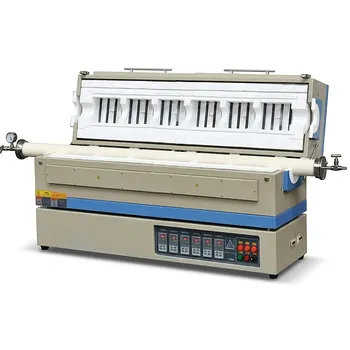
High Temperature 1700C Six Zone Split Tube Furnace with Alumina Tube and Water Cooled Flanges
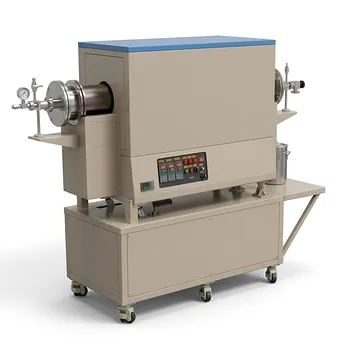
900°C Max Rotary Tube Furnace with 8 Inch 310S Alloy Tube and Optional Multi Zone Heating for Industrial Material Calcination

1100C Tube Furnace with Vacuum Flange and Programmable Temperature Controller for Material Science and Industrial Heat Treatment

Vertical 1700C Vacuum and Atmosphere Tube Furnace with 80mm Alumina Tube
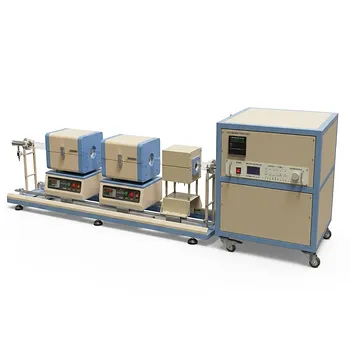
1200C Dual Sliding Tube Furnace with Dual Tubes and Flanges for PECVD Processes

1800C High Temperature Compact Vacuum Tube Furnace with 60mm OD Alumina Tube and Kanthal MoSi2 Heating Elements
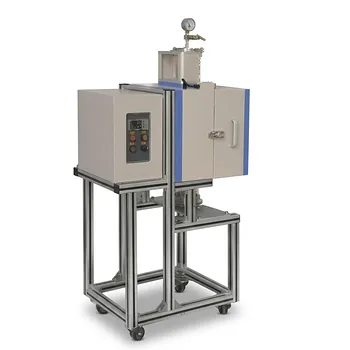
1200°C 5 Inch Vertical Quartz Tube Furnace with Stainless Steel Vacuum Flanges

High Temperature 1700C Tube Furnace with High Vacuum Turbomolecular Pump System and Multi Channel Mass Flow Controller Gas Mixer

High Temperature 1700C Benchtop Tube Furnace with 5 Inch Heating Zone High Purity Alumina Tube and Vacuum Sealing Flanges
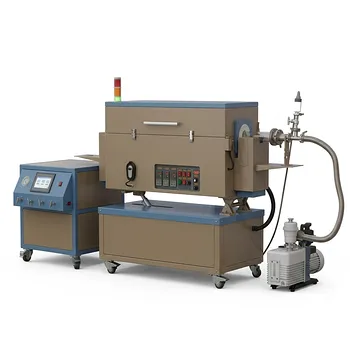
5 Inch Three Zone Rotary Tube Furnace with Integrated Gas Delivery System and 1200C Capability for Advanced Material CVD Processing
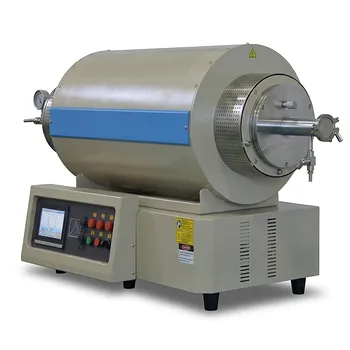
1200C Max Three Zone Tube Furnace 6 Inch OD Max with Tube and Flange
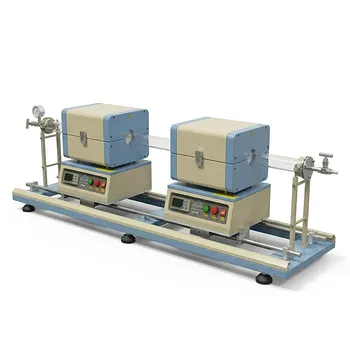
1200C Max Dual Sliding Tube Furnace with 50 mm Tube Flanges for CVD
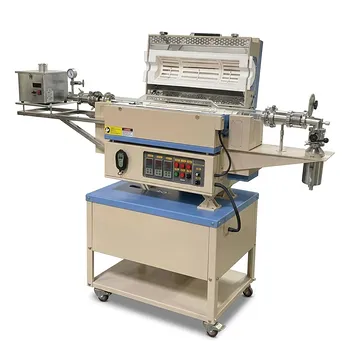
5 Inch Rotary Tube Furnace with Automatic Feeding and Receiving System 1200C Three Zone CVD Powder Processing
1200C Three Zone Split Vertical Tube Furnace 4 Inch Quartz Tube Stainless Steel Vacuum Flanges
24 Inch Three Zone Split Tube Furnace with Optional Quartz Tube and Vacuum Flange System for High Temperature Material Synthesis