What technical advantages does an organic source Bubbler offer over solid sources? Precision CVD & Process Consistency
Updated 3 months ago
Organic source bubblers represent a significant leap in precision for 2D chalcogenide synthesis. By utilizing liquid metal-organic precursors and carrier gas bubbling, these systems provide a constant vapor pressure that traditional solid powders cannot match. This allows for superior control over the chemical vapor deposition (CVD) environment, ensuring that material properties remain uniform across multiple growth cycles.
The primary advantage of an organic source bubbler is the elimination of the "source depletion effect," providing a stable feeding flux and long-term process consistency that is unattainable with solid sublimation methods.
The Challenge of Solid Source Sublimation
Inconsistent Evaporation Rates
Traditional 2D chalcogenide growth often relies on solid powders that sublimate upon heating. As the growth process continues, the surface area of the solid powder changes, leading to a fluctuating evaporation rate.
The Impact of Source Depletion
As a solid source is depleted, the amount of precursor reaching the reaction zone diminishes. This inherent defect makes it nearly impossible to maintain a constant feeding flux, resulting in thickness variations and poor repeatability between batches.
Engineering Precision through Liquid Precursors
Constant Vapor Pressure
Organic source bubblers utilize liquid metal-organic precursors maintained at a precisely controlled temperature. Because the precursor is in liquid form, the carrier gas interacts with a consistent medium, ensuring the vapor pressure remains stable regardless of how much liquid remains in the vessel.
Enhanced Transport Stability
By bubbling a carrier gas through the liquid, the system creates a saturated vapor that is transported to the reaction zone. This method decouples the source amount from the delivery rate, allowing for high-precision feeding flux throughout the entire lifespan of the precursor.
Superior Long-Term Consistency
For materials science research, the ability to replicate results is paramount. The bubbler method ensures that the chemical potential of the precursor remains identical from the first minute of growth to the last, enabling the production of large-scale, high-quality 2D crystals.
Understanding the Trade-offs
Increased System Complexity
Switching to an organic bubbler requires a more sophisticated hardware setup compared to simple powder heating. This includes mass flow controllers (MFCs), heated delivery lines to prevent condensation, and specialized sealed canisters.
Precursor Sensitivity and Cost
Metal-organic precursors used in bubblers are often more expensive than raw elemental powders. Additionally, these precursors can be highly reactive to air or moisture, requiring rigorous leak-testing and specialized handling protocols to ensure safety and purity.
How to Apply This to Your Project
Optimizing Your Growth Strategy
Deciding between a bubbler and a solid source depends on your specific research requirements and infrastructure. Consider the following goals when choosing your delivery method:
- If your primary focus is process repeatability: Transition to an organic bubbler to ensure a stable feeding flux and identical growth conditions across multiple runs.
- If your primary focus is rapid, low-cost prototyping: Stick with solid powder sources, which offer a simpler setup for quick "proof of concept" experiments where long-term consistency is less critical.
- If your primary focus is large-area uniformity: Utilize the bubbler system to maintain the precise precursor-to-chalcogen ratios necessary for suppressing defects over large substrates.
By mastering the delivery of precursors via organic bubblers, you move from unpredictable sublimation to a controlled, repeatable chemical process.
Summary Table:
| Feature | Organic Source Bubbler (Liquid) | Solid Source (Powder) |
|---|---|---|
| Feeding Flux | Constant & stable vapor pressure | Fluctuating due to surface area changes |
| Process Control | High precision via carrier gas/MFCs | Manual temperature-dependent sublimation |
| Repeatability | Superior; no source depletion effect | Poor; inconsistent batch-to-batch results |
| Uniformity | Excellent across large substrates | Variations common as source depletes |
| Complexity | High (requires heated lines & MFCs) | Low (simple heating setup) |
| Best For | High-end R&D and large-scale synthesis | Rapid, low-cost prototyping |
Elevate Your Material Research with THERMUNITS Precision Solutions
Achieving flawless 2D chalcogenide growth requires more than just high temperatures—it demands absolute control. THERMUNITS is a leading manufacturer of high-temperature laboratory equipment, specialized in providing the stability and precision needed for cutting-edge material science and industrial R&D.
Whether you are scaling up with advanced CVD/PECVD systems or need reliable Tube, Vacuum, or Atmosphere furnaces, our thermal processing solutions are engineered to eliminate variables and ensure repeatable results. From Muffle furnaces and Rotary kilns to specialized Hot Press and Vacuum Induction Melting (VIM) units, we provide the tools that turn complex research into consistent reality.
Ready to optimize your lab’s thermal processing? Contact our technical experts today to discuss how our customized heating solutions can enhance your project’s efficiency and output.
References
- Zhepeng Zhang, Andrew J. Mannix. Chemically Tailored Growth of 2D Semiconductors via Hybrid Metal–Organic Chemical Vapor Deposition. DOI: 10.1021/acsnano.4c02164
Mentioned Products
- 12 Zone Ultra Long Split Tube Furnace with 20 Foot Quartz Tube and 1100C Max Temperature
- High Temperature Rocking Tube Furnace with Quartz Tube and Vacuum Flange for Materials Synthesis
- 1100C High Pressure Rocking Tube Furnace with 2 Inch Super Alloy Processing Tube for Material Synthesis
- High Temperature Hydrogen Atmosphere Box Furnace 1650C Max Reducing Environment Material Synthesis System 8x8x8 Chamber
- 5 Inch Three Zone Rotary Tube Furnace with Integrated Gas Delivery System and 1200C Capability for Advanced Material CVD Processing
People Also Ask
- What is the role of a long heating zone in tube furnaces for permeation experiments? Achieve Thermal Stability
- What are the technical advantages of using a multi-zone independently controlled tube furnace in the modified USP process?
- What is the role of a multi-zone tube furnace in material science research? Mastering Precise Temperature Gradients
- Role of multi-zone tube furnaces in CVD growth of 2D materials? Optimize Precise Single-Crystal Thermal Control.
- How does a multi-zone tube furnace facilitate the synthesis of two-dimensional alpha-Ga2Se3 crystals? Precision Growth

Tech Team · ThermUnits
Last updated on Jun 03, 2026
Related Products
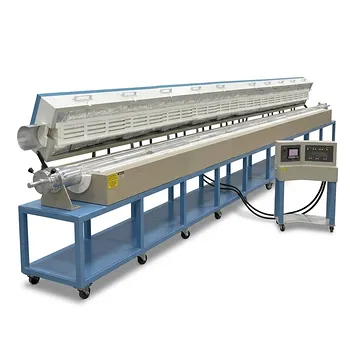
12 Zone Ultra Long Split Tube Furnace with 20 Foot Quartz Tube and 1100C Max Temperature
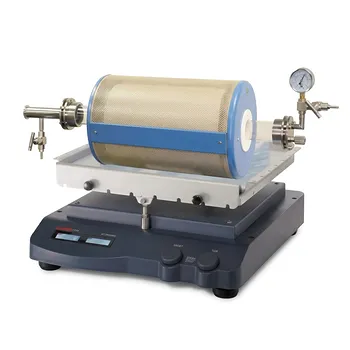
High Temperature Rocking Tube Furnace with Quartz Tube and Vacuum Flange for Materials Synthesis
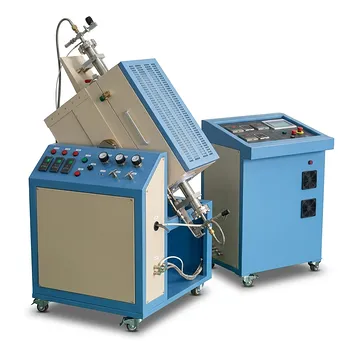
1100C High Pressure Rocking Tube Furnace with 2 Inch Super Alloy Processing Tube for Material Synthesis
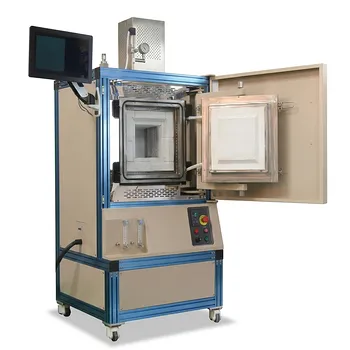
High Temperature Hydrogen Atmosphere Box Furnace 1650C Max Reducing Environment Material Synthesis System 8x8x8 Chamber
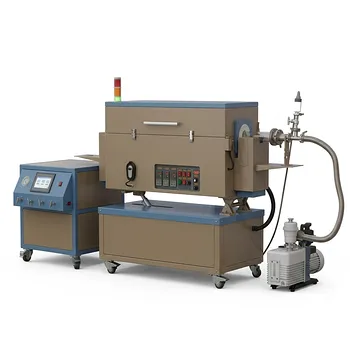
5 Inch Three Zone Rotary Tube Furnace with Integrated Gas Delivery System and 1200C Capability for Advanced Material CVD Processing
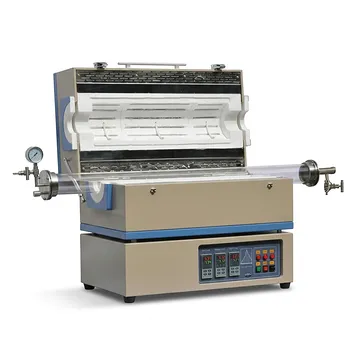
24 Inch Three Zone Split Tube Furnace with Optional Quartz Tube and Vacuum Flange System for High Temperature Material Synthesis
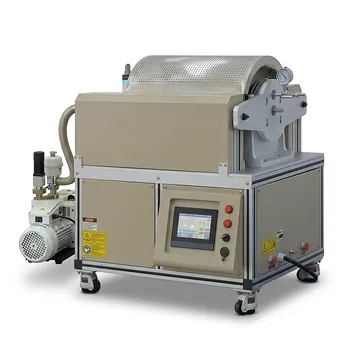
Automated 1200 C Tube Furnace for AI Material Research with 6 Inch OD and Sliding Flange
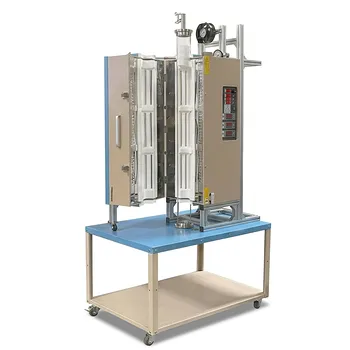
1200C Three Zone Split Vertical Tube Furnace 4 Inch Quartz Tube Stainless Steel Vacuum Flanges
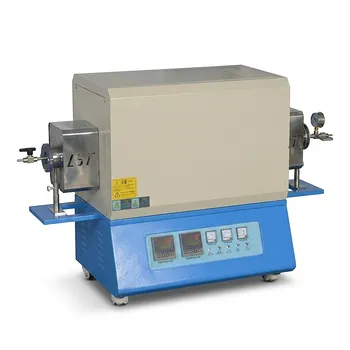
High Temperature Dual Zone Vacuum Tube Furnace for Material Research and CVD Processing

Compact Vertical Split Quartz Tube Furnace with Stainless Steel Vacuum Flanges for Rapid Thermal Quenching and Controlled Atmosphere Material Processing
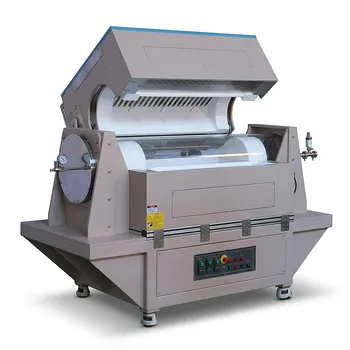
Three Zone Tube Furnace with 11 Inch or 15 Inch Quartz Tube and Hinged Flanges for Vacuum Atmosphere Heat Treatment

Vertical 1700C Vacuum and Atmosphere Tube Furnace with 80mm Alumina Tube
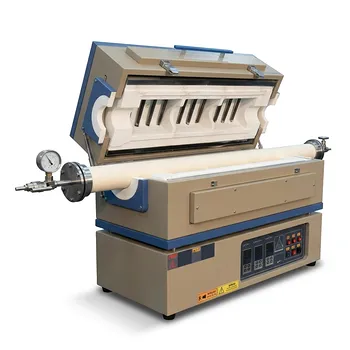
1600C Three Zone Split Tube Furnace with Alumina Tube and Vacuum Flange
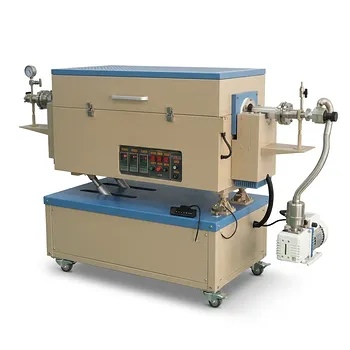
Three Zone Rotary Tube Furnace for High Temperature Powder Processing and Material Research
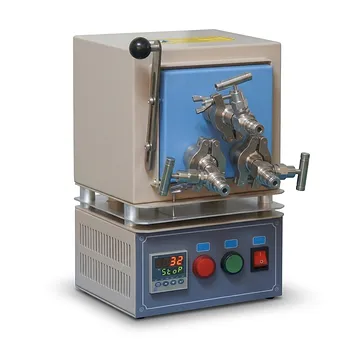
Triple Tube Compact Hybrid Muffle Furnace 1000C High Vacuum Thermal Processing System
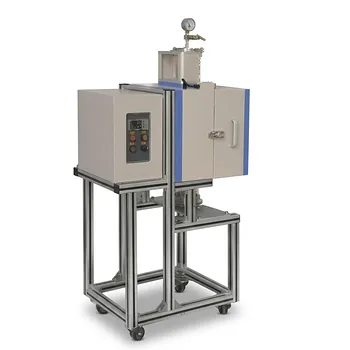
1200°C 5 Inch Vertical Quartz Tube Furnace with Stainless Steel Vacuum Flanges

High Temperature 1700C Six Zone Split Tube Furnace with Alumina Tube and Water Cooled Flanges
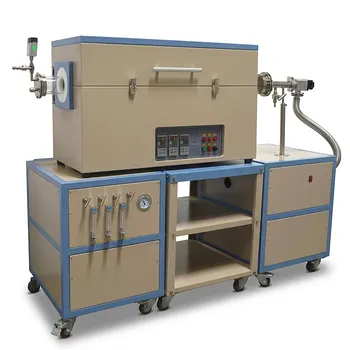
Three Zone Quartz Tube Furnace with 3 Channel Gas Mixer Vacuum Pump and Anti Corrosive Vacuum Gauge
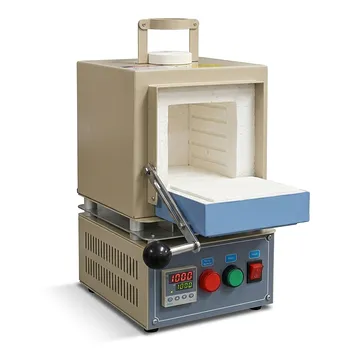
Compact 1000C Muffle Furnace with Programmable Controller and 2 Inch Top Port for Vacuum and Atmosphere Material Research