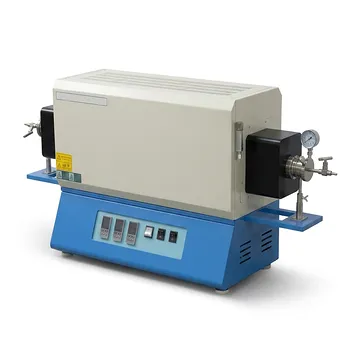
Role of multi-zone tube furnaces in CVD growth of 2D materials? Optimize Precise Single-Crystal Thermal Control.
Updated 3 months ago
A multi-zone tube furnace is the primary tool for engineering the precise thermal environments required for Chemical Vapor Deposition (CVD). By providing independent temperature control across distinct sections of the reaction tube, it allows researchers to decouple the sublimation of raw precursors from the actual growth process on the substrate. This spatial thermal management is the foundation for producing high-quality, large-area single-crystal 2D materials like molybdenum disulfide (MoS₂) and tungsten disulfide (WS₂).
The core role of a multi-zone furnace is to establish a spatial temperature gradient that independently regulates precursor vapor pressure, transport stability, and surface reaction kinetics. This decoupling is essential for achieving the uniform nucleation and epitaxial growth required for single-crystal architectures.
Decoupling Precursor Sublimation from Reaction Kinetics
Independent Temperature Zones for Diverse Precursors
In a standard CVD process, different precursors (such as sulfur powder and metal oxides) have vastly different evaporation temperatures. A multi-zone furnace allows the sulfur source, the metal source (e.g., MoO₃ or WO₃), and the substrate to each sit in a zone tuned to its specific thermal requirement.
Maintaining Stable Precursor Flux
Precise heating programs ensure that precursors volatilize at their optimal saturated vapor pressures. This creates a stable flux of gaseous reactants, which is then carried by inert gases like Argon or Hydrogen toward the substrate for a controlled chemical reaction.
Regulating Stoichiometric Ratios
For complex crystals like In₂Se₃, maintaining a precise ratio of elements is critical. Multi-zone control allows for a low-temperature upstream zone (e.g., 300°C for Selenium) and a high-temperature downstream zone (e.g., 660°C for Indium Oxide), ensuring both materials reach the substrate in the exact proportions needed for high-quality crystal growth.
Strategic Control of 2D Crystal Morphology
Managing Nucleation and Grain Size
By adjusting the temperature gradient, researchers can precisely regulate the grain size, shape, and density of the 2D materials. High-precision control over the vapor partial pressure within the reaction chamber is fundamental to preventing unwanted random nucleation and encouraging the growth of large, single-crystal domains.
Controlling Layer Thickness and Bilayer Growth
The thermal field can be manipulated to lower the nucleation barrier for specific structures. For example, maintaining a high tungsten source vapor pressure during the initial stages can make bilayer growth thermodynamically more favorable than monolayer growth, allowing for the synthesis of multi-layered 2D materials.
Ensuring Film Uniformity and Quality
Horizontal tube furnaces provide the thermal energy necessary for coordination reactions directly on the substrate surface. This environment, combined with high vacuum capabilities, ensures atmospheric purity and temperature field uniformity, which are vital for the deposition of ultra-thin halide perovskites or metal-organic framework (MOF) films.
Understanding the Trade-offs
The Complexity of Thermal Calibration
While multi-zone furnaces offer superior control, they introduce significant calibration complexity. Changes in gas flow rates can shift the actual thermal profile inside the tube away from the set points of the heating elements, requiring rigorous testing to map the true "internal" temperature gradient.
Thermal Lag and Cross-Talk
Heat from a high-temperature zone can bleed into an adjacent lower-temperature zone, a phenomenon known as thermal cross-talk. This can lead to the unintended over-evaporation of sensitive precursors if the furnace zones are not properly insulated or spaced.
Precursor Depletion and Gradient Shift
As precursors sublimate, their surface area changes, which can alter the vapor pressure over time even if the temperature remains constant. Managing this "moving target" requires sophisticated heating programs rather than static temperature settings.
How to Optimize Your CVD Growth Goals
Making the Right Choice for Your Project
Achieving high-quality 2D crystals requires aligning your furnace configuration with your specific material requirements.
- If your primary focus is large-area single crystals: Utilize the multi-zone gradient to minimize nucleation density, allowing individual grains to grow larger before coalescing.
- If your primary focus is precise layer control (e.g., Bilayers): Implement specific heating programs to maintain high precursor flux during the initial growth stage to overcome the thermodynamic barriers of secondary layers.
- If your primary focus is complex stoichiometry (e.g., In₂Se₃ or Perovskites): Use independent upstream zones to separately volatilize metal halides and chalcogens at their respective optimal vapor pressures.
The multi-zone tube furnace transforms CVD from a simple heating process into a sophisticated tool for molecular-level architecture.
Summary Table:
| Feature | Function in CVD Process | Impact on 2D Materials |
|---|---|---|
| Independent Zones | Decouples sublimation from growth | Optimizes vapor pressure for different precursors |
| Thermal Gradient | Regulates nucleation and grain size | Ensures large-area single-crystal uniformity |
| Stoichiometric Control | Maintains precise element ratios | Facilitates complex growth (e.g., In₂Se₃, Perovskites) |
| Stable Flux Regulation | Controls gaseous reactant delivery | Prevents random nucleation and unwanted layers |
Precision Thermal Solutions for Material Innovation
High-quality 2D material synthesis requires the rigorous thermal management that only specialized equipment can provide. THERMUNITS is a leading manufacturer of high-temperature laboratory equipment tailored for material science and industrial R&D. We empower researchers with the tools needed to achieve molecular-level architecture in crystal growth.
Our comprehensive range of thermal processing solutions includes:
- Advanced CVD/PECVD Systems & Multi-Zone Tube Furnaces
- Muffle, Vacuum, and Atmosphere Furnaces
- Rotary and Hot Press Furnaces
- Vacuum Induction Melting (VIM) & Electric Rotary Kilns
- High-Performance Thermal Elements
Unlock the full potential of your CVD research. Contact THERMUNITS today to consult with our experts on a tailored heat treatment solution that enhances your lab's efficiency and material quality.
References
- Wenhao Li, Wei Kong. 3D Crystal Construction by Single‐Crystal 2D Material Supercell Multiplying. DOI: 10.1002/advs.202411656
Mentioned Products
- Ten Zone Multi Orientation Laboratory Tube Furnace for 1200C High Temperature Gradient Thermal Processing
- 1200°C 10-Zone Split Tube Furnace with Horizontal and Vertical Mounting for Multi-Zone Thermal Gradients and Large Diameter Material Processing
- Seven Zone 1200C Split Tube Furnace with Precision Temperature Controller and Quick Flange Vacuum System
- Six Zone Split Tube Furnace 1.8 Meter Quartz Tube 1200C High Temperature Heating System
- Five Zone 1200C High Temperature Split Tube Furnace with Touch Screen Controller and Multiple Quartz Tube Options
People Also Ask
- What are the technical advantages of using a multi-zone independently controlled tube furnace in the modified USP process?
- How does a multi-zone tube furnace facilitate the synthesis of two-dimensional alpha-Ga2Se3 crystals? Precision Growth
- What is the role of a multi-zone tube furnace in material science research? Mastering Precise Temperature Gradients
- What key role does a laboratory high-temperature tube furnace play in the production of carbon nanofibers? Guide
- Why use a tube furnace for oxygen annealing LaCrO3/LaMnO3? Optimize Phase Transition & Magnetic Performance.

Tech Team · ThermUnits
Last updated on Jun 03, 2026
Related Products
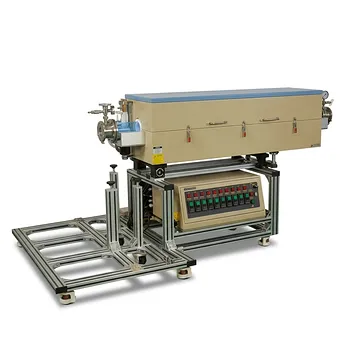
Ten Zone Multi Orientation Laboratory Tube Furnace for 1200C High Temperature Gradient Thermal Processing
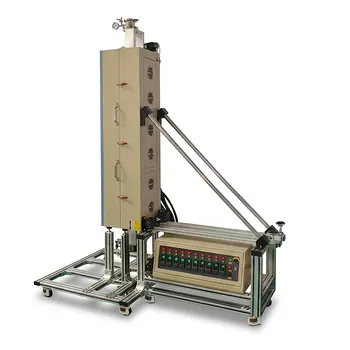
1200°C 10-Zone Split Tube Furnace with Horizontal and Vertical Mounting for Multi-Zone Thermal Gradients and Large Diameter Material Processing
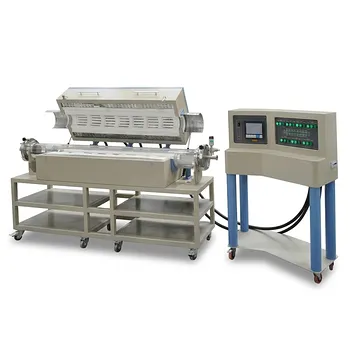
Seven Zone 1200C Split Tube Furnace with Precision Temperature Controller and Quick Flange Vacuum System
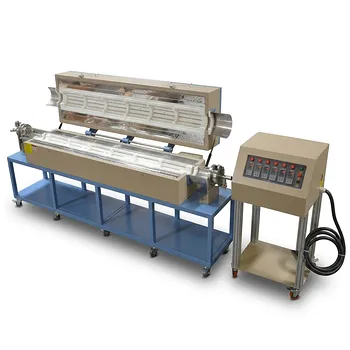
Six Zone Split Tube Furnace 1.8 Meter Quartz Tube 1200C High Temperature Heating System
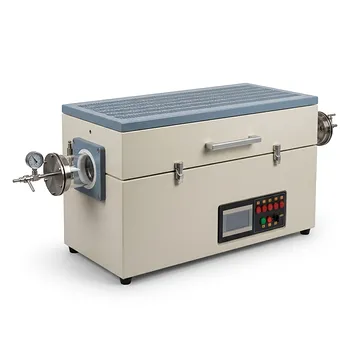
Five Zone 1200C High Temperature Split Tube Furnace with Touch Screen Controller and Multiple Quartz Tube Options
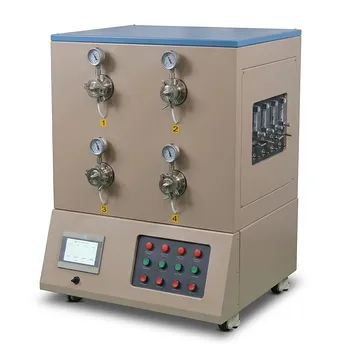
High Throughput 1200C Four Channel Tube Furnace with 3 Inch Quartz Tubes for Multi Zone Annealing and Material Research
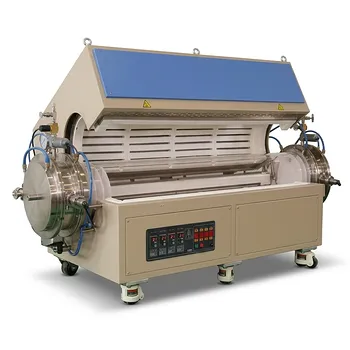
1200C Max Four Zone Split Tube Furnace with Optional Large Diameter Quartz Tubes
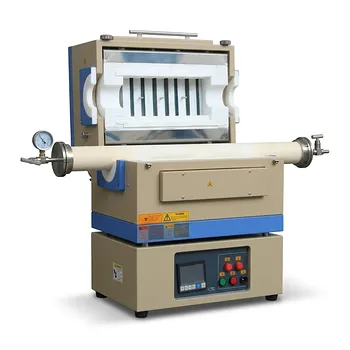
1500C Eight Zone Split Tube Furnace for Thermal Gradient Processing and Advanced Material Research
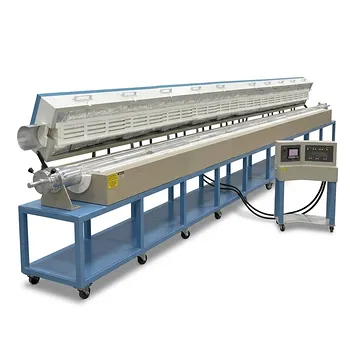
12 Zone Ultra Long Split Tube Furnace with 20 Foot Quartz Tube and 1100C Max Temperature
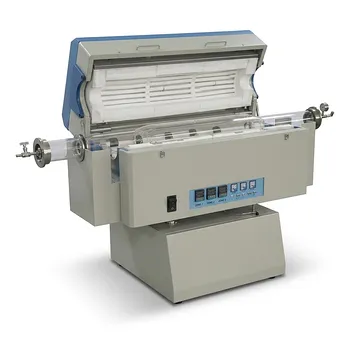
Large Three Temperature Zone Rotating Tube Furnace for High Uniformity Material Sintering
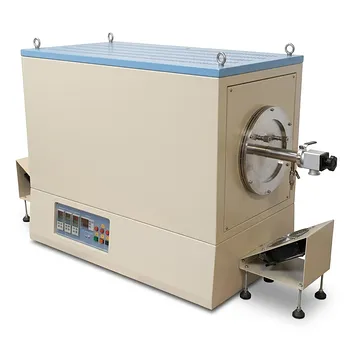
Four Zone Tube Furnace 1100C with 600mm Large Diameter Quartz Tube and Vacuum Flanges
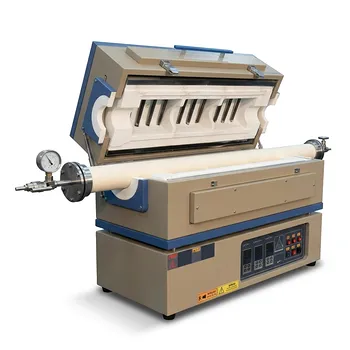
1600C Three Zone Split Tube Furnace with Alumina Tube and Vacuum Flange
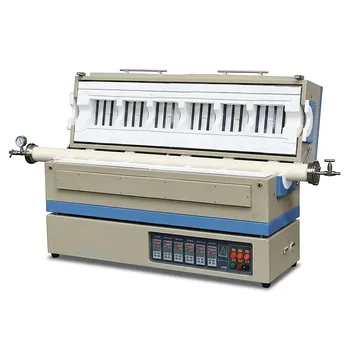
Six Zone Split Tube Furnace with Alumina Tube and Vacuum Flanges for 1500C High Temperature Thermal Processing and CVD
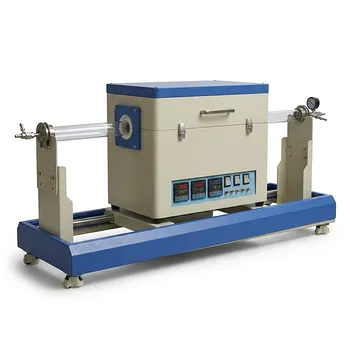
Double Temperature Zone Double Cover Tube Furnace for High Temperature CVD and Vacuum Annealing
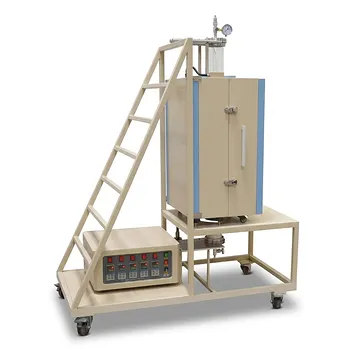
Five Zone Split Vertical Tube Furnace 1200C Max with 4 Inch Quartz Tube and Stainless Steel Vacuum Flanges

High Temperature 1700C Six Zone Split Tube Furnace with Alumina Tube and Water Cooled Flanges
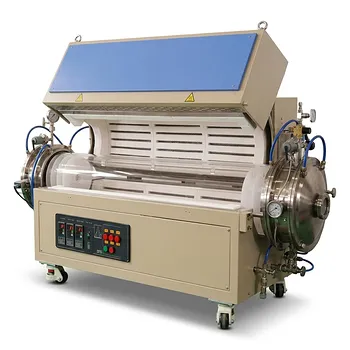
High Temperature Three Zone Split Tube Furnace 1200C Max 35.4 Inch Heating Length 8 Inch ID Tube
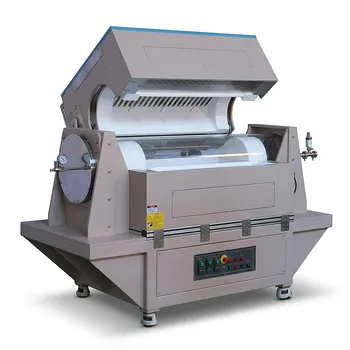
Three Zone Tube Furnace with 11 Inch or 15 Inch Quartz Tube and Hinged Flanges for Vacuum Atmosphere Heat Treatment
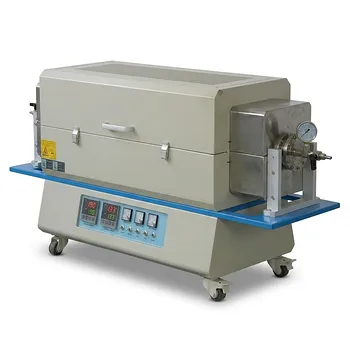
High Temperature Elongated Dual Zone Tube Furnace for Material Research and Industrial Heat Treatment