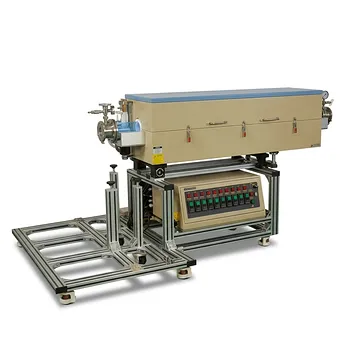
What is the role of a long heating zone in tube furnaces for permeation experiments? Achieve Thermal Stability
Updated 3 months ago
A long heating zone is the foundation of thermal stability. In permeation experiments, its primary role is to create a highly uniform isothermal environment, ensuring the entire membrane surface is exposed to an identical temperature. This design eliminates axial temperature gradients, allowing researchers to collect high-fidelity data that corresponds to a single, precise setpoint.
By positioning a relatively short permeation membrane within the center of a much longer heating zone, you isolate the specimen from the cooling effects found at the furnace ends. This configuration ensures that the resulting experimental data accurately reflects permeation characteristics at a specific nominal temperature, which is critical for precise mathematical model fitting.
Eliminating Axial Temperature Gradients
The Problem of End Effects
In standard furnace designs, heat naturally escapes through the ends of the tube, creating significant temperature drops near the openings. If a membrane is too close to these ends, different parts of the material will experience different temperatures, "blurring" the experimental results.
Creating a Thermal "Sweet Spot"
A long heating zone extends the stable temperature region far beyond the physical dimensions of the membrane. By placing the membrane in the dead center of this zone, you ensure it is submerged in a uniform thermal field where fluctuations are negligible.
Minimizing Thermal Stress
Beyond data accuracy, a uniform field prevents localized "hot spots" or "cold spots" on the membrane. This uniformity reduces uneven thermal expansion, which could otherwise lead to structural leaks or mechanical failure during the heating phase.
Impact on Data and Mathematical Modeling
Establishing a Nominal Temperature
For a mathematical model to be valid, the variables must be tightly controlled. The long heating zone allows you to define a nominal temperature with high confidence, knowing that the entire active area of the experiment is at that exact value.
Enhancing Model Fitting Precision
Permeation rates are often exponentially dependent on temperature (following the Arrhenius equation). Small errors in temperature measurement lead to massive errors in calculated permeation coefficients; therefore, a stable thermal field is mandatory for accurate model fitting.
Reducing Data Noise
When temperature is uniform, the measured flux is a pure reflection of the material's properties rather than an average of multiple temperature zones. This leads to cleaner data sets and more reliable conclusions regarding the membrane's performance.
Understanding the Trade-offs
Energy and Resource Overhead
Using a large furnace to heat a small membrane is inherently energy-inefficient. The increased thermal mass of a long heating zone also means the system will take significantly longer to reach equilibrium compared to a compact setup.
Equipment Footprint and Cost
Furnaces with extended heating zones are physically larger and more expensive to procure and maintain. You must balance the need for extreme thermal precision against the available laboratory space and budget constraints.
How to Apply This to Your Project
When designing or selecting a furnace for permeation studies, your choice should align with your specific research requirements:
- If your primary focus is High-Precision Modeling: Utilize a heating zone at least three to four times the length of your membrane to ensure the specimen sits entirely within the central isothermal region.
- If your primary focus is Rapid Material Screening: You may opt for a shorter zone to allow for faster heating and cooling cycles, provided you can tolerate a slightly higher margin of error in temperature uniformity.
Maintaining a uniform thermal field is the most effective way to transform raw permeation data into a definitive scientific model.
Summary Table:
| Key Feature | Experimental Benefit | Impact on Research |
|---|---|---|
| Isothermal Environment | Eliminates axial temperature gradients | Ensures high-fidelity data at a precise setpoint |
| Thermal "Sweet Spot" | Isolates specimen from cooling at furnace ends | Critical for accurate Arrhenius model fitting |
| Uniform Thermal Field | Reduces localized thermal stress | Prevents structural leaks and mechanical failure |
| Increased Thermal Mass | Maintains extreme thermal stability | Reduces data noise for reliable material conclusions |
Elevate Your Research Precision with THERMUNITS
Precise thermal control is the backbone of successful material science and industrial R&D. At THERMUNITS, we specialize in manufacturing high-performance laboratory equipment designed to meet the rigorous demands of permeation studies and advanced heat treatments.
Whether you need a Tube Furnace with an extended heating zone for isothermal stability or specialized Vacuum, Atmosphere, CVD/PECVD, or Hot Press furnaces, our solutions provide the uniformity and reliability your data depends on.
Why partner with THERMUNITS?
- Expert Engineering: Tailored heating zone designs to eliminate axial gradients.
- Comprehensive Range: From Muffle and Dental furnaces to Vacuum Induction Melting (VIM) and Electric Rotary Kilns.
- Proven Quality: High-grade thermal elements and robust construction for long-term R&D use.
Ready to optimize your thermal processing? Contact our technical team today to discuss your specific experiment requirements and find the perfect furnace for your laboratory.
References
- Thomas F. Fuerst, Masashi Shimada. Deuterium Permeation Through a Self-Supported Palladium-Silver Membrane in Helium Gas Mixtures. DOI: 10.1109/tps.2024.3356857
Mentioned Products
- Three Zone Tube Furnace with 24 Inch Heating Length and Hinged Flange Quartz Tube System
- 12 Zone Ultra Long Split Tube Furnace with 20 Foot Quartz Tube and 1100C Max Temperature
- 1200°C Three Zone Split Tube Furnace with 18 Inch Heating Length and Vacuum Flanges
- High Temperature Elongated Dual Zone Tube Furnace for Material Research and Industrial Heat Treatment
- High Temperature Three Zone Split Tube Furnace 1200C Max 35.4 Inch Heating Length 8 Inch ID Tube
People Also Ask
- What is the primary function of a three-zone tube furnace in the synthesis process of corn-derived carbon nanotubes?
- What role does an industrial-grade three-zone tube furnace play in VOx@VACNT synthesis? Precision Phase-State Control
- Why Use a Three-Zone vs. Single-Zone Furnace for Fe-Ni-Cu Diffusion? Key Benefits for Lab Accuracy
- What advantages does a three-zone tube furnace offer for nanoparticle synthesis? Unlock Superior Thermal Precision.
- What role does a 3-zone tube furnace play in CCO ceramic conductivity testing? Ensure Isothermal Precision.

Tech Team · ThermUnits
Last updated on Jun 02, 2026
Related Products
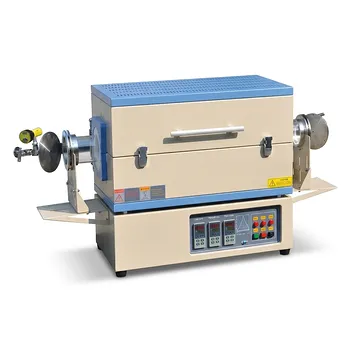
Three Zone Tube Furnace with 24 Inch Heating Length and Hinged Flange Quartz Tube System
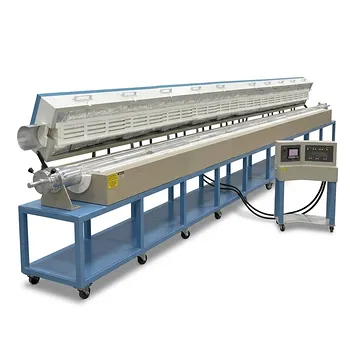
12 Zone Ultra Long Split Tube Furnace with 20 Foot Quartz Tube and 1100C Max Temperature
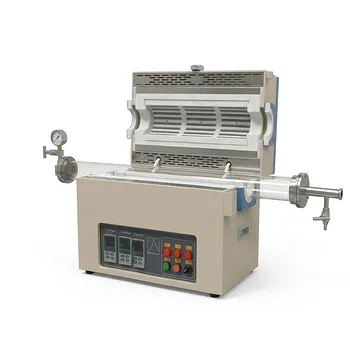
1200°C Three Zone Split Tube Furnace with 18 Inch Heating Length and Vacuum Flanges
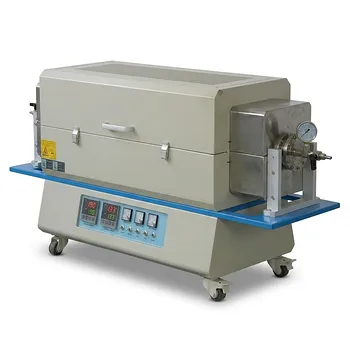
High Temperature Elongated Dual Zone Tube Furnace for Material Research and Industrial Heat Treatment
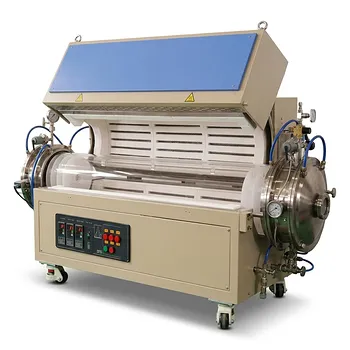
High Temperature Three Zone Split Tube Furnace 1200C Max 35.4 Inch Heating Length 8 Inch ID Tube
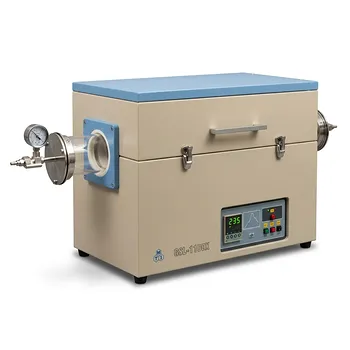
Single Zone Tube Furnace 5 Inch Quartz Tube 36 Inch Heating Zone Vacuum Flanges

Three Zone Tube Furnace with 11 Inch or 15 Inch Quartz Tube and Hinged Flanges for Vacuum Atmosphere Heat Treatment
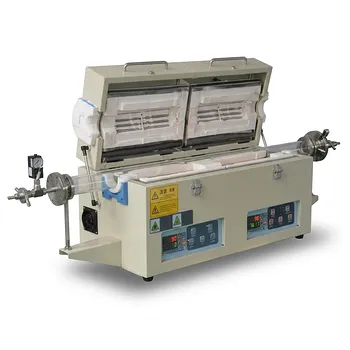
Elongated Two Temperature Zone Pipe Furnace for Industrial Heat Treatment and Material Science Research
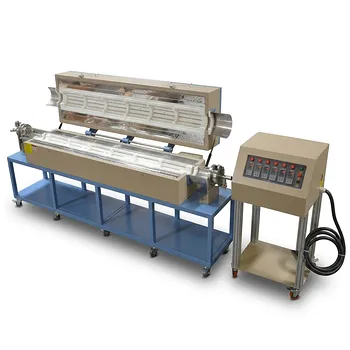
Six Zone Split Tube Furnace 1.8 Meter Quartz Tube 1200C High Temperature Heating System
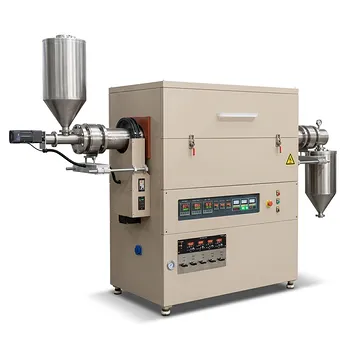
High Temperature Tilting Rotary Tube Furnace with Integrated Mass Flow Control and Multi Zone Heating
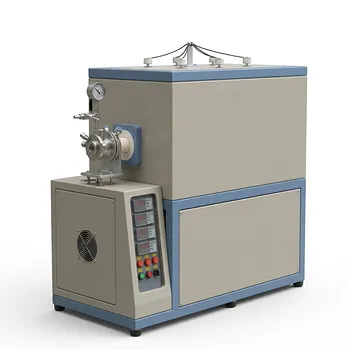
High Temperature 1700C Three Zone Tube Furnace with Alumina Tube 50mm 60mm 80mm OD for Material Research and Industrial Heat Treatment
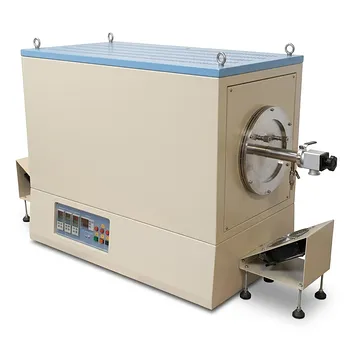
Four Zone Tube Furnace 1100C with 600mm Large Diameter Quartz Tube and Vacuum Flanges
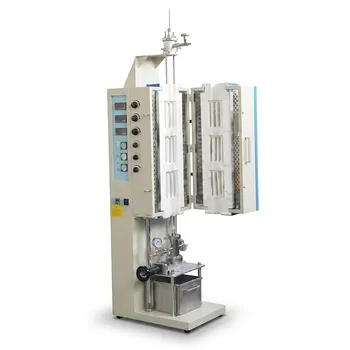
High Temperature Dual Zone Tube Furnace for Material Science Research and Professional Thermal Processing
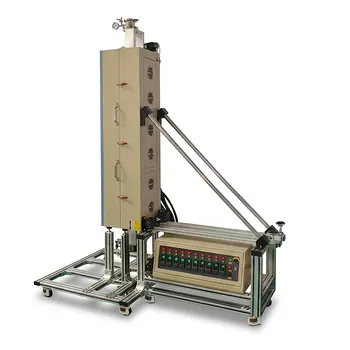
1200°C 10-Zone Split Tube Furnace with Horizontal and Vertical Mounting for Multi-Zone Thermal Gradients and Large Diameter Material Processing
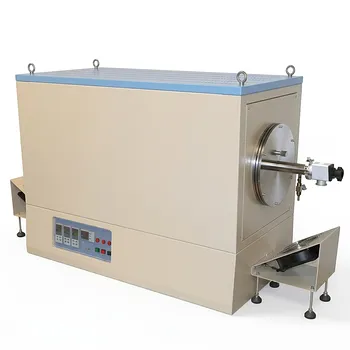
1100°C Three Zone Tube Furnace with 8.5 to 11 Inch OD Quartz Tube and Vacuum Flanges for Large Wafer Processing
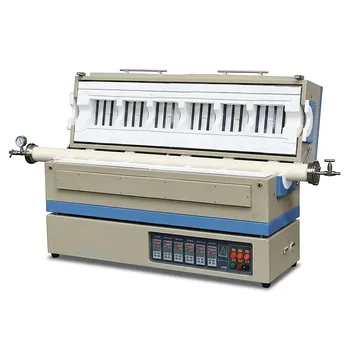
Six Zone Split Tube Furnace with Alumina Tube and Vacuum Flanges for 1500C High Temperature Thermal Processing and CVD
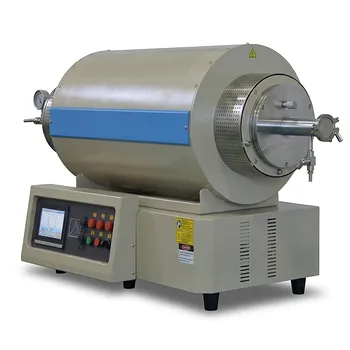
1200C Max Three Zone Tube Furnace 6 Inch OD Max with Tube and Flange
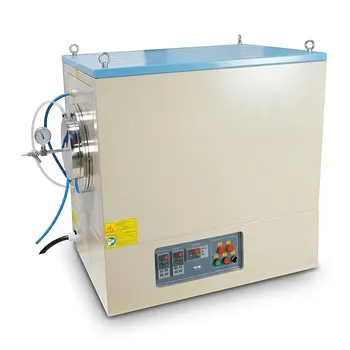
Dual Zone Tube Furnace 1100C with 11 Inch Quartz Tube and Vacuum Flanges for 8 Inch Wafer Processing
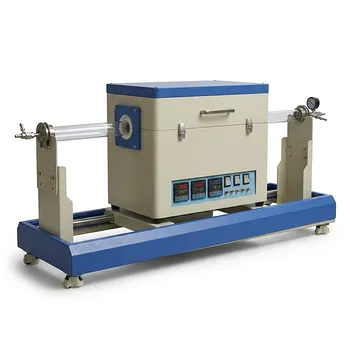
Double Temperature Zone Double Cover Tube Furnace for High Temperature CVD and Vacuum Annealing