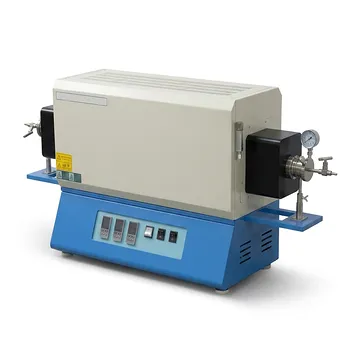
How does a multi-zone tube furnace facilitate the synthesis of two-dimensional alpha-Ga2Se3 crystals? Precision Growth
Updated 3 months ago
The synthesis of two-dimensional (2D) $\alpha$-Ga₂Se₃ relies on the precise thermal management provided by a multi-zone tube furnace. This equipment facilitates growth by establishing independent temperature controls for precursor sublimation and substrate deposition, ensuring that gallium and selenium vapors reach the growth site at the exact concentrations and temperatures required for high-quality crystallization.
A multi-zone tube furnace enables the production of 2D $\alpha$-Ga₂Se₃ by decoupling the sublimation of precursors from the crystallization process. By creating a stable, spatial temperature gradient, the furnace allows for the precise control of vapor pressures and stoichiometric ratios necessary for defect-free crystal growth.
Managing Differential Precursor Sublimation
Independent Heating Circuits
A multi-zone furnace incorporates two or more independently controlled heating circuits along the length of the quartz tube. This allows researchers to set a low temperature for high-volatility precursors (like Selenium) and a higher temperature for less volatile precursors or the reaction zone.
Optimizing Saturated Vapor Pressure
By maintaining separate thermal zones, the furnace ensures that each precursor volatilizes at its optimal saturated vapor pressure. This prevents one material from exhausting too quickly while another has barely begun to sublimate, which is critical for maintaining the correct chemical balance.
Achieving Stoichiometric Precision
Precise thermal field management allows for the fine-tuning of the stoichiometric ratio between Gallium and Selenium. This balance is mandatory to form the specific $\alpha$-phase of Ga₂Se₃ and avoid the formation of unwanted secondary phases or metallic impurities.
Governing the Deposition Environment
Creating the Thermal Gradient
The furnace creates a temperature gradient between the central heating zone and the downstream deposition zone. This gradient acts as the driving force for Physical Vapor Deposition (PVD), causing the vaporized precursors to move toward the cooler substrate where they can nucleate.
Controlled Nucleation and Growth
High-quality 2D flakes require a stable thermal environment at the substrate surface to prevent rapid, disordered crystallization. The multi-zone setup allows for a specific "deposition temperature" that is lower than the sublimation point but high enough to allow atoms to migrate into a perfect crystal lattice.
Facilitating Epitaxial Alignment
The furnace's ability to hold the downstream zone at a constant, precise temperature is essential for epitaxial growth. This ensures that the $\alpha$-Ga₂Se₃ crystals align correctly with the lattice of the substrate, such as mica or sapphire, leading to large-area, single-crystal flakes.
Understanding the Trade-offs
Thermal Cross-Talk Between Zones
One significant challenge is thermal interference, where heat from a high-temperature zone bleeds into an adjacent low-temperature zone. This can make it difficult to maintain a sharp temperature step, potentially leading to precursor overheating.
Complexity of Parameter Calibration
Operating a multi-zone furnace requires extensive calibration of gas flow and temperature profiles. Small changes in the distance between zones or the carrier gas velocity can drastically shift the deposition site, leading to inconsistent crystal thickness or quality.
How to Apply This to Your Synthesis Goals
To successfully synthesize $\alpha$-Ga₂Se₃, you must align your furnace configuration with your specific material requirements.
- If your primary focus is crystal purity: Set a strict temperature gradient that favors slow, controlled sublimation to minimize the incorporation of unreacted precursors.
- If your primary focus is large-area coverage: Focus on stabilizing the downstream deposition zone temperature to promote lateral growth over vertical nucleation.
- If your primary focus is phase-controlled growth: Use the multi-zone circuits to precisely hit the specific $\alpha$-phase transition temperature while monitoring the vapor pressure of Selenium.
Mastering the spatial temperature distribution within a multi-zone furnace is the most effective way to transition from bulk material synthesis to the production of high-performance 2D $\alpha$-Ga₂Se₃ crystals.
Summary Table:
| Feature | Role in 2D $\alpha$-Ga₂Se₃ Synthesis |
|---|---|
| Independent Heating Zones | Separates precursor sublimation from deposition for stoichiometric precision. |
| Thermal Gradient Control | Creates the driving force for Physical Vapor Deposition (PVD) toward substrates. |
| Vapor Pressure Management | Optimizes saturation levels of Gallium and Selenium to prevent phase impurities. |
| Stable Deposition Zone | Ensures controlled nucleation and epitaxial alignment for large-area flakes. |
Elevate Your Material Research with THERMUNITS
As a leading manufacturer of high-temperature laboratory equipment, THERMUNITS provides the precision thermal solutions required for advanced material science and industrial R&D. Our specialized Multi-Zone Tube Furnaces, CVD/PECVD systems, and Vacuum Furnaces are engineered to offer the stoichiometric control and stable thermal gradients essential for synthesizing high-quality 2D crystals like $\alpha$-Ga₂Se₃.
Whether you are scaling up production or perfecting thin-film deposition, our team is ready to help you select the ideal heat treatment equipment tailored to your specific research goals.
Ready to optimize your synthesis process? Contact THERMUNITS today to get a expert consultation!
References
- Nan Zhou, Tianyou Zhai. Precise Synthesis and Broadband Photoresponse of Two‐Dimensional Intrinsic Vacancy Semiconductor. DOI: 10.1002/sstr.202400062
Mentioned Products
- Ten Zone Multi Orientation Laboratory Tube Furnace for 1200C High Temperature Gradient Thermal Processing
- 1200°C 10-Zone Split Tube Furnace with Horizontal and Vertical Mounting for Multi-Zone Thermal Gradients and Large Diameter Material Processing
- Seven Zone 1200C Split Tube Furnace with Precision Temperature Controller and Quick Flange Vacuum System
- Six Zone Split Tube Furnace 1.8 Meter Quartz Tube 1200C High Temperature Heating System
- Five Zone 1200C High Temperature Split Tube Furnace with Touch Screen Controller and Multiple Quartz Tube Options
People Also Ask
- What are the technical advantages of using a multi-zone independently controlled tube furnace in the modified USP process?
- Role of multi-zone tube furnaces in CVD growth of 2D materials? Optimize Precise Single-Crystal Thermal Control.
- What is the role of a multi-zone tube furnace in material science research? Mastering Precise Temperature Gradients
- What key role does a laboratory high-temperature tube furnace play in the production of carbon nanofibers? Guide
- Why use a tube furnace for oxygen annealing LaCrO3/LaMnO3? Optimize Phase Transition & Magnetic Performance.

Tech Team · ThermUnits
Last updated on Jun 03, 2026
Related Products
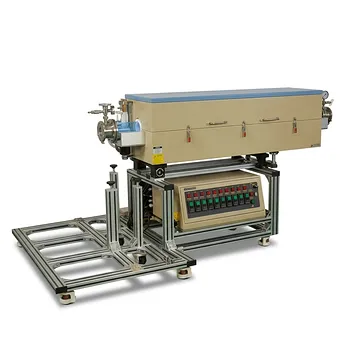
Ten Zone Multi Orientation Laboratory Tube Furnace for 1200C High Temperature Gradient Thermal Processing
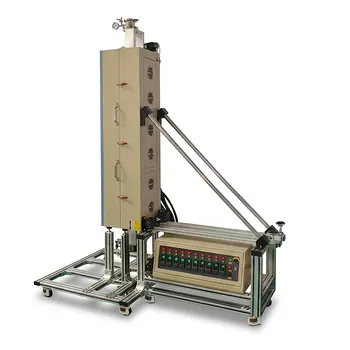
1200°C 10-Zone Split Tube Furnace with Horizontal and Vertical Mounting for Multi-Zone Thermal Gradients and Large Diameter Material Processing
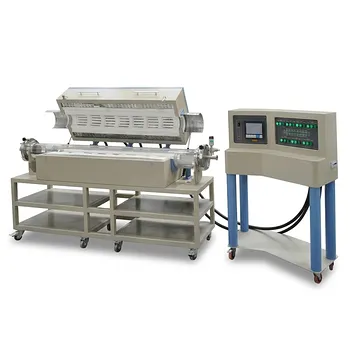
Seven Zone 1200C Split Tube Furnace with Precision Temperature Controller and Quick Flange Vacuum System
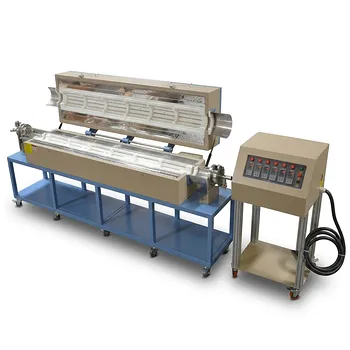
Six Zone Split Tube Furnace 1.8 Meter Quartz Tube 1200C High Temperature Heating System
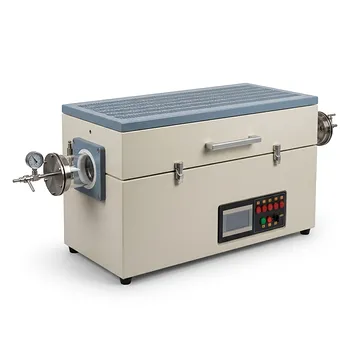
Five Zone 1200C High Temperature Split Tube Furnace with Touch Screen Controller and Multiple Quartz Tube Options
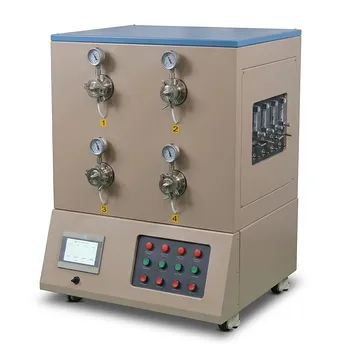
High Throughput 1200C Four Channel Tube Furnace with 3 Inch Quartz Tubes for Multi Zone Annealing and Material Research
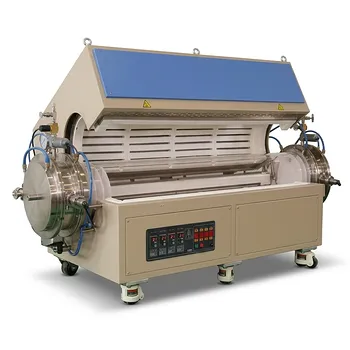
1200C Max Four Zone Split Tube Furnace with Optional Large Diameter Quartz Tubes
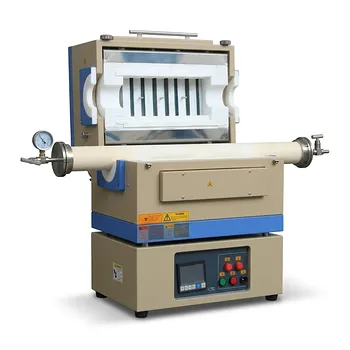
1500C Eight Zone Split Tube Furnace for Thermal Gradient Processing and Advanced Material Research
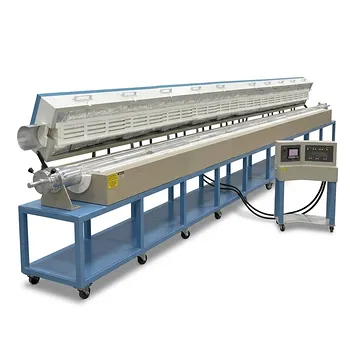
12 Zone Ultra Long Split Tube Furnace with 20 Foot Quartz Tube and 1100C Max Temperature
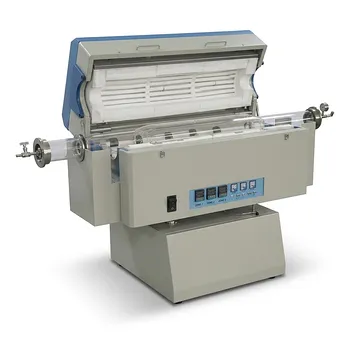
Large Three Temperature Zone Rotating Tube Furnace for High Uniformity Material Sintering
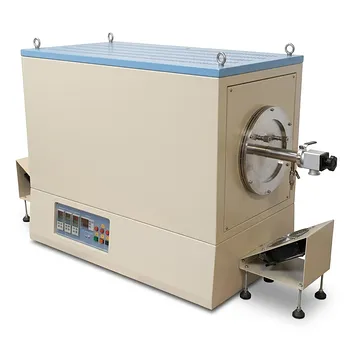
Four Zone Tube Furnace 1100C with 600mm Large Diameter Quartz Tube and Vacuum Flanges
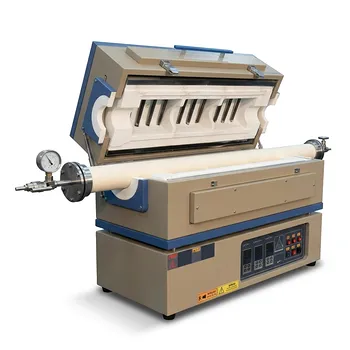
1600C Three Zone Split Tube Furnace with Alumina Tube and Vacuum Flange
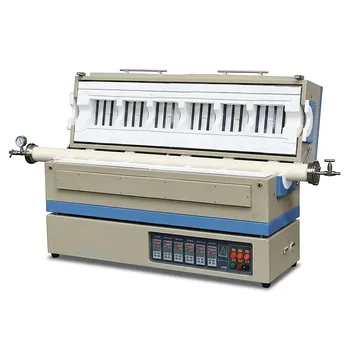
Six Zone Split Tube Furnace with Alumina Tube and Vacuum Flanges for 1500C High Temperature Thermal Processing and CVD
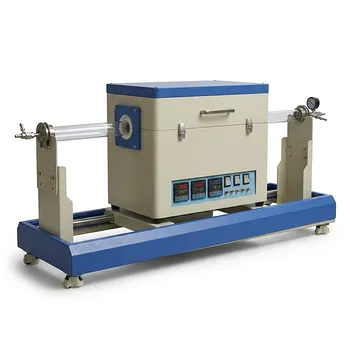
Double Temperature Zone Double Cover Tube Furnace for High Temperature CVD and Vacuum Annealing
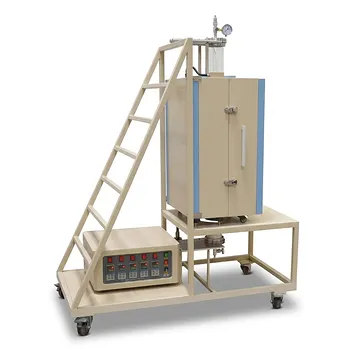
Five Zone Split Vertical Tube Furnace 1200C Max with 4 Inch Quartz Tube and Stainless Steel Vacuum Flanges

High Temperature 1700C Six Zone Split Tube Furnace with Alumina Tube and Water Cooled Flanges
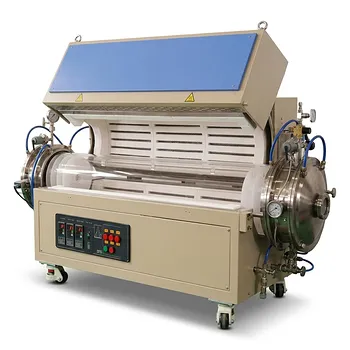
High Temperature Three Zone Split Tube Furnace 1200C Max 35.4 Inch Heating Length 8 Inch ID Tube
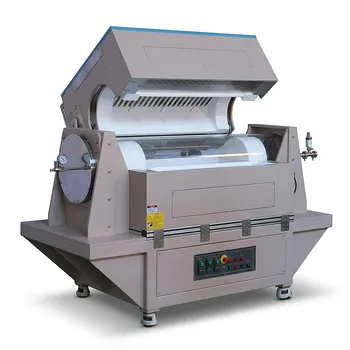
Three Zone Tube Furnace with 11 Inch or 15 Inch Quartz Tube and Hinged Flanges for Vacuum Atmosphere Heat Treatment
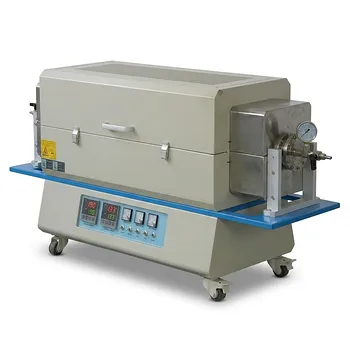
High Temperature Elongated Dual Zone Tube Furnace for Material Research and Industrial Heat Treatment