Why are metallic titanium sheets placed inside the furnace during contact angle measurements? Ensure Atmosphere Purity
Updated 3 months ago
Metallic titanium sheets are used as a "getter" material to ensure the purity of the furnace atmosphere. In high-temperature experiments involving liquid medium carbon steel, these sheets chemically react with and capture residual oxygen and nitrogen. This process maintains an ultra-low oxygen partial pressure, preventing surface oxidation that would otherwise invalidate wettability and surface tension measurements.
Core Takeaway: Titanium acts as a sacrificial deoxidizer that purifies the inert gas environment, ensuring that contact angle measurements reflect the true interaction between the liquid steel and the substrate rather than the effects of surface contamination.
The High Sensitivity of Liquid Carbon Steel
Oxygen's Influence on Surface Tension
Liquid medium carbon steel is exceptionally sensitive to its environment, particularly regarding oxygen content. Even trace amounts of oxygen can significantly lower the surface tension of the liquid metal.
Impact on Wettability Data
If oxygen is present, it accumulates at the interface between the liquid metal and the atmosphere. This alters the contact angle, leading to inaccurate data that does not represent the intrinsic properties of the steel.
Prevention of Surface Oxides
Without a purification mechanism, a thin oxide film can form on the surface of the melt. This film acts as a physical barrier, fundamentally changing how the liquid interacts with the substrate during the measurement.
The Role of Titanium as a "Getter"
Chemical Affinity for Oxygen
Titanium has an extremely high chemical affinity for oxygen and nitrogen at elevated temperatures. When placed inside the furnace, it effectively "scrubs" the atmosphere by reacting with these gases before they can reach the steel sample.
Maintaining Ultra-Low Partial Pressure
By acting as a sacrificial deoxidizer, the titanium sheets maintain a state of ultra-low oxygen partial pressure. This ensures that the argon or vacuum environment remains pure throughout the heating and cooling cycles.
Purifying the Protective Atmosphere
In systems using argon as a protective gas, the titanium sponge or sheet provides a secondary purification step. It captures any residual impurities that may have bypassed the initial gas filtration system.
Impact on Experimental Integrity
Accuracy of Surface Tension Measurements
By eliminating oxygen interference, researchers can obtain reproducible results. This allows for the precise calculation of surface tension and work of adhesion, which are critical for metallurgical modeling.
Isolation of Corrosion Mechanisms
In studies involving the dissolution of steel into other alloys, titanium ensures that the results are not skewed by oxidation-induced corrosion. This allows for the clear observation of pure chemical interactions between the liquid phases.
Consistency Across Temperature Gradients
As the furnace heats up, the reactivity of titanium increases, providing continuous protection. This is vital during the critical transition phases where the steel melts and becomes most vulnerable to atmospheric contamination.
Understanding the Trade-offs and Limitations
Finite Capacity of the Getter
Titanium sheets have a limited surface area and a finite capacity for absorption. Once the surface of the titanium is fully oxidized, it loses its effectiveness as a getter, potentially leading to atmospheric drift in long-duration experiments.
Temperature-Dependent Activation
Titanium only becomes an effective oxygen getter at high temperatures. During the initial ramp-up phase, there may be a brief window where the atmosphere is not yet fully purified, requiring careful control of the heating rate.
Potential for Cross-Contamination
If the titanium sheets are placed too close to the sample, there is a theoretical risk of vapor-phase transport. In extreme vacuum conditions, titanium atoms could potentially deposit onto the sample, though this is rarely an issue in standard contact angle setups.
How to Optimize Atmosphere Control
Implementation Strategy for High-Temperature Testing
To achieve the most accurate wettability results, the placement and volume of the getter material must be carefully considered.
- If your primary focus is Maximum Data Accuracy: Place fresh titanium sheets in multiple locations within the hot zone to ensure the lowest possible oxygen partial pressure near the sample.
- If your primary focus is Long-Duration Corrosion Studies: Use a high-surface-area titanium sponge rather than sheets to increase the total oxygen-trapping capacity of the system.
- If your primary focus is Cost-Efficiency: Reserve the use of titanium getters for alloys with high oxygen sensitivity, such as medium carbon or high-chromium steels.
Proper use of titanium getters transforms a standard furnace into a precision environment capable of capturing the true interfacial physics of liquid steel.
Summary Table:
| Feature | Description |
|---|---|
| Primary Role | Acts as a "getter" material to capture residual O₂ and N₂ |
| Mechanism | Sacrificial deoxidation to maintain ultra-low oxygen partial pressure |
| Main Benefit | Prevents surface oxidation for accurate wettability and surface tension data |
| Application | High-temperature research on liquid medium carbon steel and alloys |
| Key Limitation | Finite absorption capacity; requires high-temperature activation |
Elevate Your Research Precision with THERMUNITS
In high-temperature material science, the difference between a breakthrough and a failed experiment lies in atmosphere control. THERMUNITS is a leading manufacturer of high-temperature laboratory equipment specifically designed for demanding industrial R&D.
We offer a comprehensive range of thermal processing solutions tailored for material science, including:
- Furnaces: Muffle, Vacuum, Atmosphere, Tube, Rotary, and Hot Press models.
- Specialized Systems: CVD/PECVD systems, Vacuum Induction Melting (VIM) furnaces, and Electric Rotary Kilns.
- Components: Dental Furnaces, Thermal Elements, and custom heat treatment hardware.
Ready to achieve superior heat treatment and accurate experimental results? Our experts are here to help you select the ideal equipment for your specific metallurgical needs.
Contact THERMUNITS Today to discuss your project and discover how our advanced thermal solutions can enhance your laboratory's efficiency.
References
- Julian Cejka, Susanne Michelic. Influence of Tramp Elements on Surface Properties of Liquid Medium‐Carbon Steels. DOI: 10.1002/srin.202300715
Mentioned Products
- Compact Vertical Split Quartz Tube Furnace with Stainless Steel Vacuum Flanges for Rapid Thermal Quenching and Controlled Atmosphere Material Processing
- High Temperature 1700C Vertical Tube Furnace for Powder Spherification and Material Sintering
- 1700C Compact Hybrid Furnace with Dual Layer Box Sintering and Controlled Atmosphere Alumina Tubes
- 1100°C High Temperature Quartz Chamber Furnace 8 Inch OD with 7.6 Liter Capacity and Vacuum Atmosphere Capability
- High Temperature Muffle Furnace with Alloy Chamber for Debinding and Sintering Applications
People Also Ask
- Why integrate a vertical split tube furnace with hydraulic loading for HSECC? Essential for In-Situ Fire Simulation.
- What is the role of a split vertical tube furnace during flash sintering of 8YSZ and 20SDC? Master Ultra-Fast R&D
- What is the primary engineering purpose for using a customized ventilation hood when operating a split tube furnace? RCF Safety
- Why is a quartz tube furnace necessary for phosphorus-doped MoS2/GO preparation? Ensure Purity & Precise Synthesis
- What is the primary function of a Quartz Tube Furnace in ZnO VLS growth? Master High-Precision Nanowire Synthesis

Tech Team · ThermUnits
Last updated on Jun 03, 2026
Related Products

Compact Vertical Split Quartz Tube Furnace with Stainless Steel Vacuum Flanges for Rapid Thermal Quenching and Controlled Atmosphere Material Processing

High Temperature 1700C Vertical Tube Furnace for Powder Spherification and Material Sintering
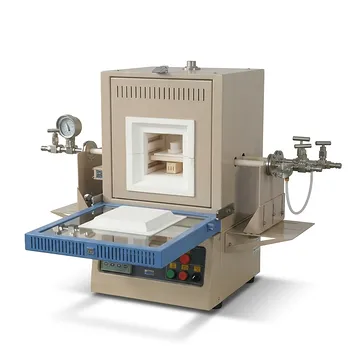
1700C Compact Hybrid Furnace with Dual Layer Box Sintering and Controlled Atmosphere Alumina Tubes
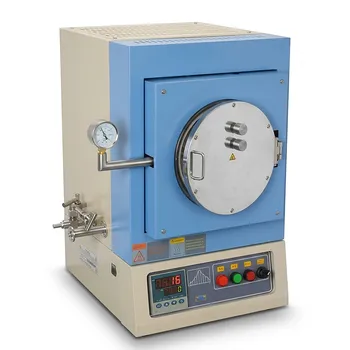
1100°C High Temperature Quartz Chamber Furnace 8 Inch OD with 7.6 Liter Capacity and Vacuum Atmosphere Capability
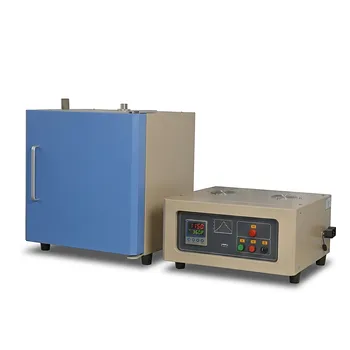
High Temperature Muffle Furnace with Alloy Chamber for Debinding and Sintering Applications
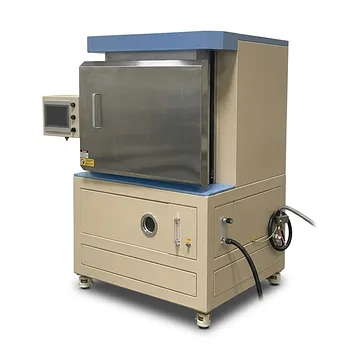
1650C High Temperature Atmosphere Controlled Box Furnace with 65L Chamber for Advanced Material Sintering and Industrial Heat Treatment
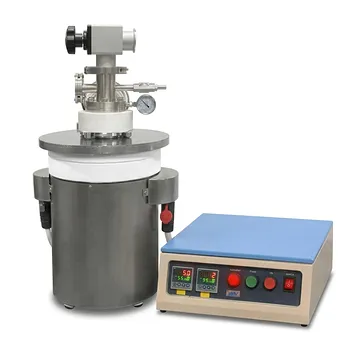
1100C High Temperature Vacuum Crucible Furnace with Quartz Chamber for Thermal Processing and Sintering
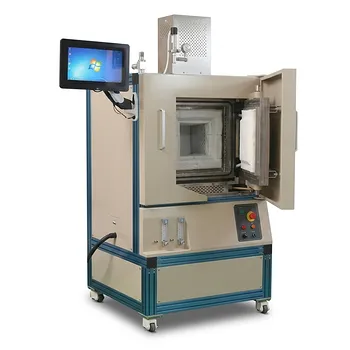
High Temperature Oxygen and Inert Atmosphere Controlled Furnace 8 Liter 1700C Sintering System for Advanced Materials RD

High Temperature 1700C Tube Furnace with High Vacuum Turbomolecular Pump System and Multi Channel Mass Flow Controller Gas Mixer

1200°C 5 Inch Vertical Quartz Tube Furnace with Stainless Steel Vacuum Flanges
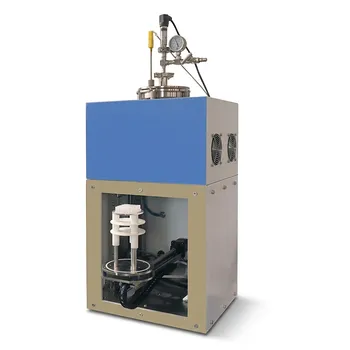
Rapid Thermal Processing RTP Atmosphere Controlled Bottom Loading Furnace 1100C High Throughput 50C per Second Heating Rate
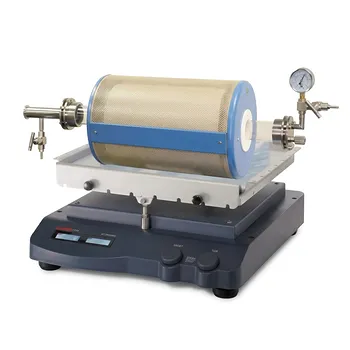
High Temperature Rocking Tube Furnace with Quartz Tube and Vacuum Flange for Materials Synthesis
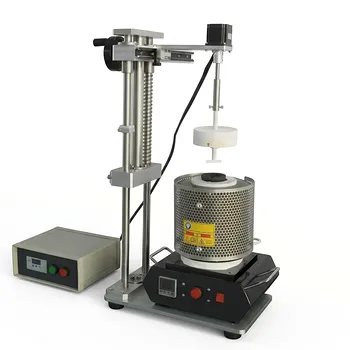
1100C Crucible Melting Furnace with Stirring Function for Glovebox and Air Sensitive Alloy Research
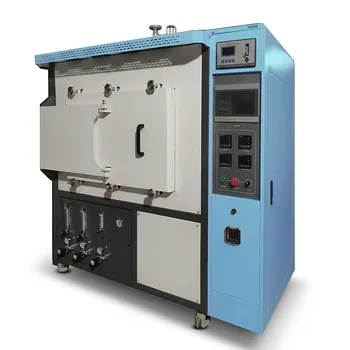
Roller Table Atmosphere Furnace 1500C High Temperature Battery Material Sintering System 112L Capacity
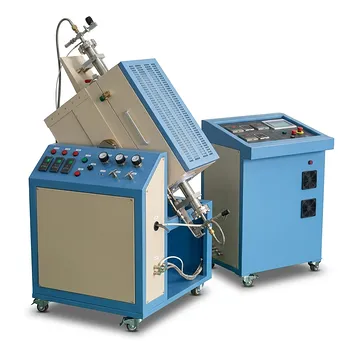
1100C High Pressure Rocking Tube Furnace with 2 Inch Super Alloy Processing Tube for Material Synthesis

1100C Tube Furnace with Vacuum Flange and Programmable Temperature Controller for Material Science and Industrial Heat Treatment
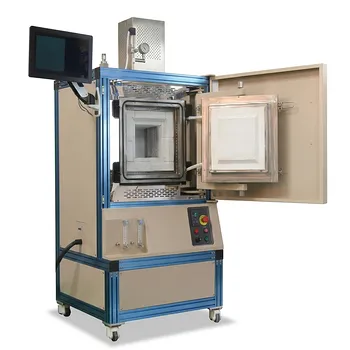
High Temperature Hydrogen Atmosphere Box Furnace 1650C Max Reducing Environment Material Synthesis System 8x8x8 Chamber
1200C Hydrogen Atmosphere Box Furnace with 5 Heated Sides and 64L Chamber
High Temperature Tilting Rotary Tubular Furnace for Continuous Powder Thermal Processing and Controlled Atmosphere Sintering
