Why does the cooling rate of a tube furnace significantly impact WS2 thin films? Master Stress for High-Quality Growth
Updated 3 months ago
The cooling rate of a tube furnace is the critical factor in managing the thermal expansion mismatch between the thin film and its substrate. A controlled cooling program, typically maintained at a rate of 10°C per minute, allows for the gradual release of internal stresses that accumulate as the materials contract. Without this precision, the resulting $WS_2$ films are prone to mechanical failure, such as cracking or delamination, which compromises their electronic and optical properties.
Core Takeaway: Controlled cooling is essential to prevent the physical destruction of $WS_2$ thin films caused by differing thermal expansion coefficients. By mitigating internal stress, the furnace protects the lattice structure and ensures the material remains stable and functional for high-end applications.
The Mechanism of Thermal Stress
Differing Thermal Expansion Coefficients
Tungsten disulfide ($WS_2$) and the substrates they are grown on, such as silicon dioxide ($SiO_2$), possess different Thermal Expansion Coefficients (TEC). As the furnace cools from high growth temperatures (often exceeding 800°C), the film and the substrate contract at different rates.
The Impact of Rapid Contraction
If the cooling process is too fast or uncontrolled, the substrate may shrink faster or slower than the $WS_2$ layer. This discrepancy creates intense internal stress at the interface, which forces the thin film to either buckle or tear to relieve the pressure.
Stress Relaxation through Programming
A programmed cooling rate provides the necessary time for the atomic lattice to adjust to these dimensional changes. This "relaxation" prevents the accumulation of the tensile or compressive forces that lead to macroscopic film failure.
Protecting Structural and Functional Integrity
Preventing Cracking and Peeling
The most immediate benefit of a stable cooling rate is the prevention of delamination (peeling) or surface cracking. Maintaining film continuity is vital for large-area monolayer growth, where even microscopic fractures can break electrical pathways.
Reducing Defect Density
Beyond visible cracks, improper cooling can introduce point defects and dislocations within the $WS_2$ crystal lattice. A slow, controlled return to room temperature preserves the integrity of the lattice, which directly correlates to higher electron mobility.
Ensuring Performance Stability
For $WS_2$ to be effective in optoelectronic and sensor applications, its crystalline quality must be uniform. Stable cooling ensures that the final product exhibits the predictable electronic bandgap required for light-emitting or sensing functions.
Understanding the Trade-offs
Natural Cooling vs. Programmed Cooling
Relying on "natural cooling"—simply turning off the furnace—often results in a non-linear temperature drop that is too aggressive in the initial stages. While programmed cooling takes longer and consumes more power, it is the only way to guarantee the repeatable production of high-quality films.
Throughput vs. Quality
In a production environment, there is a temptation to increase the cooling rate to shorten cycle times. However, saving time during the cooling phase frequently leads to a higher yield loss due to compromised film integrity, ultimately increasing the cost per functional device.
Atmospheric Considerations during Cooling
During the cooling phase, the argon gas flow and vacuum levels must remain stable. If the cooling rate is slowed significantly, the film remains at elevated temperatures longer, increasing the risk of unintended oxidation if the furnace atmosphere is not perfectly controlled.
Applying Cooling Strategies to Your Process
To achieve the best results with $WS_2$ thin films, the cooling strategy must be tailored to the specific goals of your synthesis.
- If your primary focus is device-grade optoelectronics: Use a strict programmed cooling rate of 10°C/min or slower to minimize lattice defects and maximize carrier mobility.
- If your primary focus is high-surface-area catalysts: You may prioritize growth orientation (vertical vs. horizontal) over cooling stress, though stable cooling remains necessary to prevent the film from shedding during handling.
- If your primary focus is large-scale monolayer production: Ensure the cooling program is synchronized with stable inert gas flow to maintain film continuity across the entire substrate surface.
Mastering the cooling rate transforms a tube furnace from a simple heating element into a precision instrument for material integrity.
Summary Table:
| Key Factor | Impact on WS2 Quality | Recommended Approach |
|---|---|---|
| Thermal Expansion | Prevents cracking and delamination | Programmed cooling (10°C/min) |
| Lattice Integrity | Reduces point defects and dislocations | Slow, stable temperature return |
| Atmosphere Control | Prevents unintended film oxidation | Stable argon flow during cooling |
Enhance Your Research with THERMUNITS Precision Furnaces
THERMUNITS is a premier manufacturer of high-temperature laboratory equipment tailored for material science and industrial R&D. Our advanced Tube Furnaces and CVD/PECVD systems offer the exact cooling rate programming necessary to maintain the structural integrity of WS2 and other 2D materials.
From Muffle and Vacuum furnaces to specialized Rotary, Hot Press, and Dental furnaces, we provide comprehensive thermal solutions—including VIM systems and high-quality thermal elements—to drive your innovation.
Ready to achieve superior film quality? Contact our experts today to discuss your custom heat treatment needs!
References
- Yuxin Zhang, Yue Wang. WS2 with Controllable Layer Number Grown Directly on W Film. DOI: 10.3390/nano14161356
Mentioned Products
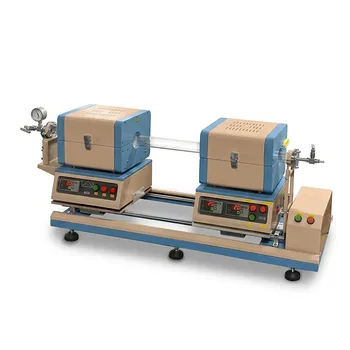
- 1200C Sliding Internal Crucible Tube Furnace for Controlled Atmosphere Thin Film Deposition and Material Sublimation Research
- Two Zones CSS Furnace for Rapid Thermal Processing Thin Film Coating 3 Inch Diameter 650C
- Automated Sliding Tube Furnace for Fast Heating and Cooling 2 Inch OD 1100C Max
- Dual Zone Split Tube Quenching Furnace with High Vacuum Atmosphere Control and Rapid Cooling
- 1100°C Large Diameter Quartz Tube Furnace with 24 Inch Heating Zone and Water Cooled Flanges
People Also Ask
- What are the advantages of a tube atmosphere furnace for CdS thin films? Enhance Crystallinity & Prevent Sulfur Loss
- Why is an atmosphere tube furnace considered core equipment for CVD? Essential for Precision Thin-Film & 2D Materials
- Why is an atmosphere-controlled tube furnace required for the annealing of Sb2S3? Optimize Semi-conductor Performance
- How does a slanted tube furnace contribute to the crystal growth of Sr4Os3O12? Optimize Thermal Fields and Purity
- Why must deposited LiMn2O4 thin films undergo annealing in a digital tube furnace? Unlock High-Performance Cathodes

Tech Team · ThermUnits
Last updated on Jun 02, 2026
Related Products
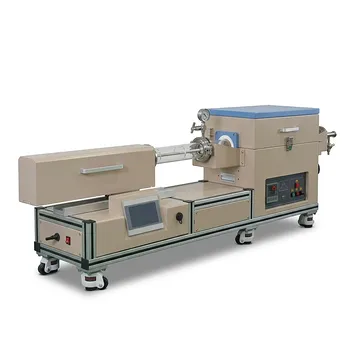
1200C Sliding Internal Crucible Tube Furnace for Controlled Atmosphere Thin Film Deposition and Material Sublimation Research
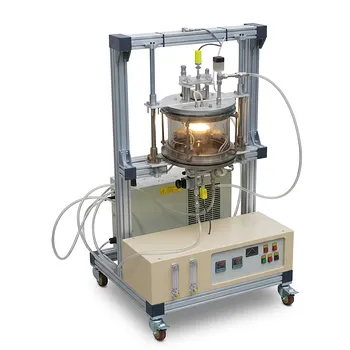
Two Zones CSS Furnace for Rapid Thermal Processing Thin Film Coating 3 Inch Diameter 650C
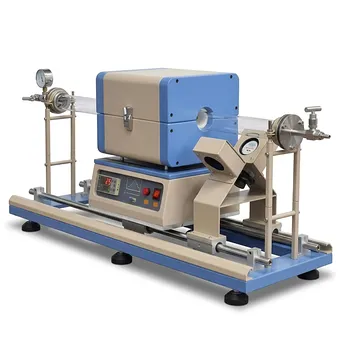
Automated Sliding Tube Furnace for Fast Heating and Cooling 2 Inch OD 1100C Max
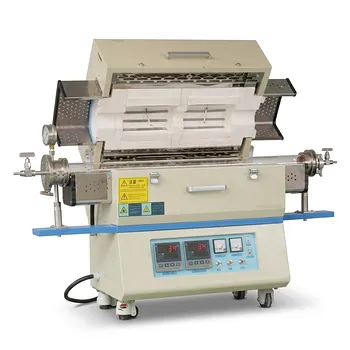
Dual Zone Split Tube Quenching Furnace with High Vacuum Atmosphere Control and Rapid Cooling
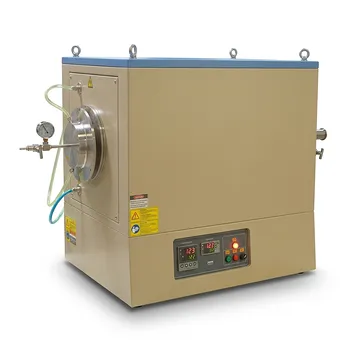
1100°C Large Diameter Quartz Tube Furnace with 24 Inch Heating Zone and Water Cooled Flanges
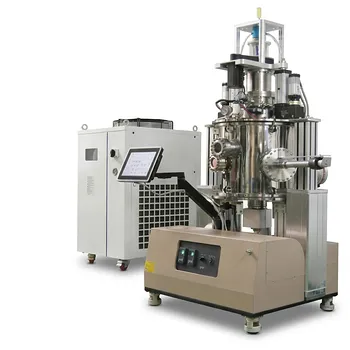
950C Rapid Thermal Processing Furnace for 12 Inch Wafer CSS Coating with Rotating Substrate Holder
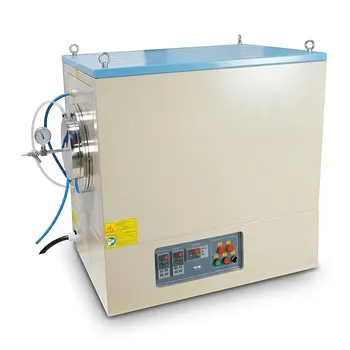
Dual Zone Tube Furnace 1100C with 11 Inch Quartz Tube and Vacuum Flanges for 8 Inch Wafer Processing
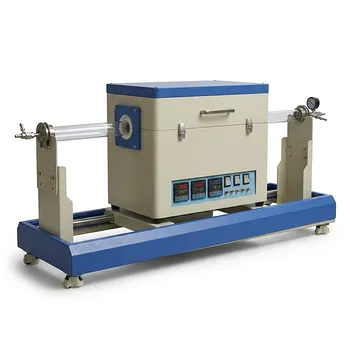
Double Temperature Zone Double Cover Tube Furnace for High Temperature CVD and Vacuum Annealing
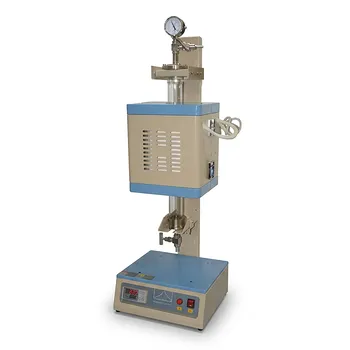
Compact Vertical Split Quartz Tube Furnace with Stainless Steel Vacuum Flanges for Rapid Thermal Quenching and Controlled Atmosphere Material Processing
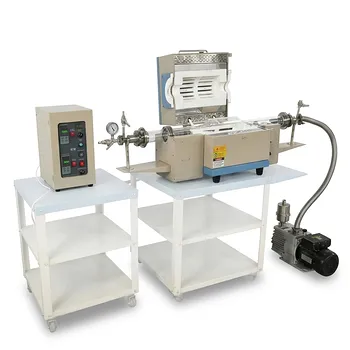
Two Zone Rotary Tube Furnace for Powder CVD Coating and Core Shell Material Synthesis 1100C
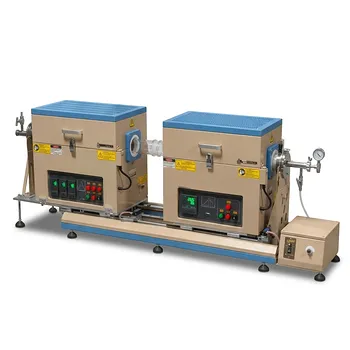
1200C Dual Temperature Zone Slidable Tube Furnace for 2D Material Growth and TCVD Synthesis
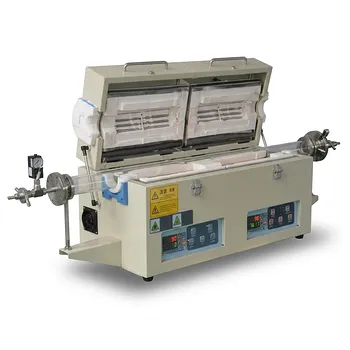
Elongated Two Temperature Zone Pipe Furnace for Industrial Heat Treatment and Material Science Research
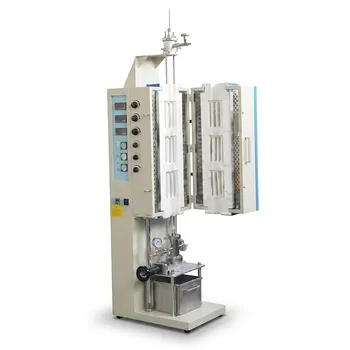
High Temperature Dual Zone Tube Furnace for Material Science Research and Professional Thermal Processing
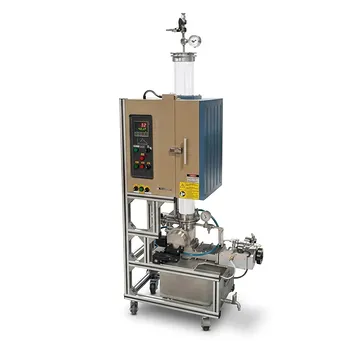
1200C High Temperature Atmosphere Controlled Vertical Quenching Tube Furnace with 4 Inch Quartz Tube
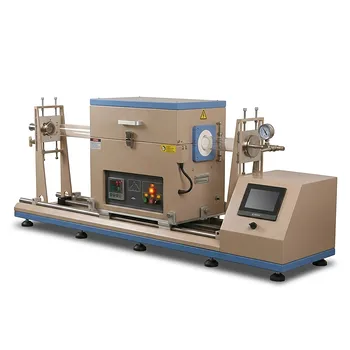
1200C Sliding Tube Furnace for Rapid Thermal Processing and CVD Graphene Growth with 100mm OD Capacity
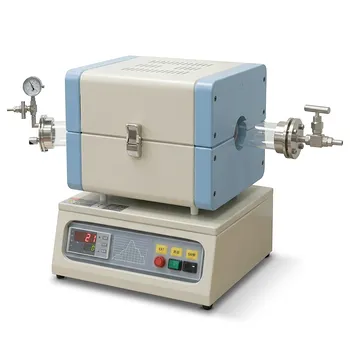
1200C Tube Furnace with Internal Magnetic Sample Sliding for Direct Vaporizing Deposition and Rapid Thermal Processing
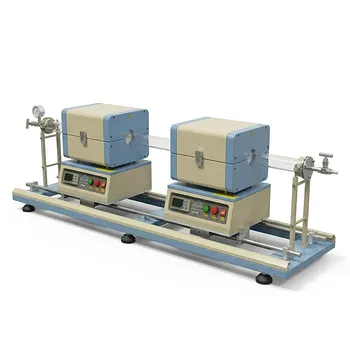
1200C Max Dual Sliding Tube Furnace with 50 mm Tube Flanges for CVD
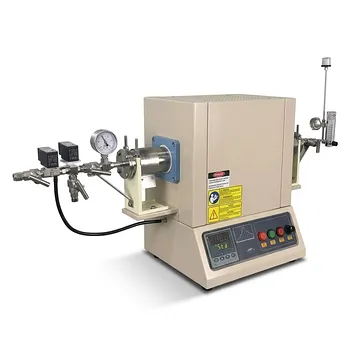
1500C Compact Hydrogen Gas Tube Furnace with 2 Inch Alumina Tube and Hydrogen Detector
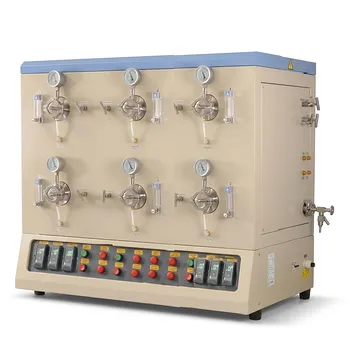
1200C High Throughput Multi Channel Tube Furnace with 50mm Quartz Tubes for Annealing and Material Phase Diagram Research