Why is a high-efficiency cold trap integrated into a Thorium Dioxide CVD system? Protect Pumps & Improve Film Quality
Updated 3 months ago
A high-efficiency cold trap is essential for protecting sensitive vacuum hardware and ensuring the precise growth of Thorium Dioxide thin films. By capturing volatile organic ligand fragments and unreacted precursors before they reach the exhaust system, the trap prevents pump degradation and stabilizes the internal pressure environment required for high-quality deposition.
The cold trap acts as a critical chemical and mechanical buffer, shielding expensive vacuum components from corrosive byproducts while maintaining the pressure stability necessary for uniform film morphology.
Protecting the Integrity of the Vacuum System
Preventing High-Vacuum Pump Contamination
Chemical Vapor Deposition (CVD) of Thorium Dioxide generates volatile organic ligand fragments that are highly detrimental to vacuum hardware. Without a cold trap, these vapors enter the pump, where they can contaminate the pump oil and corrode internal mechanical surfaces.
Extending the Service Life of Hardware
By condensing these byproducts into a solid or liquid state within the trap, the system significantly extends the maintenance intervals of the high-vacuum pumps. This prevents premature hardware failure and reduces the frequency of expensive oil changes and internal cleanings.
Maintaining Optimal Oil Viscosity
In systems utilizing oil-sealed pumps, the introduction of unreacted metal-organic precursors can chemically alter the oil's properties. The cold trap ensures that the lubrication and sealing capabilities of the pump remain within operational specifications.
Optimizing the Deposition Environment
Backpressure Stabilization
A cold trap helps maintain a consistent system backpressure, which is vital for the steady-state growth of Thorium Dioxide. By removing condensable vapors from the gas stream, it prevents pressure fluctuations that could lead to uneven film thickness or structural defects.
Managing the Precursor Mean Free Path
Stable pressure environments allow for precise control over the mean free path of precursor vapors within the reaction chamber. This control is critical for ensuring that the precursors reach the substrate in a predictable manner, which directly influences the crystal quality of the resulting thin film.
Enhancing Film Purity
By efficiently removing impurities and gaseous byproducts from the reaction zone, the trap reduces the likelihood of impurity incorporation into the Thorium Dioxide lattice. This results in a higher-purity film with better electronic or catalytic properties.
Safety and Environmental Considerations
Capturing Unreacted Precursors
Thorium precursors are often specialized and require careful handling due to their chemical and radiological nature. The cold trap serves as a safety barrier, capturing unreacted materials before they can exit the system and potentially contaminate the laboratory environment.
Reducing Hazardous Emissions
Integrating a high-efficiency trap is a key step in minimizing laboratory emissions. It ensures that harmful byproducts produced during the development of materials, such as carbon dioxide reduction catalysts, are contained and can be disposed of according to safety protocols.
Understanding the Trade-offs
Maintenance and Downtime
While a cold trap protects the pump, the trap itself becomes a collection point for hazardous waste that must be periodically cleaned. Failure to monitor the trap's capacity can lead to "breakthrough," where the captured materials re-volatilize and enter the pump anyway.
Thermal Management Requirements
To operate at high efficiency, the trap requires a constant supply of cryogens or mechanical cooling. This adds to the operational cost and complexity of the CVD system, requiring additional monitoring of coolant levels or electrical power for refrigeration units.
Potential for Pressure Drops
If not sized correctly for the flow rate of the CVD process, a cold trap can introduce an impedance in the vacuum line. This can lead to a pressure drop that might limit the ultimate vacuum depth achievable in the reaction chamber.
How to Apply This to Your Project
Recommendations for System Integration
- If your primary focus is equipment longevity: Prioritize a trap with a high surface area to maximize the capture rate of corrosive fragments, thereby protecting your pump oil.
- If your primary focus is film crystallinity: Ensure the cold trap is integrated with a precise pressure control valve to eliminate backpressure fluctuations during long deposition cycles.
- If your primary focus is laboratory safety: Use a redundant or dual-stage cold trap system to ensure that hazardous thorium precursors are fully contained even during high-flow experiments.
A properly managed cold trap is the silent guardian of the CVD process, ensuring that the quest for high-quality Thorium Dioxide films does not come at the cost of hardware destruction or environmental risk.
Summary Table:
| Feature | Primary Function | Operational Impact |
|---|---|---|
| Hardware Protection | Captures volatile organic fragments | Extends pump life & oil purity |
| Pressure Stability | Stabilizes system backpressure | Ensures uniform film morphology |
| Film Purity | Removes gaseous impurities | Enhances crystal lattice quality |
| Safety Barrier | Captures unreacted precursors | Reduces hazardous lab emissions |
Optimize Your Research with THERMUNITS Thermal Solutions
THERMUNITS is a leading manufacturer of high-temperature laboratory equipment for material science and industrial R&D. We offer a comprehensive range of thermal processing solutions, including CVD/PECVD systems, Muffle, Vacuum, Atmosphere, Tube, Rotary, and Hot Press furnaces, Dental Furnaces, electric rotary kilns, vacuum induction melting furnaces (VIM), Thermal Elements, and various other laboratory heat treatment equipment.
Our systems are engineered to integrate high-efficiency components like cold traps to protect your investment and ensure precise, repeatable results. Contact us today to discuss your specific requirements and see how our expertise can drive your innovation forward.
References
- Andreas Lichtenberg, Sanjay Mathur. Molecular Transformations for Direct Synthesis of Thorium Dioxide Films. DOI: 10.1002/zaac.202400126
Mentioned Products
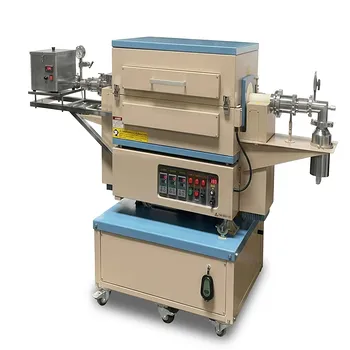
- Versatile Chemical Vapor Deposition Tube Furnace System for Advanced Material Research and Industrial Coating Processes
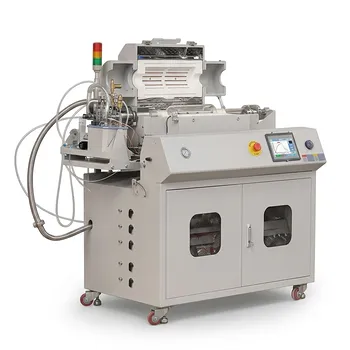
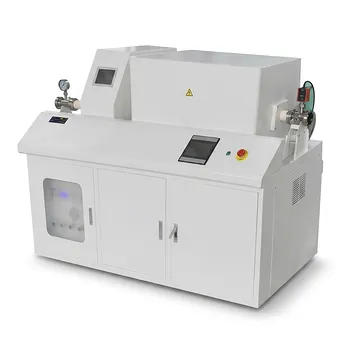
- Chemical Vapor Deposition CVD System Slide PECVD Tube Furnace with Liquid Gasifier PECVD Machine
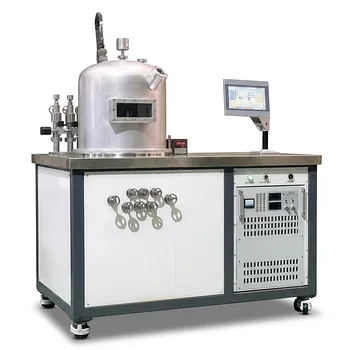
- HFCVD Machine System for Nano Diamond Coating on Drawing Dies and Industrial Tools
- Multi Heating Zones CVD Tube Furnace System for Precision Chemical Vapor Deposition and Advanced Material Synthesis
- Radio Frequency Plasma Enhanced Chemical Vapor Deposition RF PECVD System for Laboratory and Industrial Thin Film Growth
People Also Ask
- How does a sliding rail design benefit the CVD process within a furnace ventilation hood? Enhance Control & Quenching
- What role do by-product desorption and evacuation play in CVD film quality? Key Factors for High-Purity Films
- How does the deposition process occur within a Chemical Vapor Deposition (CVD) reactor? Explore the 5-Stage Growth Cycle
- Why is CVD preferred over PVD for high-aspect-ratio features? Superior Conformality for Semiconductor Fabrication
- How do temperature regimes influence the growth rate of films in a CVD system? Master CVD Kinetics for Superior Thin Films

Tech Team · ThermUnits
Last updated on Jun 03, 2026
Related Products
Versatile Chemical Vapor Deposition Tube Furnace System for Advanced Material Research and Industrial Coating Processes
Chemical Vapor Deposition CVD System Slide PECVD Tube Furnace with Liquid Gasifier PECVD Machine
HFCVD Machine System for Nano Diamond Coating on Drawing Dies and Industrial Tools
Multi Heating Zones CVD Tube Furnace System for Precision Chemical Vapor Deposition and Advanced Material Synthesis
Radio Frequency Plasma Enhanced Chemical Vapor Deposition RF PECVD System for Laboratory and Industrial Thin Film Growth
Inclined Rotary Plasma Enhanced Chemical Vapor Deposition PECVD System for Thin Film Deposition and Nanomaterial Synthesis
Vertical Openable Tube Furnace 0-1700c High Temperature Laboratory System for CVD and Vacuum Heat Treatment
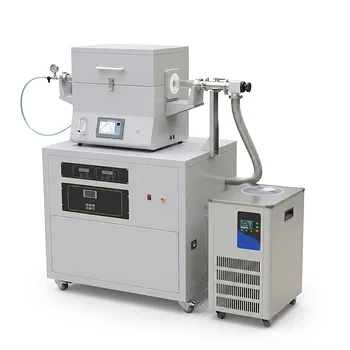
Split Chamber CVD Tube Furnace with Vacuum Station Chemical Vapor Deposition System Machine
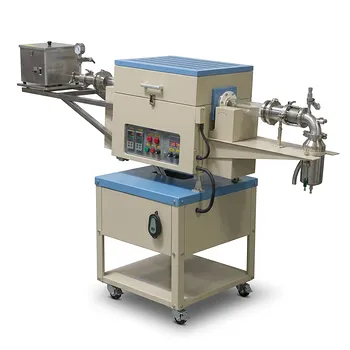
Two Zone Rotary CVD Furnace with Automatic Feeding and Receiving System for Powder Processing
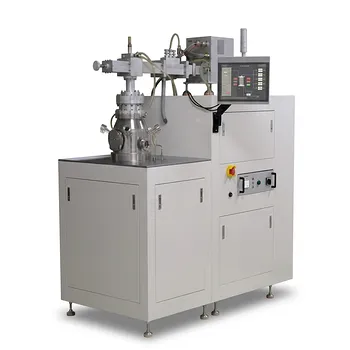
Cylindrical Resonator MPCVD Machine System for Microwave Plasma Chemical Vapor Deposition and Lab Diamond Growth
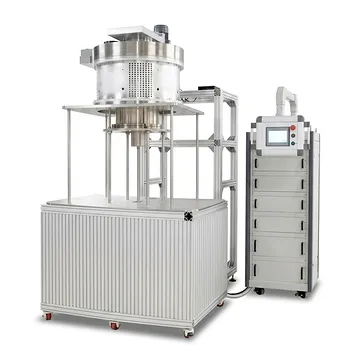
915MHz MPCVD Diamond Machine Microwave Plasma Chemical Vapor Deposition System Reactor
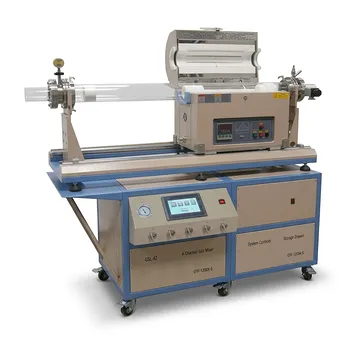
Dual Tube 100mm 80mm CVD Sliding Furnace with 4 Channel Gas Mixing and Vacuum System
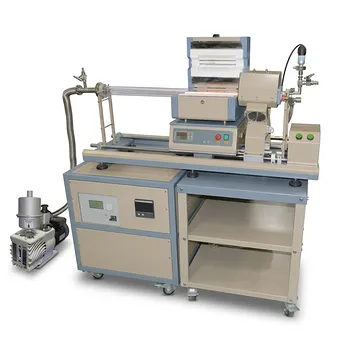
1200C Max Compact Auto-Sliding PECVD Furnace with 2 Inch Tube and Vacuum Pump
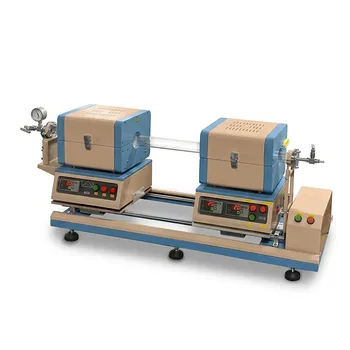
High Temperature 1200C Automatic Sliding Dual Zone Tube Furnace for 2D Transition Metal Dichalcogenides Growth and Material Sublimation Research
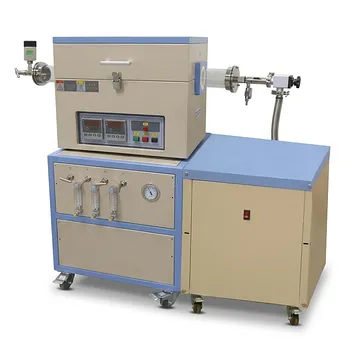
Dual Zone Quartz Tube Furnace with 80mm Diameter 1200C Max Temperature 3 Channel Gas Mixer and Vacuum Pump System
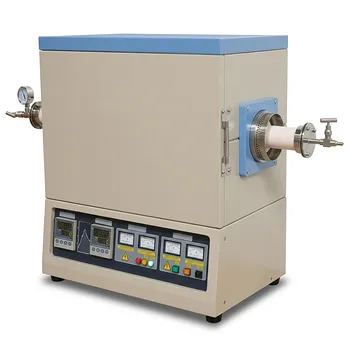
High Temperature 1700C Dual Zone Tube Furnace for Material Science and Industrial Chemical Vapor Deposition Research

High Temperature 1700C Tube Furnace with High Vacuum Turbomolecular Pump System and Multi Channel Mass Flow Controller Gas Mixer
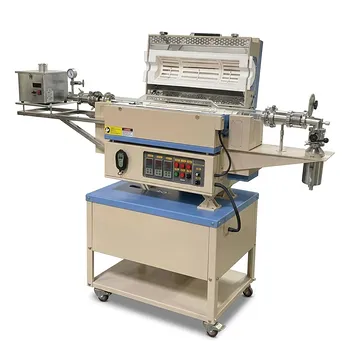
5 Inch Rotary Tube Furnace with Automatic Feeding and Receiving System 1200C Three Zone CVD Powder Processing
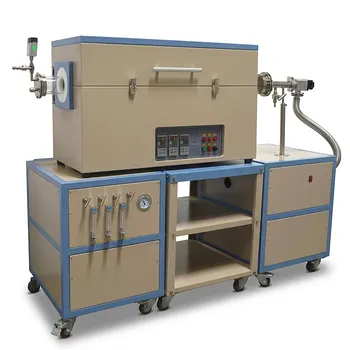
Three Zone Quartz Tube Furnace with 3 Channel Gas Mixer Vacuum Pump and Anti Corrosive Vacuum Gauge