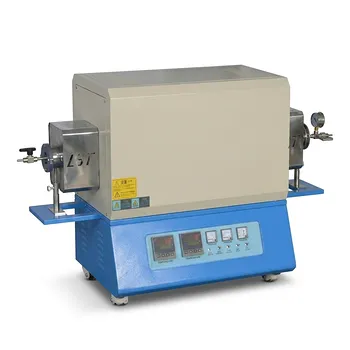
Why is a Mass Flow Controller (MFC) indispensable in CVD CNT growth? Precision Control for High-Quality Nanotubes
Updated 6 months ago
Mass flow controllers (MFCs) are indispensable because they provide the high-precision regulation of gas mixing ratios and flow rates required to maintain a stable chemical environment. This precision directly dictates the carbon concentration gradient at the catalyst surface, which is the primary factor governing growth rate, structural integrity, and the prevention of amorphous carbon contamination.
Core Takeaway: In CVD growth, the MFC acts as the "brain" of the gas delivery system, ensuring that the supply of carbon precursors perfectly matches the catalyst's processing capacity. Without this level of control, the reaction quickly descends into either catalyst deactivation or the production of low-quality soot.
Regulating the Carbon Concentration Gradient
Maintaining a Stable Supply of Carbon Atoms
The primary role of an MFC is to ensure a continuous and stable supply of carbon atoms—derived from precursors like methane (CH4) or ethylene (C2H4)—to the catalyst nanoparticles.
Precise flow regulation prevents growth stagnation caused by insufficient carbon supply while simultaneously avoiding the buildup of excess carbon.
Preventing Amorphous Carbon Contamination
If the carbon concentration is too high, the excess carbon atoms cannot be incorporated into the nanotube lattice fast enough.
This leads to the formation of amorphous carbon, which coats the catalyst and the nanotubes, effectively "poisoning" the reaction and degrading the electrical and mechanical properties of the final product.
Catalyst Activation and Maintenance
Managing the H2/Ar Mixing Ratio
MFCs are used to fine-tune the ratio between reactive gases (H2) and inert carrier gases (Ar or N2).
The concentration of Hydrogen is critical for catalyst activity; it helps reduce the metal catalyst to its active state and etches away stray amorphous carbon during the growth process.
Controlling Catalyst Deactivation
An improper gas ratio can lead to catalyst deactivation.
If the hydrogen flow is too low, the catalyst may become encapsulated in carbon; if it is too high, it may over-etch the growing nanotubes or inhibit nucleation.
Controlling Growth Kinetics and Morphology
Residence Time and Gas Velocity
The MFC regulates the gas flow velocity, which determines the "residence time" of the reactants over the catalyst bed.
This timing is crucial because it dictates how long the precursor molecules have to decompose and react before being swept out of the reaction zone, directly impacting the growth height and density of CNT forests.
Determining Diameter and Structural Integrity
By strictly regulating the flux ratio of the carbon source, MFCs allow researchers to manage the diameter distribution and morphology of the nanotubes.
This level of control is what enables the production of specific structures, such as helical carbon nanotubes or vertically aligned arrays with consistent electrical conductivity.
Understanding the Trade-offs and Pitfalls
The Risk of Precursor Starvation
When flow rates are set too high, the system may suffer from precursor starvation.
In this scenario, the gas moves so quickly that the reactants do not have sufficient time to interact with the catalyst, resulting in sparse growth and wasted material.
The Danger of Carbon Encapsulation
Conversely, insufficient flow rates lead to carbon encapsulation.
Without enough carrier gas to move the reaction byproducts away, the catalyst becomes buried under a layer of carbon, terminating the growth prematurely and resulting in short, stunted nanotubes.
Making the Right Choice for Your Goal
Strategic Implementation for CNT Growth
- If your primary focus is high-density CNT forests: Prioritize MFCs with ultra-high precision to manage the residence time and ensure a dense, uniform supply of precursors across the entire substrate.
- If your primary focus is electrical conductivity: Focus on the precise regulation of the hydrogen-to-precursor ratio to minimize amorphous carbon defects that increase resistance.
- If your primary focus is specific nanotube diameters: Use MFCs to maintain a low, highly stable concentration of carbon precursors to prevent the "oversizing" of nanotubes during the nucleation phase.
The Mass Flow Controller is the fundamental hardware guarantee for transforming a volatile chemical reaction into a repeatable, high-precision manufacturing process.
Summary Table:
| Key Role of MFC | Impact on CNT Growth | Risk of Poor Control |
|---|---|---|
| Carbon Flow Regulation | Ensures stable supply of CH4/C2H4 for uniform growth. | Amorphous carbon contamination or soot buildup. |
| H2/Ar Ratio Mixing | Maintains catalyst activity and etches stray carbon. | Catalyst deactivation or encapsulation. |
| Gas Velocity Control | Dictates residence time for precursor decomposition. | Precursor starvation or stunted tube height. |
| Morphology Control | Manages diameter distribution and structural integrity. | Inconsistent electrical conductivity and density. |
Elevate Your Material Research with Precision Thermal Solutions
Precise gas management is the "brain" of successful Carbon Nanotube synthesis. THERMUNITS is a leading manufacturer of high-temperature laboratory equipment, providing the advanced CVD/PECVD systems and thermal processing tools required for cutting-edge material science.
From high-precision Tube and Atmosphere furnaces to specialized Rotary kilns and Vacuum Induction Melting (VIM) systems, we offer a comprehensive range of solutions designed for industrial R&D and academic excellence. Let our experts help you configure the perfect system for your specific growth requirements.
Contact THERMUNITS Today to Optimize Your Lab's Performance!
References
- Aamar Shabir, Muhammad Sanaullah. Chirality Engineering of Carbon Nanotubes, Modeling and Photons Density Improvement for Solar cell Applications. DOI: 10.36348/sjet.2024.v09i02.005
Mentioned Products
- High Temperature 1700C Tube Furnace with High Vacuum Turbomolecular Pump System and Multi Channel Mass Flow Controller Gas Mixer
- Cylindrical Resonator MPCVD Machine System for Microwave Plasma Chemical Vapor Deposition and Lab Diamond Growth
- Three Zone Quartz Tube Furnace with 3 Channel Gas Mixer Vacuum Pump and Anti Corrosive Vacuum Gauge
- 915MHz MPCVD Diamond Machine Microwave Plasma Chemical Vapor Deposition System Reactor
- HFCVD Machine System for Nano Diamond Coating on Drawing Dies and Industrial Tools
People Also Ask
- What is the role of a high-temperature tube furnace in the calcination process of ZnO/In2O3 nanocomposites?
- What impact does the heating rate of a tube furnace have on biochar microstructure? Optimize Your Material R&D.
- What is the function of a high-temperature tube furnace in the synthesis of g-C3N4? Optimize Thermal Polycondensation
- What are the primary functions of a high-temperature tube furnace for Inconel 718? Master Debinding & Pre-sintering.
- What is the function of a high-temperature tube furnace in Fe-BN-C pyrolysis? Optimize Catalyst Active Site Formation

Tech Team · ThermUnits
Last updated on Apr 14, 2026
Related Products
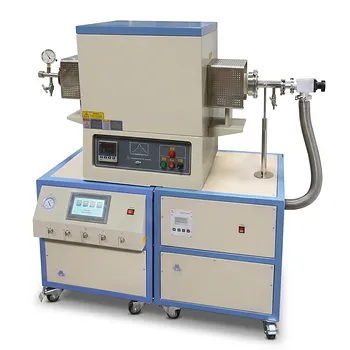
High Temperature 1700C Tube Furnace with High Vacuum Turbomolecular Pump System and Multi Channel Mass Flow Controller Gas Mixer
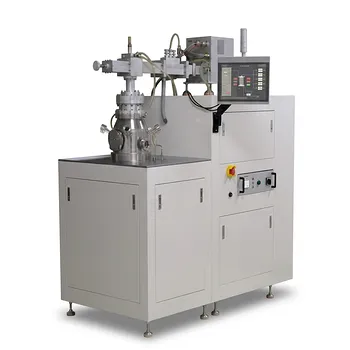
Cylindrical Resonator MPCVD Machine System for Microwave Plasma Chemical Vapor Deposition and Lab Diamond Growth
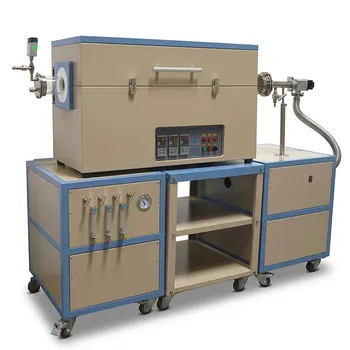
Three Zone Quartz Tube Furnace with 3 Channel Gas Mixer Vacuum Pump and Anti Corrosive Vacuum Gauge
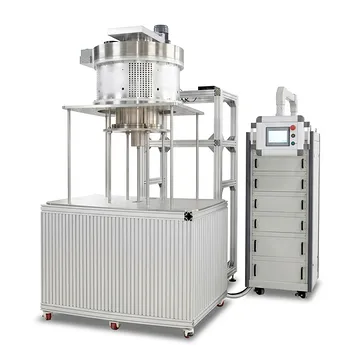
915MHz MPCVD Diamond Machine Microwave Plasma Chemical Vapor Deposition System Reactor
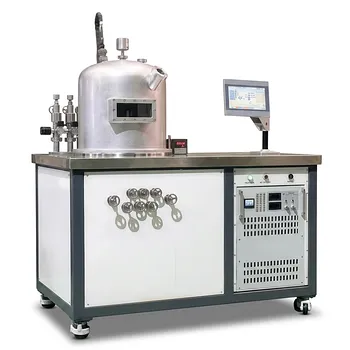
HFCVD Machine System for Nano Diamond Coating on Drawing Dies and Industrial Tools
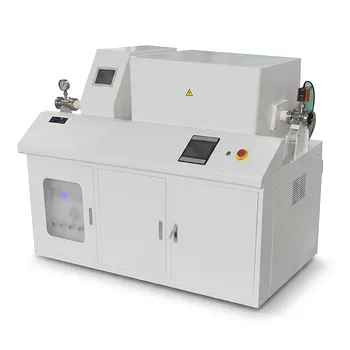
Chemical Vapor Deposition CVD System Slide PECVD Tube Furnace with Liquid Gasifier PECVD Machine
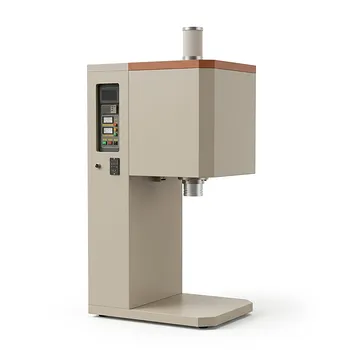
Vertical Openable Tube Furnace 0-1700c High Temperature Laboratory System for CVD and Vacuum Heat Treatment
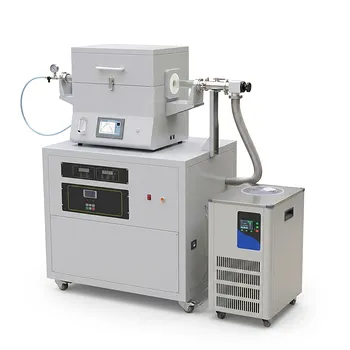
Split Chamber CVD Tube Furnace with Vacuum Station Chemical Vapor Deposition System Machine
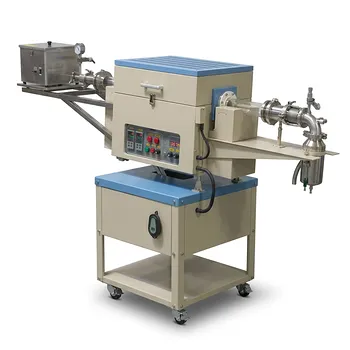
Two Zone Rotary CVD Furnace with Automatic Feeding and Receiving System for Powder Processing
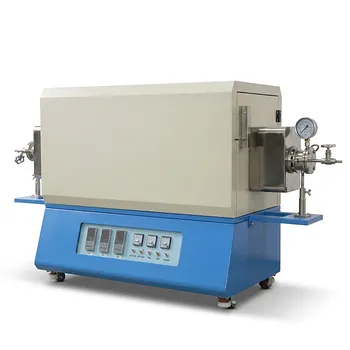
Three Temperature Zone High Temperature Vacuum Tube Furnace for CVD and Material Sintering
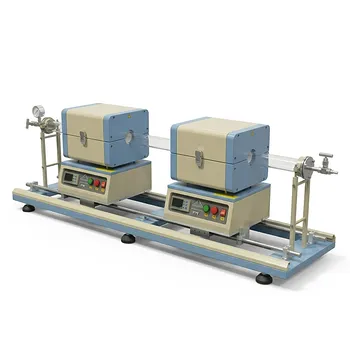
1200C Max Dual Sliding Tube Furnace with 50 mm Tube Flanges for CVD
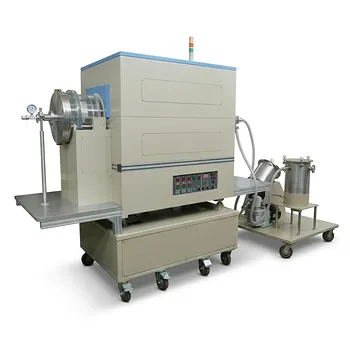
Three Zone Rotary Tube Furnace with Automatic Powder Feeding for Large Scale CVD Coating 1100C
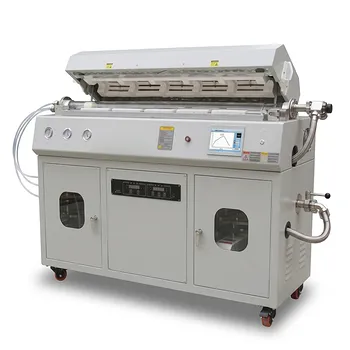
Multi Heating Zones CVD Tube Furnace System for Precision Chemical Vapor Deposition and Advanced Material Synthesis
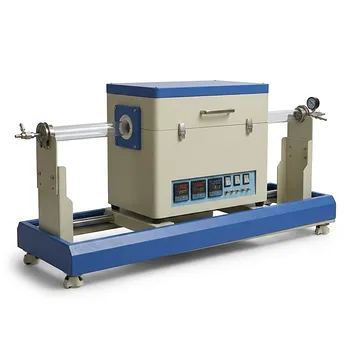
Double Temperature Zone Double Cover Tube Furnace for High Temperature CVD and Vacuum Annealing
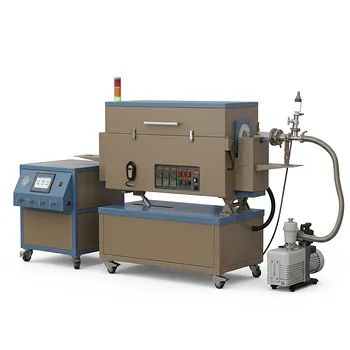
5 Inch Three Zone Rotary Tube Furnace with Integrated Gas Delivery System and 1200C Capability for Advanced Material CVD Processing
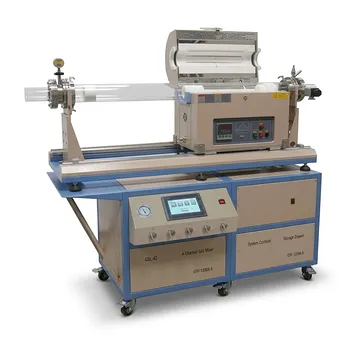
Dual Tube 100mm 80mm CVD Sliding Furnace with 4 Channel Gas Mixing and Vacuum System
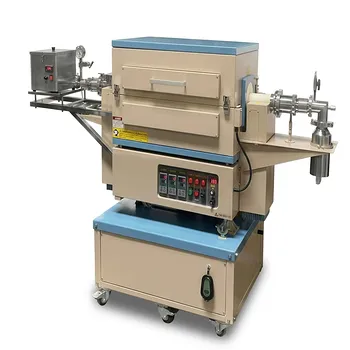
1500C 3-Zone Rotary Tube Furnace 60mm with Automatic Powder Feeding and Receiving System for Continuous Material Synthesis
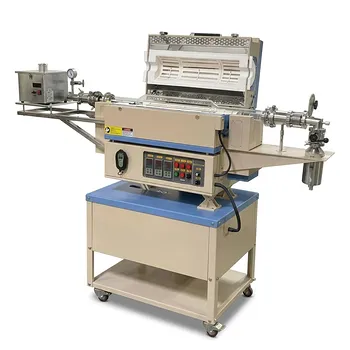
5 Inch Rotary Tube Furnace with Automatic Feeding and Receiving System 1200C Three Zone CVD Powder Processing
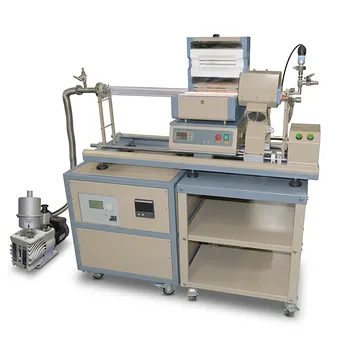
1200C Max Compact Auto-Sliding PECVD Furnace with 2 Inch Tube and Vacuum Pump