Why is a precision mass flow controller necessary for CVD growth of 2D perovskites? Ensure High-Quality Thin Films
Updated 3 months ago
The precision of a mass flow controller (MFC) is the fundamental requirement for achieving stoichiometric consistency and structural integrity in 2D perovskite thin films. By strictly regulating the flow of carrier gases, the MFC ensures that precursor vapors reach the reaction zone at a constant concentration, preventing the structural defects and phase inconsistencies that arise from even minor flow fluctuations.
A precision mass flow controller acts as the central regulator of the chemical vapor deposition (CVD) environment, directly determining the transport efficiency and concentration of reactant vapors. This level of control is essential for stabilizing the nucleation rate and ensuring the uniform growth of single-crystal films with specific crystallographic orientations.
The Role of Vapor Transport and Concentration
Maintaining Stoichiometric Consistency
In 2D perovskite synthesis, the ratio of precursors must be exact to ensure the desired chemical phase. The MFC regulates carrier gases, such as high-purity nitrogen or argon, which transport organic halide vapors to the substrate.
If the flow rate fluctuates, the vapor concentration distribution shifts, leading to localized areas of the film that lack the correct chemical proportions. This results in "stoichiometric drift," where the film’s properties vary across its surface.
Regulating Supersaturation Levels
The growth of ultra-thin nanosheets depends on balancing the supersaturation of reactants. The MFC allows operators to dynamically adjust the carrier gas flow to manage the intersection of metal halide and organic vapors.
By controlling this balance, the system prevents precursor starvation (caused by excessive flow) or over-saturation. This precision is what enables the growth of large-area films with nanometer-scale thickness control.
Impact on Crystal Quality and Morphology
Facilitating Uniform Nucleation
A stable gas flow rate ensured by a high-precision MFC allows the perovskite to nucleate and grow on the substrate at a predictable, constant rate. This stability is the difference between a disordered polycrystalline layer and a high-quality single-crystal film.
When nucleation occurs at a constant rate, the resulting films exhibit flat surfaces and highly consistent thickness. This morphological uniformity is critical for subsequent micro-nanofabrication and device performance.
Controlling Crystallographic Orientation
The orientation of the crystals within the 2D perovskite lattice dictates how well the material transports charge. Precise flow regulation ensures that the environment remains stable enough for the crystals to align in specific orientations.
Without an MFC, turbulence or flow surges can disrupt the growth interface. This disruption often leads to random orientations, which significantly degrades the electrical and optical properties of the thin film.
Understanding the Trade-offs and Limitations
Precision vs. System Complexity
While high-precision MFCs offer unmatched control, they introduce calibration requirements and increased cost to the CVD system. An MFC calibrated for nitrogen may not provide the same accuracy for other gases without specific conversion factors.
Furthermore, the MFC becomes a critical point of failure; any drift in calibration or physical clogging from precursor residues can lead to unnoticed shifts in film quality.
The Sensitivity of Flow Rates
In CVD processes, more flow is not always better. Excessive flow rates can reduce the residence time of reactants on the catalyst or substrate surface, preventing the precursors from reacting fully.
Conversely, insufficient flow can lead to "vapor stagnation," where precursors deposit prematurely on the tube walls rather than the substrate. Finding the "goldilocks zone" requires the precise, repeatable increments that only a high-grade MFC can provide.
How to Apply This to Your Project
Effective gas management is the cornerstone of reproducible 2D perovskite growth. Your choice of flow control should align with your specific research or production objectives.
- If your primary focus is large-area uniformity: Invest in high-resolution MFCs to ensure a constant concentration gradient across the entire substrate surface.
- If your primary focus is single-crystal quality: Prioritize MFCs with high repeatability to maintain a stable nucleation environment throughout the growth cycle.
- If your primary focus is nanometer-scale thickness: Utilize MFCs with fast response times to precisely regulate the injection timing and duration of precursor vapors.
Mastering the flow dynamics of your CVD system is the most reliable path to producing high-performance 2D perovskite electronics.
Summary Table:
| Key Function | Role in CVD Process | Impact on 2D Perovskite Quality |
|---|---|---|
| Flow Regulation | Controls carrier gas & precursor transport | Ensures stoichiometric consistency & phase purity |
| Supersaturation Control | Manages reactant concentration levels | Enables nanometer-scale thickness control |
| Nucleation Stability | Maintains constant, predictable growth | Facilitates high-quality single-crystal formation |
| Interface Management | Prevents turbulence and flow surges | Determines precise crystallographic orientation |
Achieve Unmatched Precision in Your Material Research
Precise gas management is the backbone of high-performance thin film synthesis. At THERMUNITS, we specialize in providing cutting-edge thermal processing solutions designed for the rigorous demands of material science and industrial R&D.
As a leading manufacturer, our expertise spans a comprehensive range of high-temperature laboratory equipment, including:
- Advanced Systems: CVD/PECVD systems, Vacuum Induction Melting (VIM) furnaces, and Dental Furnaces.
- Versatile Furnaces: Muffle, Vacuum, Atmosphere, Tube, Rotary, and Hot Press furnaces.
- Industrial Solutions: Electric rotary kilns and premium Thermal Elements.
Whether you are scaling up 2D perovskite production or perfecting single-crystal growth, our equipment offers the stability and control your project deserves.
Ready to elevate your lab's capabilities? Contact our technical team today to find the perfect thermal solution for your application!
References
- Dallar Babaian, S. Guha. Carrier relaxation and exciton dynamics in chemical-vapor-deposited two-dimensional hybrid halide perovskites. DOI: 10.1039/d4tc03014a
Mentioned Products
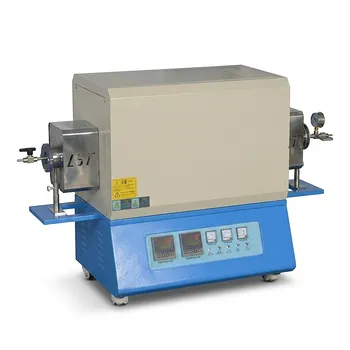
- High Temperature 1700C Tube Furnace with High Vacuum Turbomolecular Pump System and Multi Channel Mass Flow Controller Gas Mixer
- Cylindrical Resonator MPCVD Machine System for Microwave Plasma Chemical Vapor Deposition and Lab Diamond Growth
- Three Zone Quartz Tube Furnace with 3 Channel Gas Mixer Vacuum Pump and Anti Corrosive Vacuum Gauge
- 915MHz MPCVD Diamond Machine Microwave Plasma Chemical Vapor Deposition System Reactor
- Chemical Vapor Deposition CVD System Slide PECVD Tube Furnace with Liquid Gasifier PECVD Machine
People Also Ask
- What is the role of a high-temperature tube furnace in the calcination process of ZnO/In2O3 nanocomposites?
- What impact does the heating rate of a tube furnace have on biochar microstructure? Optimize Your Material R&D.
- What is the function of a high-temperature tube furnace in the synthesis of g-C3N4? Optimize Thermal Polycondensation
- What is the function of a high-temperature tube furnace in Fe-BN-C pyrolysis? Optimize Catalyst Active Site Formation
- What are the primary functions of a high-temperature tube furnace for Inconel 718? Master Debinding & Pre-sintering.

Tech Team · ThermUnits
Last updated on Jun 03, 2026
Related Products

High Temperature 1700C Tube Furnace with High Vacuum Turbomolecular Pump System and Multi Channel Mass Flow Controller Gas Mixer
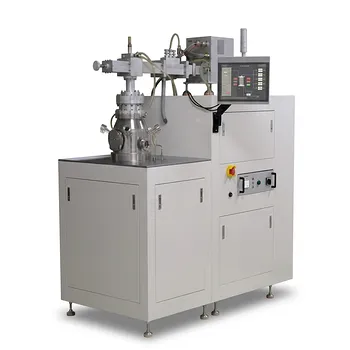
Cylindrical Resonator MPCVD Machine System for Microwave Plasma Chemical Vapor Deposition and Lab Diamond Growth
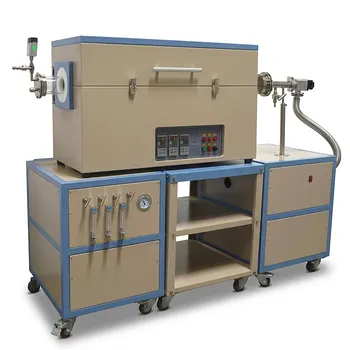
Three Zone Quartz Tube Furnace with 3 Channel Gas Mixer Vacuum Pump and Anti Corrosive Vacuum Gauge
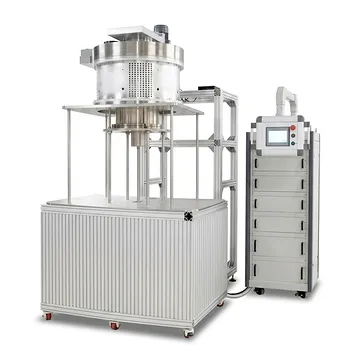
915MHz MPCVD Diamond Machine Microwave Plasma Chemical Vapor Deposition System Reactor
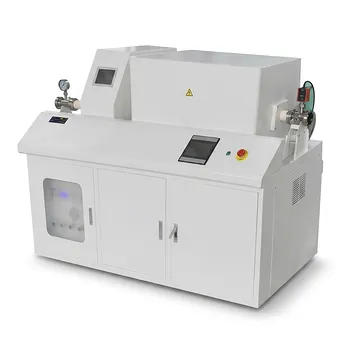
Chemical Vapor Deposition CVD System Slide PECVD Tube Furnace with Liquid Gasifier PECVD Machine
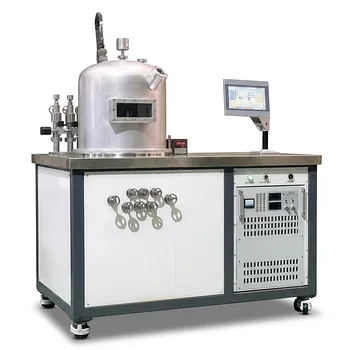
HFCVD Machine System for Nano Diamond Coating on Drawing Dies and Industrial Tools
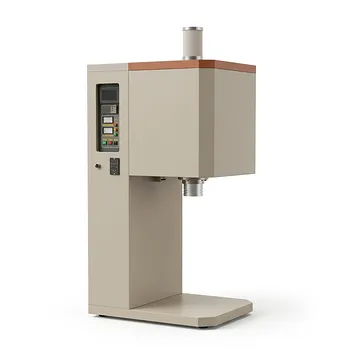
Vertical Openable Tube Furnace 0-1700c High Temperature Laboratory System for CVD and Vacuum Heat Treatment
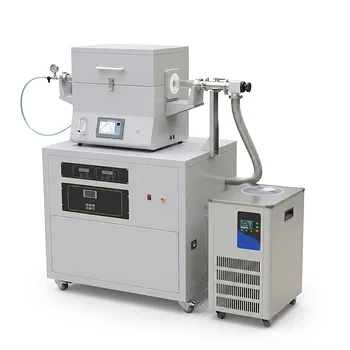
Split Chamber CVD Tube Furnace with Vacuum Station Chemical Vapor Deposition System Machine
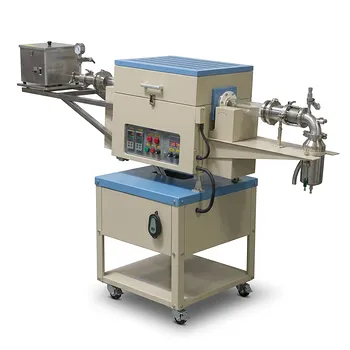
Two Zone Rotary CVD Furnace with Automatic Feeding and Receiving System for Powder Processing
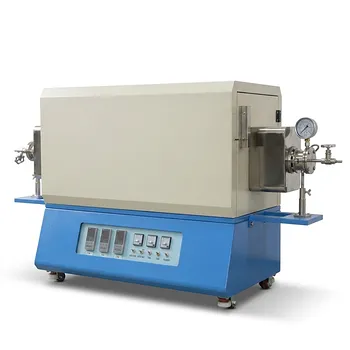
Three Temperature Zone High Temperature Vacuum Tube Furnace for CVD and Material Sintering
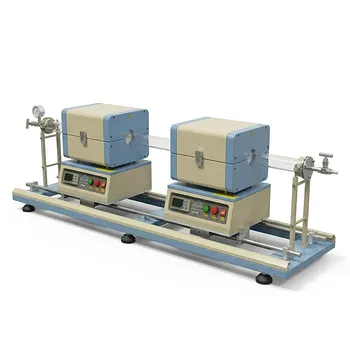
1200C Max Dual Sliding Tube Furnace with 50 mm Tube Flanges for CVD
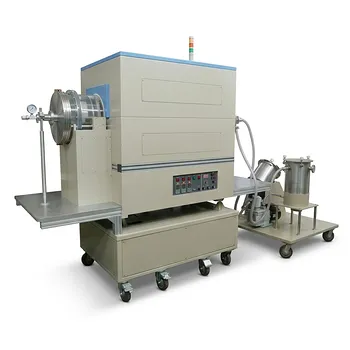
Three Zone Rotary Tube Furnace with Automatic Powder Feeding for Large Scale CVD Coating 1100C
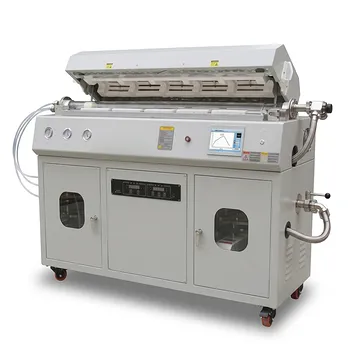
Multi Heating Zones CVD Tube Furnace System for Precision Chemical Vapor Deposition and Advanced Material Synthesis
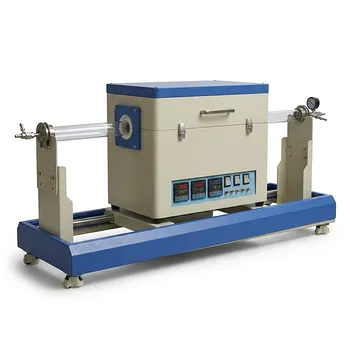
Double Temperature Zone Double Cover Tube Furnace for High Temperature CVD and Vacuum Annealing
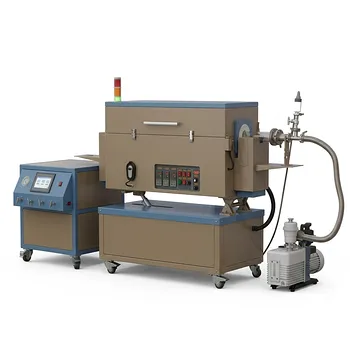
5 Inch Three Zone Rotary Tube Furnace with Integrated Gas Delivery System and 1200C Capability for Advanced Material CVD Processing
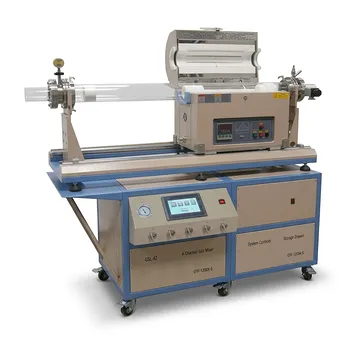
Dual Tube 100mm 80mm CVD Sliding Furnace with 4 Channel Gas Mixing and Vacuum System
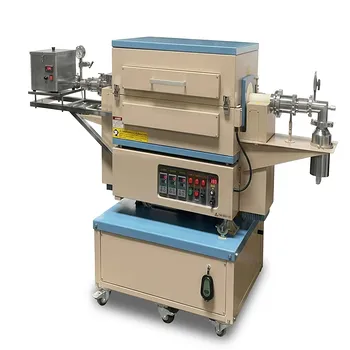
1500C 3-Zone Rotary Tube Furnace 60mm with Automatic Powder Feeding and Receiving System for Continuous Material Synthesis
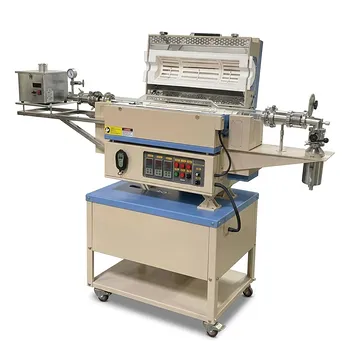
5 Inch Rotary Tube Furnace with Automatic Feeding and Receiving System 1200C Three Zone CVD Powder Processing
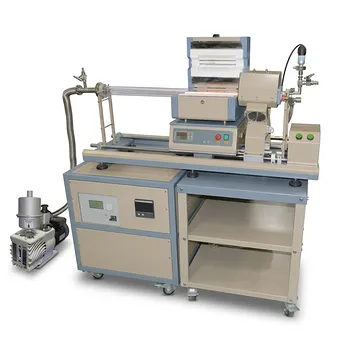
1200C Max Compact Auto-Sliding PECVD Furnace with 2 Inch Tube and Vacuum Pump