Why is a tube furnace necessary for Ag33/TiO2 calcination? Control Atmosphere for Superior Catalytic Performance
Updated 3 months ago
Atmosphere-controlled tube furnaces are essential for $Ag_{33}/TiO_2$ calcination because they provide a strictly anaerobic environment that prevents silver oxidation while facilitating the removal of ligand decomposition gases. This precise combination of chemical isolation and thermal regulation allows for the controlled desorption of nanocluster ligands and the engineering of high-activity oxygen vacancies on the titanium dioxide support.
This equipment functions as more than a heat source; it is a chemical reactor that stabilizes sensitive metal species. By integrating high-purity gas flow with exact temperature ramping, it ensures the material's chemical stoichiometry and catalytic potential are preserved.
Preventing Silver Oxidation and Degradation
The Critical Need for an Anaerobic Environment
Silver species are highly sensitive to oxygen, especially at the elevated temperatures required for calcination. A tube furnace utilizes a sealed furnace tube to introduce a constant flow of high-purity nitrogen, effectively displacing all ambient oxygen.
Preserving Chemical Stoichiometry
Without this strictly controlled environment, silver nanoclusters would oxidize into silver oxides, fundamentally altering their electronic properties. The atmosphere control system ensures that the metallic integrity of the $Ag_{33}$ species remains unchanged during the sintering process.
Isolating Sensitive Precursors
The high-precision system also isolates the materials from ambient moisture, which could otherwise interfere with the ligand desorption process. This isolation is decisive for maintaining the stability and performance of the final supported catalyst.
Driving Structural Evolution and Defect Engineering
Removal of Ligand Decomposition Biproducts
As $Ag_{33}$ nanoclusters undergo thermal treatment, their organic ligands decompose into gases such as $CO_2$ and $SO_2$. The continuous nitrogen stream provided by the atmosphere system effectively sweeps these gases away from the material surface.
Induction of High-Activity Oxygen Vacancies
The removal of these decomposition gases, particularly in an inert environment, induces the formation of oxygen vacancies on the $TiO_2$ support. These vacancies are critical for increasing the catalytic activity of the material, as they serve as active sites for chemical reactions.
Facilitating In-Situ Ligand Desorption
The furnace acts as the central equipment for in-situ ligand desorption, where the absence of oxygen allows the ligands to leave the metal core without triggerring unwanted combustion or charring. This results in a cleaner metal-support interface.
Precision Control of Thermal Dynamics
Regulation of Specific Heating Rates
The system allows for highly specific heating rates, such as $5^\circ C/min$, which prevents thermal shock and ensures uniform structural evolution. Sudden temperature spikes can lead to uncontrolled sintering, causing the nanoclusters to aggregate into larger, less active particles.
Managing Critical Isothermal Nodes
By holding the temperature at specific nodes, such as $400^\circ C$, the furnace provides the necessary time for complex chemical transformations to complete. This "dwell time" is essential for the full transformation of precursors into their final crystalline or coordinated states.
Uniformity of the Thermal Field
A high-precision tube furnace ensures that the temperature is distributed evenly across the entire sample. This uniformity is vital for achieving a homogeneous distribution of silver species across the $TiO_2$ support, preventing localized "hot spots" that ruin material consistency.
Understanding the Trade-offs
Flow Rate and Atmosphere Integrity
While high nitrogen flow rates ensure the removal of biproducts, excessively high flows can create temperature gradients within the tube. If the gas is not pre-heated or the flow is too turbulent, it can lead to inconsistent calcination across the sample bed.
System Sealing and Purity Risks
The effectiveness of the atmosphere control is entirely dependent on the mechanical integrity of the furnace seals. Even trace amounts of oxygen leakage can lead to the "poisoning" of the catalyst or the unintended oxidation of the silver, rendering the high-precision control moot.
How to Apply This to Your Project
Making the Right Choice for Your Goal
- If your primary focus is maximizing catalytic activity: Ensure the system allows for precise isothermal dwell times to maximize the density of oxygen vacancies on the support.
- If your primary focus is silver particle size control: Prioritize a furnace with a high-precision PID controller to maintain a slow, steady heating rate, which prevents metal aggregation.
- If your primary focus is material purity: Invest in high-purity gas filtration and ensure the furnace tube is made of high-quality quartz or alumina to prevent leaching at high temperatures.
Precise atmospheric and thermal control is the only way to successfully bridge the gap between unstable precursors and highly active, stable supported catalysts.
Summary Table:
| Feature | Function in Ag33/TiO2 Calcination | Key Performance Benefit |
|---|---|---|
| Anaerobic Control | Displaces oxygen with high-purity Nitrogen | Prevents silver oxidation and preserves stoichiometry |
| Gas Management | Sweeps away $CO_2$ and $SO_2$ byproducts | Ensures a clean metal-support interface |
| Thermal Precision | Regulates rates (e.g., $5^\circ C/min$) | Prevents aggregation and ensures structural uniformity |
| Defect Engineering | Facilitates in-situ ligand desorption | Induces high-activity oxygen vacancies on $TiO_2$ |
| Isothermal Nodes | Maintains specific dwell times (e.g., $400^\circ C$) | Allows full crystalline transformation |
Optimize Your Material Synthesis with THERMUNITS Precision
At THERMUNITS, we understand that advanced catalysts like $Ag_{33}/TiO_2$ require more than just heat—they require absolute environmental control. As a leading manufacturer of high-temperature laboratory equipment, we provide the precision needed to bridge the gap between unstable precursors and high-performance materials.
Our comprehensive range of thermal solutions is engineered specifically for the rigorous demands of material science and industrial R&D:
- Advanced Furnaces: Including Atmosphere, Tube, Vacuum, Muffle, Rotary, and Hot Press models.
- Specialized Systems: CVD/PECVD systems, Vacuum Induction Melting (VIM) furnaces, and Electric Rotary Kilns.
- Precision Components: Dental Furnaces and high-grade Thermal Elements.
Why partner with THERMUNITS? We deliver industry-leading thermal uniformity, high-precision PID control, and superior atmospheric integrity to ensure your research yields consistent, high-purity results every time.
Ready to elevate your lab's capabilities? Contact THERMUNITS today to find the perfect thermal processing solution for your project!
References
- Weihua Zhang, Fan Tian. Sintering Ag33 Nanoclusters on TiO2 Nanoparticles as an Efficient Catalyst for Nitroarene Reduction. DOI: 10.3390/ma17246120
Mentioned Products
- High Magnetic Field Compatible Tube Furnace for 1100C Material Research with Controlled Atmosphere and Water Cooled Non Magnetic Case
- 1200°C Atmosphere Controlled Automatic Bottom Loading Furnace with 6 Inch Quartz Tube
- Compact Vertical Split Quartz Tube Furnace with Stainless Steel Vacuum Flanges for Rapid Thermal Quenching and Controlled Atmosphere Material Processing
- 1700C High Temperature Alumina Tube Furnace with 18 Inch Heated Zone and Vacuum Sealing Flanges
- High Temperature Dual Zone Split Tube Furnace for Advanced Atmosphere Sintering and Vacuum CVD Applications
People Also Ask
- What are the advantages of 1100°C tube furnaces for ORR catalysts? Boost Conductivity and Structural Stability.
- How does a high-temperature tube furnace influence TiC nanoparticle crystal structure? Control Phase Purity & Growth
- What is the role of a high-precision tube furnace in magnetite catalyst preparation? Master phase-controlled reduction.
- What role does a high-temperature tube furnace play in the pyrolysis of MLPB? Key for Precision Biochar Synthesis
- Why use a tube atmosphere furnace with nitrogen for MDBC carbonization? Ensure High Yield & Material Integrity

Tech Team · ThermUnits
Last updated on Jun 03, 2026
Related Products
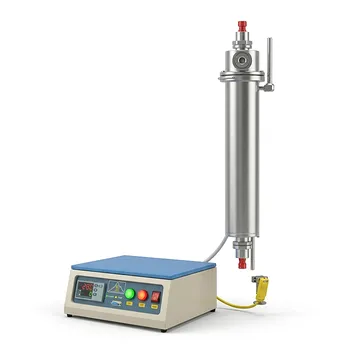
High Magnetic Field Compatible Tube Furnace for 1100C Material Research with Controlled Atmosphere and Water Cooled Non Magnetic Case
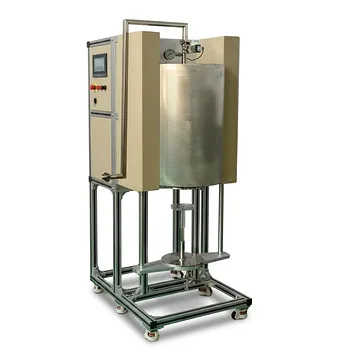
1200°C Atmosphere Controlled Automatic Bottom Loading Furnace with 6 Inch Quartz Tube

Compact Vertical Split Quartz Tube Furnace with Stainless Steel Vacuum Flanges for Rapid Thermal Quenching and Controlled Atmosphere Material Processing
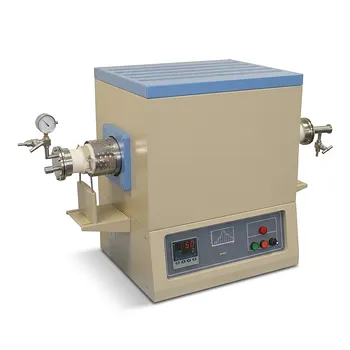
1700C High Temperature Alumina Tube Furnace with 18 Inch Heated Zone and Vacuum Sealing Flanges
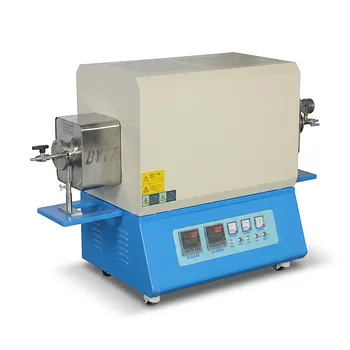
High Temperature Dual Zone Split Tube Furnace for Advanced Atmosphere Sintering and Vacuum CVD Applications
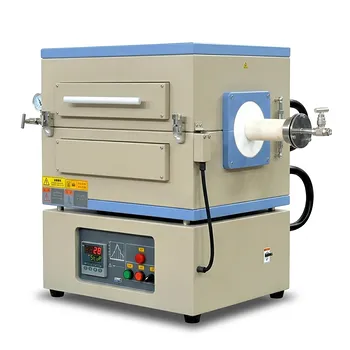
1500°C Split Tube Furnace with Alumina Tube and Vacuum Sealing Flanges for Material Research

Vertical 1700C Vacuum and Atmosphere Tube Furnace with 80mm Alumina Tube
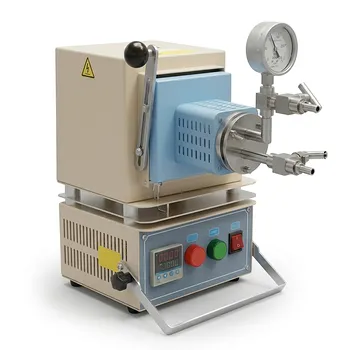
Compact Hybrid Muffle and Tube Furnace for 1000C Controlled Atmosphere Laboratory Material Sintering
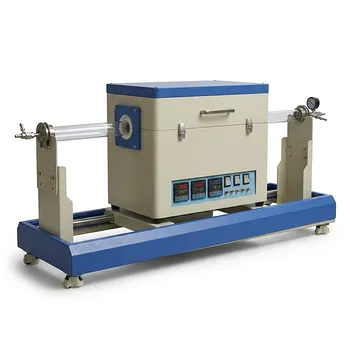
Double Temperature Zone Double Cover Tube Furnace for High Temperature CVD and Vacuum Annealing
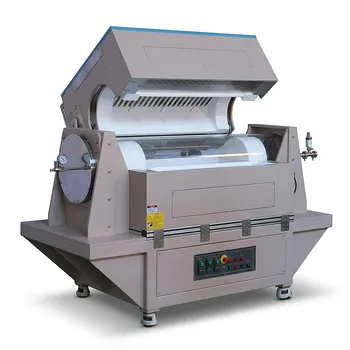
Three Zone Tube Furnace with 11 Inch or 15 Inch Quartz Tube and Hinged Flanges for Vacuum Atmosphere Heat Treatment
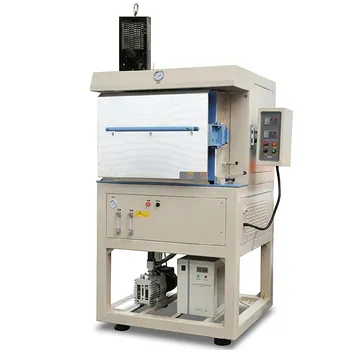
1200C Hydrogen Atmosphere Box Furnace with 5 Heated Sides and 64L Chamber
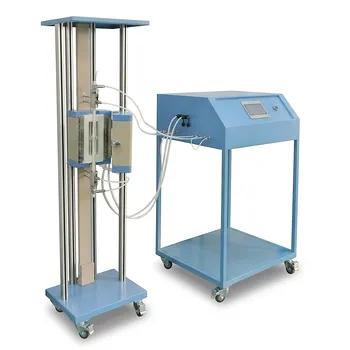
High Temperature Vertical Tube Furnace for Small Solid Oxide Fuel Cell Testing with Four Channel Gas Control
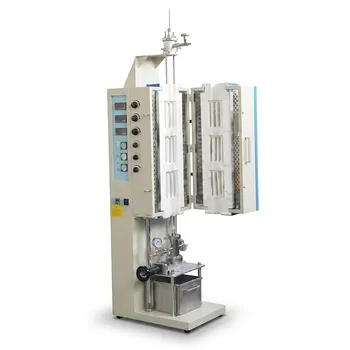
High Temperature Dual Zone Tube Furnace for Material Science Research and Professional Thermal Processing

High Temperature 1700C Tube Furnace with High Vacuum Turbomolecular Pump System and Multi Channel Mass Flow Controller Gas Mixer
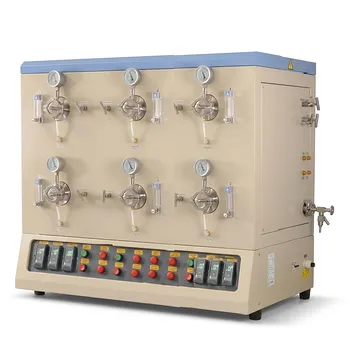
1200C High Throughput Multi Channel Tube Furnace with 50mm Quartz Tubes for Annealing and Material Phase Diagram Research
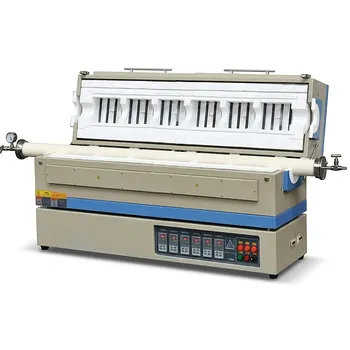
High Temperature 1700C Six Zone Split Tube Furnace with Alumina Tube and Water Cooled Flanges
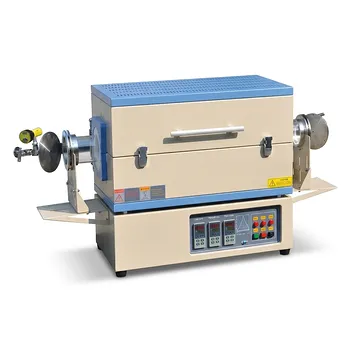
Three Zone Tube Furnace with 24 Inch Heating Length and Hinged Flange Quartz Tube System
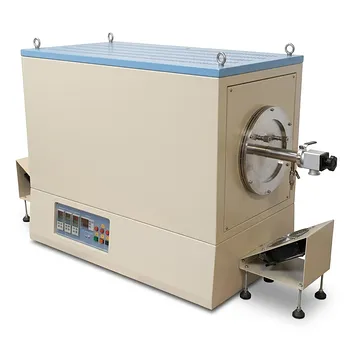
Four Zone Tube Furnace 1100C with 600mm Large Diameter Quartz Tube and Vacuum Flanges

High Temperature Automated 5 Inch Tube Furnace for Autonomous Material Research and Advanced Laboratory R&D
