How does a high-temperature tube furnace influence TiC nanoparticle crystal structure? Control Phase Purity & Growth
Updated 3 months ago
The high-temperature tube furnace is the critical control mechanism for the phase purity and crystallinity of titanium carbide (TiC) nanoparticles. It provides a stable 950°C environment and a continuous inert gas flow that drives the solid-phase reaction between titanium dioxide ($TiO_2$), magnesium, and carbon sources. By maintaining precise heating curves, the furnace dictates the nucleation rate and ensures the complete reduction of precursors, preventing the formation of undesirable intermediate titanium oxycarbide ($TiO_xC_y$) phases.
The furnace acts as a controlled thermodynamic reactor that enables the magnesiothermic reduction to bypass incomplete sub-oxides. Its primary role is to synchronize the thermal energy required for magnesium vaporization with the carbonization kinetics of titanium, resulting in high-performance plasmonic nanocrystals with a defined crystal lattice.
Thermal Stability and Phase Transformation
Elimination of Intermediate Phases
A primary challenge in TiC synthesis is the formation of titanium oxycarbide ($TiO_xC_y$), a common impurity that degrades plasmonic performance. The tube furnace maintains a constant temperature (typically 950°C) that provides sufficient activation energy to push the reaction past these intermediate stages.
This sustained thermal energy ensures that oxygen is fully stripped from the $TiO_2$ lattice and replaced by carbon. Without this precise temperature maintenance, the resulting powder would remain a mixture of sub-oxides rather than a pure carbide phase.
Influence on Nucleation and Crystallinity
The furnace's heating curve directly determines how many TiC nuclei form and how fast they grow. A controlled, steady ramp-up allows for uniform nucleation across the precursor mixture, leading to consistent nanoparticle sizes.
High-precision temperature control ensures that the resulting TiC possesses high crystallinity, meaning the atoms are arranged in a nearly perfect periodic lattice. This structural integrity is vital for the material’s electronic and optical properties.
Atmospheric Control and Reaction Kinetics
Prevention of Re-oxidation
The tube furnace provides a strictly controlled inert gas environment, which is essential during magnesiothermic reduction. Because magnesium and titanium are highly reactive at 950°C, any trace of oxygen would lead to the reformation of $TiO_2$ or other oxides.
The continuous flow of gas also helps carry away any volatile byproducts. This keeps the chemical equilibrium shifted toward the production of pure TiC, ensuring the final crystal structure is not compromised by trapped impurities.
Diffusion Kinetics and Lattice Formation
The thermal environment of the furnace governs the diffusion kinetics of the carbon atoms into the titanium metallic centers. As magnesium reduces the $TiO_2$, carbon atoms must migrate into the newly formed titanium structure to create the carbide.
The furnace provides the kinetic energy necessary for these atoms to overcome diffusion barriers. This ensures that the carbon is incorporated effectively into the lattice, rather than simply sitting on the surface of the particles.
Understanding the Trade-offs
Heating Rate Sensitivity
The speed at which the furnace reaches its target temperature, known as the ramp rate, involves significant trade-offs. Rapid heating can lead to smaller grain sizes but may result in incomplete reduction or "pockets" of unreacted precursors due to uneven heat distribution.
Conversely, a very slow heating rate might promote grain growth, where nanoparticles fuse together to form larger, less useful aggregates. Finding the "sweet spot" in the heating curve is essential for balancing particle size with phase purity.
Temperature Uniformity Risks
In a tube furnace, the "hot zone" must be large enough to cover the entire sample crucible. If there is a temperature gradient across the sample, the particles at the edges may reach the TiC phase while those in the center remain as oxycarbides.
This lack of uniformity can lead to a heterogenous product with inconsistent crystal structures. Constant monitoring and calibration of the furnace's internal thermocouples are required to prevent these structural discrepancies.
Applying Furnace Control to Your Synthesis Goals
Strategic Recommendations for Implementation
To achieve specific material characteristics, the furnace parameters must be adjusted according to the desired outcome of the magnesiothermic reduction.
- If your primary focus is Phase Purity: Maintain a steady dwell time at 950°C with a high-purity inert gas flow to ensure all $TiO_xC_y$ is converted to TiC.
- If your primary focus is Small Particle Size: Utilize a faster heating ramp to trigger rapid nucleation, followed by a shorter dwell time to prevent excessive grain growth.
- If your primary focus is Lattice Doping: Use a slower, controlled cooling rate to allow dopant ions to settle into the titanium carbide lattice sites without creating excessive defects.
The precise orchestration of temperature and atmosphere within the tube furnace is what transforms a raw chemical mixture into a sophisticated, high-performance nanocrystal.
Summary Table:
| Control Factor | Impact on TiC Crystal Structure | Primary Objective |
|---|---|---|
| 950°C Thermal Stability | Eliminates titanium oxycarbide ($TiO_xC_y$) phases | Achieving Phase Purity |
| Inert Atmosphere | Prevents re-oxidation and facilitates carbon diffusion | Structural Integrity |
| Heating Ramp Rate | Dictates nucleation rate and prevents grain growth | Particle Size Control |
| Thermal Uniformity | Ensures consistent lattice formation across sample | Product Homogeneity |
Elevate Your Nanomaterial Synthesis with THERMUNITS
As a leading manufacturer of high-temperature laboratory equipment, THERMUNITS provides the precision and reliability required for advanced material science and industrial R&D. Our specialized Tube Furnaces are designed to offer the exact thermal stability and atmospheric control necessary for sensitive processes like magnesiothermic reduction.
Whether you are working on TiC nanoparticles, ceramics, or complex alloys, our comprehensive range of solutions—including Muffle, Vacuum, Atmosphere, Tube, Rotary, and Hot Press furnaces, CVD/PECVD systems, and VIM furnaces—ensures your research achieves superior crystallinity and phase purity.
Ready to optimize your thermal processing? Contact our expert team today to discuss how THERMUNITS can provide a custom heat treatment solution tailored to your laboratory's needs!
References
- Matthew J. Margeson, Mita Dasog. Turning Trash to Treasure: The Influence of Carbon Waste Source on the Photothermal Behaviour of Plasmonic Titanium Carbide Interfaces. DOI: 10.1002/cphc.202400806
Mentioned Products
- High Temperature Tube Furnace 1500C with Sliding Flanges and 50mm OD for Rapid Thermal Processing Fast Heating and Cooling
- High Temperature 1700C Vertical Tube Furnace for Powder Spherification and Material Sintering
- High Temperature 1700C Tube Furnace with High Vacuum Turbomolecular Pump System and Multi Channel Mass Flow Controller Gas Mixer
- 1200°C High Temperature 4 Inch Tube Furnace with Sliding Flange for CVD Systems
- High Magnetic Field Compatible Tube Furnace for 1100C Material Research with Controlled Atmosphere and Water Cooled Non Magnetic Case
People Also Ask
- How are high-temperature tube furnaces utilized to repair etching damage? Precision Lattice Restoration Solutions
- What role does a high-temperature tube furnace play in CVD synthesis of silicon nanowires? Master VLS Growth Precision.
- What core conditions does a high-temperature tube furnace provide for rGO aerogels? Mastering Precision Synthesis.
- What role does a high-temperature tube furnace play in the sulfidation heat treatment of CoS@C/MXene nanocomposites? Guide
- How does precision tube furnace control influence CoFe nanoparticle formation? Master Your Bimetallic Synthesis.

Tech Team · ThermUnits
Last updated on Jun 02, 2026
Related Products

High Temperature Tube Furnace 1500C with Sliding Flanges and 50mm OD for Rapid Thermal Processing Fast Heating and Cooling

High Temperature 1700C Vertical Tube Furnace for Powder Spherification and Material Sintering

High Temperature 1700C Tube Furnace with High Vacuum Turbomolecular Pump System and Multi Channel Mass Flow Controller Gas Mixer
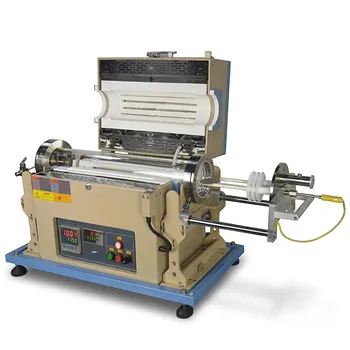
1200°C High Temperature 4 Inch Tube Furnace with Sliding Flange for CVD Systems
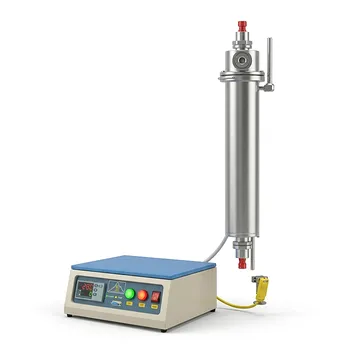
High Magnetic Field Compatible Tube Furnace for 1100C Material Research with Controlled Atmosphere and Water Cooled Non Magnetic Case

High Temperature 1700C Benchtop Tube Furnace with 5 Inch Heating Zone High Purity Alumina Tube and Vacuum Sealing Flanges

1800C High Temperature Compact Vacuum Tube Furnace with 60mm OD Alumina Tube and Kanthal MoSi2 Heating Elements

1750°C High Temperature Benchtop Vacuum Atmosphere Tube Furnace with Kanthal Super 1800 Heating Elements and 60mm Alumina Processing Tube

Compact High Temperature 1600C Tube Furnace with 50mm Alumina Tube and Vacuum Flanges for Material Sintering
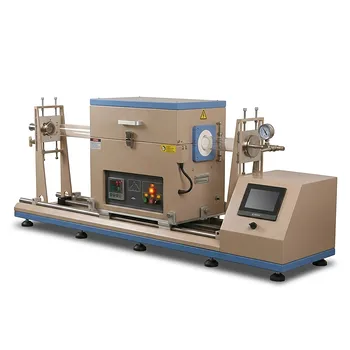
1200C Sliding Tube Furnace for Rapid Thermal Processing and CVD Graphene Growth with 100mm OD Capacity

High Temperature Automated 5 Inch Tube Furnace for Autonomous Material Research and Advanced Laboratory R&D

1100C Tube Furnace with Vacuum Flange and Programmable Temperature Controller for Material Science and Industrial Heat Treatment
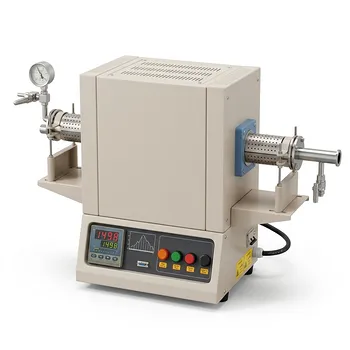
1500C High Temperature Compact Tube Furnace 2 Inch OD with Vacuum Flanges and Complete Accessories
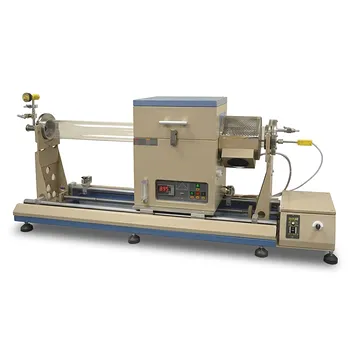
900 ºC Max Sliding RTP Tube Furnace with Rapid IR Heating and 4 Inch OD Quartz Tube
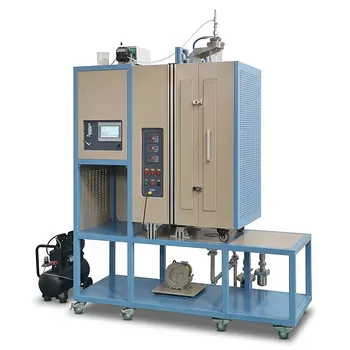
1500C Three Zone Vertical Pyrolysis Furnace for Nanoparticle Synthesis and Advanced Oxide Coating
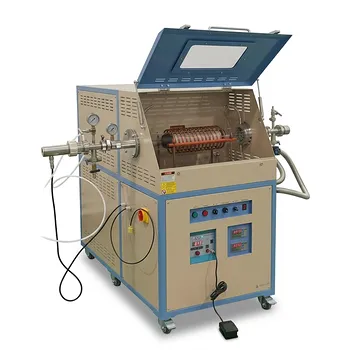
Ultra High Temperature 2300C Induction Heated Graphite Tube Furnace with Infrared Control
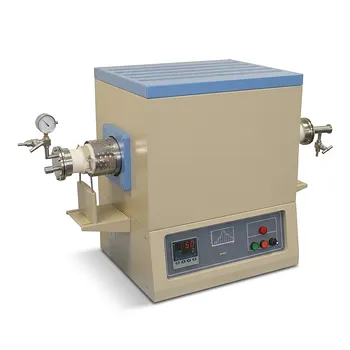
1700C High Temperature Alumina Tube Furnace with 18 Inch Heated Zone and Vacuum Sealing Flanges
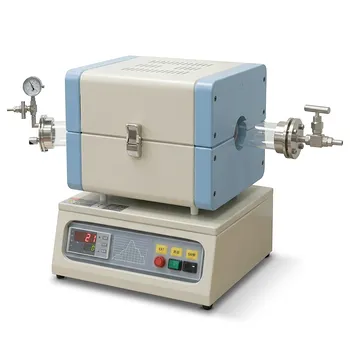
1200C Tube Furnace with Internal Magnetic Sample Sliding for Direct Vaporizing Deposition and Rapid Thermal Processing
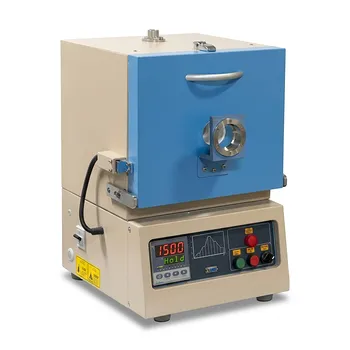
1500C Hybrid Muffle Tube Furnace 1.7L Box with 2 Inch Mullite Tube and Programmable PID Controller
