Why is a tube furnace with atmosphere control required for Cr2O3/Ru research? Achieve High-Temp Material Stability
Updated 3 months ago
Atmosphere control is the critical factor in $\text{Cr}_2\text{O}_3/\text{Ru}$ stability because it creates a precise thermodynamic environment that preserves both layers simultaneously. By introducing a humidified $\text{Ar/H}_2$ gas mixture, the system maintains the oxidation state of the $\text{Cr}_2\text{O}_3$ layer while preventing the metallic Ruthenium (Ru) from oxidizing or diffusing across the interface. This specific chemical balance allows the heterostructure to remain stable at extreme temperatures reaching 950°C.
The core takeaway is that a tube furnace with atmosphere control allows researchers to manipulate the chemical potential of oxygen within the furnace. This ensures the protective oxide layer remains intact while the underlying metal is shielded from degradation, a feat impossible in a standard air-filled environment.
The Thermodynamic Precision of Atmosphere Control
Maintaining Oxidation State Selectivity
The primary role of the atmosphere control system is to manage the oxidation state of the materials. In heterostructures like $\text{Cr}_2\text{O}_3/\text{Ru}$, the goal is to keep the chromium in its oxide form while keeping the ruthenium in its metallic form.
Utilizing a humidified $\text{Ar/H}_2$ gas mixture creates a specific oxygen partial pressure. This pressure is high enough to satisfy the thermodynamic requirements of $\text{Cr}_2\text{O}_3$, stopping it from reducing, yet low enough to prevent the ruthenium metal from reacting with oxygen.
Inhibiting Metallic Oxidation and Interdiffusion
At temperatures as high as 950°C, atoms become highly mobile, leading to a risk of interface interdiffusion. This occurs when the atoms of the two layers begin to mix, destroying the distinct heterostructure.
The controlled atmosphere acts as a chemical stabilizer at the interface. By inhibiting the oxidation of the underlying Ru, the system prevents the formation of ruthenium oxides that would otherwise compromise the structural and electronic integrity of the device.
Why Atmosphere Control is Non-Negotiable
Preventing Unintended Chemical Reactions
Without a sealed tube and precise gas introduction, materials are at the mercy of ambient air. Oxygen and moisture in the air cause uncontrolled oxidation, which would turn the metallic ruthenium into an oxide and potentially alter the stoichiometry of the $\text{Cr}_2\text{O}_3$ layer.
As seen in similar material research, such as with $\text{CoFe}_2\text{O}_4$ or molybdenum compounds, maintaining specific ratios of ions is only possible when the environment is purged of air. This ensures that any changes to the material are the result of the experiment's variables rather than external chemical corrosion.
Solving the Problem of High-Temperature Volatility
High-temperature research (above 700°C) significantly increases the reactivity of precursors. Atmosphere control allows for the isolation of oxygen, which prevents the combustion of components and ensures that the material remains physically stable.
In $\text{Cr}_2\text{O}_3/\text{Ru}$ research, this stability is essential for "ultra-high temperature" applications. The tube furnace provides a stable reducing or inert environment that mimics or tests the extreme conditions the heterostructure must survive in real-world applications.
Understanding the Trade-offs and Risks
The Complexity of Gas Calibration
Using a humidified $\text{Ar/H}_2$ mixture requires precise calibration; if the hydrogen concentration is too high, it may inadvertently reduce the chromium oxide. Conversely, if the moisture (humidity) is not strictly regulated, the oxygen partial pressure may rise enough to oxidize the ruthenium.
Equipment Limitations
Standard furnaces cannot maintain the vacuum or sealed pressure required for these gas mixtures. Research into these heterostructures requires specialized tube furnaces that can handle flammable gases like hydrogen and maintain a leak-proof seal to avoid any atmospheric contamination.
How to Apply This to Your Research Goal
- If your primary focus is Phase Purity: Use a sealed tube furnace to perform a deep vacuum cycle followed by an inert gas purge to ensure no trace oxygen interferes with the stoichiometry of your oxide layer.
- If your primary focus is Interface Integrity: Prioritize the use of a reducing gas mixture (like $\text{H}_2/\text{Ar}$) to keep the metallic substrate from oxidizing, which is the leading cause of layer delamination and interdiffusion.
- If your primary focus is High-Temperature Durability: Ensure your furnace is rated for at least 950°C and equipped with high-precision mass flow controllers to maintain a consistent gas ratio throughout the entire heating and cooling cycle.
By mastering the atmosphere within the tube furnace, you transform it from a simple heater into a sophisticated chemical reactor capable of stabilizing materials at the edge of their thermodynamic limits.
Summary Table:
| Key Feature | Functional Benefit | Research Impact |
|---|---|---|
| Oxygen Potential Control | Maintains specific oxidation states | Ensures $Cr_2O_3$ phase purity without reduction |
| Reducing Gas ($Ar/H_2$) | Inhibits metallic oxidation | Prevents Ruthenium degradation at 950°C |
| Sealed Tube Design | Blocks ambient air/moisture | Eliminates unintended chemical corrosion |
| Interface Stabilization | Minimizes high-temp atom mobility | Prevents delamination and interdiffusion |
Elevate Your Material Research with THERMUNITS
At THERMUNITS, we understand that stabilization research for complex heterostructures like $Cr_2O_3/Ru$ demands absolute environmental precision. As a leading manufacturer of high-temperature laboratory equipment, we provide the specialized thermal solutions necessary to control chemical potentials and preserve material integrity at the edge of thermodynamic limits.
Whether your R&D requires Tube, Vacuum, Atmosphere, or Rotary furnaces, our systems are engineered for high-precision gas calibration and leak-proof sealing to handle flammable mixtures like $H_2/Ar$ safely.
Ready to achieve superior interface integrity and phase purity? Explore our range of Muffle, CVD/PECVD, Vacuum Induction Melting (VIM), and Hot Press furnaces today. Our experts are here to help you select the ideal heat treatment equipment for your material science goals.
Contact THERMUNITS Today to optimize your thermal processing workflow!
References
- Quintin Cumston, William E. Kaden. Wafer-scale development, characterization, and high temperature stabilization of epitaxial Cr2O3 films grown on Ru(0001). DOI: 10.1063/5.0201818
Mentioned Products
- 1200°C Atmosphere Controlled Automatic Bottom Loading Furnace with 6 Inch Quartz Tube
- Compact Vertical Split Quartz Tube Furnace with Stainless Steel Vacuum Flanges for Rapid Thermal Quenching and Controlled Atmosphere Material Processing
- Compact Hybrid Muffle and Tube Furnace for 1000C Controlled Atmosphere Laboratory Material Sintering
- Three Temperature Zone Rotating Tube Furnace for Material Sintering and Controlled Atmospheric Heat Treatment
- Vertical 1700C Vacuum and Atmosphere Tube Furnace with 80mm Alumina Tube
People Also Ask
- Why is a tube furnace required for FGM-PhG structural color ceramics? Key to Carbon Preservation & Vibrant Color
- Why is an atmosphere-controlled tube furnace required for the pre-sulfidation of NiMo/gamma-Al2O3 catalysts?
- Why is an atmosphere-controlled tube furnace required for 800 °C CNF annealing? Essential for Oxidative Protection.
- Why is an atmosphere-controlled tube furnace required for [email protected]/C preparation? Key for Purity & Structure
- Why is an atmosphere-controlled tube furnace required for single-atom sensor calcination? Ensure Atomic Dispersion.

Tech Team · ThermUnits
Last updated on Jun 03, 2026
Related Products
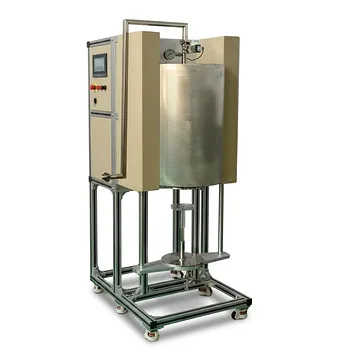
1200°C Atmosphere Controlled Automatic Bottom Loading Furnace with 6 Inch Quartz Tube
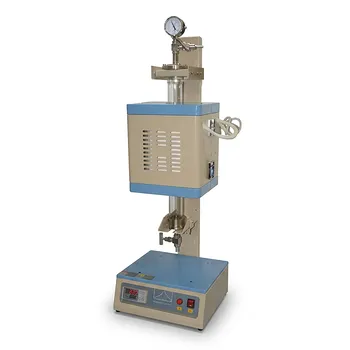
Compact Vertical Split Quartz Tube Furnace with Stainless Steel Vacuum Flanges for Rapid Thermal Quenching and Controlled Atmosphere Material Processing
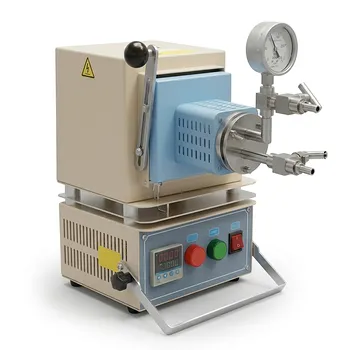
Compact Hybrid Muffle and Tube Furnace for 1000C Controlled Atmosphere Laboratory Material Sintering
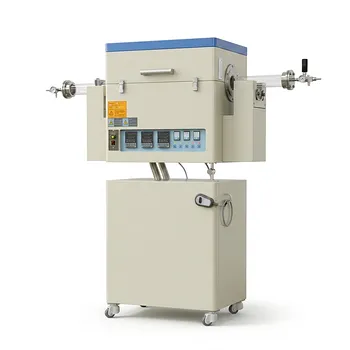
Three Temperature Zone Rotating Tube Furnace for Material Sintering and Controlled Atmospheric Heat Treatment
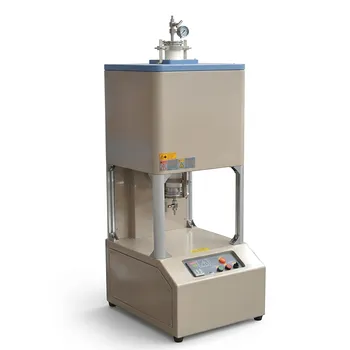
Vertical 1700C Vacuum and Atmosphere Tube Furnace with 80mm Alumina Tube
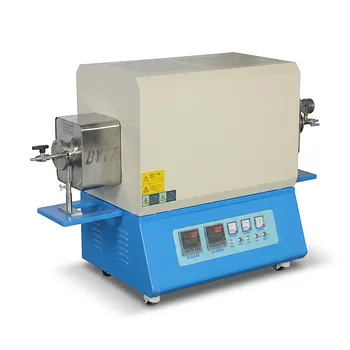
High Temperature Dual Zone Split Tube Furnace for Advanced Atmosphere Sintering and Vacuum CVD Applications
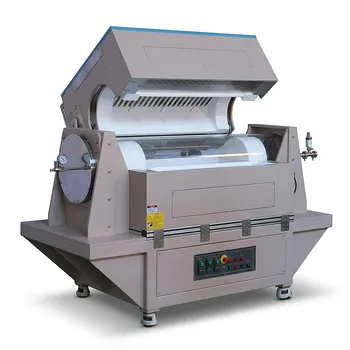
Three Zone Tube Furnace with 11 Inch or 15 Inch Quartz Tube and Hinged Flanges for Vacuum Atmosphere Heat Treatment
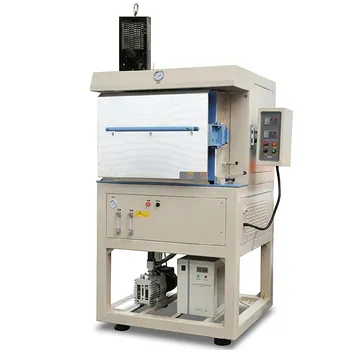
1200C Hydrogen Atmosphere Box Furnace with 5 Heated Sides and 64L Chamber
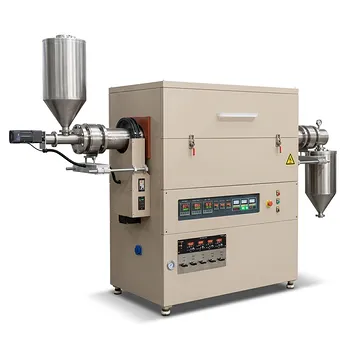
High Temperature Tilting Rotary Tube Furnace with Integrated Mass Flow Control and Multi Zone Heating
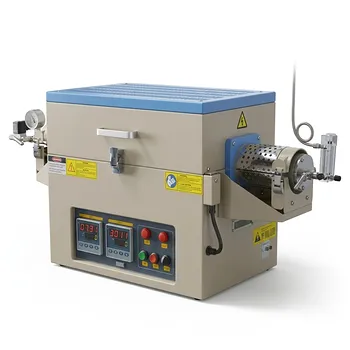
1100C Dual Zone Hydrogen Gas Tube Furnace with Quartz Tube and Integrated H2 Leak Detection System
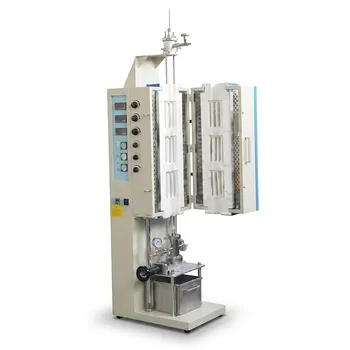
High Temperature Dual Zone Tube Furnace for Material Science Research and Professional Thermal Processing
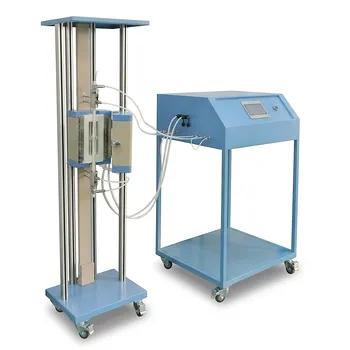
High Temperature Vertical Tube Furnace for Small Solid Oxide Fuel Cell Testing with Four Channel Gas Control
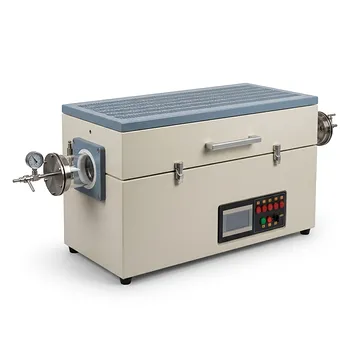
Five Zone 1200C High Temperature Split Tube Furnace with Touch Screen Controller and Multiple Quartz Tube Options
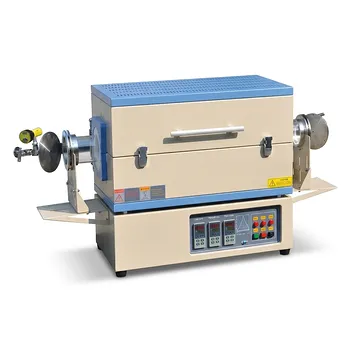
Three Zone Tube Furnace with 24 Inch Heating Length and Hinged Flange Quartz Tube System
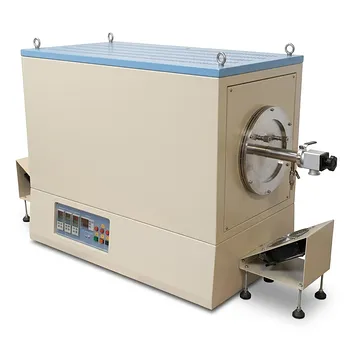
Four Zone Tube Furnace 1100C with 600mm Large Diameter Quartz Tube and Vacuum Flanges
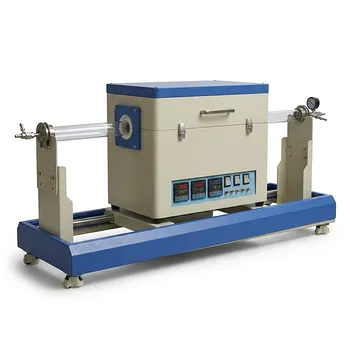
Double Temperature Zone Double Cover Tube Furnace for High Temperature CVD and Vacuum Annealing
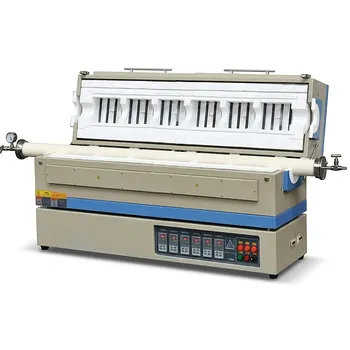
High Temperature 1700C Six Zone Split Tube Furnace with Alumina Tube and Water Cooled Flanges
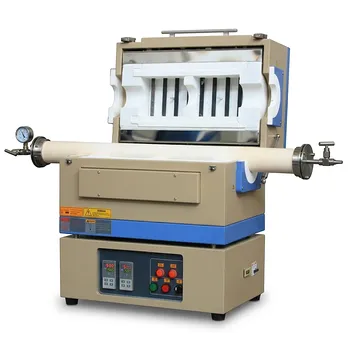
1500C Two Zone Split Tube Furnace with Vacuum Flange and 80mm Alumina Tube
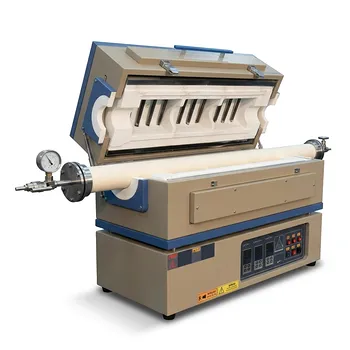
1600C Three Zone Split Tube Furnace with Alumina Tube and Vacuum Flange
