Why is a high-vacuum tube furnace required for magnesium-based hydrogen storage alloys? Ensure purity and phase control.
Updated 3 months ago
The necessity of a high-vacuum tube furnace for magnesium-based alloys stems from the extreme chemical reactivity of these metals at elevated temperatures. Elements like magnesium (Mg), titanium (Ti), and manganese (Mn) possess a high affinity for oxygen and moisture. Without a strictly controlled environment, these materials will oxidize or even combust during the long-term heating cycles required for solid-state diffusion, leading to failed alloy synthesis.
Core Takeaway: A high-vacuum ($10^{-5}$ Pa) and inert-gas-protected environment is essential to isolate reactive metals from oxygen and moisture, ensuring that the resulting hydrogen storage alloy achieves its intended chemical composition and precise phase structure.
Preventing Chemical Degradation at High Temperatures
Neutralizing Extreme Metallic Reactivity
Magnesium and its alloying partners, such as titanium, are highly chemically active when heated. In a standard atmosphere, these elements react instantly with oxygen and nitrogen to form stable oxides and nitrides.
A tube furnace capable of reaching high vacuum levels removes these reactive gases before the heating process begins. This isolation is the only way to preserve the metallic state of the raw materials during the synthesis of alloys like $Mg_{1.6}Ni_{1-x}Ti_{0.4}Mn_x$.
Protecting the Diffusion Interface
Solid-state diffusion relies on the movement of atoms across the boundaries of different metal particles. If oxygen is present, oxide layers form on the surface of the powder particles, acting as physical barriers that block atomic migration.
By using high-purity argon gas protection, the furnace ensures that these interfaces remain "clean." This allows for the unhindered flow of atoms, which is critical for the formation of complex intermetallic compounds.
Driving Precise Phase Formation and Homogeneity
Enabling Long-Term Thermal Energy Transfer
Solid-state diffusion is a time-dependent process that requires stable thermal energy, often reaching 600 °C for 4 hours or more. The tube furnace provides a uniform heat field that drives the large-scale diffusion of different metal atoms across interfaces.
This controlled environment is necessary to promote the formation of the $Mg_2Ni$ main phase and critical compounds like $Ni_3Ti$ and $Mg_3MnNi_2$. These specific phases are what give the alloy its unique hydrogen storage and catalytic properties.
Maintaining Compositional Accuracy
High temperatures can cause the volatilization of certain elements, particularly nickel or magnesium, if the environment is not properly pressurized or stabilized. A vacuum furnace allows for microstructural homogenization while preventing the loss of these critical elements.
By preventing the introduction of oxygen impurities, the furnace ensures that the electronic valence states of the active sites remain unchanged. This is vital for the final material's ability to absorb and release hydrogen efficiently.
Understanding the Technical Trade-offs
Equipment Complexity vs. Material Purity
Achieving a high vacuum of $10^{-5}$ Pa requires sophisticated pumping systems and high-quality seals. While this increases the complexity and cost of the experimental setup, any compromise in vacuum depth risks the introduction of oxygen impurities that can fundamentally alter the alloy's performance.
Gas Flow Management
Using a continuous flow of inert gas (argon) provides a neutral atmosphere but requires precise flow control. If the gas purity is insufficient or the flow rate is inconsistent, the surface integrity of the alloy may still be compromised, leading to non-uniform thermal histories.
How to Apply This to Your Alloy Synthesis
To ensure the successful production of magnesium-based hydrogen storage materials, the furnace parameters must be matched to your specific research goals.
- If your primary focus is Compositional Accuracy: Prioritize achieving the highest possible vacuum ($10^{-5}$ Pa) before heating to ensure no raw materials are lost to oxidation.
- If your primary focus is Phase Purity: Maintain a stable, long-term temperature (e.g., 600 °C) with uniform heat field distribution to facilitate complete solid-state diffusion.
- If your primary focus is Surface Integrity: Utilize a constant flow of high-purity argon gas to create a neutral environment that prevents the volatilization of transition metals.
By strictly controlling the atmosphere and thermal environment, you ensure that the microstructural evolution of the alloy proceeds in its purest state, resulting in high-performance hydrogen storage materials.
Summary Table:
| Key Feature | Role in Synthesis | Impact on Material Performance |
|---|---|---|
| High Vacuum ($10^{-5}$ Pa) | Removes $O_2$ and moisture | Prevents metallic oxidation and combustion of Mg/Ti. |
| Inert Gas Protection | Provides a neutral atmosphere | Maintains clean diffusion interfaces for atomic migration. |
| Uniform Heat Field | Drives solid-state diffusion | Ensures formation of $Mg_2Ni$ and $Ni_3Ti$ phases. |
| Atmosphere Control | Prevents element volatilization | Maintains compositional accuracy and electronic valence states. |
Elevate Your Alloy Research with THERMUNITS Precision
Achieving the perfect phase structure in magnesium-based hydrogen storage materials requires uncompromising atmospheric control. THERMUNITS is a leading manufacturer of high-temperature laboratory equipment, providing the advanced thermal processing solutions needed for cutting-edge material science and industrial R&D.
Whether you require High-Vacuum Tube Furnaces, Atmosphere Furnaces, or Vacuum Induction Melting (VIM) systems, our equipment is engineered to eliminate oxidation and ensure microstructural homogeneity. From CVD/PECVD systems to specialized thermal elements, we empower researchers to produce high-purity alloys with repeatable results.
Ready to optimize your heat treatment process? Contact our technical experts today to discuss your specific requirements and discover how our comprehensive furnace solutions can accelerate your R&D breakthroughs.
References
- Jiangang Wang, Jing Ma. Study on Microstructure and Electrochemical Properties of Mg1.6Ni1-xTi0.4Mnx (x = 0~0.3) Alloy. DOI: 10.3390/coatings14121558
Mentioned Products
- 1500C Max Dual Zone Rotary Tube Furnace with 60 mm OD Alumina Tube for High Temperature Material Synthesis
- 1750°C High Temperature Benchtop Vacuum Atmosphere Tube Furnace with Kanthal Super 1800 Heating Elements and 60mm Alumina Processing Tube
- High Vacuum Melting Casting Furnace with Mechanical Stirring and Secondary Charge for Metallic Alloy Research
- Compact High Temperature 1600C Tube Furnace with 50mm Alumina Tube and Vacuum Flanges for Material Sintering
- 1800C High Temperature Compact Vacuum Tube Furnace with 60mm OD Alumina Tube and Kanthal MoSi2 Heating Elements
People Also Ask
- How does a rotary tube furnace improve the processing of granular materials? Enhance Uniformity and Reaction Kinetics
- Why is the precise optimization of residence time essential in the catalyst calcination process? Maximize Your Yields.
- Why use a rotary tube furnace for FACS carbonization? Ensure uniform morphology and prevent sphere agglomeration.
- In what ways do rotary tube furnaces enhance chemical and specialty mineral processing? Drive Precision and Uniformity.
- What parameters must operators control to maintain product quality in a rotary furnace? Master Your Heat Treatment.

Tech Team · ThermUnits
Last updated on Jun 02, 2026
Related Products
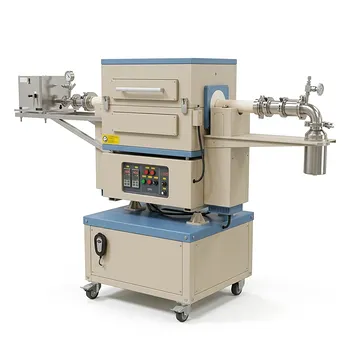
1500C Max Dual Zone Rotary Tube Furnace with 60 mm OD Alumina Tube for High Temperature Material Synthesis
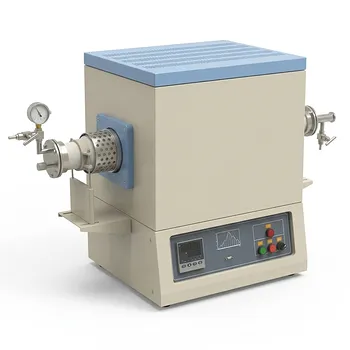
1750°C High Temperature Benchtop Vacuum Atmosphere Tube Furnace with Kanthal Super 1800 Heating Elements and 60mm Alumina Processing Tube
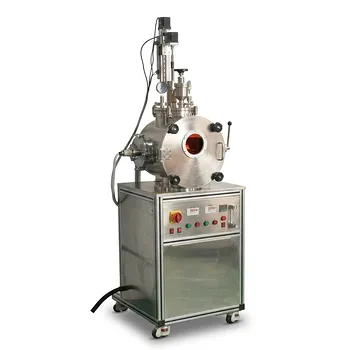
High Vacuum Melting Casting Furnace with Mechanical Stirring and Secondary Charge for Metallic Alloy Research

Compact High Temperature 1600C Tube Furnace with 50mm Alumina Tube and Vacuum Flanges for Material Sintering

1800C High Temperature Compact Vacuum Tube Furnace with 60mm OD Alumina Tube and Kanthal MoSi2 Heating Elements
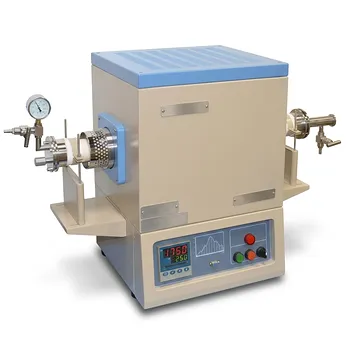
High Temperature Compact Vacuum Tube Furnace 1750C Max 60mm OD Alumina Tube

High Temperature 1700C Vertical Tube Furnace for Powder Spherification and Material Sintering
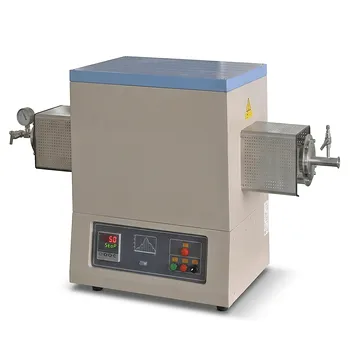
High Temperature 1700C Tube Furnace with 4 Inch OD Alumina Tube and Vacuum Sealing Flanges
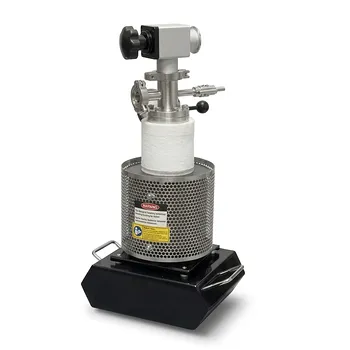
High Temperature 1100C Compact Top Loading Vertical Vacuum Tube Furnace for High Vacuum Noble Metal Melting and Material Research

High Temperature 1700C Six Zone Split Tube Furnace with Alumina Tube and Water Cooled Flanges
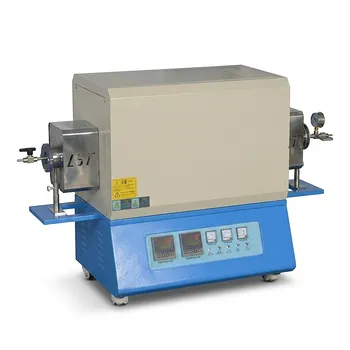
High Temperature Dual Zone Vacuum Tube Furnace for Material Research and CVD Processing

High Temperature 1700C Tube Furnace with High Vacuum Turbomolecular Pump System and Multi Channel Mass Flow Controller Gas Mixer

High Temperature 1700C Benchtop Tube Furnace with 5 Inch Heating Zone High Purity Alumina Tube and Vacuum Sealing Flanges
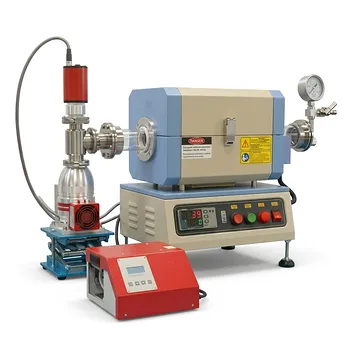
High Vacuum Compact Tube Furnace 1200C with Integrated Turbo Pump System and 8 Inch Heating Zone
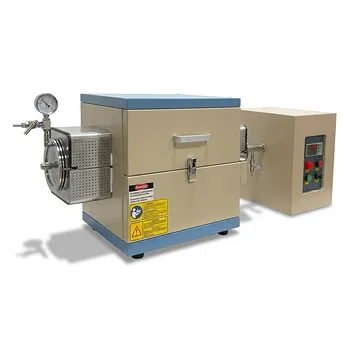
1200C High Temperature 5 Inch Split Vacuum Tube Furnace with 12 Inch Heating Zone and Separated PID Controller
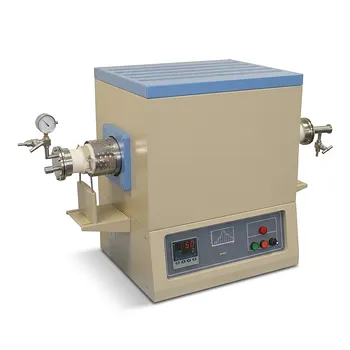
1700C High Temperature Alumina Tube Furnace with 18 Inch Heated Zone and Vacuum Sealing Flanges
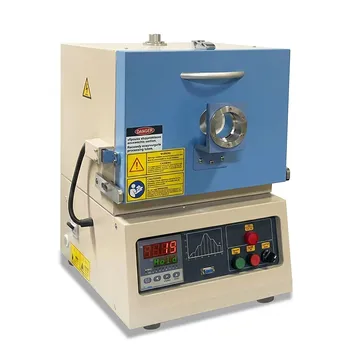
High Temperature Hybrid Muffle and Tube Furnace 1700C Programmable PID Controlled Box System with Vacuum Flange and Alumina Processing Tube
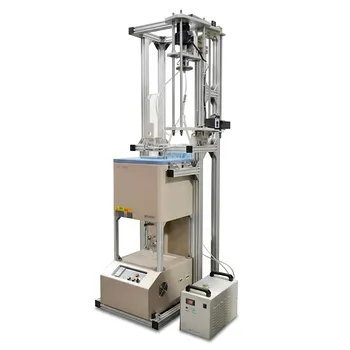
500C Vacuum Vertical Tube Furnace 84mm OD Sample Rotation Lifting System

1100C Tube Furnace with Vacuum Flange and Programmable Temperature Controller for Material Science and Industrial Heat Treatment
