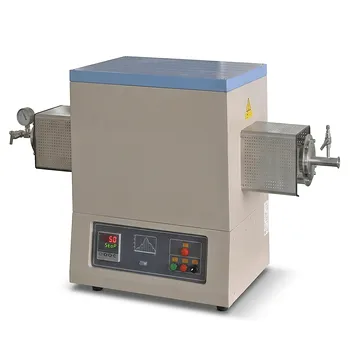
Why is a tube furnace with high vacuum and inert atmosphere control required for Ti3AlC2 synthesis? Ensure High Purity.
Updated 3 months ago
Synthesizing the $Ti_3AlC_2$ MAX phase requires a high-vacuum, inert-atmosphere tube furnace primarily to prevent the aggressive oxidation of titanium and aluminum powders at high temperatures. These metallic components are highly reactive and will readily form stable oxides like $Al_2O_3$ and $TiO_2$ in even trace amounts of oxygen. By utilizing a vacuum and purging with high-purity argon, the furnace ensures the raw materials undergo the necessary solid-phase reactions to form the complex layered MAX phase structure rather than becoming a contaminated ceramic mixture.
Core Takeaway: A controlled atmosphere furnace is indispensable for $Ti_3AlC_2$ synthesis because it provides the extreme oxygen-free environment and precise thermal control required to manage volatile metallic elements and drive the thermodynamic conversion of intermediate phases into the final product.
Preventing Oxidative Degradation
The High Reactivity of Titanium and Aluminum
At the required sintering temperatures—often ranging from 1150°C to 1600°C—titanium and aluminum have a high affinity for oxygen. If exposed to air, these raw materials will oxidize before they can react with carbon to form the MAX phase.
Displacing Oxygen and Water Vapor
The tube furnace uses a continuous flow of high-purity argon (Ar) to physically expel oxygen and water vapor from the chamber. This creates an inert barrier that protects the powder compact throughout the entire heating and cooling cycle.
Achieving Low Oxygen Partial Pressure
High-vacuum systems can reach pressure levels as low as 10⁻⁵ mbar, which is critical for ensuring the chemical stability of the powders. This "extreme reducing environment" is the only way to ensure that the metallic surfaces remain clean and reactive for the synthesis process.
Facilitating Thermodynamic Phase Transitions
Managing Intermediate Phase Conversion
The synthesis of $Ti_3AlC_2$ often involves the formation of intermediate phases, such as $Ti_2AlC$. Precise temperature control is required to drive the thermodynamic conversion of these intermediates into the final $Ti_3AlC_2$ target.
Precision Thermal Fields
Tube furnaces provide a stable and uniform thermal field with controlled heating rates, typically around 10°C/min. This prevents localized overheating that could lead to the melting of aluminum or the formation of unwanted secondary phases.
Removal of Volatile Impurities
The vacuum capability allows for specific holding stages at lower temperatures (e.g., 400°C) to burn off residual binders or space holders. This process ensures that the pore structure and chemical purity of the final material are not compromised by carbonaceous residues.
Understanding the Trade-offs
The Risk of Aluminum Evaporation
While a high vacuum is excellent for removing oxygen, it can inadvertently lead to aluminum loss. Aluminum has a high vapor pressure at elevated temperatures, and an excessive vacuum may cause it to evaporate out of the sample before the reaction completes.
Balancing Atmosphere and Pressure
Researchers must often balance the use of vacuum with inert gas overpressure. Starting with a high vacuum to purge the system and then backfilling with argon helps maintain the elemental stoichiometry of the $Ti_3AlC_2$ while still preventing oxidation.
Equipment Sensitivity and Cost
Operating at 1600°C under high vacuum puts significant stress on furnace components, such as the alumina work tube and vacuum seals. This requires higher maintenance standards compared to standard air-fired box furnaces.
How to Apply This to Your Project
Recommendations for Synthesis Success
- If your primary focus is maximum phase purity: Utilize a high vacuum (10⁻⁵ mbar) during the initial ramp-up to remove all adsorbed gases before switching to a slight positive pressure of argon for the high-temperature soak.
- If your primary focus is preventing aluminum loss: Limit the vacuum duration at temperatures above 800°C and maintain a steady flow of high-purity argon to suppress metal vaporization.
- If your primary focus is removing binders or additives: Incorporate a low-temperature dwell stage (300°C–500°C) under vacuum to ensure all organic impurities are evacuated before the sintering reaction begins.
By strictly controlling the chemical and thermal environment within the tube furnace, you ensure that the delicate solid-phase reactions necessary for MAX phase formation proceed without interference from atmospheric contaminants.
Summary Table:
| Key Feature | Role in Ti3AlC2 Synthesis |
|---|---|
| High Vacuum (10⁻⁵ mbar) | Removes adsorbed gases and prevents oxidative degradation of Ti/Al. |
| Inert Atmosphere (Ar) | Provides a protective barrier and suppresses aluminum evaporation at high temps. |
| Precise Thermal Control | Manages thermodynamic conversion from intermediate phases (like Ti2AlC). |
| Uniform Heating Fields | Prevents localized overheating and ensures stoichiometric stability. |
Advance Your Material Research with THERMUNITS
Synthesizing complex materials like Ti3AlC2 MAX phases requires uncompromising environmental control. THERMUNITS is a leading manufacturer of high-temperature laboratory equipment tailored for material science and industrial R&D. We offer a comprehensive range of thermal processing solutions, including Tube, Vacuum, Atmosphere, and Hot Press furnaces, as well as CVD/PECVD systems and Vacuum Induction Melting (VIM) furnaces.
Our equipment is engineered to provide the precise oxygen-free environments and thermal stability necessary for your most demanding heat treatment processes. Contact us today to explore how our specialized solutions can enhance your lab's efficiency and synthesis success.
References
- Najma Khatoon, Douglas B. Chrisey. Synthesis and Photothermal Processing of Silicon‐Based Nanoconfined MXenes. DOI: 10.1002/admi.202400447
Mentioned Products
- 1200C Hybrid Muffle and Tube Furnace for Material Research with Dual Atmosphere Control Quartz Tubes
- 1750°C High Temperature Benchtop Vacuum Atmosphere Tube Furnace with Kanthal Super 1800 Heating Elements and 60mm Alumina Processing Tube
- Vertical 1700C Vacuum and Atmosphere Tube Furnace with 80mm Alumina Tube
- Three Zone Tube Furnace with 11 Inch or 15 Inch Quartz Tube and Hinged Flanges for Vacuum Atmosphere Heat Treatment
- Atmosphere Controlled Muffle Furnace 1700C Maximum Temperature 80L High Capacity Vacuum Inert Gas Box Furnace
People Also Ask
- What's the Role of Tube Furnaces in FeCuS-N-C Synthesis? Precision Pyrolysis & Atmosphere Control
- Why is an atmosphere tube furnace required during the pre-carbonization stage of coal-based hard carbon synthesis?
- How does a high-temperature atmosphere tube furnace facilitate CoN@Co growth on biochar? Precision Synthesis Guide
- What is the purpose of Ar/H2 annealing? Enhancing Pt-Co3O4 Catalytic Performance via Precision EMSI Tuning
- Why is a High-Precision Tube Atmosphere Furnace required for biochar? Achieve Optimal Pore Structure & Carbon Content

Tech Team · ThermUnits
Last updated on Jun 02, 2026
Related Products
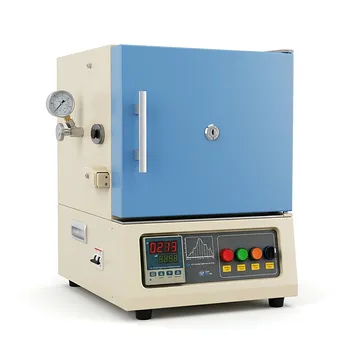
1200C Hybrid Muffle and Tube Furnace for Material Research with Dual Atmosphere Control Quartz Tubes

1750°C High Temperature Benchtop Vacuum Atmosphere Tube Furnace with Kanthal Super 1800 Heating Elements and 60mm Alumina Processing Tube

Vertical 1700C Vacuum and Atmosphere Tube Furnace with 80mm Alumina Tube
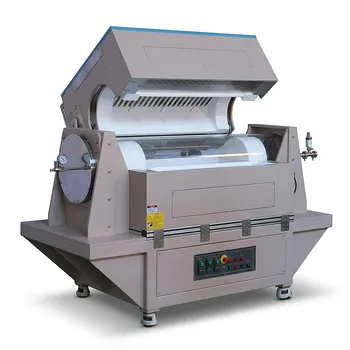
Three Zone Tube Furnace with 11 Inch or 15 Inch Quartz Tube and Hinged Flanges for Vacuum Atmosphere Heat Treatment
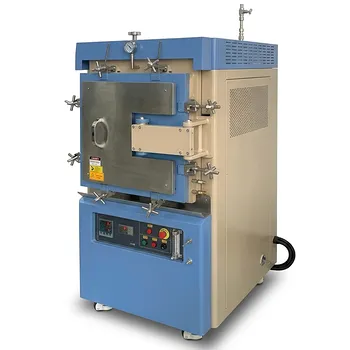
Atmosphere Controlled Muffle Furnace 1700C Maximum Temperature 80L High Capacity Vacuum Inert Gas Box Furnace

Compact Vertical Split Quartz Tube Furnace with Stainless Steel Vacuum Flanges for Rapid Thermal Quenching and Controlled Atmosphere Material Processing
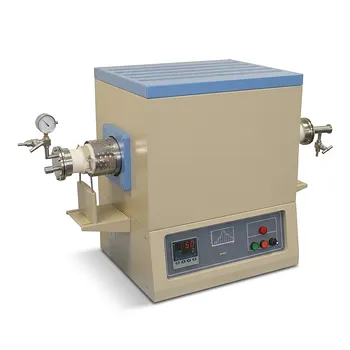
1700C High Temperature Alumina Tube Furnace with 18 Inch Heated Zone and Vacuum Sealing Flanges
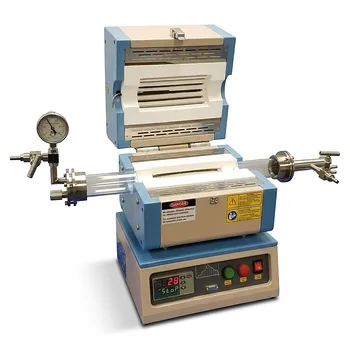
Compact Split Tube Furnace with Integrated Vacuum System and Precision Temperature Calibrator
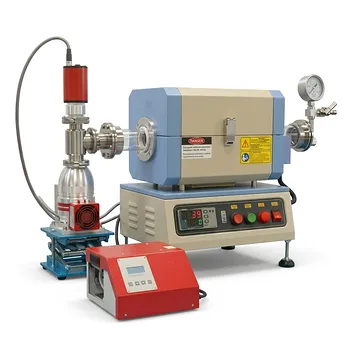
High Vacuum Compact Tube Furnace 1200C with Integrated Turbo Pump System and 8 Inch Heating Zone
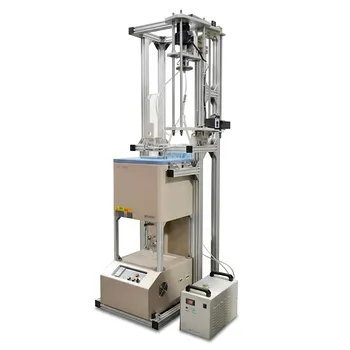
500C Vacuum Vertical Tube Furnace 84mm OD Sample Rotation Lifting System
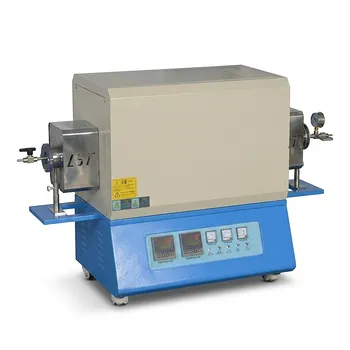
High Temperature Dual Zone Vacuum Tube Furnace for Material Research and CVD Processing
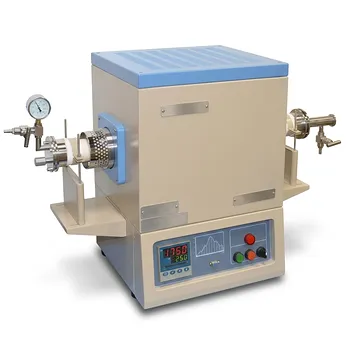
High Temperature Compact Vacuum Tube Furnace 1750C Max 60mm OD Alumina Tube

1100C Tube Furnace with Vacuum Flange and Programmable Temperature Controller for Material Science and Industrial Heat Treatment

1200°C 5 Inch Vertical Quartz Tube Furnace with Stainless Steel Vacuum Flanges
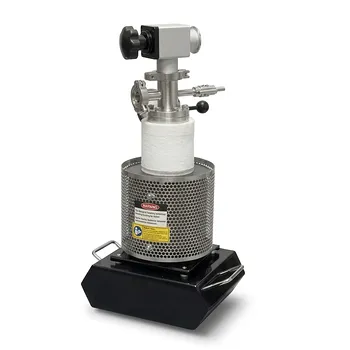
High Temperature 1100C Compact Top Loading Vertical Vacuum Tube Furnace for High Vacuum Noble Metal Melting and Material Research
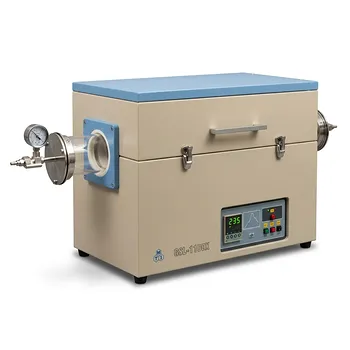
Single Zone Tube Furnace 5 Inch Quartz Tube 36 Inch Heating Zone Vacuum Flanges

1800C High Temperature Compact Vacuum Tube Furnace with 60mm OD Alumina Tube and Kanthal MoSi2 Heating Elements
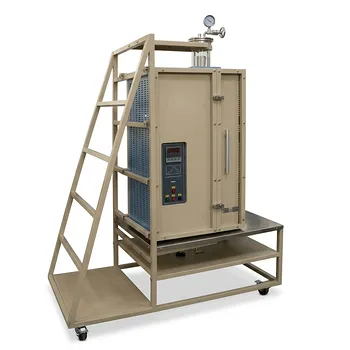
Split Vertical Tube Furnace with 1200C Quartz Tube and Stainless Steel Vacuum Flanges for Rapid Thermal Processing
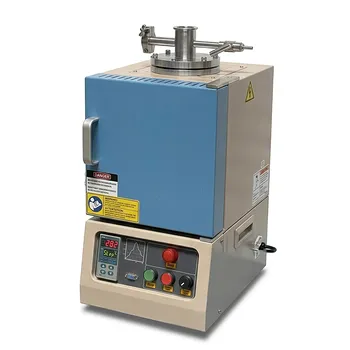
High Temperature Hybrid Muffle and Tube Furnace with Vacuum Capability and PID Control