Why is a vacuum system utilized for post-treatment in the SCA-CVD process? Ensure MOF Purity & Structural Integrity
Updated 3 months ago
The utilization of a vacuum system for post-treatment is a strategic choice to ensure chemical purity and structural preservation. In the Self-Condensation Assisted Chemical Vapor Deposition (SCA-CVD) process, the vacuum exploits the high volatility of unreacted precursors like ferrocene and benzimidazole to remove them without liquid intervention. This physical removal process eliminates residual droplets and impurities that would otherwise compromise the quality of the grown Metal-Organic Framework (MOF) single crystals.
Core Takeaway: Vacuum post-treatment serves as a "dry cleaning" mechanism that removes volatile residues while bypassing the mechanical and chemical stresses associated with traditional solvent-based washing. This ensures that atomic-scale MOF structures remain intact and free of contamination.
The Role of Precursor Volatility in Dry Cleaning
Exploiting Vapor Pressure for Residue Removal
The primary precursors used in SCA-CVD, such as ferrocene and benzimidazole, possess high volatility under reduced pressure. By applying a vacuum after the growth cycle, these substances transition easily from a condensed or liquid state back into a gas phase.
Eliminating Residual Droplets
During the cooling or transition phases of CVD, unreacted precursors can form residual droplets on the surface of the newly formed crystals. A vacuum system effectively "evaporates" these droplets, ensuring the surface of the MOF single crystal is pristine and chemically consistent.
Protecting Structural Integrity at the Atomic Scale
Avoiding Solvent-Induced Damage
Traditional cleaning methods rely on liquid solvents to dissolve unreacted materials, but these liquids can exert capillary forces or chemical stresses. For MOF structures grown as atomic-scale thin flakes, these forces are often strong enough to distort, tear, or collapse the delicate framework.
Preventing Impurity Residues
Solvent cleaning often introduces a new problem: solvent entrapment or residue. Even high-purity solvents can leave behind trace contaminants upon drying, whereas a vacuum treatment is a purely physical process that leaves no chemical footprint on the sample.
Enhancing Crystal Quality through Pressure Control
Increasing the Mean Free Path
While critical during growth, maintaining low pressure post-growth ensures that any desorbed impurity molecules have a long mean free path. This allows them to be efficiently swept out of the reaction chamber by the pump rather than re-depositing onto the MOF crystal surface.
Maintaining a Controlled Atmosphere
The vacuum system prevents the influx of atmospheric moisture or oxygen immediately following the reaction. This is vital for MOFs that might be sensitive to oxidation or hydrolysis before they are properly stabilized or characterized.
Understanding the Trade-offs
Limitations of Non-Volatile Precursors
The effectiveness of vacuum post-treatment is strictly dependent on the volatility of the precursors. If the reaction involves heavy, non-volatile organic monomers or metal salts, a vacuum alone will not be sufficient to clean the sample, and secondary methods may still be required.
Energy and Equipment Constraints
Achieving the high-vacuum levels (often down to 10^-2 Torr) necessary for thorough cleaning requires sophisticated pumping stations. This increases the operational complexity and energy consumption of the SCA-CVD setup compared to simple ambient-pressure processes.
Applying Post-Treatment Strategies to Your Process
Recommendations for Implementation
- If your primary focus is structural delicacy: Prioritize vacuum post-treatment over solvent washing to prevent the mechanical collapse of thin-film or high-porosity MOF architectures.
- If your primary focus is chemical purity: Use a high-vacuum system to exploit the sublimation points of your specific precursors, ensuring that unreacted monomers are removed without leaving solvent residues.
- If your primary focus is throughput: Evaluate the volatility of your precursors; if they require excessive time to desorb under vacuum, consider a hybrid approach using gentle, highly volatile "intermediate" rinsing agents.
By leveraging the physical properties of precursors through vacuum post-treatment, researchers can achieve a level of structural and chemical precision that liquid-phase processing simply cannot match.
Summary Table:
| Feature | Vacuum Post-Treatment | Traditional Solvent Washing |
|---|---|---|
| Mechanism | Sublimation/Evaporation of residues | Dissolution and physical rinsing |
| Structural Risk | Minimal; avoids capillary forces | High; risk of framework collapse |
| Chemical Purity | High; leaves no solvent residues | Moderate; potential solvent entrapment |
| Atmosphere | Controlled; prevents oxidation | Ambient or solvent-exposed |
| Best Used For | Volatile precursors (e.g., Ferrocene) | Non-volatile precursors |
Elevate Your Material Research with THERMUNITS Precision Equipment
Achieving atomic-scale precision in MOF growth and SCA-CVD processes requires advanced thermal and vacuum control. THERMUNITS is a leading manufacturer of high-temperature laboratory equipment dedicated to supporting material science and industrial R&D.
We provide a comprehensive range of high-performance thermal solutions, including:
- CVD/PECVD Systems designed for high-purity single crystal growth.
- Vacuum & Atmosphere Furnaces for precise post-treatment and contamination control.
- Muffle, Tube, and Rotary Furnaces for versatile laboratory heat treatment.
- Specialized Solutions: Dental Furnaces, Vacuum Induction Melting (VIM), and Hot Press Furnaces.
Don't let impurities or structural damage compromise your research. Partner with THERMUNITS for reliable, industrial-grade equipment tailored to your specific R&D needs.
Contact Our Engineering Team Today to find the perfect solution for your laboratory!
References
- Lingxin Luo, Jian Zheng. Self-condensation-assisted chemical vapour deposition growth of atomically two-dimensional MOF single-crystals. DOI: 10.1038/s41467-024-48050-5
Mentioned Products
- Dual Tube 100mm 80mm CVD Sliding Furnace with 4 Channel Gas Mixing and Vacuum System
- Cylindrical Resonator MPCVD Machine System for Microwave Plasma Chemical Vapor Deposition and Lab Diamond Growth
- Vertical Openable Tube Furnace 0-1700c High Temperature Laboratory System for CVD and Vacuum Heat Treatment
- Split Chamber CVD Tube Furnace with Vacuum Station Chemical Vapor Deposition System Machine
- Three Temperature Zone High Temperature Vacuum Tube Furnace for CVD and Material Sintering
People Also Ask
- How does the Sweet Spot region within a chemical vapor deposition reactor influence the morphology control of VOx particles?
- What is the purpose of placing quartz crystals at the inlet and outlet of a CVD reaction tube? Optimize MoS2 Synthesis
- Why is a double-zone tube furnace required for CVD of WS2? Master Thermal Precision for High-Quality 2D Materials
- What are the temperature control requirements for a tube furnace used in pyrolysis and CVD? Master Thermal Precision
- What is the primary function of a dual-zone tube furnace in CVD MoS2 synthesis? Achieve Precise Thermal Control

Tech Team · ThermUnits
Last updated on Jun 02, 2026
Related Products
Dual Tube 100mm 80mm CVD Sliding Furnace with 4 Channel Gas Mixing and Vacuum System
Cylindrical Resonator MPCVD Machine System for Microwave Plasma Chemical Vapor Deposition and Lab Diamond Growth
Vertical Openable Tube Furnace 0-1700c High Temperature Laboratory System for CVD and Vacuum Heat Treatment
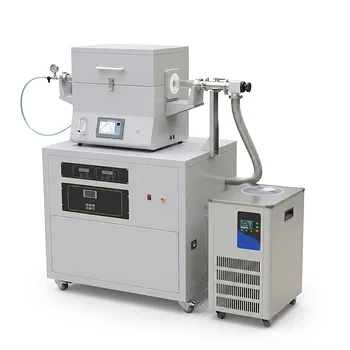
Split Chamber CVD Tube Furnace with Vacuum Station Chemical Vapor Deposition System Machine
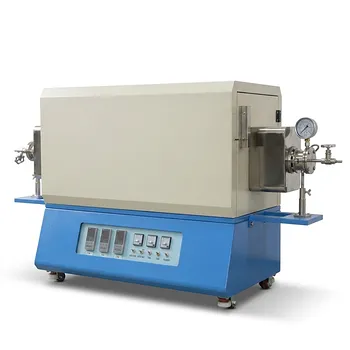
Three Temperature Zone High Temperature Vacuum Tube Furnace for CVD and Material Sintering
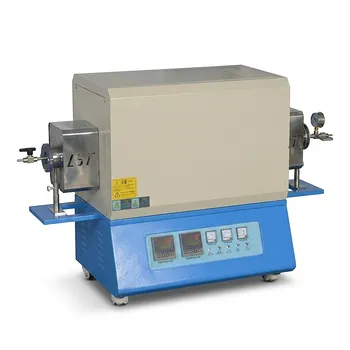
High Temperature Dual Zone Vacuum Tube Furnace for Material Research and CVD Processing
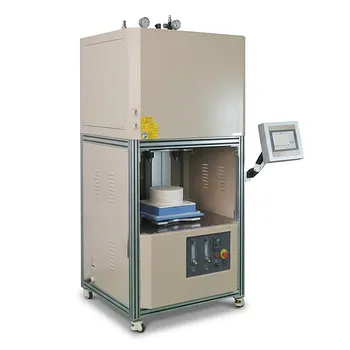
High Temperature Vertical Atmosphere Controlled Furnace 1700C Automatic Bottom Loading 13 Liter Vacuum Thermal System
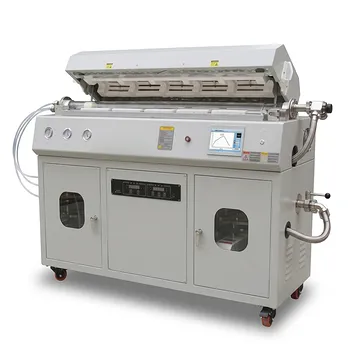
Multi Heating Zones CVD Tube Furnace System for Precision Chemical Vapor Deposition and Advanced Material Synthesis
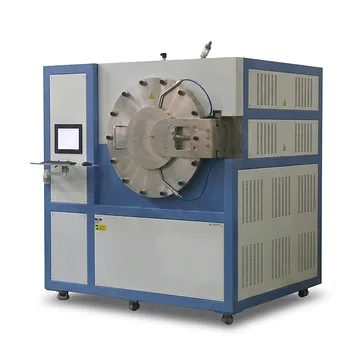
High Vacuum Pressure Chamber Furnace 800C 3.5 Bar Sintering System for Superconducting Materials
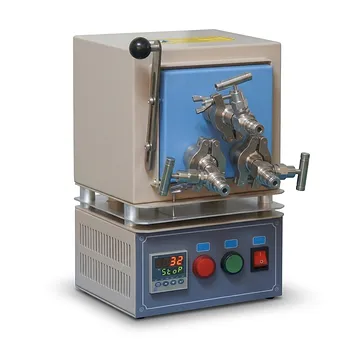
Triple Tube Compact Hybrid Muffle Furnace 1000C High Vacuum Thermal Processing System
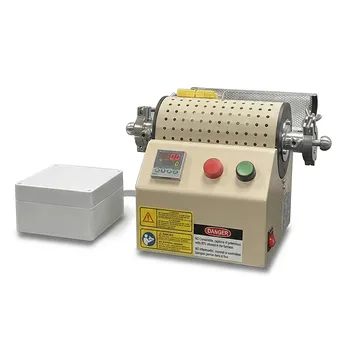
1000C Mini Tube Furnace with 20mm Quartz Tube and Vacuum Flanges for Material Science Research and Controlled Atmosphere Small Sample Processing
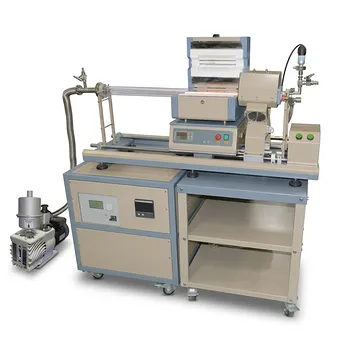
1200C Max Compact Auto-Sliding PECVD Furnace with 2 Inch Tube and Vacuum Pump
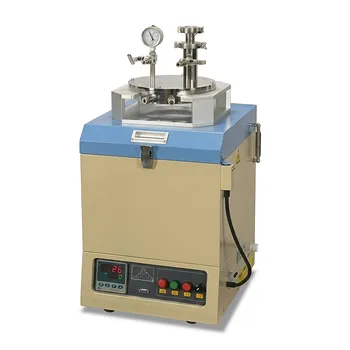
Vertical Vacuum Furnace 1100C High Temperature 8 Inch Quartz Chamber Water Cold Flange System
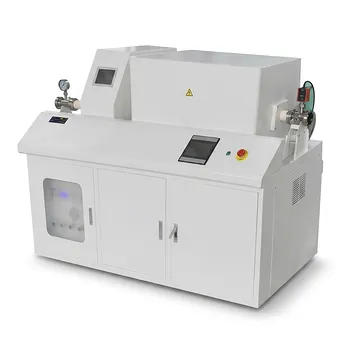
Chemical Vapor Deposition CVD System Slide PECVD Tube Furnace with Liquid Gasifier PECVD Machine
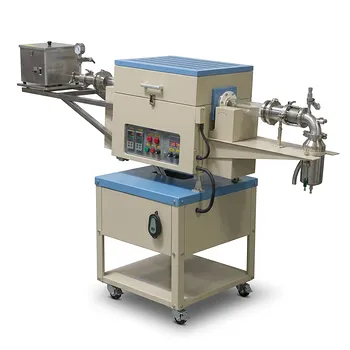
Two Zone Rotary CVD Furnace with Automatic Feeding and Receiving System for Powder Processing
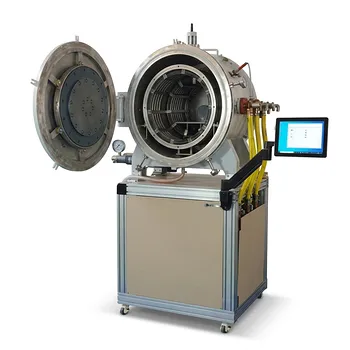
1600°C Cold Wall High Vacuum Chamber Furnace with Molybdenum Heating and 400mm Cube Work Zone
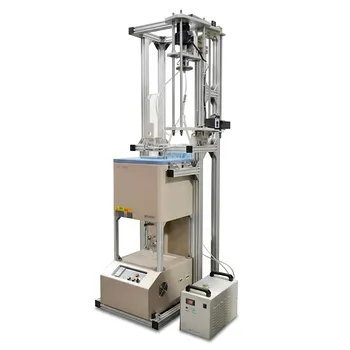
500C Vacuum Vertical Tube Furnace 84mm OD Sample Rotation Lifting System
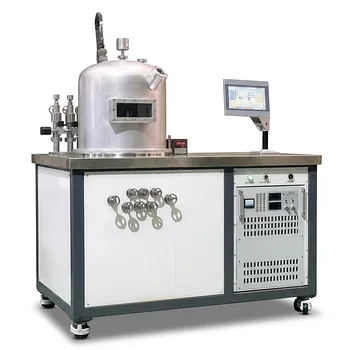
HFCVD Machine System for Nano Diamond Coating on Drawing Dies and Industrial Tools