Why is a Vacuum Tube Furnace required for the 850°C solution treatment of alloy precursors? Achieve Phase Homogeneity
Updated 3 months ago
The 850°C solution treatment in a vacuum tube furnace is the critical step for ensuring chemical homogeneity and phase purity in alloy precursors. This specific thermal environment eliminates compositional segregation and facilitates the complete transformation of the material into a stable, single-phase orthorhombic beta-Cu4Ti structure. By providing a high-vacuum, oxygen-free atmosphere, the furnace prevents the oxidation of reactive elements like Titanium, which is essential for maintaining the integrity of the precursor's surface and internal microstructure prior to dealloying.
Core Takeaway: A vacuum tube furnace is required to create a chemically uniform, single-phase precursor while preventing surface oxidation. This precise control over the starting microstructure is what allows for a regular pore distribution and stable skeletal structure during the subsequent liquid metal dealloying process.
Achieving Microstructural Homogeneity
Elimination of Compositional Segregation
During the initial casting of alloys, elements often distribute unevenly, leading to compositional segregation. The 850°C solution treatment provides the thermal energy necessary for solute atoms to diffuse fully throughout the matrix.
This process ensures that the alloy moves from an inconsistent "as-cast" state to a uniform chemical distribution. Without this homogenization, the final dealloyed structure would likely exhibit irregular mechanical properties and unpredictable pore sizes.
Transformation to Single-Phase Beta-Cu4Ti
The specific goal of this treatment is to transition the precursor into a stable single-phase orthorhombic beta-Cu4Ti structure. This phase is the ideal starting point for liquid metal dealloying because of its predictable reaction kinetics.
A vacuum tube furnace allows for the precise, long-duration heating required to reach this equilibrium. This stability ensures that the material responds uniformly when it eventually comes into contact with the liquid metal bath.
Inhibition of Impurity Phases
When followed by rapid water quenching, the high-temperature treatment prevents the precipitation of unwanted impurity phases such as Cu3Ti2. These secondary phases can act as defects during the dealloying stage.
By "freezing" the high-temperature single-phase structure through quenching, the furnace treatment ensures that the dealloying front moves through a clean, secondary-phase-free material. This results in a much more regular skeletal structure in the final porous metal.
Preventing Atmospheric Degradation
Mitigation of Surface Oxidation
Titanium is highly reactive and susceptible to oxidation at 850°C. A vacuum environment provides an extremely low oxygen partial pressure, isolating the alloy from atmospheric gases that would otherwise form a thick oxide layer.
Preventing this oxidation is vital because a surface oxide layer can act as a barrier to the liquid metal during dealloying. By maintaining surface integrity, the vacuum furnace ensures the dealloying process begins simultaneously and evenly across the entire precursor surface.
Protection of Active Elements
In alloys containing active elements like Titanium or Hafnium, exposure to even trace amounts of oxygen can lead to internal oxidation or "de-alumination." This alters the internal thermodynamic drivers of the material.
The vacuum tube furnace ensures that the observed behaviors, such as grain growth and phase transformation, are driven solely by the internal kinetics of the alloy. This allows researchers to achieve precise control over the final microstructural properties without interference from external chemical reactions.
Maintaining Chemical Purity
Operating under high-vacuum conditions (often reaching levels like 9 × 10⁻³ mbar) inhibits the degassing of elements and prevents the inclusion of impurities from the air. This maintains the exact stoichiometry of the alloy intended by the researcher.
By preserving the purity of the internal microstructure, the vacuum furnace prevents performance fluctuations. This level of purity is necessary for applications requiring extreme precision, such as nanocrystalline films or high-strength structural alloys.
Understanding the Trade-offs
Thermal Budget and Processing Time
While long-duration heating is necessary for homogenization, it increases the thermal budget of the fabrication process. Excessive time at 850°C can lead to unwanted grain growth, which might coarsen the final dealloyed ligaments.
Vacuum Quality vs. Cost
Maintaining a high-vacuum environment requires specialized equipment and longer setup times compared to inert gas furnaces. However, using argon or nitrogen instead of a true vacuum may still allow trace oxygen to react with highly sensitive precursors, potentially compromising the dealloying regularity.
Quenching Challenges
The transition from a vacuum furnace to a water quench must be rapid to avoid the precipitation of Cu3Ti2 phases. If the transfer is too slow, the benefits of the high-temperature solution treatment are lost, leading to a non-uniform precursor.
How to Apply This to Your Project
Maximizing Precursor Quality for Dealloying
To ensure the best results during liquid metal dealloying, the precursor preparation must be handled with extreme care regarding temperature and atmosphere.
- If your primary focus is Pore Uniformity: Prioritize the 850°C homogenization time to ensure the beta-Cu4Ti phase is entirely single-phase before dealloying begins.
- If your primary focus is Surface Integrity: Ensure your vacuum levels are sufficiently high (low oxygen partial pressure) to prevent even microscopic titanium oxide scales.
- If your primary focus is Phase Purity: Execute the water quench immediately following the vacuum treatment to "lock in" the orthorhombic structure and inhibit impurity precipitation.
By strictly controlling the 850°C environment in a vacuum tube furnace, you create the ideal microstructural "blank slate" required for high-performance dealloyed materials.
Summary Table:
| Key Process Feature | Impact on Alloy Precursor | Benefit for Liquid Metal Dealloying |
|---|---|---|
| High Vacuum Environment | Prevents Ti oxidation and impurity inclusion | Ensures clean surface and uniform reaction kinetics |
| 850°C Thermal Stability | Eliminates compositional segregation | Guarantees predictable and regular pore distribution |
| Phase Transformation | Facilitates single-phase $\beta$-Cu4Ti structure | Provides a stable microstructural "blank slate" |
| Atmospheric Control | Protects reactive elements (Ti, Hf) | Maintains stoichiometry and internal thermodynamic drivers |
Elevate Your Material Research with THERMUNITS Precision Furnaces
Achieving the perfect single-phase microstructure for liquid metal dealloying requires absolute control over temperature and atmosphere. THERMUNITS is a leading manufacturer of high-temperature laboratory equipment, providing researchers with the stability and vacuum integrity needed for sensitive 850°C solution treatments.
Our comprehensive range of thermal processing solutions includes:
- Advanced Furnaces: Vacuum, Tube, Atmosphere, Muffle, Rotary, and Hot Press Furnaces.
- Specialized Systems: CVD/PECVD Systems, Vacuum Induction Melting (VIM), and Dental Furnaces.
- Components: High-quality Thermal Elements and lab heat treatment accessories.
Whether you are working on nanocrystalline films or high-strength structural alloys, our equipment ensures your precursors remain oxidation-free and chemically pure.
Ready to optimize your heat treatment process? Contact our technical experts today to find the perfect furnace for your R&D needs.
References
- Kook Noh Yoon, Eun Soo Park. Water‐Etched Porous Ti: Surface Manipulation of Ti Foam Fabricated by Liquid Metal Dealloying Technique. DOI: 10.1002/smtd.202401092
Mentioned Products
- 1800C High Temperature Compact Vacuum Tube Furnace with 60mm OD Alumina Tube and Kanthal MoSi2 Heating Elements
- High Vacuum Compact Tube Furnace 1200C with Integrated Turbo Pump System and 8 Inch Heating Zone
- 1750°C High Temperature Benchtop Vacuum Atmosphere Tube Furnace with Kanthal Super 1800 Heating Elements and 60mm Alumina Processing Tube
- 500C Vacuum Vertical Tube Furnace 84mm OD Sample Rotation Lifting System
- 1200C High Temperature 5 Inch Split Vacuum Tube Furnace with 12 Inch Heating Zone and Separated PID Controller
People Also Ask
- What core functions does a high-temperature vacuum tube furnace provide? Optimize np-CuSn Sintering & Joint Integrity
- What is the primary function of a high-temperature tube furnace in Cu1-N-C synthesis? Precision Thermal Control.
- What impact does the heating rate of a tube furnace have on biochar microstructure? Optimize Your Material R&D.
- Role of Tube Furnace in KNNLST Ceramic Synthesis: Achieve High Phase Purity and Thermal Uniformity
- What is the role of a high-temperature tube furnace in the preparation of S-C3N4? Master Precision Material Synthesis

Tech Team · ThermUnits
Last updated on Jun 02, 2026
Related Products

1800C High Temperature Compact Vacuum Tube Furnace with 60mm OD Alumina Tube and Kanthal MoSi2 Heating Elements
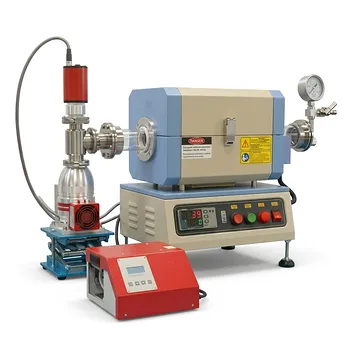
High Vacuum Compact Tube Furnace 1200C with Integrated Turbo Pump System and 8 Inch Heating Zone

1750°C High Temperature Benchtop Vacuum Atmosphere Tube Furnace with Kanthal Super 1800 Heating Elements and 60mm Alumina Processing Tube
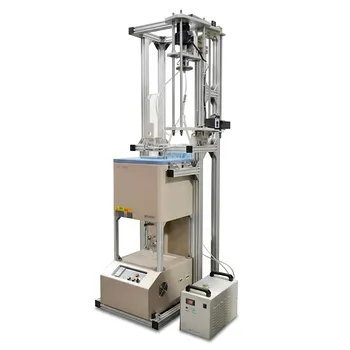
500C Vacuum Vertical Tube Furnace 84mm OD Sample Rotation Lifting System
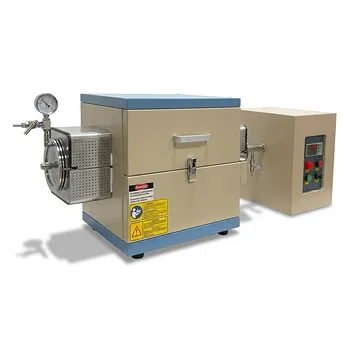
1200C High Temperature 5 Inch Split Vacuum Tube Furnace with 12 Inch Heating Zone and Separated PID Controller
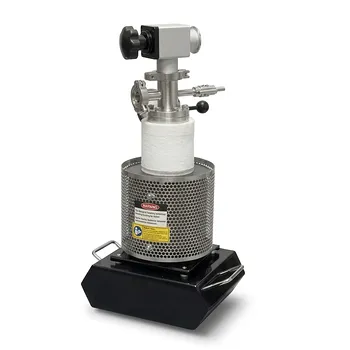
High Temperature 1100C Compact Top Loading Vertical Vacuum Tube Furnace for High Vacuum Noble Metal Melting and Material Research
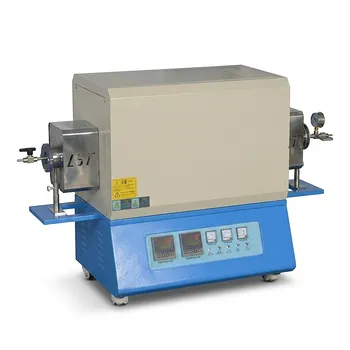
High Temperature Dual Zone Vacuum Tube Furnace for Material Research and CVD Processing

Vertical 1700C Vacuum and Atmosphere Tube Furnace with 80mm Alumina Tube

High Temperature 1700C Tube Furnace with High Vacuum Turbomolecular Pump System and Multi Channel Mass Flow Controller Gas Mixer
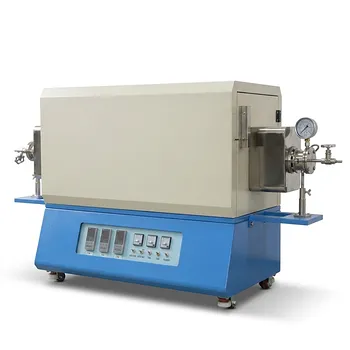
Three Temperature Zone High Temperature Vacuum Tube Furnace for CVD and Material Sintering

1100C Tube Furnace with Vacuum Flange and Programmable Temperature Controller for Material Science and Industrial Heat Treatment
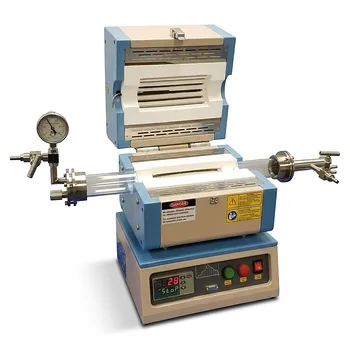
Compact Split Tube Furnace with Integrated Vacuum System and Precision Temperature Calibrator
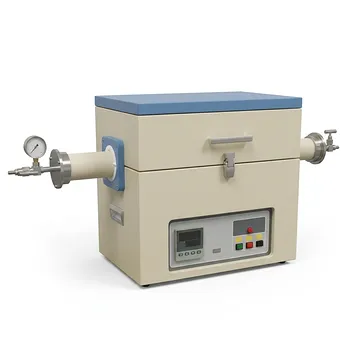
1250C Split Tube Furnace with 3 Inch Mullite Tube and Vacuum Sealing Flanges for Precision Thermal Processing
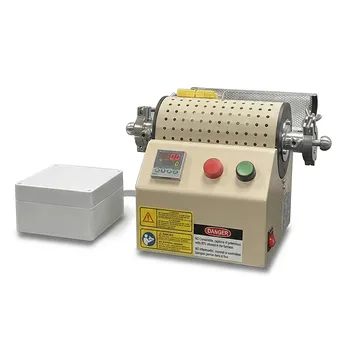
1000C Mini Tube Furnace with 20mm Quartz Tube and Vacuum Flanges for Material Science Research and Controlled Atmosphere Small Sample Processing

Compact High Temperature 1600C Tube Furnace with 50mm Alumina Tube and Vacuum Flanges for Material Sintering

Compact Vertical Split Quartz Tube Furnace with Stainless Steel Vacuum Flanges for Rapid Thermal Quenching and Controlled Atmosphere Material Processing
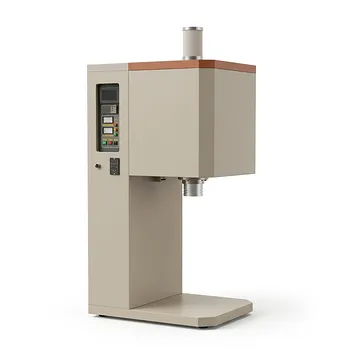
Vertical Openable Tube Furnace 0-1700c High Temperature Laboratory System for CVD and Vacuum Heat Treatment
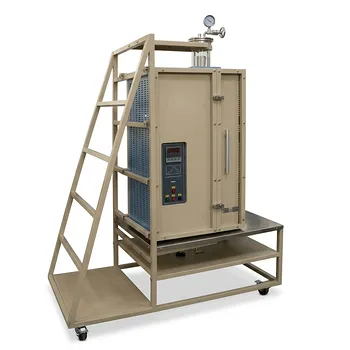
Split Vertical Tube Furnace with 1200C Quartz Tube and Stainless Steel Vacuum Flanges for Rapid Thermal Processing

High Temperature 1700C Vertical Tube Furnace for Powder Spherification and Material Sintering
