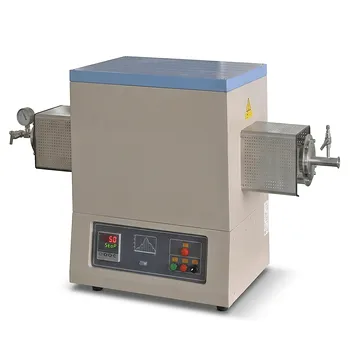
Why is an atmosphere-controlled high-temperature tube furnace required for In/GaN preparation? Master the Process.
Updated 3 months ago
The atmosphere-controlled high-temperature tube furnace is the indispensable reactor required for the chemical synthesis of Indium-doped Gallium Nitride (In/GaN). It provides the precise 1000°C thermal environment and continuous ammonia ($NH_3$) flow necessary to convert solid Gallium Oxide into a nitride lattice. Without the specific airtightness and gas control of this equipment, the chemical substitution of Indium atoms into the Gallium Nitride structure would be impossible.
Core Takeaway: This specialized furnace facilitates the "ammoniation process," where a stable reducing atmosphere allows for the simultaneous chemical reduction of oxides and the crystalline integration of Nitrogen and Indium atoms into a high-purity lattice.
The Chemistry of the Ammoniation Process
Driving the Oxide-to-Nitride Reaction
Solid Gallium Oxide is a stable compound that requires significant thermal energy to break its atomic bonds. The tube furnace provides a consistent 1000°C environment that enables the solid precursor to react chemically with high-purity ammonia gas.
Creating a Stable Reducing Atmosphere
The presence of ammonia at high temperatures creates a reducing atmosphere, which is critical for removing oxygen from the Gallium Oxide. The furnace’s high degree of airtightness prevents external oxygen from re-contaminating the process, ensuring the successful formation of the Gallium Nitride lattice.
Engineering the Crystal Lattice and Doping
Facilitating Indium Atom Substitution
For the material to achieve its semiconductor properties, Indium atoms must replace Gallium atoms within the crystal structure. The controlled thermal energy within the furnace provides the atomic mobility required for Indium to migrate and integrate into the lattice sites.
Eliminating Lattice Defects
High-temperature processing allows atoms to rearrange themselves into a more stable, highly crystalline structure. This "annealing" effect helps eliminate defects and internal stresses that occur during the initial stages of synthesis, resulting in a superior material with better thermophysical properties.
Uniformity Through Precise Gas Flow
The furnace’s ability to maintain a precise gas flow rate ensures that the ammonia concentration is uniform across the entire sample. This uniformity is essential for achieving a consistent phase transformation and ensuring that the Indium doping is not localized or uneven.
Understanding Technical Trade-offs and Risks
Thermal Gradient Challenges
While high temperatures are necessary, uneven heating within the tube can lead to non-uniform doping. If one section of the furnace is slightly cooler, the Indium may not substitute correctly, leading to a sample with inconsistent electronic characteristics.
The Airtightness Requirement
Standard high-temperature furnaces often lack the hermetic sealing found in tube furnaces. Any leakage of ambient air introduces oxygen, which competes with nitrogen and can lead to the formation of unwanted oxide phases rather than the desired pure nitride.
Gas Flow Management
Excessive gas flow can lead to "thermal shock" or cooling of the precursor surface, while insufficient flow may not provide enough nitrogen for a complete reaction. Balancing the ammonia flow rate against the heating ramp is a delicate technical requirement for successful synthesis.
How to Optimize Your Synthesis Results
To achieve the highest quality Indium-doped Gallium Nitride, the furnace parameters must be aligned with your specific research or production goals.
- If your primary focus is high crystalline purity: Prioritize the furnace’s airtightness and vacuum capability to ensure a completely oxygen-free environment before introducing ammonia.
- If your primary focus is uniform Indium concentration: Utilize a furnace with multiple heating zones to ensure a perfectly uniform temperature field across the entire length of the precursor boat.
- If your primary focus is reducing processing time: Implement precise programmed ramp rates to reach the 1000°C threshold quickly without causing structural stress to the tube or the sample.
By mastering the controlled environment of the high-temperature tube furnace, you ensure the successful transition from raw oxide precursors to high-performance semiconductor materials.
Summary Table:
| Key Requirement | Technical Function | Impact on In/GaN Quality |
|---|---|---|
| 1000°C Environment | Breaks Gallium Oxide atomic bonds | Enables chemical conversion to a nitride lattice |
| Ammonia ($NH_3$) Flow | Creates a stable reducing atmosphere | Removes oxygen and integrates Nitrogen/Indium |
| Hermetic Sealing | Prevents external oxygen ingress | Eliminates unwanted oxide phases and impurities |
| Controlled Gas Rate | Ensures uniform ammonia concentration | Prevents localized doping and ensures phase consistency |
| Multi-zone Heating | Maintains uniform thermal field | Reduces lattice defects and internal structural stress |
Elevate Your Material Synthesis with THERMUNITS
As a leading manufacturer of high-temperature laboratory equipment for material science and industrial R&D, THERMUNITS understands the precision required for semiconductor synthesis. Our high-performance Atmosphere and Vacuum Tube Furnaces are specifically engineered to provide the airtight environments and precise gas flow control necessary for successful In/GaN ammoniation.
Whether you need CVD/PECVD systems, Rotary kilns, or Vacuum Induction Melting furnaces, our comprehensive range of thermal processing solutions—including Muffle, Atmosphere, and Dental furnaces—ensures your lab achieves superior crystalline purity and uniform doping.
Ready to optimize your heat treatment results?
Contact our technical experts today to discuss how THERMUNITS can support your specific research and production goals!
References
- Mingxiang Zhang, Fei Wang. Indium Doped Gan Porous Micro‐Rods Enhanced CO<sub>2</sub> Reduction Driving By Solar Light. DOI: 10.1002/admi.202301035
Mentioned Products
- High Temperature Vertical Atmosphere Controlled Furnace with Automatic Bottom Loading and 1700°C Capacity for Advanced Material Research
- 1650C High Temperature Atmosphere Controlled Box Furnace with 65L Chamber for Advanced Material Sintering and Industrial Heat Treatment
- 1750°C High Temperature Benchtop Vacuum Atmosphere Tube Furnace with Kanthal Super 1800 Heating Elements and 60mm Alumina Processing Tube
- High Temperature Oxygen and Inert Atmosphere Controlled Furnace 8 Liter 1700C Sintering System for Advanced Materials RD
- 1700C High Temperature Alumina Tube Furnace with 18 Inch Heated Zone and Vacuum Sealing Flanges
People Also Ask
- What role does atmosphere control play in technical ceramics and glass? Master Material Purity and Precision
- What is the function of a vertical tube furnace in MnOx-SiO2 research? Precision Control & Quenching
- What's the Role of Tube Furnaces in FeCuS-N-C Synthesis? Precision Pyrolysis & Atmosphere Control
- What role does a high-temperature atmosphere furnace play in the direct electrochemical reduction of CO2? - Key Insights
- What is the function of a high-temperature tube furnace with atmosphere control? Optimize Carbonization of Composites

Tech Team · ThermUnits
Last updated on Jun 03, 2026
Related Products
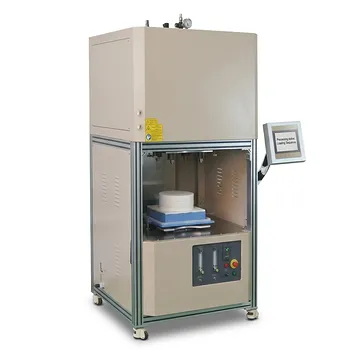
High Temperature Vertical Atmosphere Controlled Furnace with Automatic Bottom Loading and 1700°C Capacity for Advanced Material Research
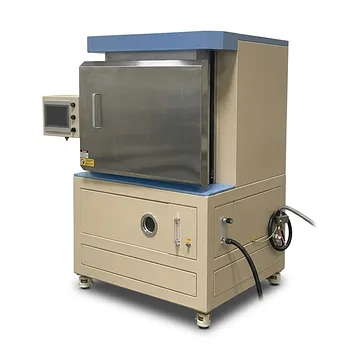
1650C High Temperature Atmosphere Controlled Box Furnace with 65L Chamber for Advanced Material Sintering and Industrial Heat Treatment

1750°C High Temperature Benchtop Vacuum Atmosphere Tube Furnace with Kanthal Super 1800 Heating Elements and 60mm Alumina Processing Tube
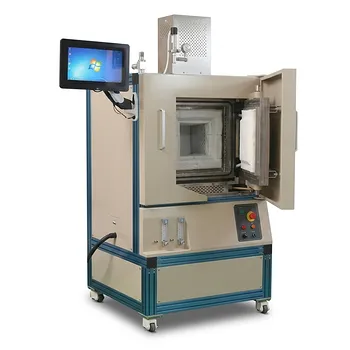
High Temperature Oxygen and Inert Atmosphere Controlled Furnace 8 Liter 1700C Sintering System for Advanced Materials RD
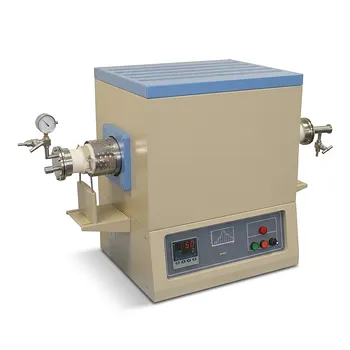
1700C High Temperature Alumina Tube Furnace with 18 Inch Heated Zone and Vacuum Sealing Flanges
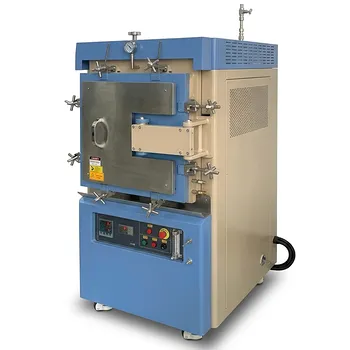
Atmosphere Controlled Muffle Furnace 1700C Maximum Temperature 80L High Capacity Vacuum Inert Gas Box Furnace
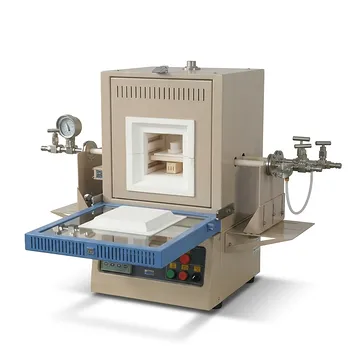
1700C Compact Hybrid Furnace with Dual Layer Box Sintering and Controlled Atmosphere Alumina Tubes
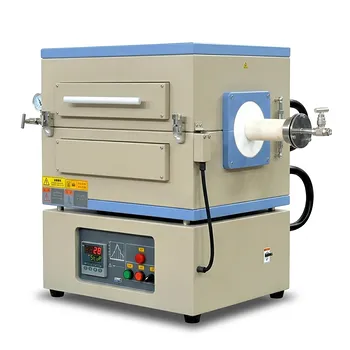
1500°C Split Tube Furnace with Alumina Tube and Vacuum Sealing Flanges for Material Research

Vertical 1700C Vacuum and Atmosphere Tube Furnace with 80mm Alumina Tube
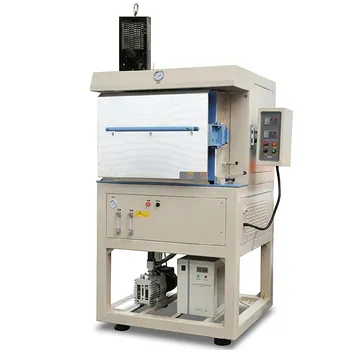
1200C Hydrogen Atmosphere Box Furnace with 5 Heated Sides and 64L Chamber
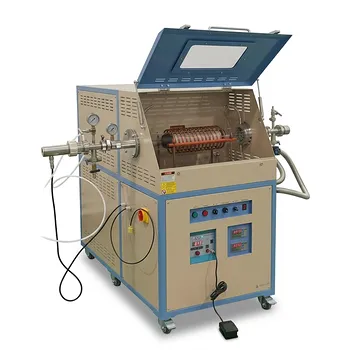
Ultra High Temperature 2300C Induction Heated Graphite Tube Furnace with Infrared Control
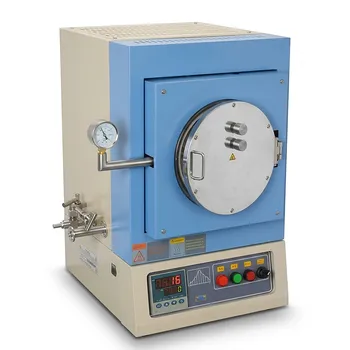
1100°C High Temperature Quartz Chamber Furnace 8 Inch OD with 7.6 Liter Capacity and Vacuum Atmosphere Capability

High Temperature 1700C Tube Furnace with High Vacuum Turbomolecular Pump System and Multi Channel Mass Flow Controller Gas Mixer

High Temperature Tube Furnace 1500C with Sliding Flanges and 50mm OD for Rapid Thermal Processing Fast Heating and Cooling

High Temperature 1700C Vertical Tube Furnace for Powder Spherification and Material Sintering

Compact High Temperature 1600C Tube Furnace with 50mm Alumina Tube and Vacuum Flanges for Material Sintering

High Temperature Automated 5 Inch Tube Furnace for Autonomous Material Research and Advanced Laboratory R&D
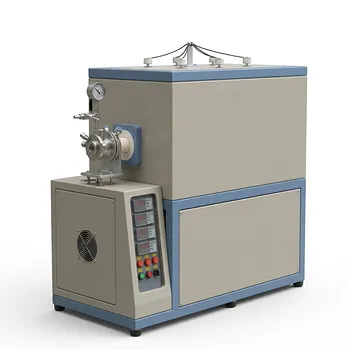
High Temperature 1700C Three Zone Tube Furnace with Alumina Tube 50mm 60mm 80mm OD for Material Research and Industrial Heat Treatment
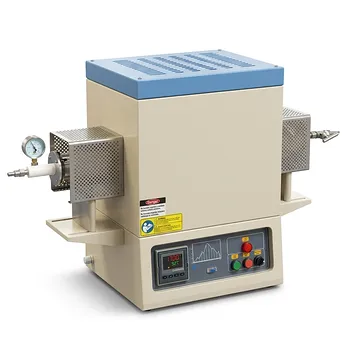
High Temperature Three Zone Tube Furnace 1700C with Alumina Tube and Water Cooled Flanges