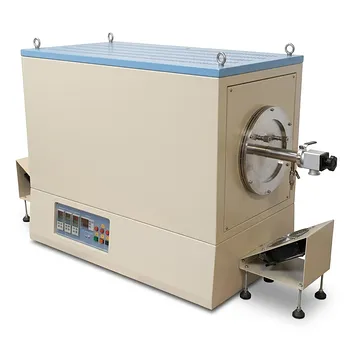
Why is an Atmosphere-Controlled Tube Furnace necessary for TCN? The Key to High-Purity 1D Morphological Growth
Updated 3 months ago
The Atmosphere-Controlled Tube Furnace is the essential reactor for synthesizing one-dimensional tubular carbon nitride (TCN) because it maintains a strict oxygen-free environment required for high-temperature polymerization. Without this precise control, the organic precursors—typically urea and melamine—would undergo oxidative combustion rather than forming the desired periodic conjugated structure. At the critical synthesis temperature of 550°C, the furnace ensures the material follows a specific morphological growth path to achieve its unique tubular shape.
Core Takeaway: An atmosphere-controlled tube furnace is necessary to prevent the oxidative degradation of precursors and to facilitate the precise thermal polymerization required to form a stable, one-dimensional tubular carbon nitride skeleton.
Preventing Oxidative Degradation of Precursors
The Risk of High-Temperature Combustion
Precursors like urea and melamine are highly sensitive to oxygen when heated to the required polymerization temperature of 550°C. In a standard atmosphere, these materials would oxidize or burn out, leading to a significant loss of carbon and nitrogen content.
Isolation from Atmospheric Oxygen
The tube furnace provides a sealed environment where inert gases (such as high-purity nitrogen or argon) displace all oxygen. This isolation is critical to ensure that the precursors decompose and recombine into the target carbon nitride structure rather than turning into waste gases like CO2.
Protecting the Carbon-Nitrogen Skeleton
By maintaining a pure nitrogen protection environment, the furnace allows for the thermal rearrangement of atoms. This preserves the stable periodic conjugated system and the highly delocalized pi-conjugated structure necessary for TCN's functional properties.
Guiding Morphological Growth and Porosity
Forcing the One-Dimensional Path
The formation of a one-dimensional tubular structure is not accidental; it depends on the chemical environment during polymerization. The absence of oxygen and the presence of a controlled inert flow guide the precursors to follow a specific growth path that results in the regular tubular morphology.
Facilitating Gas-Phase Exfoliation
The tube furnace’s design allows for a continuous flow of gas, which is vital for gas-phase exfoliation. This flow helps in creating distinct pore structures and high surface areas, which are defining characteristics of tubular carbon nitride.
Removing Reaction Byproducts
As precursors polymerize, they release byproduct gases such as CO, CO2, and water vapor. The controlled atmosphere system efficiently removes these byproducts, ensuring that the reaction occurs within a stable chemical potential environment and preventing side reactions that could stall growth.
Maintaining Chemical Purity and Doping Precision
Ensuring Heteroatom Incorporation
For specialized versions of TCN, such as those that are carbon-doped or involve other heteroatoms like phosphorus, oxygen exclusion is mandatory. This ensures that these atoms are successfully incorporated into the carbon nitride skeleton rather than reacting with atmospheric oxygen.
Activation of Photothermal Effects
The precise thermal treatment allowed by a tube furnace is necessary to activate the photothermal effect in carbon-doped structures. This requires a stable, non-oxidized framework that can only be achieved through consistent, high-purity atmosphere control.
Metal-Carbon Interface Protection
In cases where TCN is prepared on substrates like titanium, the atmosphere control prevents the chemical corrosion of the metal. Inhibiting oxygen prevents the formation of coarse oxide particles, maintaining the conductivity and smoothness of the interface.
Understanding the Trade-offs
Complexity and Gas Consumption
Operating an atmosphere-controlled tube furnace requires a continuous supply of high-purity inert gas, which increases operational costs. Furthermore, the system requires precise calibration of gas flow rates to avoid cooling the furnace core or disrupting the delicate precursors.
Limited Batch Scalability
Tube furnaces generally have a smaller volume compared to industrial box furnaces. While they provide superior atmosphere control, they may limit the total volume of material that can be processed in a single batch, making them more suitable for high-precision research and specialized production.
Risk of Gas Purity Fluctuations
The success of the synthesis is entirely dependent on the purity of the gas source. Even trace amounts of oxygen contamination in the nitrogen line can lead to oxidative defects in the TCN, which can compromise the structural integrity and performance of the final material.
How to Apply This to Your Project
When selecting your synthesis parameters, the choice of atmosphere and furnace configuration should align with your specific material goals.
- If your primary focus is high structural crystallinity: Use a continuous flow of high-purity nitrogen to ensure the complete removal of oxidative byproducts and the stability of the pi-conjugated system.
- If your primary focus is specific morphological growth (tubular/porous): Ensure the gas flow rate is optimized to facilitate gas-phase exfoliation without creating excessive turbulence that could disrupt the precursor bed.
- If your primary focus is heteroatom (N, P, or C) doping: Utilize a strictly sealed argon or nitrogen environment to prevent the dopants from oxidizing before they can integrate into the TCN skeleton.
The precision of an atmosphere-controlled tube furnace is the fundamental requirement for transforming simple organic precursors into complex, one-dimensional tubular carbon nitride.
Summary Table:
| Feature/Function | Importance for TCN Synthesis |
|---|---|
| Oxygen-Free Environment | Prevents oxidative combustion of urea/melamine precursors. |
| Precise Temp (550°C) | Facilitates stable thermal polymerization of the nitrogen skeleton. |
| Controlled Gas Flow | Aids gas-phase exfoliation and removes reaction byproducts. |
| Inert Gas Protection | Preserves the periodic conjugated structure and enables precise doping. |
Elevate Your Material Synthesis with THERMUNITS
Precision is the difference between success and failure in high-temperature material science. THERMUNITS is a leading manufacturer of high-performance laboratory equipment, providing the exact thermal environments needed for complex processes like tubular carbon nitride (TCN) preparation.
Whether you are conducting industrial R&D or advanced material research, our comprehensive range of equipment includes:
- Atmosphere-Controlled & Vacuum Tube Furnaces for oxygen-free synthesis.
- CVD/PECVD Systems for advanced thin-film deposition.
- Muffle, Rotary, and Hot Press Furnaces for diverse heat treatments.
- Specialized Solutions like Dental Furnaces, Electric Rotary Kilns, and Vacuum Induction Melting (VIM) systems.
Don't let oxidative degradation compromise your results. Partner with THERMUNITS for reliable, high-purity thermal processing solutions.
Contact our technical experts today to find the perfect furnace for your application!
References
- Chenyong Jiang, Guofeng Guan. One-Dimensional Tubular Carbon Nitride Embedded in Ni2P for Enhanced Photocatalytic Activity of H2 Evolution. DOI: 10.3390/catal14040243
Mentioned Products
- 1200°C Atmosphere Controlled Automatic Bottom Loading Furnace with 6 Inch Quartz Tube
- Compact Vertical Split Quartz Tube Furnace with Stainless Steel Vacuum Flanges for Rapid Thermal Quenching and Controlled Atmosphere Material Processing
- Compact Hybrid Muffle and Tube Furnace for 1000C Controlled Atmosphere Laboratory Material Sintering
- 1700C High Temperature Alumina Tube Furnace with 18 Inch Heated Zone and Vacuum Sealing Flanges
- Vertical 1700C Vacuum and Atmosphere Tube Furnace with 80mm Alumina Tube
People Also Ask
- Why is a tube furnace required for FGM-PhG structural color ceramics? Key to Carbon Preservation & Vibrant Color
- Why is an atmosphere-controlled tube furnace required for the pre-sulfidation of NiMo/gamma-Al2O3 catalysts?
- Why is an atmosphere-controlled tube furnace required for 800 °C CNF annealing? Essential for Oxidative Protection.
- Why is an atmosphere-controlled tube furnace required for [email protected]/C preparation? Key for Purity & Structure
- Why is an atmosphere-controlled tube furnace required for single-atom sensor calcination? Ensure Atomic Dispersion.

Tech Team · ThermUnits
Last updated on Jun 03, 2026
Related Products
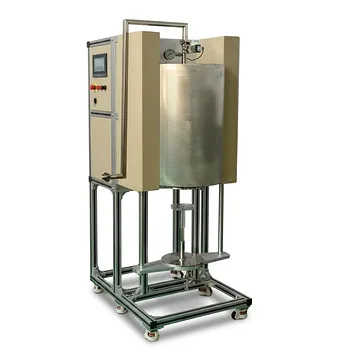
1200°C Atmosphere Controlled Automatic Bottom Loading Furnace with 6 Inch Quartz Tube

Compact Vertical Split Quartz Tube Furnace with Stainless Steel Vacuum Flanges for Rapid Thermal Quenching and Controlled Atmosphere Material Processing
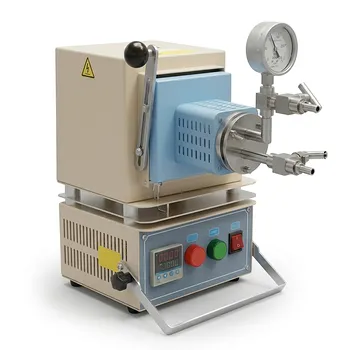
Compact Hybrid Muffle and Tube Furnace for 1000C Controlled Atmosphere Laboratory Material Sintering
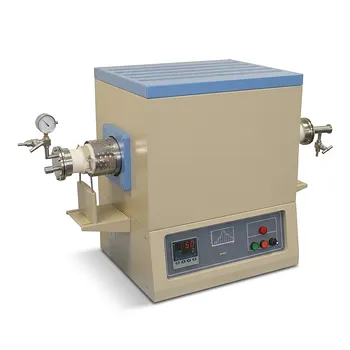
1700C High Temperature Alumina Tube Furnace with 18 Inch Heated Zone and Vacuum Sealing Flanges

Vertical 1700C Vacuum and Atmosphere Tube Furnace with 80mm Alumina Tube
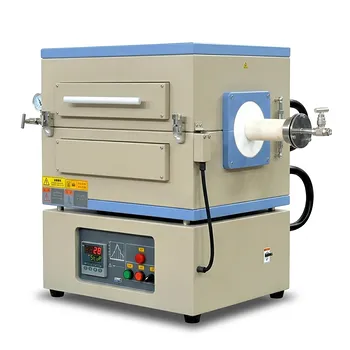
1500°C Split Tube Furnace with Alumina Tube and Vacuum Sealing Flanges for Material Research
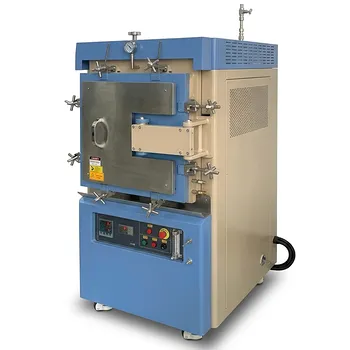
Atmosphere Controlled Muffle Furnace 1700C Maximum Temperature 80L High Capacity Vacuum Inert Gas Box Furnace
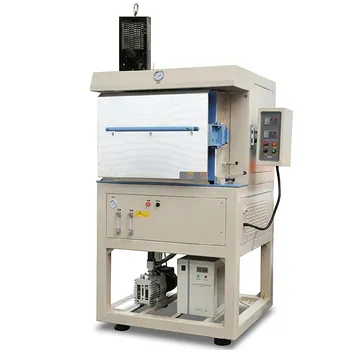
1200C Hydrogen Atmosphere Box Furnace with 5 Heated Sides and 64L Chamber

Three Zone Tube Furnace with 11 Inch or 15 Inch Quartz Tube and Hinged Flanges for Vacuum Atmosphere Heat Treatment
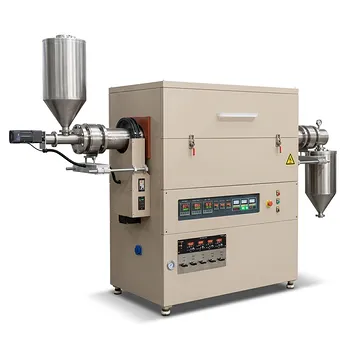
High Temperature Tilting Rotary Tube Furnace with Integrated Mass Flow Control and Multi Zone Heating
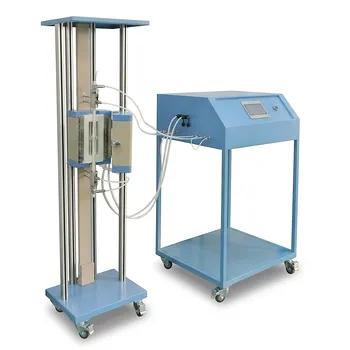
High Temperature Vertical Tube Furnace for Small Solid Oxide Fuel Cell Testing with Four Channel Gas Control
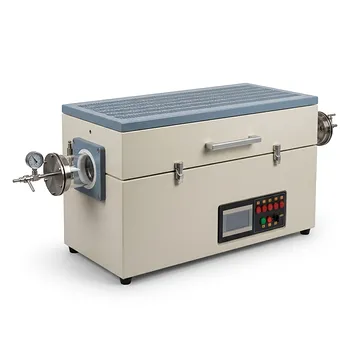
Five Zone 1200C High Temperature Split Tube Furnace with Touch Screen Controller and Multiple Quartz Tube Options
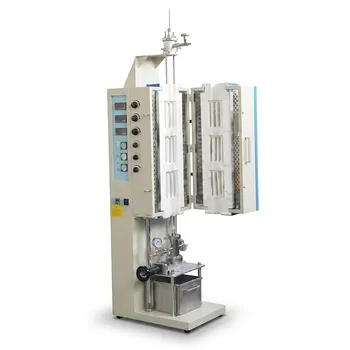
High Temperature Dual Zone Tube Furnace for Material Science Research and Professional Thermal Processing

High Temperature 1700C Tube Furnace with High Vacuum Turbomolecular Pump System and Multi Channel Mass Flow Controller Gas Mixer

High Temperature 1700C Vertical Tube Furnace for Powder Spherification and Material Sintering
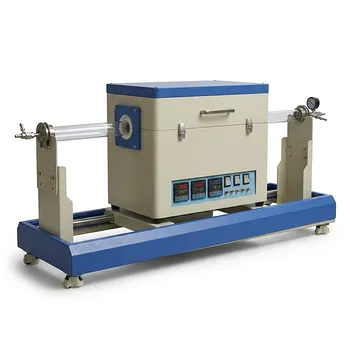
Double Temperature Zone Double Cover Tube Furnace for High Temperature CVD and Vacuum Annealing

High Temperature Automated 5 Inch Tube Furnace for Autonomous Material Research and Advanced Laboratory R&D

High Temperature 1700C Six Zone Split Tube Furnace with Alumina Tube and Water Cooled Flanges
Dual Zone Tube Furnace 1100C with 11 Inch Quartz Tube and Vacuum Flanges for 8 Inch Wafer Processing