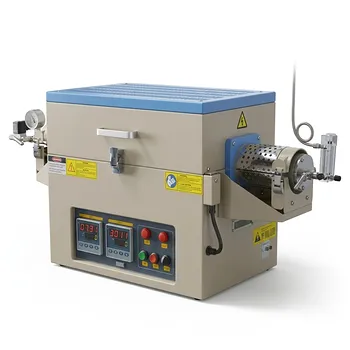
Why is an electromagnetic vibrator essential for the feeding system of a Drop Tube Furnace (DTF)? Achieve Precise Flow
Updated 3 months ago
The electromagnetic vibrator is the primary engine of flow consistency in a Drop Tube Furnace (DTF) feeding system. It prevents the accumulation and clogging of fine fuel particles, such as coal dust and biomass, within the narrow feed tubes. By providing controlled mechanical agitation, it ensures that powder fuel is uniformly fluidized by carrier gases to maintain a steady flow rate—typically between 1.5 and 3.6 g/min—which is vital for gathering stable experimental data.
The electromagnetic vibrator is essential because it overcomes the natural tendency of fine powders to clump or "bridge," ensuring a constant and predictable fuel supply. Without this active fluidization, the irregular transport of fuel would lead to inconsistent combustion and unreliable research results.
Overcoming Physical Obstacles in Powder Transport
Preventing Particle Accumulation and Clogging
Fine particles like coal dust and biomass are highly susceptible to moisture and electrostatic forces that cause them to stick together. These particles often form "bridges" across feed tubes, which can completely halt the fuel supply to the furnace.
Controlled mechanical vibration breaks these inter-particle bonds continuously. This keeps the material in a "live" state, preventing the buildup that leads to expensive experimental downtime.
Enhancing Carrier Gas Interaction
For a DTF to operate correctly, the primary carrier gas must mix intimately with the fuel particles. If the fuel sits in stagnant clumps, the gas simply flows around the mass rather than transporting it.
The vibrator keeps the particles in constant motion, maximizing their exposure to the gas stream. This ensures the fuel is uniformly fluidized, allowing the gas to carry a consistent density of powder into the furnace chamber.
Ensuring Data Integrity Through Flow Stability
Maintaining a Constant Feed Rate
Reliable combustion research requires a feed rate that does not fluctuate over time. The vibrator allows the system to maintain a precise range, often targeted between 1.5 to 3.6 g/min.
Steady flow ensures that the thermochemical environment inside the drop tube remains constant. Fluctuations in fuel density would otherwise cause spikes in temperature and gas emissions, masking the true kinetic behavior of the fuel.
Achieving Repeatable Experimental Results
In scientific testing, the ability to replicate a trial is paramount. An electromagnetic vibrator provides a tunable parameter that can be standardized across different experiments.
By locking in a specific vibration intensity, researchers can ensure that the physical delivery of the fuel is identical across multiple runs. This isolates the fuel's chemical properties as the primary variable being studied.
Understanding the Trade-offs and Pitfalls
The Risk of Over-Vibration
While vibration is necessary, excessive intensity can lead to particle segregation. In some fuel blends, heavier particles may settle faster than lighter ones under high vibration, leading to an inconsistent fuel composition over time.
Mechanical Wear and Noise
Continuous electromagnetic vibration introduces mechanical stress to the feeding assembly. Over time, this can lead to the loosening of fasteners or fatigue in the feed tube material, requiring regular maintenance checks to ensure system vacuum and alignment.
Material-Specific Sensitivity
Different materials respond to vibration frequencies in unique ways. A frequency that fluidizes lignite coal perfectly might cause certain types of fibrous biomass to compact further, requiring the operator to calibrate the vibrator specifically for each fuel type.
How to Apply This to Your DTF Operations
Choosing the right vibration strategy is essential for the success of your combustion or gasification studies.
- If your primary focus is high-precision kinetic data: Closely monitor the vibrator's frequency to ensure the fuel flow stays within the 1.5 to 3.6 g/min range with minimal deviation.
- If your primary focus is working with difficult biomass: Use a variable-frequency vibrator to find the "sweet spot" that prevents bridging without causing particle compaction.
- If your primary focus is long-term equipment reliability: Implement a routine inspection schedule to tighten mechanical couplings that may be loosened by the vibrator’s constant movement.
Properly calibrated vibration transforms a temperamental powder-feeding process into a controlled, scientific instrument for precise fuel analysis.
Summary Table:
| Feature | Role of Electromagnetic Vibrator in DTF |
|---|---|
| Primary Function | Provides controlled mechanical agitation to prevent particle bridging and clogging. |
| Flow Consistency | Maintains a stable feed rate, typically between 1.5 and 3.6 g/min. |
| Fluidization | Ensures uniform mixing of fuel particles (coal/biomass) with carrier gases. |
| Data Integrity | Eliminates flow fluctuations to ensure repeatable and accurate kinetic research. |
| Risk Mitigation | Prevents expensive downtime caused by stagnant material buildup in feed tubes. |
Optimize Your Thermal Research with THERMUNITS Precision Solutions
High-precision experiments demand a reliable and consistent fuel delivery system. As a leading manufacturer of high-temperature laboratory equipment, THERMUNITS specializes in providing advanced thermal processing solutions tailored for material science and industrial R&D.
Whether you require specialized Tube Furnaces, CVD/PECVD systems, Muffle Furnaces, or custom feeding systems for Drop Tube Furnaces, our equipment is engineered for stability and repeatability. From vacuum and atmosphere control to rotary kilns and induction melting, we bring expert engineering to your laboratory.
Ready to enhance your research accuracy? Contact our technical team today to discuss how our comprehensive range of thermal elements and heat treatment equipment can serve your specific project needs.
References
- Garikai T. Marangwanda, Daniel M. Madyira. Experimental investigation on the effect of blending bituminous coal with pinus sawdust on combustion performance parameters. DOI: 10.1016/j.heliyon.2024.e27287
Mentioned Products
- 1200C Sliding Tube Furnace for Rapid Thermal Processing and CVD Graphene Growth with 100mm OD Capacity
- 1250C Split Tube Furnace with 3 Inch Mullite Tube and Vacuum Sealing Flanges for Precision Thermal Processing
- Compact Vertical Split Quartz Tube Furnace with Stainless Steel Vacuum Flanges for Rapid Thermal Quenching and Controlled Atmosphere Material Processing
- 1200C Tube Furnace with Internal Magnetic Sample Sliding for Direct Vaporizing Deposition and Rapid Thermal Processing
- High Temperature 1700C Six Zone Split Tube Furnace with Alumina Tube and Water Cooled Flanges
People Also Ask
- Why is a Tube Furnace typically utilized for CVD? Achieve Precision in Graphene and 2D Material Synthesis
- CVD Tube Furnace Advantages for Pd-P Catalyst Durability: Precision Control for 40,000+ Cycles
- What is the function of CVD furnaces in graphene prep? Enhancing Photodetector Charge Transport
- Why use CVD and a tube furnace for Pd3P0.95/NC catalyst phosphidation? Ensure high phase purity and performance.
- How does a tube furnace system equipped with gas mass flow controllers facilitate the MCW process? Optimize Graphene Yield

Tech Team · ThermUnits
Last updated on Jun 03, 2026
Related Products
1200C Sliding Tube Furnace for Rapid Thermal Processing and CVD Graphene Growth with 100mm OD Capacity
1250C Split Tube Furnace with 3 Inch Mullite Tube and Vacuum Sealing Flanges for Precision Thermal Processing

Compact Vertical Split Quartz Tube Furnace with Stainless Steel Vacuum Flanges for Rapid Thermal Quenching and Controlled Atmosphere Material Processing
1200C Tube Furnace with Internal Magnetic Sample Sliding for Direct Vaporizing Deposition and Rapid Thermal Processing

High Temperature 1700C Six Zone Split Tube Furnace with Alumina Tube and Water Cooled Flanges
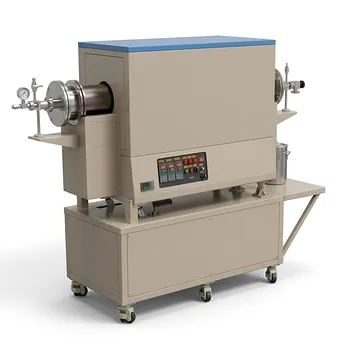
900°C Max Rotary Tube Furnace with 8 Inch 310S Alloy Tube and Optional Multi Zone Heating for Industrial Material Calcination

1100C Tube Furnace with Vacuum Flange and Programmable Temperature Controller for Material Science and Industrial Heat Treatment

Vertical 1700C Vacuum and Atmosphere Tube Furnace with 80mm Alumina Tube
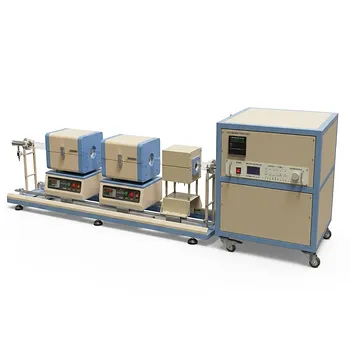
1200C Dual Sliding Tube Furnace with Dual Tubes and Flanges for PECVD Processes

1800C High Temperature Compact Vacuum Tube Furnace with 60mm OD Alumina Tube and Kanthal MoSi2 Heating Elements

1200°C 5 Inch Vertical Quartz Tube Furnace with Stainless Steel Vacuum Flanges

High Temperature 1700C Tube Furnace with High Vacuum Turbomolecular Pump System and Multi Channel Mass Flow Controller Gas Mixer

High Temperature 1700C Benchtop Tube Furnace with 5 Inch Heating Zone High Purity Alumina Tube and Vacuum Sealing Flanges

5 Inch Three Zone Rotary Tube Furnace with Integrated Gas Delivery System and 1200C Capability for Advanced Material CVD Processing
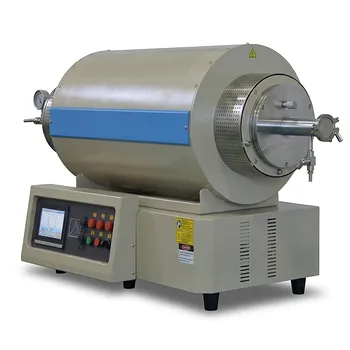
1200C Max Three Zone Tube Furnace 6 Inch OD Max with Tube and Flange
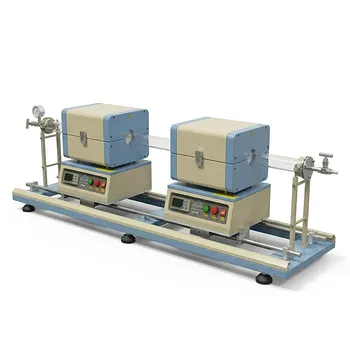
1200C Max Dual Sliding Tube Furnace with 50 mm Tube Flanges for CVD
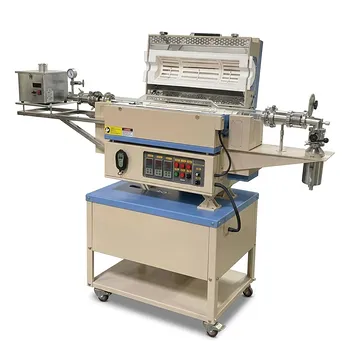
5 Inch Rotary Tube Furnace with Automatic Feeding and Receiving System 1200C Three Zone CVD Powder Processing
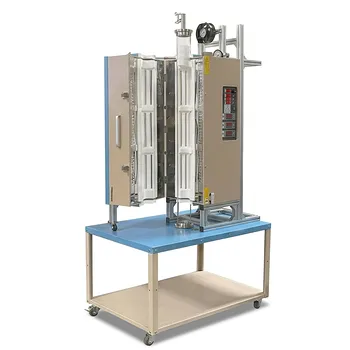
1200C Three Zone Split Vertical Tube Furnace 4 Inch Quartz Tube Stainless Steel Vacuum Flanges
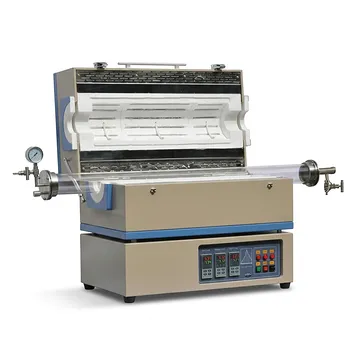
24 Inch Three Zone Split Tube Furnace with Optional Quartz Tube and Vacuum Flange System for High Temperature Material Synthesis