Why is an ultra-high temperature tube furnace required for sodium-ion battery anodes? Optimize Graphitization & Performance
Updated 3 months ago
The requirement for ultra-high temperature processing is driven by the need for atomic-level structural reorganization. Achieving temperatures exceeding 2000°C in a tube furnace is essential to provide the thermal energy required for the graphitization of carbon, transitioning it from a disordered amorphous state to a highly conductive quasi-graphitic structure. This extreme heat allows for the precise contraction of the carbon interlayer spacing, which is the critical factor in determining how efficiently sodium ions can be stored and transported within the battery anode.
The core necessity of an ultra-high temperature tube furnace lies in its ability to overcome the kinetic barriers of carbon graphitization. By precisely controlling temperatures up to and beyond 2000°C, the equipment enables the fine-tuning of carbon nanostructures to optimize both electrical conductivity and sodium-ion intercalation.
The Mechanics of Structural Graphitization
Overcoming High Kinetic Barriers
At temperatures between 1300°C and 2000°C, carbon materials require significant energy to break and reform atomic bonds. The ultra-high temperature environment provides the necessary thermal activation to move atoms from a chaotic, amorphous carbon state into a more ordered, quasi-graphitic structure. Without reaching these extremes, the material remains structurally stagnant, resulting in poor electrochemical activity.
Precision Control of Interlayer Spacing
The performance of a sodium-ion battery depends heavily on the $d_{002}$ interlayer spacing of the carbon anode. A tube furnace allows for the precise contraction of this spacing—for example, from 3.78 Å to 3.65 Å. This specific structural "tightening" is vital for creating stable channels that facilitate the reversible intercalation of relatively large sodium ions.
Enhancing Electrochemical Performance
Maximizing Electrical Conductivity
High-temperature treatment significantly reduces internal resistance by promoting long-range atomic order. As the carbon becomes more graphitic, electrical conductivity improves, allowing for faster electron transport during charge and discharge cycles. This is a fundamental requirement for high-performance batteries that must handle high current densities.
Optimizing Sodium-Ion Intercalation
The transition to a quasi-graphitic structure creates a balance between disordered sites and ordered layers. This specific morphology, achievable only through precise thermal gradients, ensures that there are enough entry points and storage sites for sodium ions. If the temperature is too low, the channels are poorly formed; if too high, the structure may become too dense for ion entry.
Ensuring Material Purity and Stability
Removal of Surface Functional Groups
At temperatures reaching 1500°C and above, oxygen-containing functional groups (such as carboxyl and hydroxyl groups) are deeply removed from the carbon matrix. This thermal decomposition increases the fixed carbon content to over 98.5 wt%. High purity is essential to prevent side reactions with the electrolyte, which can degrade battery life.
Atmospheric Protection and Consistency
Ultra-high temperature tube furnaces provide a controlled inert atmosphere or vacuum that prevents the carbon from burning off (oxidation). This protection ensures that the structural integrity of the carbon nanospheres or porous structures is maintained. The uniform high-temperature zone within the tube ensures that every particle in a batch undergoes the same degree of transformation.
Understanding the Trade-offs
The Risk of Excessive Graphitization
While high temperatures are necessary, exceeding the optimal window can lead to excessive graphitization, which may reduce the number of defects available for sodium-ion storage. Sodium ions often require a degree of structural disorder ("hard carbon" characteristics) to intercalate effectively. Finding the "sweet spot" between conductivity and storage capacity is the primary challenge in thermal profiling.
Equipment and Energy Constraints
Operating at 2000°C+ places extreme stress on the heating elements and the ceramic processing tubes. The energy consumption is significantly higher than standard carbonization at 800°C, increasing the cost of production. Furthermore, maintaining a high-vacuum or pure argon environment becomes increasingly difficult as temperatures rise, requiring sophisticated sealing and monitoring systems.
How to Apply This to Your Project
Making the Right Choice for Your Goal
To achieve the best results in anode synthesis, your thermal processing strategy must align with your specific performance targets.
- If your primary focus is Maximum Power Density: Prioritize temperatures closer to 2000°C to maximize electrical conductivity and electron mobility.
- If your primary focus is High Storage Capacity: Focus on the 1300°C to 1600°C range to maintain a slightly larger interlayer spacing and more intercalation sites.
- If your primary focus is Long-Term Cycle Stability: Ensure the furnace environment is strictly controlled to remove all oxygen functional groups and reach a fixed carbon content above 98.5%.
The precise calibration of an ultra-high temperature furnace is the definitive factor in transforming raw carbon precursors into a high-performance battery component.
Summary Table:
| Process Objective | Temperature Range | Structural & Performance Impact |
|---|---|---|
| Initial Carbonization | < 1200°C | Formation of basic carbon skeleton; high impurity content |
| Hard Carbon Synthesis | 1300°C - 1600°C | Optimal d002 spacing (3.7-3.8 Å) for high sodium ion capacity |
| High-Order Graphitization | > 2000°C | Maximizes electrical conductivity; minimizes internal resistance |
| Material Purification | > 1500°C | Deep removal of oxygen groups; fixed carbon content > 98.5% |
| Atmospheric Control | Ambient to 2000°C+ | Vacuum or inert gas prevents oxidation and maintains structure |
Precision Thermal Solutions for Next-Gen Energy Storage
Achieving the perfect balance of conductivity and capacity in sodium-ion anodes requires extreme precision and ultra-high temperatures. THERMUNITS is a leading manufacturer of high-temperature laboratory equipment, providing the advanced tools necessary for cutting-edge material science and industrial R&D.
We offer a comprehensive suite of thermal processing solutions tailored to your specific research needs, including:
- High-Temperature Tube & Atmosphere Furnaces (reaching 2000°C+)
- Vacuum, Muffle, and Hot Press Furnaces
- CVD/PECVD Systems and Rotary Kilns
- Vacuum Induction Melting (VIM) and Dental Furnaces
Maximize your material performance today. Contact the THERMUNITS experts to find the ideal furnace configuration for your laboratory or production line.
References
- Alexander Rützler, Anna Fischer. Mesoporous N‐Doped Carbon Nanospheres as Anode Material for Sodium Ion Batteries with High Rate Capability and Superior Power Densities. DOI: 10.1002/adfm.202401188
Mentioned Products
- High Temperature 1700C Tube Furnace with High Vacuum Turbomolecular Pump System and Multi Channel Mass Flow Controller Gas Mixer
- High Temperature Tube Furnace 1500C with Sliding Flanges and 50mm OD for Rapid Thermal Processing Fast Heating and Cooling
- 1750°C High Temperature Benchtop Vacuum Atmosphere Tube Furnace with Kanthal Super 1800 Heating Elements and 60mm Alumina Processing Tube
- High Temperature Split Tube Furnace 1500C for Material Research Vacuum and Atmosphere Thermal Processing
- 1700C High Temperature Alumina Tube Furnace with 18 Inch Heated Zone and Vacuum Sealing Flanges
People Also Ask
- What impact does the heating rate of a tube furnace have on biochar microstructure? Optimize Your Material R&D.
- What is the role of a high-temperature tube furnace in the calcination process of ZnO/In2O3 nanocomposites?
- What is the function of a high-temperature tube furnace in the synthesis of g-C3N4? Optimize Thermal Polycondensation
- What are the primary functions of a high-temperature tube furnace for Inconel 718? Master Debinding & Pre-sintering.
- What is the function of a high-temperature tube furnace in Fe-BN-C pyrolysis? Optimize Catalyst Active Site Formation

Tech Team · ThermUnits
Last updated on Jun 02, 2026
Related Products

High Temperature 1700C Tube Furnace with High Vacuum Turbomolecular Pump System and Multi Channel Mass Flow Controller Gas Mixer

High Temperature Tube Furnace 1500C with Sliding Flanges and 50mm OD for Rapid Thermal Processing Fast Heating and Cooling

1750°C High Temperature Benchtop Vacuum Atmosphere Tube Furnace with Kanthal Super 1800 Heating Elements and 60mm Alumina Processing Tube
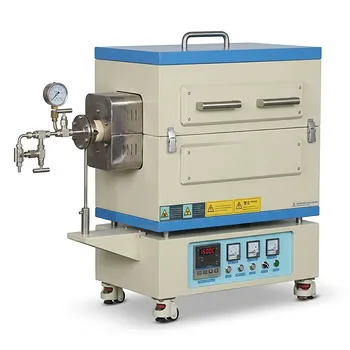
High Temperature Split Tube Furnace 1500C for Material Research Vacuum and Atmosphere Thermal Processing
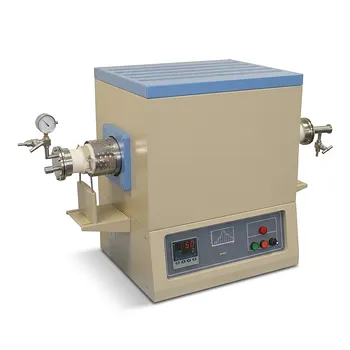
1700C High Temperature Alumina Tube Furnace with 18 Inch Heated Zone and Vacuum Sealing Flanges

High Temperature 1700C Benchtop Tube Furnace with 5 Inch Heating Zone High Purity Alumina Tube and Vacuum Sealing Flanges

Compact High Temperature 1600C Tube Furnace with 50mm Alumina Tube and Vacuum Flanges for Material Sintering
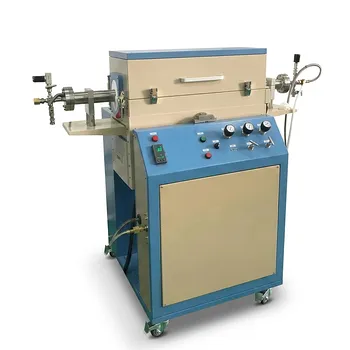
High Temperature Rocking Tube Furnace 1700°C Alumina Processing Tube with Precision Oscillation for Material Synthesis

1800C High Temperature Compact Vacuum Tube Furnace with 60mm OD Alumina Tube and Kanthal MoSi2 Heating Elements
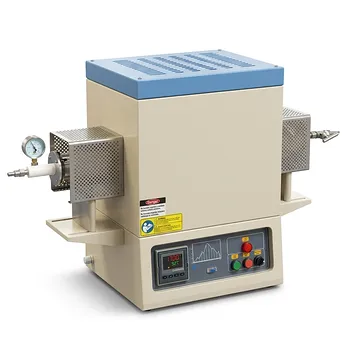
High Temperature Three Zone Tube Furnace 1700C with Alumina Tube and Water Cooled Flanges
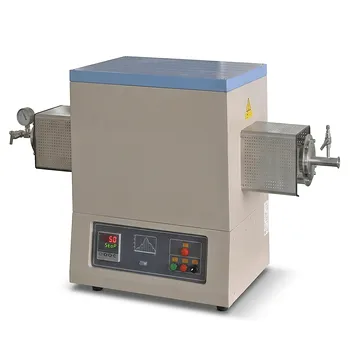
High Temperature 1700C Tube Furnace with 4 Inch OD Alumina Tube and Vacuum Sealing Flanges

High Temperature 1700C Vertical Tube Furnace for Powder Spherification and Material Sintering

High Temperature 1700C Six Zone Split Tube Furnace with Alumina Tube and Water Cooled Flanges
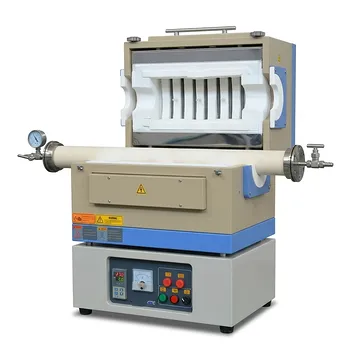
High Temperature 1600C Split Tube Furnace Vacuum Flanges Valves Optional 60mm 80mm Alumina Tube

High Temperature Automated 5 Inch Tube Furnace for Autonomous Material Research and Advanced Laboratory R&D
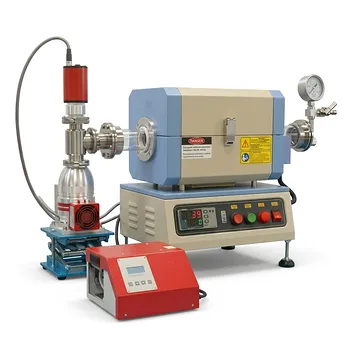
High Vacuum Compact Tube Furnace 1200C with Integrated Turbo Pump System and 8 Inch Heating Zone
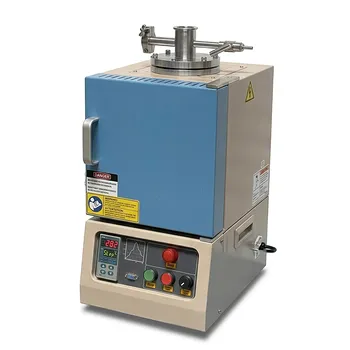
High Temperature Hybrid Muffle and Tube Furnace with Vacuum Capability and PID Control
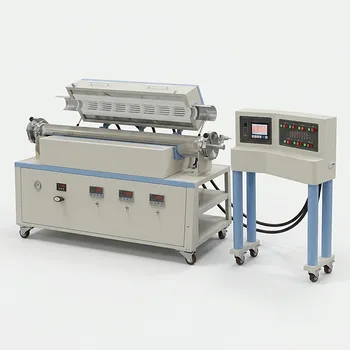
1100C Eight Zone High Pressure Super Alloy Tube Furnace with Integrated High Pressure Gas Control System
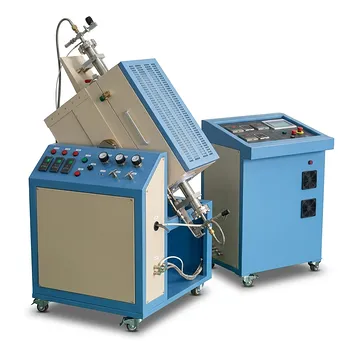
1100C High Pressure Rocking Tube Furnace with 2 Inch Super Alloy Processing Tube for Material Synthesis