Why is high-purity nitrogen introduced into a vacuum tube furnace during CCS preparation? Optimize Carbon Yields.
Updated 3 months ago
High-purity nitrogen is introduced to create an inert atmosphere that prevents the oxidative combustion of coconut shells at high temperatures. By displacing atmospheric oxygen, nitrogen ensures that the raw material undergoes pyrolysis rather than burning. This controlled environment is essential for preserving the carbon framework and developing the intricate pore structures required for high-quality Carbonized Coconut Shell (CCS).
Core Takeaway: Nitrogen acts as a protective shield that isolates the raw material from oxygen, enabling the thermal decomposition of organic matter into carbon-rich structures while preventing yield loss through ash formation.
Preventing Oxidation and Combustion
Displacing Atmospheric Oxygen
At temperatures reaching 800 °C, organic materials like coconut shells are highly reactive. If oxygen is present, the material will undergo combustion, essentially burning into ash rather than carbonizing.
High-purity nitrogen (typically 99.99%) is continuously fed into the tube furnace to purge the chamber. This process effectively removes air and creates an oxygen-deficient environment necessary for successful chemical transformation.
Facilitating Pyrolysis Over Burning
Pyrolysis is the thermal decomposition of organic material in the absence of oxygen. By maintaining a nitrogen-rich environment, the furnace allows the coconut shell to reach high temperatures without catching fire.
Under these conditions, the organic compounds break down into carbon and volatile gases. This ensures the material is converted into a carbon-rich biochar structure rather than being destroyed by thermal erosion.
Structural and Yield Optimization
Protecting Pore Development
The value of Carbonized Coconut Shell lies in its primary pore structure, which is critical for future activation. An inert atmosphere ensures that the "pore-forming" process occurs uniformly across the material.
If oxidation were allowed to occur, it would be "non-selective," meaning it would eat away at the carbon walls. Nitrogen prevents this degradation, protecting the microporous and mesoporous structures that give CCS its high surface area.
Strategic Removal of Volatiles
A steady flow of nitrogen does more than just block oxygen; it acts as a carrier gas. As the coconut shell is heated, it releases volatile impurities and moisture.
The constant gas flow sweeps these byproducts out of the furnace tube. This prevents volatiles from re-depositing on the carbon or interfering with the reconstruction of the carbon framework.
Understanding the Trade-offs
The Cost of Purity
Using high-purity nitrogen (99.99% or higher) is significantly more expensive than using industrial-grade nitrogen. However, even trace amounts of oxygen can lead to "surface burn-off," which reduces the total carbon yield.
Flow Rate Management
If the nitrogen flow rate is too low, oxygen may leak back into the system through the exhaust. Conversely, an excessively high flow rate can lead to thermal gradients within the furnace, causing uneven carbonization and wasting gas.
Pressure Sensitivity
While the nitrogen creates a protective "blanket," managing the internal pressure is vital. In a vacuum tube furnace, the balance between the vacuum pump and the nitrogen inlet must be precise to maintain the inert working environment without over-pressurizing the quartz tube.
How to Apply This to Your Project
Recommendations for Carbonization
To achieve the highest quality Carbonized Coconut Shell, your gas handling strategy should align with your specific material goals.
- If your primary focus is maximum carbon yield: Ensure a constant positive pressure of high-purity nitrogen to prevent any oxygen ingress, which minimizes material loss.
- If your primary focus is high porosity: Maintain a consistent flow rate to effectively sweep away volatile gases, preventing them from clogging the developing pore network.
- If your primary focus is surface chemistry: Use the nitrogen environment to preserve specific functional groups and lattice defects that would otherwise be destroyed by oxidation.
By meticulously controlling the nitrogen atmosphere, you transition from a simple burning process to a precise chemical synthesis of high-performance carbon materials.
Summary Table:
| Key Factor | Role of High-Purity Nitrogen | Impact on CCS Quality |
|---|---|---|
| Atmospheric Control | Displaces oxygen to create an inert environment | Prevents material combustion and ash formation |
| Thermal Process | Facilitates pyrolysis (decomposition without $O_2$) | Ensures conversion into carbon-rich biochar |
| Structural Integrity | Protects developing microporous networks | Maintains high surface area for future activation |
| Impurity Management | Acts as a carrier gas for volatiles | Sweeps away moisture and gaseous byproducts |
| Yield Optimization | Minimizes surface burn-off | Increases total carbon recovery and purity |
Maximize Your Material Research with THERMUNITS
Achieving precision in carbonization requires reliable thermal environments. THERMUNITS is a leading manufacturer of high-temperature laboratory equipment for material science and industrial R&D. We provide high-performance solutions designed to handle complex atmospheres, including:
- Vacuum and Atmosphere Tube Furnaces for precise gas control.
- Muffle, Rotary, and Hot Press Furnaces for diverse heat treatments.
- CVD/PECVD Systems and Vacuum Induction Melting (VIM) for advanced synthesis.
Whether you are producing Carbonized Coconut Shell (CCS) or developing new carbon frameworks, our equipment ensures uniform heating and meticulous atmosphere management.
Contact our technical experts today to discuss your research requirements and discover how our thermal processing solutions can enhance your lab's efficiency and product quality.
References
- Yizhong Li, Guidong Yang. Design and Preparation of Activated Carbon with High Specific Surface Area and Porosity Through an Organic Activator Coupled with CO<sub>2</sub> Activation. DOI: 10.1002/admi.202400450
Mentioned Products
- 1800C High Temperature Compact Vacuum Tube Furnace with 60mm OD Alumina Tube and Kanthal MoSi2 Heating Elements
- High Vacuum Compact Tube Furnace 1200C with Integrated Turbo Pump System and 8 Inch Heating Zone
- 500C Vacuum Vertical Tube Furnace 84mm OD Sample Rotation Lifting System
- 1750°C High Temperature Benchtop Vacuum Atmosphere Tube Furnace with Kanthal Super 1800 Heating Elements and 60mm Alumina Processing Tube
- 1200C High Temperature 5 Inch Split Vacuum Tube Furnace with 12 Inch Heating Zone and Separated PID Controller
People Also Ask
- What core functions does a high-temperature vacuum tube furnace provide? Optimize np-CuSn Sintering & Joint Integrity
- What is the primary function of a high-temperature tube furnace in Cu1-N-C synthesis? Precision Thermal Control.
- What impact does the heating rate of a tube furnace have on biochar microstructure? Optimize Your Material R&D.
- Role of Tube Furnace in KNNLST Ceramic Synthesis: Achieve High Phase Purity and Thermal Uniformity
- What is the role of a high-temperature tube furnace in the preparation of S-C3N4? Master Precision Material Synthesis

Tech Team · ThermUnits
Last updated on Jun 03, 2026
Related Products

1800C High Temperature Compact Vacuum Tube Furnace with 60mm OD Alumina Tube and Kanthal MoSi2 Heating Elements
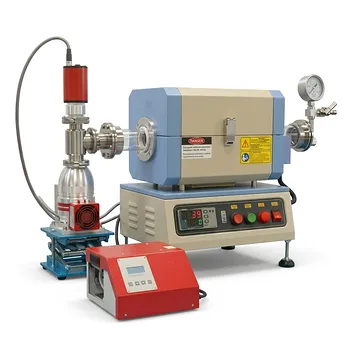
High Vacuum Compact Tube Furnace 1200C with Integrated Turbo Pump System and 8 Inch Heating Zone
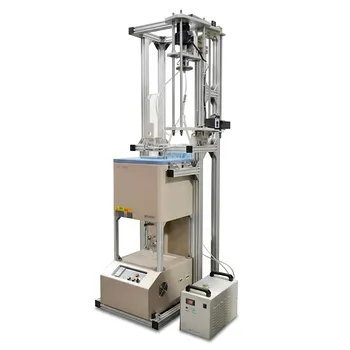
500C Vacuum Vertical Tube Furnace 84mm OD Sample Rotation Lifting System

1750°C High Temperature Benchtop Vacuum Atmosphere Tube Furnace with Kanthal Super 1800 Heating Elements and 60mm Alumina Processing Tube
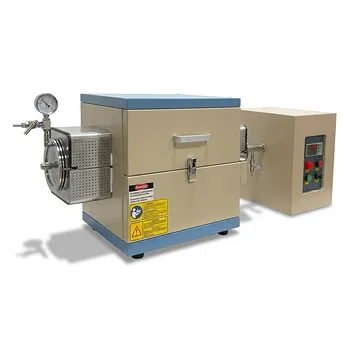
1200C High Temperature 5 Inch Split Vacuum Tube Furnace with 12 Inch Heating Zone and Separated PID Controller
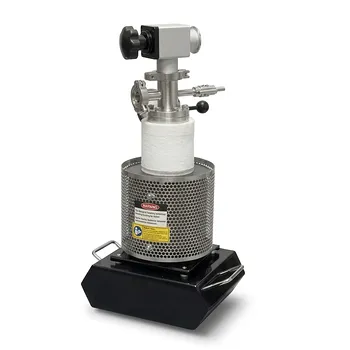
High Temperature 1100C Compact Top Loading Vertical Vacuum Tube Furnace for High Vacuum Noble Metal Melting and Material Research
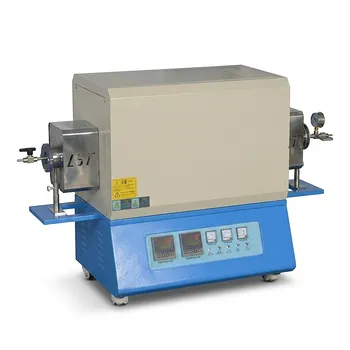
High Temperature Dual Zone Vacuum Tube Furnace for Material Research and CVD Processing

Vertical 1700C Vacuum and Atmosphere Tube Furnace with 80mm Alumina Tube

High Temperature 1700C Tube Furnace with High Vacuum Turbomolecular Pump System and Multi Channel Mass Flow Controller Gas Mixer
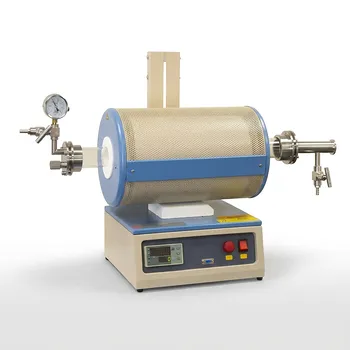
1100C Tube Furnace with Vacuum Flange and Programmable Temperature Controller for Material Science and Industrial Heat Treatment
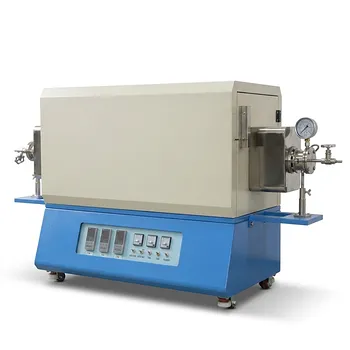
Three Temperature Zone High Temperature Vacuum Tube Furnace for CVD and Material Sintering
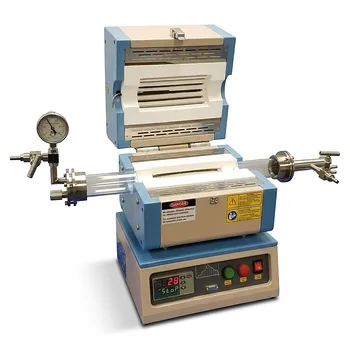
Compact Split Tube Furnace with Integrated Vacuum System and Precision Temperature Calibrator
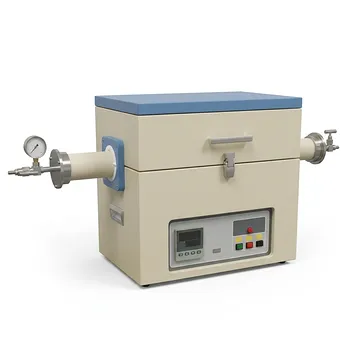
1250C Split Tube Furnace with 3 Inch Mullite Tube and Vacuum Sealing Flanges for Precision Thermal Processing
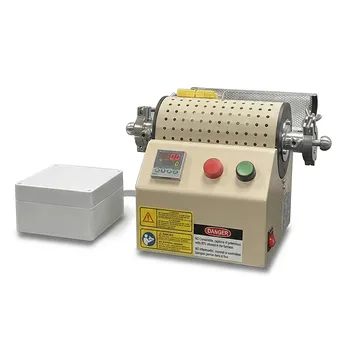
1000C Mini Tube Furnace with 20mm Quartz Tube and Vacuum Flanges for Material Science Research and Controlled Atmosphere Small Sample Processing

Compact High Temperature 1600C Tube Furnace with 50mm Alumina Tube and Vacuum Flanges for Material Sintering

Compact Vertical Split Quartz Tube Furnace with Stainless Steel Vacuum Flanges for Rapid Thermal Quenching and Controlled Atmosphere Material Processing
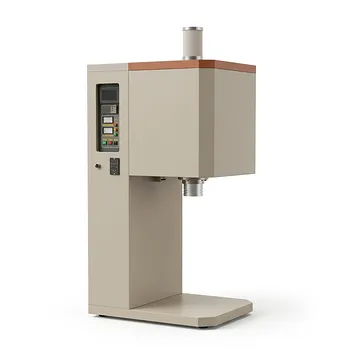
Vertical Openable Tube Furnace 0-1700c High Temperature Laboratory System for CVD and Vacuum Heat Treatment
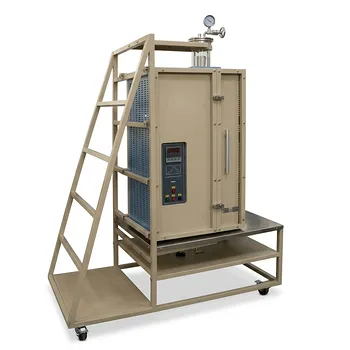
Split Vertical Tube Furnace with 1200C Quartz Tube and Stainless Steel Vacuum Flanges for Rapid Thermal Processing

High Temperature 1700C Vertical Tube Furnace for Powder Spherification and Material Sintering
