Why perform homogenization annealing on Zircaloy-4 in a vacuum furnace? Achieve Uniform Hydride Distribution & Purity.
Updated 3 months ago
Homogenization annealing is the critical step that ensures Zircaloy-4 samples move from a state of surface-level saturation to internal chemical equilibrium. It is necessary because the initial hydrogenation process creates steep concentration gradients, leaving the core of the material largely unaffected while the surface is heavily loaded. By applying a controlled thermal cycle in a vacuum, hydrogen atoms are given the time to diffuse evenly throughout the metallic matrix, creating a uniform distribution of zirconium hydride without introducing harmful atmospheric contaminants.
Core Takeaway: Homogenization annealing eliminates the hydrogen concentration gradients formed during loading, ensuring a uniform distribution of $\delta$-$\text{ZrH}_{1.66}$ hydrides. This process is mandatory for achieving a stable microstructure that allows subsequent corrosion and mechanical tests to reflect the true bulk properties of the material.
Eliminating Hydrogen Concentration Gradients
The Challenge of Post-Hydrogenation Profiles
During the initial hydrogenation stage, hydrogen atoms primarily accumulate near the surface of the Zircaloy-4 sample. This results in a "skin" of high hydride concentration, which does not represent the intended bulk composition of the alloy.
Facilitating Atomic Diffusion
Homogenization annealing uses long-term heat preservation to provide the kinetic energy necessary for hydrogen atoms to move. This thermal energy drives the atoms from areas of high concentration (the surface) to areas of low concentration (the core), balancing the chemical potential across the entire sample.
Establishing Microstructural Stability
The ultimate goal is to ensure a uniform distribution of zirconium hydride ($\delta$-$\text{ZrH}_{1.66}$) throughout the matrix. Without this uniformity, any subsequent material testing would be skewed by the localized concentration of hydrides, leading to inaccurate performance data.
Protecting the Material from Atmospheric Contamination
Zirconium’s High Chemical Affinity
Zircaloy-4 has an extreme chemical affinity for oxygen, nitrogen, and hydrogen. At the high temperatures required for annealing, the material acts like a "getter," pulling these elements from the surrounding air if they are present.
Preventing Surface Oxidation and Embrittlement
Using a vacuum annealing furnace ensures an oxygen-free environment, typically maintaining an oxygen partial pressure below $3 \times 10^{-3}$ Pa. This prevents the formation of oxide scales and brittle layers that would compromise the mechanical integrity of the joint or sample.
Ensuring Clean Metallic Interfaces
A high-vacuum environment is essential to inhibit reactions with harmful impurities during the long-duration heat treatment. This allows the material to reach a state of macroscopic chemical homogeneity while maintaining a clean, unoxidized surface for accurate diffusion measurements.
Ensuring Representative Material Testing
Accuracy of Corrosion Evaluations
If the hydrogen distribution is not uniform, corrosion testing will only reflect the behavior of the hydrogen-rich surface layer. Homogenization ensures that the results reflect the "bulk effects," providing a realistic look at how the material will perform in a nuclear reactor environment.
Recrystallization and Microstructure
The precise control of temperature and duration in a vacuum furnace also facilitates complete recrystallization. This results in a stable, uniform microstructure and consistent mechanical properties across the entire alloy plate.
Understanding the Trade-offs and Risks
The Impact of Excessive Duration
While long-duration heat treatment is necessary for diffusion, staying at high temperatures for too long can lead to grain growth. Oversized grains can negatively impact the mechanical strength and ductility of the Zircaloy-4, potentially complicating the analysis of the hydrogen's effect.
Vacuum Quality and Leakage
The effectiveness of the process is entirely dependent on the integrity of the vacuum. Even a minor leak can introduce enough oxygen to cause severe embrittlement, rendering the Zircaloy-4 samples useless for standardized testing.
Temperature Precision
Heating near the solidus line drives efficient atomic rearrangement but requires extreme precision. If temperatures fluctuate or exceed safety margins, there is a risk of localized melting or unintended phase transformations that deviate from the target $\delta$-$\text{ZrH}_{1.66}$ structure.
How to Apply This to Your Project
When preparing Zircaloy-4 samples for research or industrial evaluation, the homogenization step must be treated as a core part of the fabrication process rather than an optional finish.
- If your primary focus is corrosion resistance testing: Ensure the annealing duration is sufficient to reach the core of the sample thickness to prevent surface-level artifacts from skewing your data.
- If your primary focus is mechanical ductility: Prioritize a high-vacuum environment ($< 10^{-3}$ Pa) to prevent oxygen-induced embrittlement, which can mask the true effects of the hydrogen content.
- If your primary focus is microstructural phase analysis: Use precise temperature controls to maintain the stability of the $\delta$-$\text{ZrH}_{1.66}$ phase throughout the homogenization cycle.
By strictly controlling the vacuum environment and thermal duration, you transform a heterogeneous sample into a standardized technical material ready for rigorous analysis.
Summary Table:
| Key Objective | Mechanism | Critical Benefit |
|---|---|---|
| Eliminate Gradients | Atomic Diffusion | Ensures uniform hydride distribution throughout the sample core. |
| Surface Protection | High Vacuum ($<10^{-3}$ Pa) | Prevents oxygen-induced embrittlement and surface oxidation. |
| Microstructure Stability | Controlled Thermal Cycle | Promotes recrystallization and consistent mechanical properties. |
| Data Accuracy | Homogenization | Guarantees that corrosion and mechanical tests reflect bulk material behavior. |
Advance Your Material Science Research with Precision Thermal Solutions
Precise homogenization and contamination-free processing are vital for the integrity of Zircaloy-4 and other advanced alloys. THERMUNITS is a leading manufacturer of high-temperature laboratory equipment, providing the control and reliability required for nuclear and industrial R&D.
Whether you need to eliminate hydrogen gradients or prevent brittle oxide layers, our comprehensive range of thermal processing solutions is designed for your success:
- High-Vacuum & Atmosphere Furnaces for oxygen-sensitive annealing.
- Tube, Muffle, and Rotary Furnaces for versatile material treatment.
- CVD/PECVD & Vacuum Induction Melting (VIM) systems for advanced synthesis.
- Hot Press & Dental Furnaces for specialized material densification.
Ready to enhance your lab's thermal precision?
Contact THERMUNITS today to discuss your specific heat treatment requirements and discover how our equipment can deliver the uniform results your research demands.
References
- Huifang Yue, Meiyi Yao. Effects of Hydrogenation on the Corrosion Behavior of Zircaloy-4. DOI: 10.3390/ma17051101
Mentioned Products
- High Temperature 1000C Vacuum Furnace with 8 Inch ID Chamber for Material Sintering and Research Annealing
- High Temperature Cold Wall Vacuum Furnace for Advanced Material Sintering and Annealing 1600C Heating Area 200x200x300mm
- Three Temperature Zone High Temperature Vacuum Tube Furnace for CVD and Material Sintering
- High Temperature Vertical Atmosphere Controlled Furnace with Automatic Bottom Loading and 1700°C Capacity for Advanced Material Research
- 950C Rapid Thermal Processing Furnace for 12 Inch Wafer CSS Coating with Rotating Substrate Holder
People Also Ask
- How does the temperature control precision of a high-temperature sintering furnace affect Na1+xLa1-xZr2O6-δ ceramics?
- How does a high-temperature sintering furnace environment enhance NdFeB magnets? Achieve 98%+ density with precision.
- What role does a high-temperature annealing furnace play in forming ordered Pt3(CoNi) intermetallic catalysts?
- What is the function of high-vacuum furnaces in (Mo2/3V1/3)n+1AlCn MAX phase synthesis? Ensure Purity & Diffusion.
- How does a vacuum or atmosphere sintering furnace contribute to the congener-welding process of carbon nitride membranes?

Tech Team · ThermUnits
Last updated on Jun 03, 2026
Related Products
High Temperature 1000C Vacuum Furnace with 8 Inch ID Chamber for Material Sintering and Research Annealing
High Temperature Cold Wall Vacuum Furnace for Advanced Material Sintering and Annealing 1600C Heating Area 200x200x300mm
Three Temperature Zone High Temperature Vacuum Tube Furnace for CVD and Material Sintering
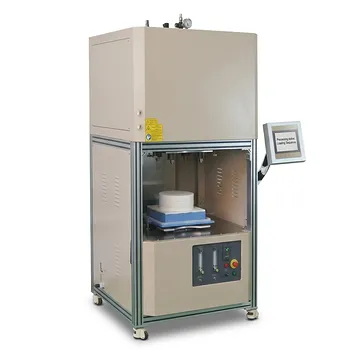
High Temperature Vertical Atmosphere Controlled Furnace with Automatic Bottom Loading and 1700°C Capacity for Advanced Material Research
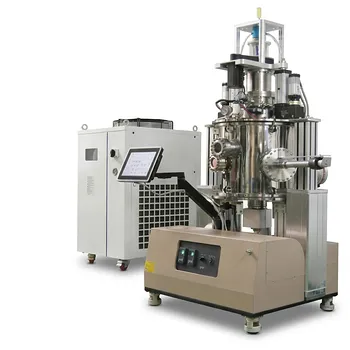
950C Rapid Thermal Processing Furnace for 12 Inch Wafer CSS Coating with Rotating Substrate Holder
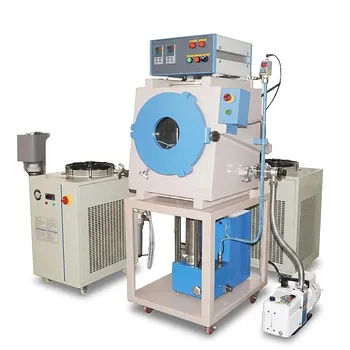
High Temperature Vacuum Lamination Hot Press Furnace Machine for Semiconductor Wafer Bonding and Advanced Composite Thermal Processing
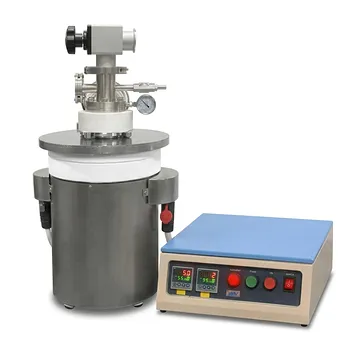
1100C High Temperature Vacuum Crucible Furnace with Quartz Chamber for Thermal Processing and Sintering
1200°C Bottom Loading Vacuum Furnace with Rapid Gas Cooling and 8.6 Inch Diameter Quartz Chamber
Bottom Loading Vacuum Furnace 1200C Rapid Cooling Atmosphere Control Quartz Chamber
Industrial Vacuum Hot Press Furnace Machine and High Temperature Heated Vacuum Press for Advanced Material Sintering
Compact Atmosphere Controlled Rapid Thermal Processing RTP Furnace with 4 Inch ID Quartz Tube 1100C
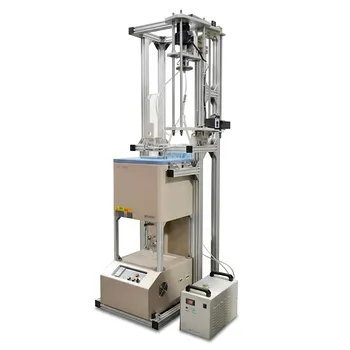
500C Vacuum Vertical Tube Furnace 84mm OD Sample Rotation Lifting System
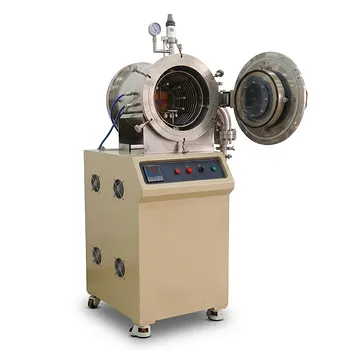
High Temperature Cold Wall High Vacuum Chamber Furnace 1400C for Advanced Material Processing
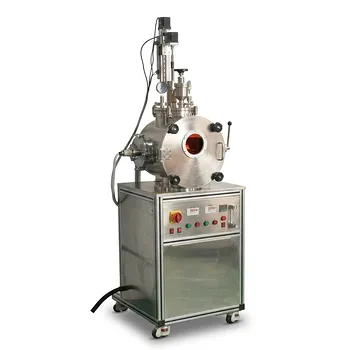
High Vacuum Melting Casting Furnace with Mechanical Stirring and Secondary Charge for Metallic Alloy Research
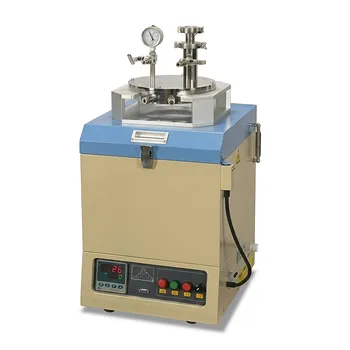
Vertical Vacuum Furnace 1100C High Temperature 8 Inch Quartz Chamber Water Cold Flange System

1750°C High Temperature Benchtop Vacuum Atmosphere Tube Furnace with Kanthal Super 1800 Heating Elements and 60mm Alumina Processing Tube
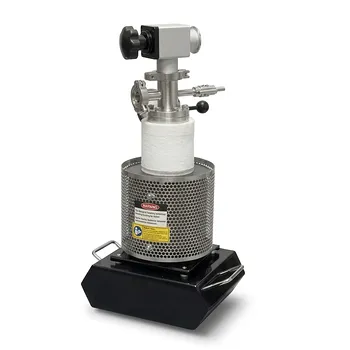
High Temperature 1100C Compact Top Loading Vertical Vacuum Tube Furnace for High Vacuum Noble Metal Melting and Material Research
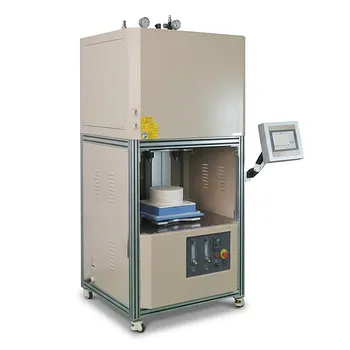
High Temperature Vertical Atmosphere Controlled Furnace 1700C Automatic Bottom Loading 13 Liter Vacuum Thermal System

Vertical 1700C Vacuum and Atmosphere Tube Furnace with 80mm Alumina Tube