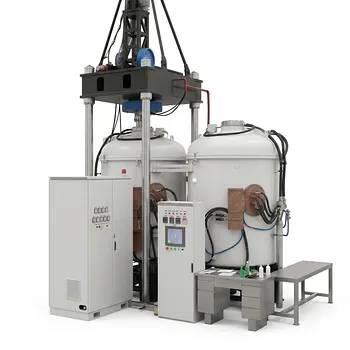
Why is vacuum critical in Cu-Cu bonding? Prevention of Oxidation & Secrets to Atomic-Level Bonding Success
Updated 3 months ago
The low-pressure environment in vacuum bonding is the critical safeguard against surface oxidation. This atmosphere — often maintained at levels such as 200 Pa — ensures that copper surfaces remain chemically pure during high-temperature heating. By excluding oxygen, the furnace enables direct atomic contact, which is the physical prerequisite for the diffusion and grain growth required to form a high-strength metallic bond.
A vacuum environment acts as a definitive chemical shield, preventing oxide layers from forming or thickening during the bonding process. This purity allows copper atoms to migrate freely across the interface, transforming two separate surfaces into a single, unified metallic structure.
The Barrier of Surface Oxidation
Eliminating the Oxide Layer
Copper is highly reactive to oxygen, especially when heated to the transition temperatures required for diffusion. A vacuum furnace creates an anaerobic environment that halts the growth of non-conductive and brittle oxide layers between the components.
Preventing Secondary Oxidation
Even if copper surfaces are chemically cleaned with organic acids prior to bonding, they can re-oxidize instantly when heat is applied. The vacuum environment prevents this secondary oxidation, ensuring the bond occurs at the metal-to-metal level rather than through a layer of contamination.
Maintaining Surface Activity
Vacuum environments help preserve the "active" state of the copper surface. By keeping the interface free of oxygen molecules, the metal atoms remain ready to form new metallic bonds the moment they are brought into contact.
Facilitating Atomic-Level Interaction
Enabling Atomic Diffusion
For a bond to be "direct," atoms must migrate from one copper lattice into the other. Without oxygen molecules acting as a physical barrier, atoms can move across the interface through solid-state diffusion, a process essential for a permanent union.
Promoting Interfacial Grain Growth
Once atoms begin to diffuse, the copper grains on either side of the joint grow and merge across the interface. This grain growth is what eliminates the visible boundary between parts, resulting in the high mechanical strength characteristic of vacuum-bonded joints.
Eliminating External Interference
A high-vacuum environment can also be used to eliminate the influence of external mechanical pressure. This allows researchers to more accurately observe the Kirkendall effect and other microstructure evolutions driven solely by solid-state diffusion.
The Role of Complementary Forces
Synergy Between Heat and Vacuum
High temperatures provide the kinetic energy needed for atoms to move, but they also normally accelerate chemical degradation. The vacuum cancels out the negative effects of heat (oxidation) while allowing the positive effects (migration and bonding) to proceed.
The Impact of Mechanical Pressure
While the vacuum manages chemical purity, mechanical pressure (often around 5 MPa) is frequently applied to overcome microscopic surface irregularities. This pressure ensures the surfaces are in tight enough physical contact for the vacuum-enabled diffusion to begin.
Understanding the Trade-offs
Vacuum Quality vs. Throughput
Achieving ultra-low pressures, or high vacuum, takes significant time and specialized equipment. Engineers must determine the specific pressure threshold—such as the difference between a rough vacuum and a high vacuum—to balance bond integrity with production speed.
Surface Preparation Limits
A vacuum prevents new oxidation, but it is not a substitute for proper pre-cleaning. Heavy pre-existing oxides or oils may not be fully removed by the vacuum alone, meaning rigorous pre-processing remains a requirement for high-reliability applications.
How to Apply This to Your Project
When optimizing a direct Cu-Cu bonding process, the environmental control strategy must align with your specific performance and material requirements.
- If your primary focus is Maximum Bond Strength: Prioritize a high-vacuum environment combined with stable mechanical pressure to ensure total grain growth across the interface.
- If your primary focus is Minimizing Process Time: Identify the highest allowable pressure (e.g., 200 Pa) that still effectively prevents secondary oxidation to reduce pump-down cycles.
- If your primary focus is Analyzing Microstructure: Utilize a high vacuum without external mechanical pressure to isolate the effects of solid-state diffusion and void formation.
Controlled atmospheric purity is the foundational requirement for high-performance metallurgy, turning a simple interface into a seamless atomic union.
Summary Table:
| Key Factor | Role of Vacuum Environment | Impact on Cu-Cu Bond Quality |
|---|---|---|
| Oxidation Control | Eliminates oxygen to prevent non-conductive oxide layers | Ensures pure metal-to-metal contact |
| Atomic Diffusion | Removes physical barriers between copper lattices | Facilitates solid-state migration and bonding |
| Surface Activity | Prevents secondary oxidation during heating cycles | Maintains high surface energy for grain growth |
| Microstructure | Isolates effects of heat and pressure from atmosphere | Produces a unified, seamless metallic structure |
Elevate Your Material Research with THERMUNITS
Precise control over local environments is the difference between a failed joint and a seamless atomic union. THERMUNITS is a leading manufacturer of high-temperature laboratory equipment, providing the advanced thermal solutions required for cutting-edge material science and industrial R&D.
Our extensive range includes Vacuum Bonding, Hot Press, Muffle, Atmosphere, and Rotary furnaces, as well as CVD/PECVD systems and Vacuum Induction Melting (VIM) furnaces. We empower researchers to achieve superior bond integrity and repeatable results in challenging Cu-Cu and ceramic-to-metal applications.
Ready to optimize your heat treatment process? Contact our engineering team today to find the perfect thermal processing solution for your laboratory.
References
- C.X. He, Shien‐Ping Feng. Nanocrystalline copper for direct copper-to-copper bonding with improved cross-interface formation at low thermal budget. DOI: 10.1038/s41467-024-51510-7
Mentioned Products
- High Temperature Vacuum Lamination Hot Press Furnace Machine for Semiconductor Wafer Bonding and Advanced Composite Thermal Processing
- 1100C High Temperature Vacuum Crucible Furnace with Quartz Chamber for Thermal Processing and Sintering
- High Vacuum Melting Casting Furnace with Mechanical Stirring and Secondary Charge for Metallic Alloy Research
- Three Temperature Zone High Temperature Vacuum Tube Furnace for CVD and Material Sintering
- Vertical Vacuum Furnace 1100C High Temperature 8 Inch Quartz Chamber Water Cold Flange System
People Also Ask
- What types of heating systems and insulation are used in Vacuum Hot Press Furnaces? Optimize Your Thermal Processing
- What is a Vacuum Hot Press Furnace and what are its primary industrial applications? Achieve Maximum Material Density
- What are the structural features of the furnace body and chamber in a Vacuum Hot Press Furnace? Master Material Density
- Why is graphite the preferred material for dies and heating elements in Vacuum Hot Press Furnaces? High-Temp Solutions
- What are the primary operational components and mechanisms of a vacuum hot press furnace? A Technical Breakdown

Tech Team · ThermUnits
Last updated on Jun 02, 2026
Related Products
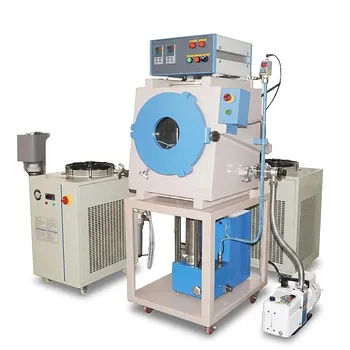
High Temperature Vacuum Lamination Hot Press Furnace Machine for Semiconductor Wafer Bonding and Advanced Composite Thermal Processing
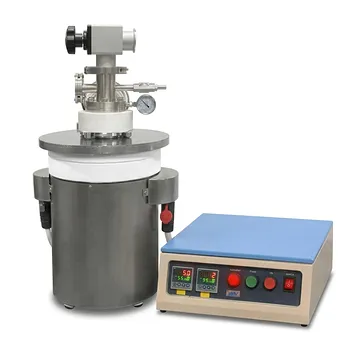
1100C High Temperature Vacuum Crucible Furnace with Quartz Chamber for Thermal Processing and Sintering
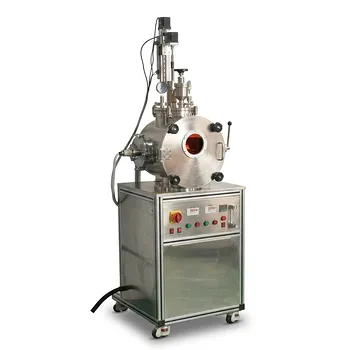
High Vacuum Melting Casting Furnace with Mechanical Stirring and Secondary Charge for Metallic Alloy Research
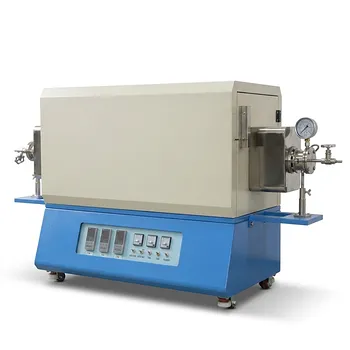
Three Temperature Zone High Temperature Vacuum Tube Furnace for CVD and Material Sintering
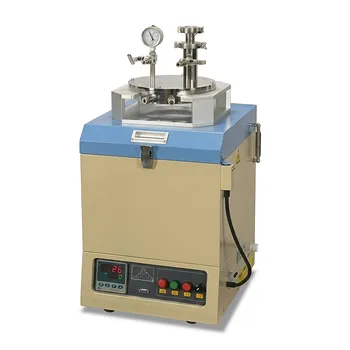
Vertical Vacuum Furnace 1100C High Temperature 8 Inch Quartz Chamber Water Cold Flange System
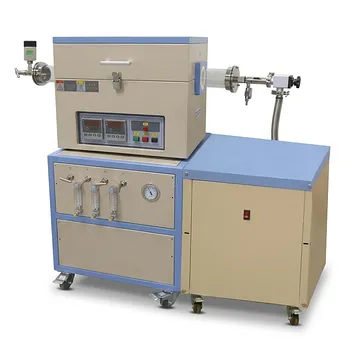
Dual Zone Quartz Tube Furnace with 80mm Diameter 1200C Max Temperature 3 Channel Gas Mixer and Vacuum Pump System
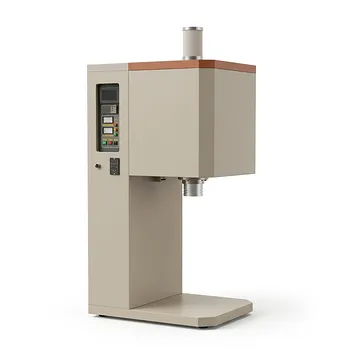
Vertical Openable Tube Furnace 0-1700c High Temperature Laboratory System for CVD and Vacuum Heat Treatment
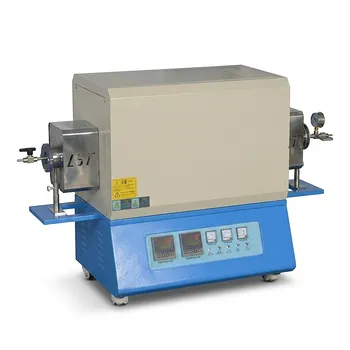
High Temperature Dual Zone Vacuum Tube Furnace for Material Research and CVD Processing
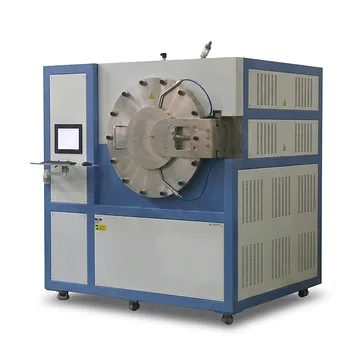
High Vacuum Pressure Chamber Furnace 800C 3.5 Bar Sintering System for Superconducting Materials
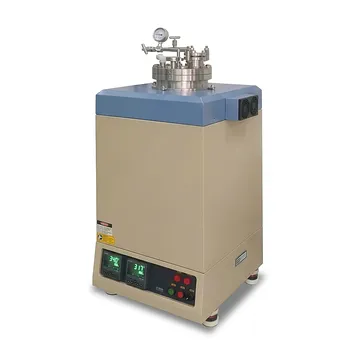
High Temperature 1000C Vacuum Furnace with 8 Inch ID Chamber for Material Sintering and Research Annealing
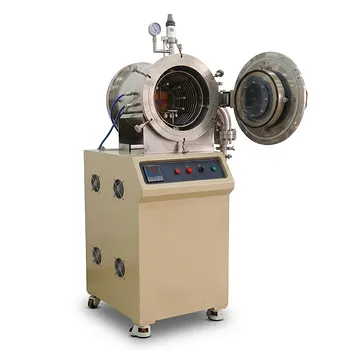
High Temperature Cold Wall High Vacuum Chamber Furnace 1400C for Advanced Material Processing
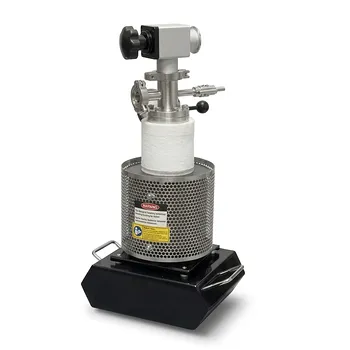
High Temperature 1100C Compact Top Loading Vertical Vacuum Tube Furnace for High Vacuum Noble Metal Melting and Material Research
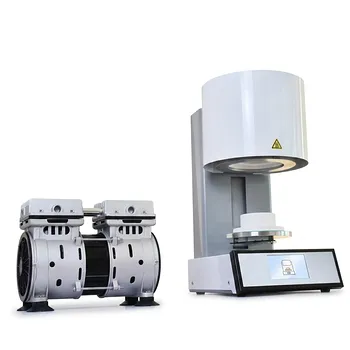
Vacuum Dental Porcelain Sintering Furnace for High Precision Ceramic Restorations
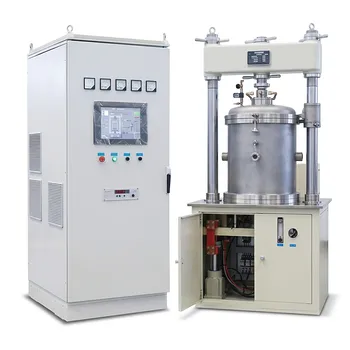
Industrial Vacuum Hot Press Furnace Machine and High Temperature Heated Vacuum Press for Advanced Material Sintering
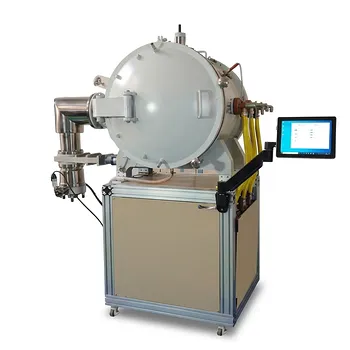
High Temperature Cold Wall Vacuum Furnace for Advanced Material Sintering and Annealing 1600C Heating Area 200x200x300mm

1800C High Temperature Compact Vacuum Tube Furnace with 60mm OD Alumina Tube and Kanthal MoSi2 Heating Elements
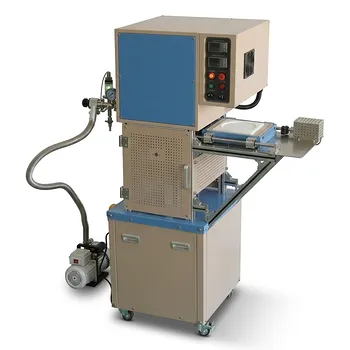
1200°C Bottom Loading Vacuum Furnace with Rapid Gas Cooling and 8.6 Inch Diameter Quartz Chamber
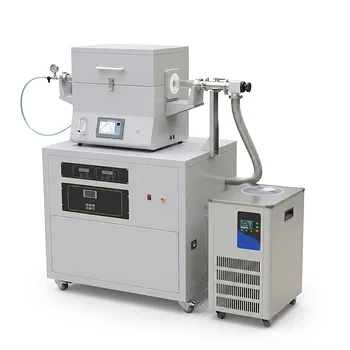
Split Chamber CVD Tube Furnace with Vacuum Station Chemical Vapor Deposition System Machine
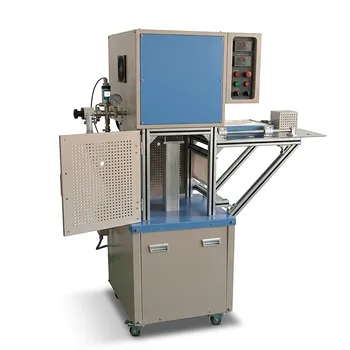
Bottom Loading Vacuum Furnace 1200C Rapid Cooling Atmosphere Control Quartz Chamber