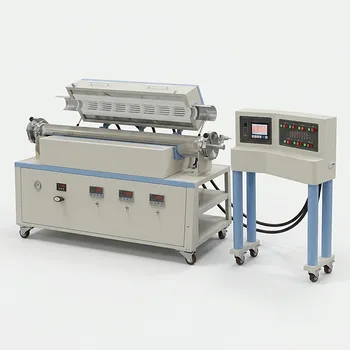
Why must NCM811 synthesis use high-purity oxygen? Unlock Superior Cathode Performance & Structural Stability
Updated 3 months ago
High-nickel cathode synthesis requires a high-purity oxygen atmosphere to maintain the delicate chemical balance of nickel ions. In materials like NCM811, where nickel exceeds 80% of the composition, a high oxygen partial pressure is necessary to stabilize trivalent nickel ($Ni^{3+}$) and prevent it from reducing to divalent nickel ($Ni^{2+}$). Without this specific environment, the material suffers from structural defects and poor electrochemical performance due to the migration of nickel into lithium sites.
Core Takeaway: Industrial-grade oxygen provides the high partial pressure required to stabilize the $Ni^{3+}$ oxidation state and suppress cation mixing. This ensures the formation of a highly ordered, layered $R\bar{3}m$ crystal structure essential for high-capacity battery performance.
The Role of Oxygen Partial Pressure in Phase Stability
Stabilizing the Trivalent Nickel State
High-nickel materials are inherently unstable at the high temperatures required for synthesis, typically between 700°C and 900°C. In a standard air environment, trivalent nickel ($Ni^{3+}$) tends to reduce to divalent nickel ($Ni^{2+}$), which degrades the material's energy density. A high-purity oxygen atmosphere provides the chemical "backpressure" needed to keep nickel in its higher oxidation state.
Facilitating the $R\bar{3}m$ Layered Structure
The goal of sintering is to achieve a long-range ordered arrangement of nickel, manganese, and cobalt. High-purity oxygen accelerates interface reaction kinetics, allowing the material to complete full lithiation and phase transformation quickly. This results in the desired hexagonal $R\bar{3}m$ space group, which is the foundation of high crystallinity and efficient lithium-ion diffusion.
Suppressing Rock-Salt Phase Impurities
In the absence of sufficient oxygen, the reduction of nickel leads to the formation of undesirable rock-salt phases ($NiO$-like structures). These impurities act as dead weight within the cathode, blocking the movement of lithium ions and significantly reducing the battery's cycle life. A continuous flow of oxygen in a tube furnace effectively inhibits these reduction tendencies.
Mitigating the Challenge of Cation Mixing
The Problem of Ionic Radius Similarity
Divalent nickel ($Ni^{2+}$) has an ionic radius very similar to that of lithium ($Li^+$). During high-temperature sintering, $Ni^{2+}$ ions can easily migrate into the lithium layers, a phenomenon known as cation mixing. This migration "plugs" the channels through which lithium ions must flow during charging and discharging.
Structural Reinforcement through Atmosphere Control
By maintaining a high-purity oxygen environment, the concentration of $Ni^{2+}$ is minimized. This ensures that the nickel ions stay within their designated transition metal layers, preserving the open pathways for lithium-ion transport. This structural integrity is what allows NCM811 to achieve its high specific capacity.
Surface Impurity Management
High-nickel precursors are prone to forming surface impurities like lithium carbonates ($Li_2CO_3$) and hydroxides ($LiOH$). A controlled oxygen atmosphere at high temperatures helps decompose these impurity phases or drives them to diffuse into the particle bulk. This "cleans" the particle surface and restores the kinetics required for high-speed lithium transport.
Understanding the Trade-offs and Technical Constraints
Cost and Complexity of Industrial Gas Supply
Utilizing high-purity oxygen at an industrial scale introduces significant operational costs compared to standard air-based sintering. It requires specialized atmosphere-controlled furnaces and precise gas delivery systems to maintain a constant flow. The increased complexity of managing high-pressure oxygen also necessitates more rigorous safety protocols to prevent oxidation-related hazards.
Sensitivity to Temperature Fluctuations
Even with the correct atmosphere, high-nickel synthesis is extremely sensitive to "hot spots" or uneven heating. If the temperature exceeds the critical range (often 800°C–900°C), the oxygen atmosphere may no longer be enough to prevent the thermal decomposition of the $Ni^{3+}$ species. This necessitates the use of high-precision tube furnaces with multi-stage temperature control to ensure a stable thermal field throughout the sintering process.
How to Apply This to Your Project
Successful synthesis depends on matching your equipment and atmosphere to your specific nickel concentration and desired particle morphology.
- If your primary focus is maximizing discharge capacity: You must prioritize a continuous, high-flow oxygen atmosphere to ensure the highest possible $Ni^{3+}$ ratio and a perfect $R\bar{3}m$ structure.
- If your primary focus is reducing production costs: Consider optimizing the temperature profile to see if a slightly lower oxygen purity can be offset by a longer, more controlled "soaking" period at lower temperatures.
- If your primary focus is material recycling or regeneration: Use an atmosphere furnace to provide the high-purity oxygen needed to repair the layered structure and decompose carbonates that have built up on the aged cathode surface.
Ultimately, high-purity oxygen is not merely an additive but a critical structural stabilizer that defines the electrochemical limits of high-nickel battery technology.
Summary Table:
| Parameter | Role in Synthesis | Performance Benefit |
|---|---|---|
| Oxygen Partial Pressure | Stabilizes $Ni^{3+}$ oxidation state | Maximizes specific energy density |
| Atmosphere Purity | Suppresses $Ni^{2+}/Li^{+}$ cation mixing | Maintains clear Li-ion diffusion channels |
| Phase Control | Facilitates $R\bar{3}m$ layered structure | Improves electrochemical stability |
| Surface Treatment | Decomposes $Li_{2}CO_{3}$ and $LiOH$ | Enhances reaction kinetics |
Optimize Your Cathode Synthesis with THERMUNITS
High-performance battery materials like NCM811 demand uncompromising atmosphere control. THERMUNITS is a leading manufacturer of high-temperature laboratory equipment for material science and industrial R&D. Our specialized Atmosphere, Tube, and Vacuum furnaces are engineered to provide the high-purity oxygen environments and precise thermal fields necessary to prevent cation mixing and ensure phase purity.
From Muffle and Rotary furnaces to advanced CVD/PECVD systems and Vacuum Induction Melting (VIM) units, we offer a comprehensive range of thermal processing solutions tailored to your R&D needs.
Ready to enhance your lab's efficiency and material quality?
Contact our technical team today to discuss your heat treatment requirements!
References
- Zhedong Liu, Yanan Chen. Approaching Ultimate Synthesis Reaction Rate of Ni-Rich Layered Cathodes for Lithium-Ion Batteries. DOI: 10.1007/s40820-024-01436-y
Mentioned Products
- High Temperature Oxygen and Inert Atmosphere Controlled Furnace 8 Liter 1700C Sintering System for Advanced Materials RD
- High Temperature Vertical Atmosphere Controlled Furnace with Automatic Bottom Loading and 1700°C Capacity for Advanced Material Research
- 1500C Three Zone Vertical Pyrolysis Furnace for Nanoparticle Synthesis and Advanced Oxide Coating
- 1650C High Temperature Atmosphere Controlled Box Furnace with 65L Chamber for Advanced Material Sintering and Industrial Heat Treatment
- High Temperature Vertical Atmosphere Controlled Furnace 1700C Automatic Bottom Loading 13 Liter Vacuum Thermal System
People Also Ask
- What role does atmosphere control play in technical ceramics and glass? Master Material Purity and Precision
- What are the advantages of using an atmosphere-controlled high-temperature sintering furnace? Precise Oxygen Control
- Why is a tube furnace required for FGM-PhG structural color ceramics? Key to Carbon Preservation & Vibrant Color
- What role does an atmosphere furnace play in CN & Aux-CN preparation? Master Thermal Polycondensation & Stability.
- How high-temp furnaces ensure membrane integrity in molten salt impregnation? Precision Thermal & Atmosphere Control

Tech Team · ThermUnits
Last updated on Jun 03, 2026
Related Products
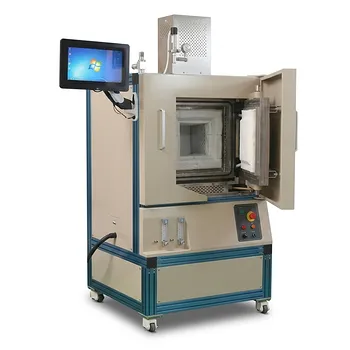
High Temperature Oxygen and Inert Atmosphere Controlled Furnace 8 Liter 1700C Sintering System for Advanced Materials RD
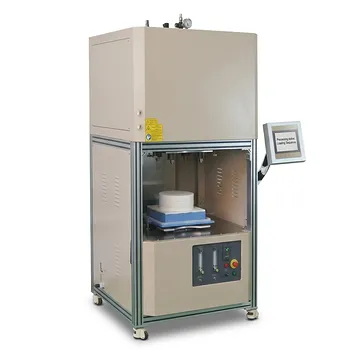
High Temperature Vertical Atmosphere Controlled Furnace with Automatic Bottom Loading and 1700°C Capacity for Advanced Material Research
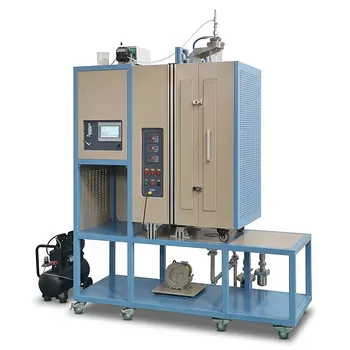
1500C Three Zone Vertical Pyrolysis Furnace for Nanoparticle Synthesis and Advanced Oxide Coating
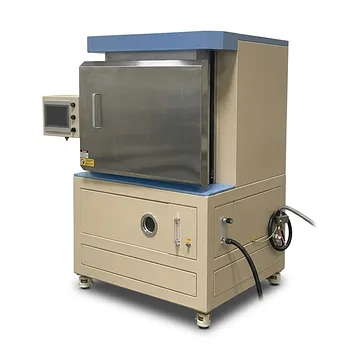
1650C High Temperature Atmosphere Controlled Box Furnace with 65L Chamber for Advanced Material Sintering and Industrial Heat Treatment
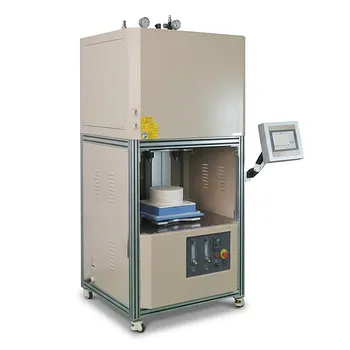
High Temperature Vertical Atmosphere Controlled Furnace 1700C Automatic Bottom Loading 13 Liter Vacuum Thermal System
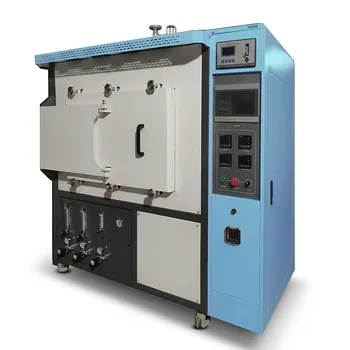
Roller Table Atmosphere Furnace 1500C High Temperature Battery Material Sintering System 112L Capacity
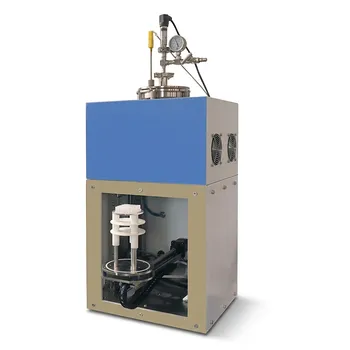
Rapid Thermal Processing RTP Atmosphere Controlled Bottom Loading Furnace 1100C High Throughput 50C per Second Heating Rate
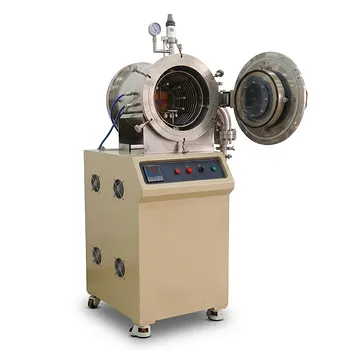
High Temperature Cold Wall High Vacuum Chamber Furnace 1400C for Advanced Material Processing
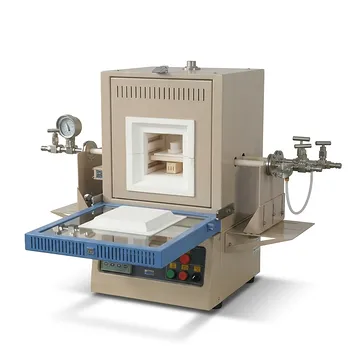
1700C Compact Hybrid Furnace with Dual Layer Box Sintering and Controlled Atmosphere Alumina Tubes
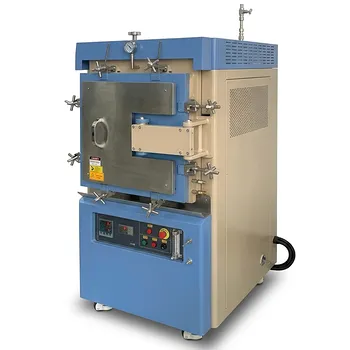
Atmosphere Controlled Muffle Furnace 1700C Maximum Temperature 80L High Capacity Vacuum Inert Gas Box Furnace
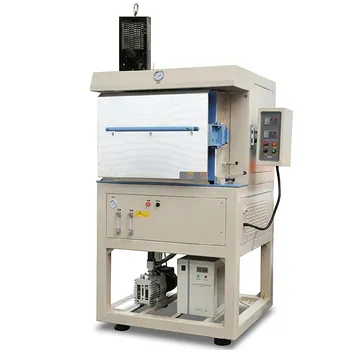
1200C Hydrogen Atmosphere Box Furnace with 5 Heated Sides and 64L Chamber
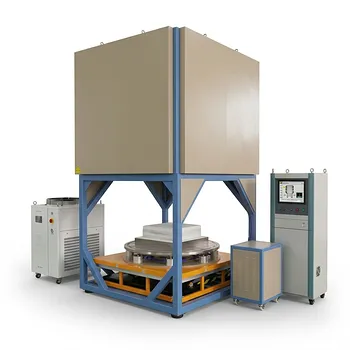
Bottom Loaded Inert Gas Atmosphere Box Furnace 1700C 1300C 216L Large Capacity Industrial Thermal Processing System
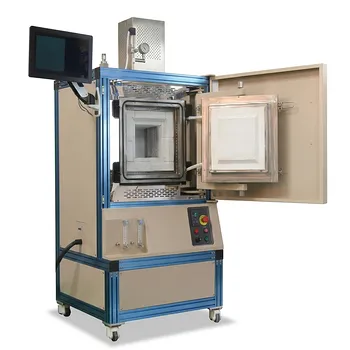
High Temperature Hydrogen Atmosphere Box Furnace 1650C Max Reducing Environment Material Synthesis System 8x8x8 Chamber

Vertical 1700C Vacuum and Atmosphere Tube Furnace with 80mm Alumina Tube
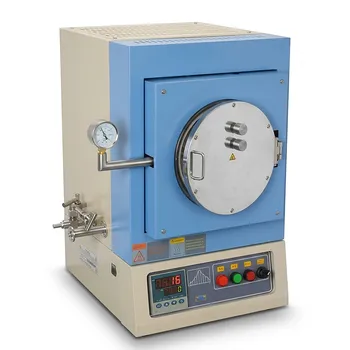
1100°C High Temperature Quartz Chamber Furnace 8 Inch OD with 7.6 Liter Capacity and Vacuum Atmosphere Capability
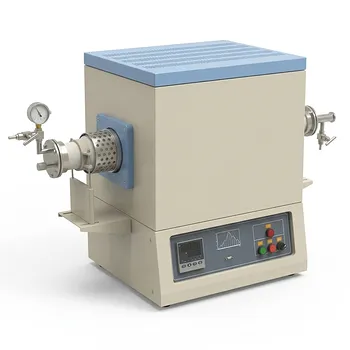
1750°C High Temperature Benchtop Vacuum Atmosphere Tube Furnace with Kanthal Super 1800 Heating Elements and 60mm Alumina Processing Tube
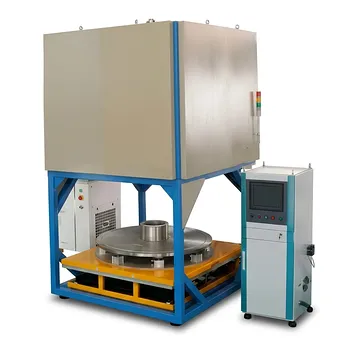
1400C Bottom Loaded Inert Gas Atmosphere Box Furnace with 125L Capacity and Precision Hydraulic Lift
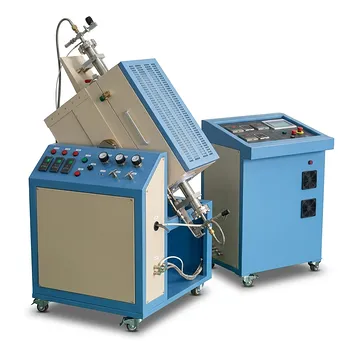
1100C High Pressure Rocking Tube Furnace with 2 Inch Super Alloy Processing Tube for Material Synthesis
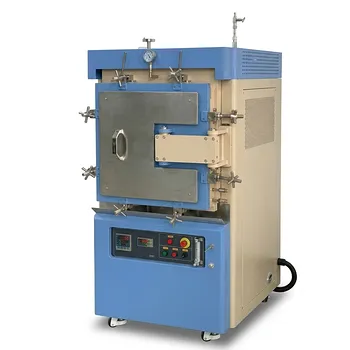
High Temperature Economic Hydrogen Gas Box Furnace 1600C Atmosphere Controlled Thermal Processing System 65L Capacity