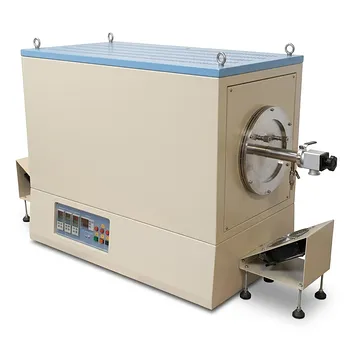
Why must the carbonization process of lignin fibers be conducted in a tube furnace? Prevent Oxidation & Maximize Yield.
Updated 3 months ago
Atmosphere-controlled equipment is essential for lignin carbonization because it prevents the material from undergoing oxidative combustion at the high temperatures required for structural transformation. At processing temperatures typically ranging from 600°C to 900°C, lignin fibers will simply burn away if exposed to oxygen. A sealed environment, such as a tube furnace, allows for the introduction of high-purity inert gases like nitrogen or argon, which protects the material while it reorganizes into high-performance carbon structures.
The core necessity of atmosphere-controlled equipment lies in its ability to isolate the lignin from oxygen, enabling chemical dehydrogenation and deoxygenation without destroying the carbon skeleton. This controlled environment ensures that organic precursors are successfully converted into high-purity, sp2-hybridized carbon nanofibers rather than ash.
Preventing Material Loss Through Oxidation
The Risk of High-Temperature Combustion
Lignin is a complex organic polymer that becomes highly reactive when heated to the temperatures required for carbonization. If oxygen is present in the furnace chamber, the carbon atoms will preferentially bond with oxygen to form CO2, effectively combusting the sample.
The Role of Inert Gas Displacement
Atmosphere-controlled tube furnaces use a continuous flow of high-purity nitrogen or argon to completely displace oxygen. This creates a protective shield that allows the lignin to undergo thermal decomposition (pyrolysis) without the interference of oxidative reactions.
Maximizing Carbon Yield
By eliminating the possibility of burn-off, the furnace ensures that the maximum amount of carbon is preserved. This is critical for maintaining the structural integrity and "carbon yield" of the resulting nanofibers or hard carbon products.
Facilitating Complex Chemical Rearrangement
Removal of Heteroatoms
To transform lignin into carbon fiber, non-carbon elements known as heteroatoms (specifically oxygen and hydrogen) must be removed. The controlled heat of the furnace facilitates dehydrogenation and deoxygenation reactions that strip these elements away.
Formation of sp2 Hybridized Structures
As heteroatoms depart, the remaining carbon atoms must reorganize into stable sp2 hybridized structures. The stable environment of a tube furnace allows these atoms to form graphene microcrystalline fragments, which are the building blocks of high-strength carbon materials.
Development of Electrical Conductivity
The precise transition from amorphous carbon to a graphitized structure is what grants the material its electrical conductivity. Atmosphere control ensures this structural evolution is orderly, resulting in a conductive skeleton suitable for electromagnetic shielding or battery applications.
Precision Control for Structural Uniformity
The Importance of Thermal Holding
Tube furnaces offer a constant temperature holding function, allowing the material to soak at a specific temperature (e.g., 600°C) for several hours. This ensures that the polycondensation of carbon chains is thorough and uniform throughout the entire fiber batch.
Managing the Heating Curve
The ability to precisely control the heating rate and cooling curve is vital for preventing structural defects. Gradual heating allows for the slow release of volatile gases, preventing the "popcorn effect" where rapidly escaping gases rupture the delicate nanofibers.
Achieving High Crystallinity
Strict atmosphere control allows for processing at even higher temperatures (up to 1200°C) to optimize interlayer spacing and crystallinity. This level of refinement is necessary to produce materials with specific (002) crystal plane characteristics.
Understanding the Technical Trade-offs
Equipment Sealing and Integrity
The primary pitfall in this process is insufficient sealing of the furnace tube. Even a minor leak can introduce enough oxygen to cause partial oxidation, which results in "pitting" on the fiber surface and significantly reduces mechanical strength.
Gas Flow Rate Dynamics
While a high flow of inert gas ensures an oxygen-free environment, excessively high flow rates can lead to thermal gradients or the unwanted removal of smaller carbon fragments. Balancing the flow rate is essential to maintain a stable temperature field across the material.
Cost vs. Gas Purity
Using ultra-high-purity argon provides the best protection for sensitive nanostructures, but it is significantly more expensive than nitrogen. For most lignin applications, high-purity nitrogen is the industry standard, though it may react with certain metal additives if the carbonization involves composite materials.
How to Apply This to Your Project
Recommendations for Success
- If your primary focus is high electrical conductivity: Prioritize a furnace capable of reaching at least 900°C-1000°C with a long thermal holding time to maximize graphitization.
- If your primary focus is maximizing pore formation: Use a strictly controlled nitrogen atmosphere at lower carbonization temperatures (500°C-600°C) to preserve the potential for high surface area.
- If your primary focus is structural uniformity: Ensure your tube furnace has a "constant temperature zone" that is significantly longer than your sample boat to avoid edge effects.
Properly managed atmosphere control transforms lignin from a low-value byproduct into a sophisticated, high-performance carbon architecture.
Summary Table:
| Key Requirement | Technical Function | Benefit to Lignin Carbonization |
|---|---|---|
| Oxygen Isolation | Prevents oxidative combustion | Maintains carbon skeleton and maximizes yield |
| Inert Atmosphere | Displaces air with $N_2$ or $Ar$ | Enables pyrolysis and $sp^2$ structural formation |
| Precision Heating | Controlled heating/cooling rates | Prevents structural defects and "popcorn effect" |
| Thermal Holding | Uniform temperature distribution | Ensures thorough graphitization and conductivity |
Optimize Your Lignin Research with THERMUNITS
Achieving high-performance carbon nanofibers requires extreme precision and reliable atmosphere control. THERMUNITS is a leading manufacturer of high-temperature laboratory equipment specifically designed for material science and industrial R&D. We provide the advanced thermal processing solutions necessary to transform raw lignin into sophisticated carbon architectures.
Our comprehensive product range includes:
- Tube & Atmosphere Furnaces (Optimized for controlled lignin carbonization)
- Muffle, Vacuum, Rotary, and Hot Press Furnaces
- CVD/PECVD Systems & Vacuum Induction Melting (VIM) Furnaces
- Dental Furnaces, Electric Rotary Kilns, and high-quality Thermal Elements
Ready to elevate your material synthesis? Contact our experts today to find the perfect furnace for your laboratory. Let us help you achieve superior heat treatment results and maximize your research output.
References
- Maxime Parot, Tatjana Stevanović. Effect of Iron Chloride Addition on Softwood Lignin Nano-Fiber Stabilization and Carbonization. DOI: 10.3390/polym16060814
Mentioned Products
- 1200°C Atmosphere Controlled Automatic Bottom Loading Furnace with 6 Inch Quartz Tube
- Compact Vertical Split Quartz Tube Furnace with Stainless Steel Vacuum Flanges for Rapid Thermal Quenching and Controlled Atmosphere Material Processing
- Compact Hybrid Muffle and Tube Furnace for 1000C Controlled Atmosphere Laboratory Material Sintering
- 1700C High Temperature Alumina Tube Furnace with 18 Inch Heated Zone and Vacuum Sealing Flanges
- Vertical 1700C Vacuum and Atmosphere Tube Furnace with 80mm Alumina Tube
People Also Ask
- Why is a tube furnace required for FGM-PhG structural color ceramics? Key to Carbon Preservation & Vibrant Color
- Why is an atmosphere-controlled tube furnace required for the pre-sulfidation of NiMo/gamma-Al2O3 catalysts?
- Why is an atmosphere-controlled tube furnace required for 800 °C CNF annealing? Essential for Oxidative Protection.
- Why is an atmosphere-controlled tube furnace required for [email protected]/C preparation? Key for Purity & Structure
- Why is an atmosphere-controlled tube furnace required for single-atom sensor calcination? Ensure Atomic Dispersion.

Tech Team · ThermUnits
Last updated on Jun 02, 2026
Related Products
1200°C Atmosphere Controlled Automatic Bottom Loading Furnace with 6 Inch Quartz Tube

Compact Vertical Split Quartz Tube Furnace with Stainless Steel Vacuum Flanges for Rapid Thermal Quenching and Controlled Atmosphere Material Processing
Compact Hybrid Muffle and Tube Furnace for 1000C Controlled Atmosphere Laboratory Material Sintering

1700C High Temperature Alumina Tube Furnace with 18 Inch Heated Zone and Vacuum Sealing Flanges

Vertical 1700C Vacuum and Atmosphere Tube Furnace with 80mm Alumina Tube
1500°C Split Tube Furnace with Alumina Tube and Vacuum Sealing Flanges for Material Research
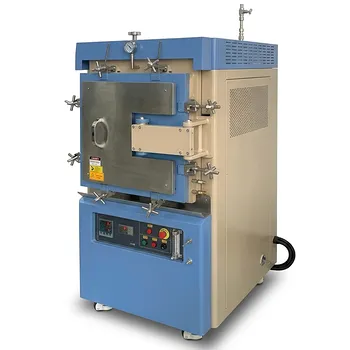
Atmosphere Controlled Muffle Furnace 1700C Maximum Temperature 80L High Capacity Vacuum Inert Gas Box Furnace
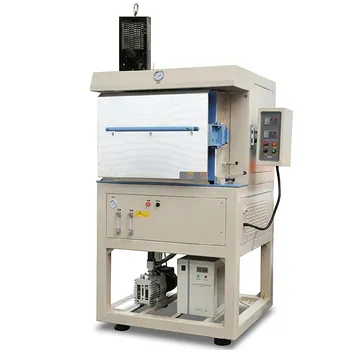
1200C Hydrogen Atmosphere Box Furnace with 5 Heated Sides and 64L Chamber

Three Zone Tube Furnace with 11 Inch or 15 Inch Quartz Tube and Hinged Flanges for Vacuum Atmosphere Heat Treatment
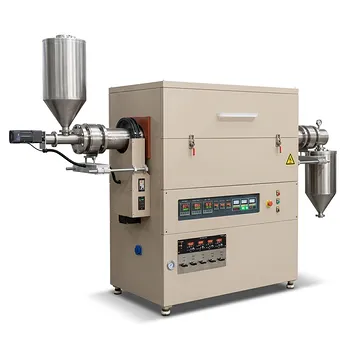
High Temperature Tilting Rotary Tube Furnace with Integrated Mass Flow Control and Multi Zone Heating
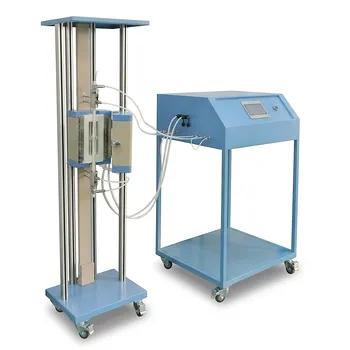
High Temperature Vertical Tube Furnace for Small Solid Oxide Fuel Cell Testing with Four Channel Gas Control
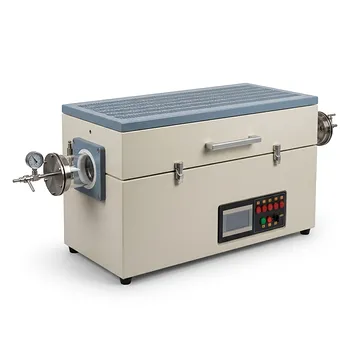
Five Zone 1200C High Temperature Split Tube Furnace with Touch Screen Controller and Multiple Quartz Tube Options
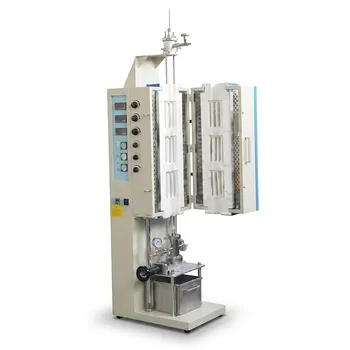
High Temperature Dual Zone Tube Furnace for Material Science Research and Professional Thermal Processing

High Temperature 1700C Tube Furnace with High Vacuum Turbomolecular Pump System and Multi Channel Mass Flow Controller Gas Mixer

High Temperature 1700C Vertical Tube Furnace for Powder Spherification and Material Sintering
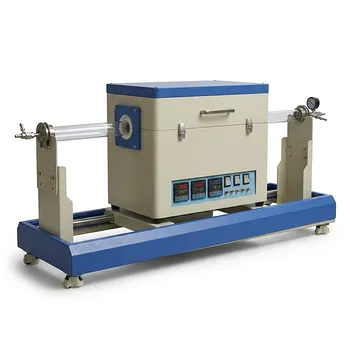
Double Temperature Zone Double Cover Tube Furnace for High Temperature CVD and Vacuum Annealing

High Temperature Automated 5 Inch Tube Furnace for Autonomous Material Research and Advanced Laboratory R&D

High Temperature 1700C Six Zone Split Tube Furnace with Alumina Tube and Water Cooled Flanges
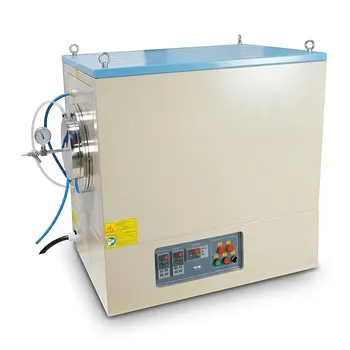
Dual Zone Tube Furnace 1100C with 11 Inch Quartz Tube and Vacuum Flanges for 8 Inch Wafer Processing