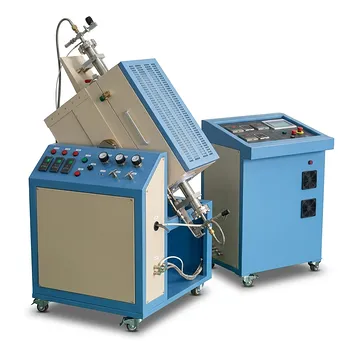
Why must the reduction of Sn@BIBCs be performed in a high-temperature tube furnace with Ar/H2? Master Phase Control.
Updated 3 months ago
The reduction of Sn@BIBCs requires a high-temperature tube furnace and an Ar/H2 atmosphere to facilitate the chemical transformation of tin oxide (SnO2) into metallic tin while simultaneously optimizing the carbon carrier. This specific environment leverages the reducing properties of hydrogen to achieve the necessary phase change at approximately 350°C. Without this controlled atmosphere, the material would fail to achieve the conductivity and catalytic activity required for high-performance anode applications.
This thermal treatment is a dual-purpose process that chemically reduces tin precursors and graphitizes the carbon framework. By excluding oxygen and providing a reactive hydrogen environment, it ensures the structural integrity of the "bowl-in-bowl" architecture while maximizing electrical performance.
Facilitating Chemical Phase Transformations
The Conversion of Tin Oxide to Metallic Tin
The primary role of the hydrogen (H2) in the gas mixture is to act as a potent reducing agent. At 350°C, the H2 reacts with the SnO2 within the composite, stripping away oxygen to leave behind metallic tin nanospheres or tin selenide.
Achieving High Phase Purity
Using a tube furnace allows for the removal of volatile impurities and ensures that the reduction is uniform across the material. This precision is critical for converting oxysulfide or polysulfide impurities into high-purity phases, which is essential for the material’s final chemical stability.
Optimizing the Carbon Framework
Enhancing Electrical Conductivity
The high-temperature treatment does more than just reduce the tin; it also increases the reduction degree of the carbon carrier. Similar to the conversion of graphene oxide (GO) to reduced graphene oxide (rGO), this process removes oxygen-containing functional groups that hinder electron flow.
Preserving the Bowl-in-Bowl Architecture
The "bowl-in-bowl" carbon (BIBC) structure provides the necessary surface area and mechanical support for the tin. A stable, inert environment provided by the Argon (Ar) prevents the carbon framework from combusting or degrading at high temperatures.
Improving Zinc-ophilic Properties
The specific degree of reduction achieved in an Ar/H2 atmosphere ensures the anode possesses excellent zinc-ophilic properties. This attracts zinc ions more effectively during battery cycling, which promotes uniform deposition and enhances the catalytic activity of the electrode.
The Necessity of Atmosphere Control
Prevention of Unwanted Oxidation
At high temperatures, carbon and metallic tin are highly susceptible to oxidation if even trace amounts of oxygen are present. The Argon acts as a protective shield, excluding oxygen and moisture to ensure the thermal energy is used solely for the intended chemical bond breaking and recombination.
Precision in Gas Flow and Temperature
A tube furnace is required because it allows for a strictly controlled gas flow and a constant temperature profile. This stability is necessary to maintain the stoichiometry of the material and to prevent the tin nanospheres from aggregating into larger, less effective particles.
Understanding the Trade-offs
While the Ar/H2 atmosphere is essential, it presents specific challenges regarding gas concentration and safety. A higher concentration of hydrogen accelerates the reduction process but increases the risk of flammability and potential over-reduction of the carbon framework.
Furthermore, if the temperature exceeds the optimal 350°C-400°C range significantly, the metallic tin may undergo excessive grain growth. This can lead to a loss of the "nanosphere" morphology, reducing the surface area and negatively impacting the electrochemical performance of the anode.
How to Apply This to Your Project
When performing the reduction of Sn@BIBCs, your technical approach should be dictated by your specific performance requirements.
- If your primary focus is maximizing electrical conductivity: Prioritize a higher reduction degree of the carbon carrier by ensuring a steady flow of H2 and maintaining the upper limit of the recommended temperature range.
- If your primary focus is structural integrity of the nanospheres: Focus on precise temperature control to prevent tin aggregation, keeping the furnace at a constant 350°C.
- If your primary focus is material purity: Utilize high-purity Argon (99.999%) to ensure that no trace oxygen or moisture interferes with the phase transformation of the tin.
The synergy between hydrogen reduction and argon protection in a controlled furnace is what transforms a simple composite into a high-performance, zinc-ophilic anode material.
Summary Table:
| Component/Parameter | Role in Sn@BIBCs Reduction | Key Outcome |
|---|---|---|
| Hydrogen (H2) | Reducing Agent | Converts SnO2 into metallic Tin nanospheres. |
| Argon (Ar) | Inert Protective Shield | Prevents carbon framework combustion & oxidation. |
| Tube Furnace | Precise Environment Control | Ensures uniform gas flow & stable thermal profile. |
| Temperature (350°C) | Activation Energy | Facilitates reduction while preventing grain growth. |
| Carbon Framework | Support & Conductivity | Graphitization enhances electron flow & zinc-ophilicity. |
Elevate Your Materials Research with THERMUNITS
Achieving precise chemical transformations like Sn@BIBCs reduction requires the highest level of thermal control. THERMUNITS is a leading manufacturer of high-temperature laboratory equipment for material science and industrial R&D. We provide the reliability you need to ensure structural integrity and phase purity in every experiment.
Our comprehensive range of thermal solutions includes:
- Advanced Tube & Atmosphere Furnaces for precise gas-controlled reduction.
- Muffle, Vacuum, and Rotary Furnaces for versatile heat treatment.
- High-End CVD/PECVD Systems and Vacuum Induction Melting (VIM) units.
- Specialized solutions like Hot Press, Dental Furnaces, and Electric Rotary Kilns.
Don't let equipment limitations hinder your innovation. Let THERMUNITS empower your laboratory with state-of-the-art heat treatment technology designed for precision and durability.
Contact our technical experts today to find the perfect furnace for your application!
References
- Xiaoyu Wu, Ming Chen. Tailoring Versatile Cathodes and Induced Anodes for Zn–Se Batteries: Anisotropic Orientation of Tin‐Based Materials within Bowl‐In‐Ball Carbon. DOI: 10.1002/advs.202403224
Mentioned Products
- High Temperature Tube Furnace 1500C with Sliding Flanges and 50mm OD for Rapid Thermal Processing Fast Heating and Cooling
- High Temperature 1700C Tube Furnace with High Vacuum Turbomolecular Pump System and Multi Channel Mass Flow Controller Gas Mixer
- 1750°C High Temperature Benchtop Vacuum Atmosphere Tube Furnace with Kanthal Super 1800 Heating Elements and 60mm Alumina Processing Tube
- High Temperature 1700C Benchtop Tube Furnace with 5 Inch Heating Zone High Purity Alumina Tube and Vacuum Sealing Flanges
- High Temperature Split Tube Furnace 1500C for Material Research Vacuum and Atmosphere Thermal Processing
People Also Ask
- How are high-temperature tube furnaces utilized to repair etching damage? Precision Lattice Restoration Solutions
- What role does a high-temperature tube furnace play in CVD synthesis of silicon nanowires? Master VLS Growth Precision.
- What core conditions does a high-temperature tube furnace provide for rGO aerogels? Mastering Precision Synthesis.
- What role does a high-temperature tube furnace play in the sulfidation heat treatment of CoS@C/MXene nanocomposites? Guide
- How does precision tube furnace control influence CoFe nanoparticle formation? Master Your Bimetallic Synthesis.

Tech Team · ThermUnits
Last updated on Jun 02, 2026
Related Products

High Temperature Tube Furnace 1500C with Sliding Flanges and 50mm OD for Rapid Thermal Processing Fast Heating and Cooling

High Temperature 1700C Tube Furnace with High Vacuum Turbomolecular Pump System and Multi Channel Mass Flow Controller Gas Mixer
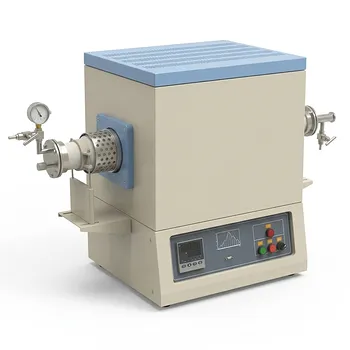
1750°C High Temperature Benchtop Vacuum Atmosphere Tube Furnace with Kanthal Super 1800 Heating Elements and 60mm Alumina Processing Tube

High Temperature 1700C Benchtop Tube Furnace with 5 Inch Heating Zone High Purity Alumina Tube and Vacuum Sealing Flanges
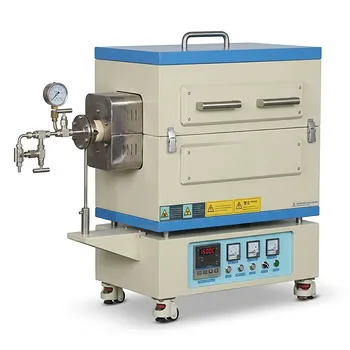
High Temperature Split Tube Furnace 1500C for Material Research Vacuum and Atmosphere Thermal Processing
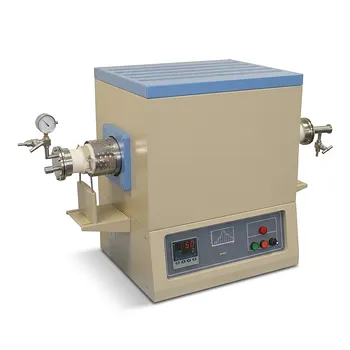
1700C High Temperature Alumina Tube Furnace with 18 Inch Heated Zone and Vacuum Sealing Flanges

1800C High Temperature Compact Vacuum Tube Furnace with 60mm OD Alumina Tube and Kanthal MoSi2 Heating Elements

Compact High Temperature 1600C Tube Furnace with 50mm Alumina Tube and Vacuum Flanges for Material Sintering
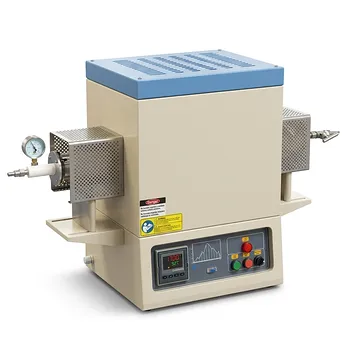
High Temperature Three Zone Tube Furnace 1700C with Alumina Tube and Water Cooled Flanges
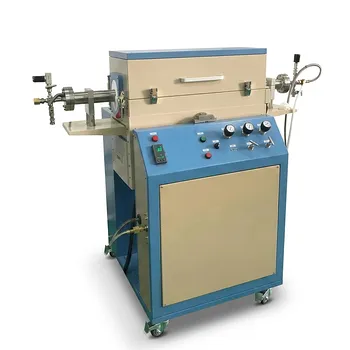
High Temperature Rocking Tube Furnace 1700°C Alumina Processing Tube with Precision Oscillation for Material Synthesis
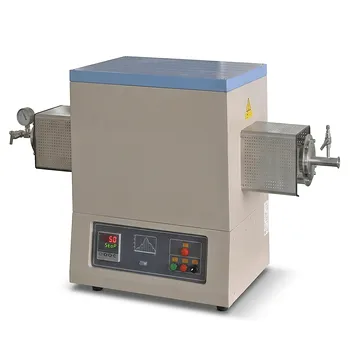
High Temperature 1700C Tube Furnace with 4 Inch OD Alumina Tube and Vacuum Sealing Flanges

High Temperature 1700C Vertical Tube Furnace for Powder Spherification and Material Sintering
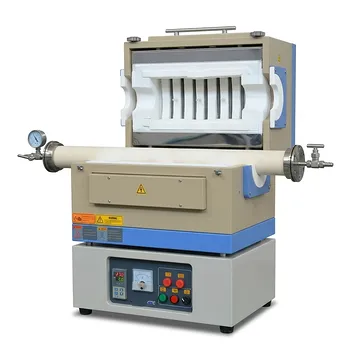
High Temperature 1600C Split Tube Furnace Vacuum Flanges Valves Optional 60mm 80mm Alumina Tube

High Temperature Automated 5 Inch Tube Furnace for Autonomous Material Research and Advanced Laboratory R&D

High Temperature 1700C Six Zone Split Tube Furnace with Alumina Tube and Water Cooled Flanges
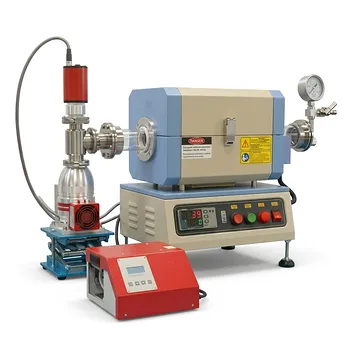
High Vacuum Compact Tube Furnace 1200C with Integrated Turbo Pump System and 8 Inch Heating Zone
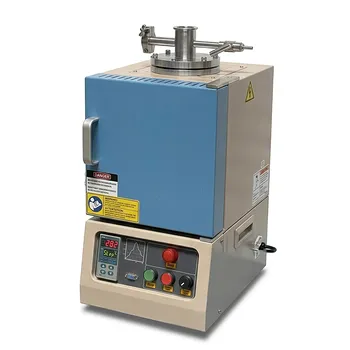
High Temperature Hybrid Muffle and Tube Furnace with Vacuum Capability and PID Control
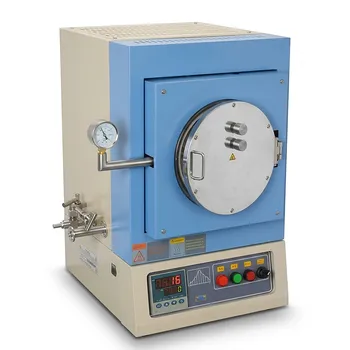
1100°C High Temperature Quartz Chamber Furnace 8 Inch OD with 7.6 Liter Capacity and Vacuum Atmosphere Capability
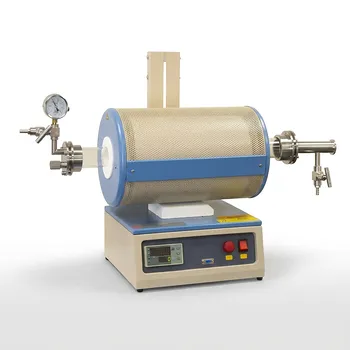
1100C Tube Furnace with Vacuum Flange and Programmable Temperature Controller for Material Science and Industrial Heat Treatment