The Architecture of Interfaces: Why the Vacuum Tube Furnace is the Scalpel of Grain Boundary Engineering
Jun 13, 2026
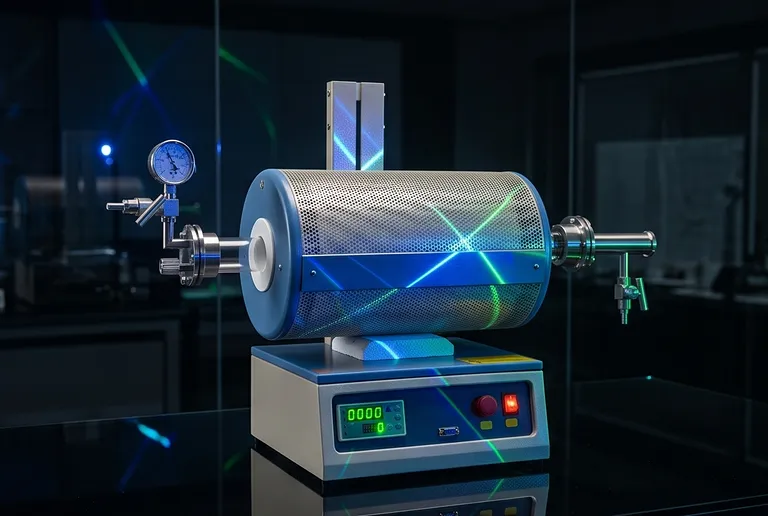
The Invisible Architecture
In the world of high-performance metallurgy, we often obsess over the bulk—the weight, the volume, the chemistry. But for CoNiCr alloys, the real drama happens at the edges.
Grain Boundary Engineering (GBE) is the practice of treating a material not as a solid block, but as a complex network of interfaces. These boundaries are where a material decides to hold together or fall apart.
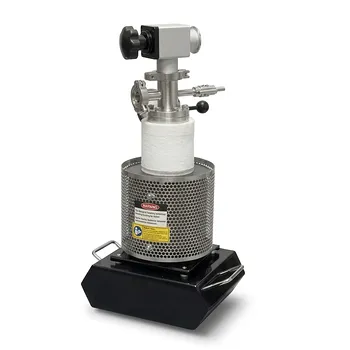
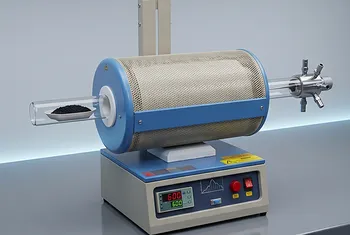
To engineer these boundaries, one does not use a hammer. One uses a vacuum tube furnace. It is the scalpel that allows researchers to dissect and reconstruct the atomic-scale architecture of an alloy.
The Psychology of Kinetic Control
Precision in heat treatment is rarely about the heat itself; it is about the timing of the energy. In CoNiCr alloys, the transition from a deformed structure to a defect-free grain is a race against time and temperature.
Manipulating Nucleation
The furnace acts as a programmable choreographer. By controlling the heating rate, we trigger recrystallization—the birth of new grains.
- Rapid Heating: Triggers high-density nucleation.
- Controlled Dwell: Prevents the "bully" grains from growing too large and consuming their neighbors.
The Stability of Evolution
Advanced alloys often require homogenization cycles that last for days. In these long-term stretches, the internal environment must remain hauntingly still. A stable internal pressure ensures that the microstructure evolves predictably. Without this stability, the grain boundaries develop unevenly, creating localized weak points that lead to premature fatigue.
Purity in the Void
In Grain Boundary Engineering, oxygen is the enemy of integrity. When CoNiCr is heated to extreme temperatures, even a few stray molecules of air can cause interfacial oxidation.
Eliminating the "Dirty" Boundary
A vacuum environment (often $10^{-3}$ mTorr or better) serves one primary purpose: isolation. By removing the atmosphere, the furnace ensures that the grain boundaries remain "clean." Clean boundaries are a prerequisite for the precipitation of strengthening phases.
Surface vs. Substance
While GBE focuses on internal structures, the vacuum furnace also manages the surface. For alloys bonding with ceramics or specialized coatings, a controlled vacuum (around 980°C) facilitates a dense, uniform oxide layer. It is the difference between a surface that flakes and one that integrates.
Phase Management: The "Reset" Button
One of the most remarkable capabilities of high-temperature tube furnaces is the ability to "undo" the damage of time.
| Feature | Impact on CoNiCr Alloys | Key Mechanism |
|---|---|---|
| Kinetic Control | Uniform grain distribution | Programmable heating & stable dwell |
| Atmosphere Purity | Prevents internal oxidation | High vacuum or inert gas purging |
| Phase Management | $\gamma'$ precipitation control | Precise aging & rapid quenching |
| Thermal Uniformity | Consistent tensile strength | Multi-zone heating stability |
Managing Gamma-Prime
The vacuum tube furnace allows for the fine-scale precipitation of gamma-prime ($\gamma'$) at the grain boundaries. By utilizing specific aging temperatures, engineers control how alloying elements migrate from the matrix to the interfaces, directly tailoring the alloy’s creep resistance.
Recovery and Re-dissolution
When an alloy has suffered from creep damage—where phases have "rafted" or coarsened—the furnace can perform a recovery treatment at temperatures as high as 1315°C. This effectively "resets" the material, re-dissolving the coarse phases so they can be re-precipitated into an ordered cubic structure.
The Engineering Trade-offs
Modern metallurgy is a game of balances. There are no solutions, only trade-offs.
- Heating Rate vs. Gradient: Heating a sample too quickly can cause the exterior to expand while the core remains cool, introducing thermal stress.
- Vacuum vs. Volatilization: At extreme temperatures, a vacuum that is "too deep" can cause elements like Chromium to sublime (evaporate) from the surface.
- Quenching Speed: Rapid argon quenching "freezes" atoms in a supersaturated state, but requires a furnace system capable of managing the thermal shock.
Your Performance Roadmap
If you are pursuing a specific mechanical outcome for your CoNiCr project, the furnace configuration must match your goal:
- For Creep Resistance: Prioritize a two-stage aging process for $\gamma'$ phase ordering.
- For Fatigue Life: Focus on high-precision recrystallization to maximize "special" low-energy grain boundaries.
- For Microstructural Repair: Ensure your system can reach and maintain temperatures above 1300°C for full re-dissolution.
Precision Tools for Atomic Design
At THERMUNITS, we understand that a furnace is more than just a heat source; it is the fundamental laboratory for controlling the life of a material. Our range of vacuum and atmosphere tube furnaces is designed for the exactitude required by modern Grain Boundary Engineering.
From CVD systems to Vacuum Induction Melting (VIM), we provide the thermal processing environments where material science meets industrial reality.
To explore the ideal thermal profile for your next research breakthrough, Contact Our Experts.
Quick Links
Suggested Products
Compact High Temperature 1600C Tube Furnace with 50mm Alumina Tube and Vacuum Flanges for Material Sintering 1800C High Temperature Compact Vacuum Tube Furnace with 60mm OD Alumina Tube and Kanthal MoSi2 Heating Elements High Temperature 1700C Six Zone Split Tube Furnace with Alumina Tube and Water Cooled Flanges Vertical 1700C Vacuum and Atmosphere Tube Furnace with 80mm Alumina Tube High Temperature Compact Vacuum Tube Furnace 1750C Max 60mm OD Alumina TubeFurther Reading
The Geometry of Heat: Engineering Magnetic Biochar Through Controlled Pyrolysis The Architecture of Absence: Why Atmosphere Control Defines the Fate of Mesoporous Carbon The Invisible Architect: Precision Thermal Oxidation in NiO@Ni Synthesis The Architecture of Isolation: Why Atmosphere Defines Material Destiny The Architecture of the Interface: Why 200°C Defines the Memristor
ThermUnits
Last updated on Apr 14, 2026
Related Products

Compact High Temperature 1600C Tube Furnace with 50mm Alumina Tube and Vacuum Flanges for Material Sintering

1800C High Temperature Compact Vacuum Tube Furnace with 60mm OD Alumina Tube and Kanthal MoSi2 Heating Elements

High Temperature 1700C Six Zone Split Tube Furnace with Alumina Tube and Water Cooled Flanges

Vertical 1700C Vacuum and Atmosphere Tube Furnace with 80mm Alumina Tube
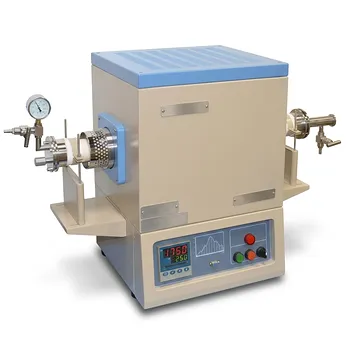
High Temperature Compact Vacuum Tube Furnace 1750C Max 60mm OD Alumina Tube
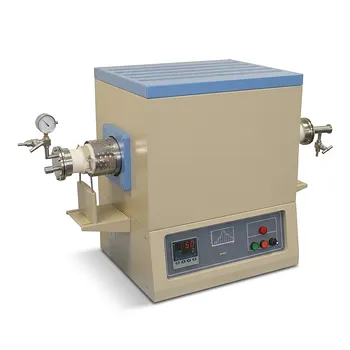
1700C High Temperature Alumina Tube Furnace with 18 Inch Heated Zone and Vacuum Sealing Flanges
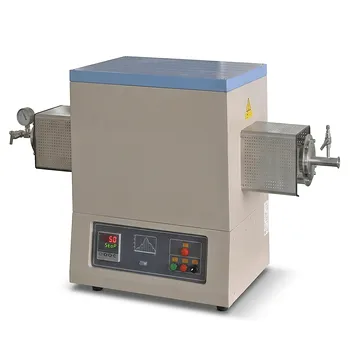
High Temperature 1700C Tube Furnace with 4 Inch OD Alumina Tube and Vacuum Sealing Flanges
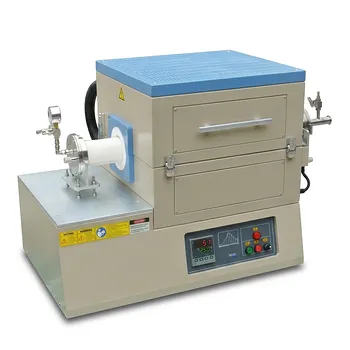
High Temperature 1700C Split Tube Furnace with Vacuum Flanges Valves and 60mm Alumina Tube
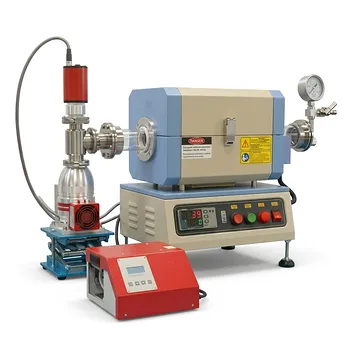
High Vacuum Compact Tube Furnace 1200C with Integrated Turbo Pump System and 8 Inch Heating Zone

High Temperature 1700C Benchtop Tube Furnace with 5 Inch Heating Zone High Purity Alumina Tube and Vacuum Sealing Flanges
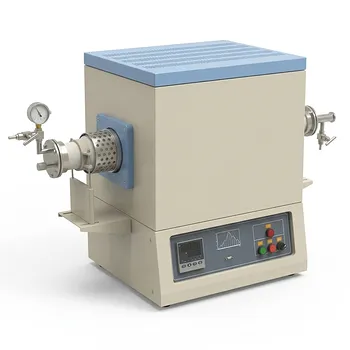
1750°C High Temperature Benchtop Vacuum Atmosphere Tube Furnace with Kanthal Super 1800 Heating Elements and 60mm Alumina Processing Tube

High Temperature 1700C Vertical Tube Furnace for Powder Spherification and Material Sintering
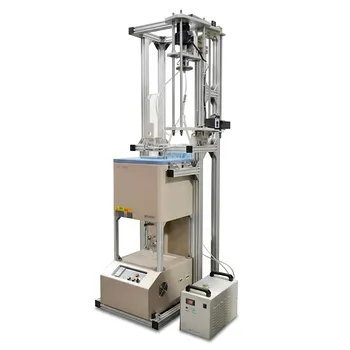
500C Vacuum Vertical Tube Furnace 84mm OD Sample Rotation Lifting System

Compact Vertical Split Quartz Tube Furnace with Stainless Steel Vacuum Flanges for Rapid Thermal Quenching and Controlled Atmosphere Material Processing
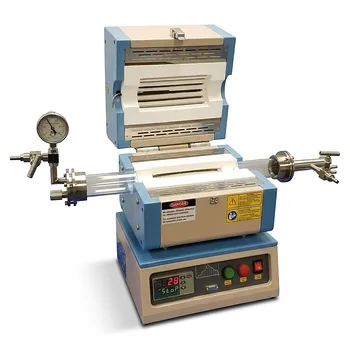
Compact Split Tube Furnace with Integrated Vacuum System and Precision Temperature Calibrator
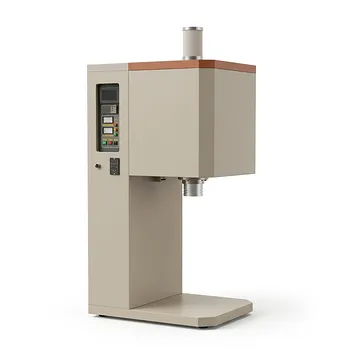
Vertical Openable Tube Furnace 0-1700c High Temperature Laboratory System for CVD and Vacuum Heat Treatment
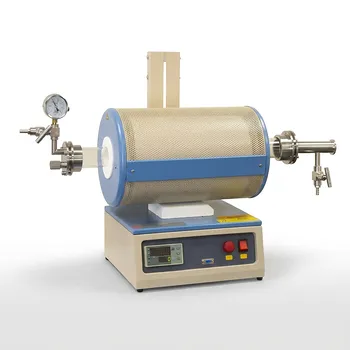
1100C Tube Furnace with Vacuum Flange and Programmable Temperature Controller for Material Science and Industrial Heat Treatment
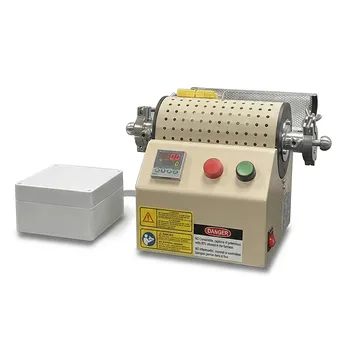
1000C Mini Tube Furnace with 20mm Quartz Tube and Vacuum Flanges for Material Science Research and Controlled Atmosphere Small Sample Processing
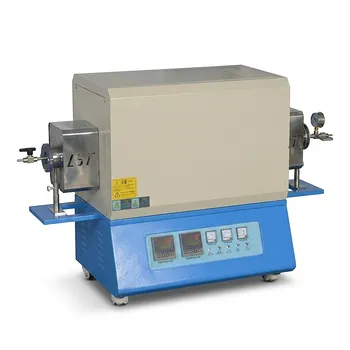
High Temperature Dual Zone Vacuum Tube Furnace for Material Research and CVD Processing