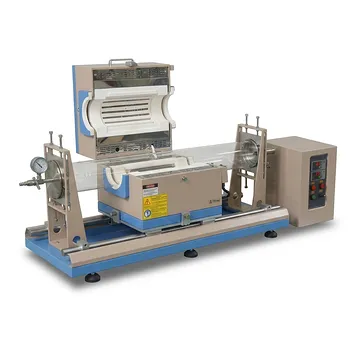
How does a high-precision tube furnace assist in the exfoliation of bulk graphitic carbon nitride into ultrathin nanosheets? Master Thermal Control.
Updated 3 months ago
A high-precision tube furnace is the essential tool for "thermal exfoliation," providing the exact thermal energy and ramp rates required to break the weak van der Waals forces holding bulk graphitic carbon nitride ($g-C_3N_4$) layers together. By subjecting the bulk material to a controlled environment—typically heating to 600 °C at a precise rate of 2.8 °C/min—the furnace forces the layers apart to create ultrathin nanosheets with high specific surface areas and abundant active sites.
The tube furnace acts as a precision energy delivery system that overcomes interlayer bonding without destroying the material’s crystalline structure. This process transforms dense bulk solids into high-surface-area nanosheets by balancing thermal energy input with strict atmosphere control.
Overcoming Interlayer Forces Through Controlled Energy
Breaking the Van der Waals Bonds
Bulk graphitic carbon nitride consists of stacked layers held together by relatively weak interlayer van der Waals forces. The tube furnace provides a sustained, high-temperature environment that delivers enough kinetic energy to the lattice to overcome these forces.
Thermal Expansion and Layer Separation
As the material reaches critical temperatures (often between 550 °C and 600 °C), the thermal energy induces microscopic vibrations and gas evolution between the layers. This internal pressure causes the bulk structure to "puff up" or exfoliate, resulting in ultrathin nanosheets characterized by wrinkles and curls.
Maximizing Active Surface Area
The primary goal of this exfoliation is to increase the specific surface area. By successfully thinning the material, the furnace exposes more active sites on the surface, which are vital for the subsequent construction of composite materials or catalytic applications.
The Role of Precision Programming
Precise Heating Rates
The heating rate is a critical variable; for instance, a rate of 2.8 °C/min ensures that the exfoliation occurs uniformly. If the temperature rises too quickly, the material may undergo rapid decomposition or sintering rather than clean exfoliation.
Atmosphere Management and Purity
High-precision tube furnaces allow for the introduction of protective gases like argon. This prevents oxidative loss, where the carbon nitride might react with oxygen in the air and burn away, ensuring the final nanosheets maintain high chemical purity.
Temperature Uniformity
A high-quality tube furnace creates a uniform temperature field within the heating zone. This consistency is essential to ensure that every part of the bulk sample experiences the same thermal history, leading to a homogenous product with consistent crystallinity.
Understanding the Trade-offs and Pitfalls
Thermal Oxidative Etching vs. Yield
While high temperatures facilitate exfoliation, they also risk thermal oxidative etching. If oxygen is present or if temperatures exceed the stability threshold, the material will begin to decompose into gas, significantly reducing the final yield of nanosheets.
Balancing Crystallinity and Thickness
There is often a trade-off between the thickness of the nanosheets and their structural integrity. Higher temperatures or longer holding times may produce thinner sheets, but they can also introduce structural defects or reduce the overall crystallinity of the $g-C_3N_4$.
Precision vs. Throughput
Achieving high-quality ultrathin nanosheets requires slow, precise heating cycles in a confined tube space. This focus on precision often limits the volume of material that can be processed in a single batch compared to larger, less precise industrial ovens.
How to Apply This to Your Project
Recommendation for Implementation
Successful exfoliation depends on aligning your furnace settings with your specific material goals.
- If your primary focus is Maximum Surface Area: Utilize a higher exfoliation temperature (near 600 °C) with a very slow ramp rate to maximize the separation of layers.
- If your primary focus is Material Purity: Ensure the furnace is fully purged with argon or nitrogen before and during the heating cycle to prevent any oxidative degradation.
- If your primary focus is High Crystallinity: Opt for a slightly lower peak temperature (around 550 °C) and longer holding times to allow the layered structure to stabilize without losing its atomic order.
By mastering the thermal precision of the tube furnace, you can reliably transform bulk carbon nitride into a high-performance, two-dimensional nanomaterial.
Summary Table:
| Parameter | Role in g-C₃N₄ Exfoliation | Impact on Final Material |
|---|---|---|
| Heating Rate | Ensures uniform layer separation (e.g., 2.8 °C/min) | Prevents sintering; promotes thin nanosheets |
| Peak Temperature | Provides kinetic energy to break van der Waals forces | Controls specific surface area and crystallinity |
| Atmosphere Control | Introduces protective gases like Argon or Nitrogen | Prevents oxidative etching and ensures purity |
| Thermal Uniformity | Maintains a consistent temperature field | Ensures homogenous product and consistent quality |
Elevate Your Material Research with THERMUNITS Precision
Achieving the perfect exfoliation of $g-C_3N_4$ requires more than just heat; it requires absolute thermal precision. THERMUNITS is a leading manufacturer of high-temperature laboratory equipment specifically designed for material science and industrial R&D. We provide the tools you need to transform bulk solids into high-performance nanomaterials.
Our comprehensive range of thermal solutions includes:
- Precision Tube & Atmosphere Furnaces (Ideal for exfoliation and CVD/PECVD)
- Muffle, Vacuum, & Rotary Furnaces
- Hot Press & Vacuum Induction Melting (VIM) Furnaces
- Dental Furnaces & Electric Rotary Kilns
- Custom Thermal Elements and specialized heat treatment equipment
Ready to optimize your thermal exfoliation process? Contact our technical experts today to find the perfect furnace solution for your laboratory’s unique requirements.
References
- Junwu Zhu, Mengxia Ji. Graphite Carbon Nitride Accelerating Interfacial Electron Transfer of Defect-Rich TiO2 for N2 Photofixation. DOI: 10.3390/catal15010019
Mentioned Products
- 1200C High Throughput Multi Channel Tube Furnace with 50mm Quartz Tubes for Annealing and Material Phase Diagram Research
- High Temperature Tube Furnace 1500C with Sliding Flanges and 50mm OD for Rapid Thermal Processing Fast Heating and Cooling
- High Temperature 1700C Benchtop Tube Furnace with 5 Inch Heating Zone High Purity Alumina Tube and Vacuum Sealing Flanges
- Compact High Temperature 1600C Tube Furnace with 50mm Alumina Tube and Vacuum Flanges for Material Sintering
- 1100C High Pressure Rocking Tube Furnace with 2 Inch Super Alloy Processing Tube for Material Synthesis
People Also Ask
- Why is high-purity alumina selected for sample trays? Key to High-Throughput Sintering Success
- How does a high-throughput tube furnace achieve precise sulfurization? Expert Control for CoS2–Co(OH)F Nanostructures
- How does the precise temperature control of a tube furnace influence the formation of V2AlC MAX phase? Expert Insights.
- What is the function of argon gas flow within a tube furnace during the selenization of MOFs? Essential Process Guide
- What is the effect of introducing camphor as a carbon source in a tube furnace CVD? Boost CNT Density and Growth

Tech Team · ThermUnits
Last updated on Jun 02, 2026
Related Products
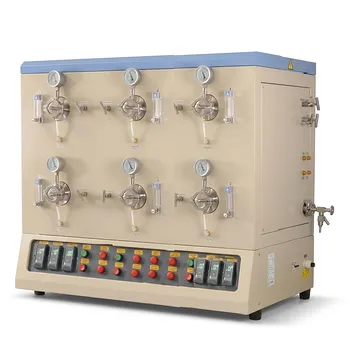
1200C High Throughput Multi Channel Tube Furnace with 50mm Quartz Tubes for Annealing and Material Phase Diagram Research
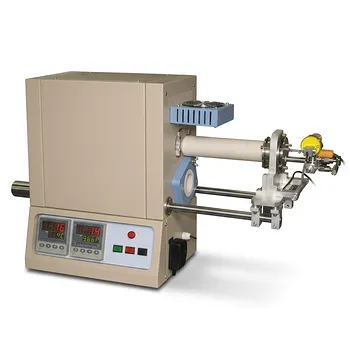
High Temperature Tube Furnace 1500C with Sliding Flanges and 50mm OD for Rapid Thermal Processing Fast Heating and Cooling

High Temperature 1700C Benchtop Tube Furnace with 5 Inch Heating Zone High Purity Alumina Tube and Vacuum Sealing Flanges

Compact High Temperature 1600C Tube Furnace with 50mm Alumina Tube and Vacuum Flanges for Material Sintering
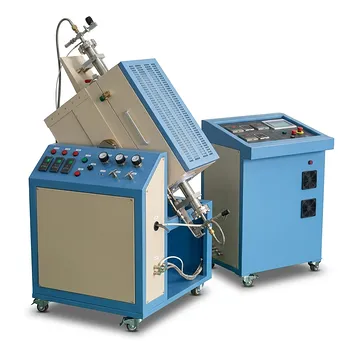
1100C High Pressure Rocking Tube Furnace with 2 Inch Super Alloy Processing Tube for Material Synthesis

High Temperature Automated 5 Inch Tube Furnace for Autonomous Material Research and Advanced Laboratory R&D
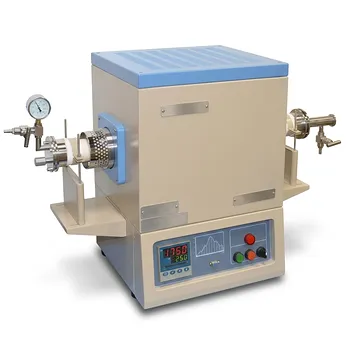
High Temperature Compact Vacuum Tube Furnace 1750C Max 60mm OD Alumina Tube

High Temperature 1700C Tube Furnace with High Vacuum Turbomolecular Pump System and Multi Channel Mass Flow Controller Gas Mixer

High Temperature 1700C Vertical Tube Furnace for Powder Spherification and Material Sintering
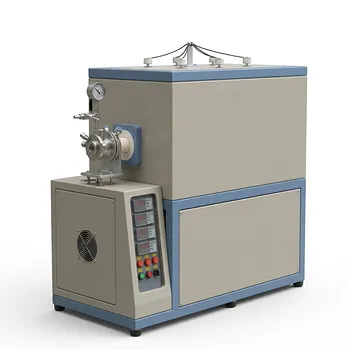
High Temperature 1700C Three Zone Tube Furnace with Alumina Tube 50mm 60mm 80mm OD for Material Research and Industrial Heat Treatment
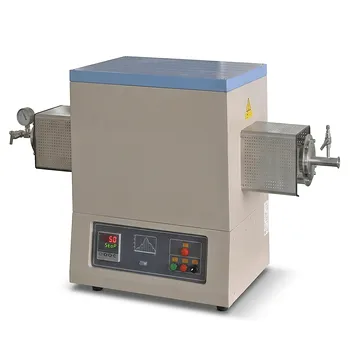
High Temperature 1700C Tube Furnace with 4 Inch OD Alumina Tube and Vacuum Sealing Flanges
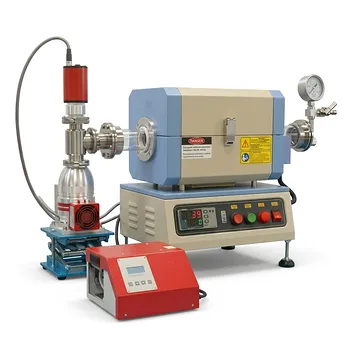
High Vacuum Compact Tube Furnace 1200C with Integrated Turbo Pump System and 8 Inch Heating Zone

1800C High Temperature Compact Vacuum Tube Furnace with 60mm OD Alumina Tube and Kanthal MoSi2 Heating Elements
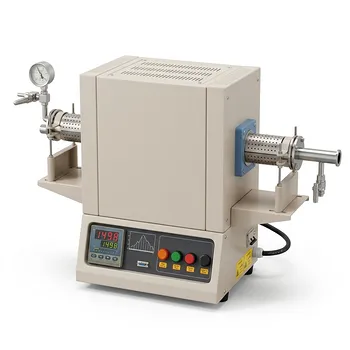
1500C High Temperature Compact Tube Furnace 2 Inch OD with Vacuum Flanges and Complete Accessories
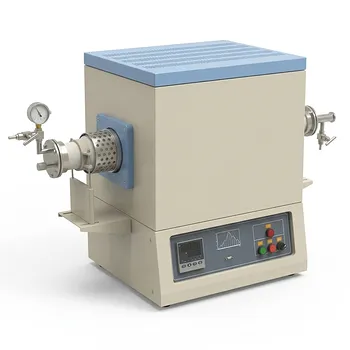
1750°C High Temperature Benchtop Vacuum Atmosphere Tube Furnace with Kanthal Super 1800 Heating Elements and 60mm Alumina Processing Tube

High Temperature 1700C Six Zone Split Tube Furnace with Alumina Tube and Water Cooled Flanges
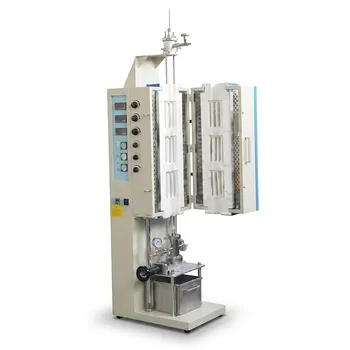
High Temperature Dual Zone Tube Furnace for Material Science Research and Professional Thermal Processing
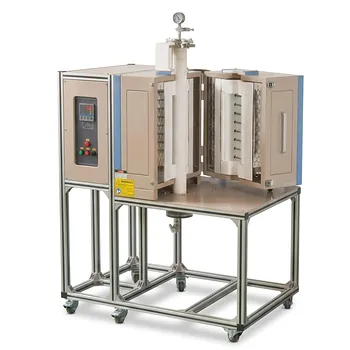
High Temperature 1700C Vertical Split Tube Furnace for Material Quenching and Single Crystal Growth
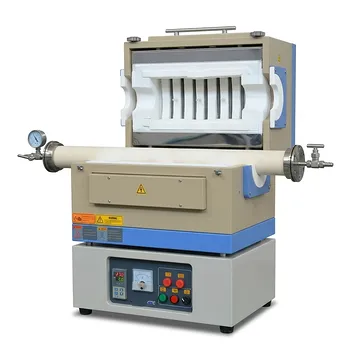
High Temperature 1600C Split Tube Furnace Vacuum Flanges Valves Optional 60mm 80mm Alumina Tube