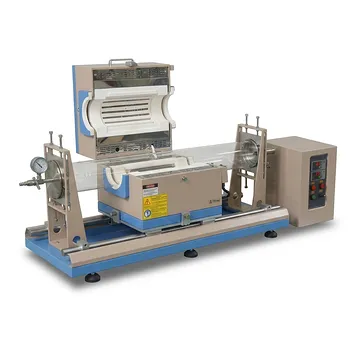
How does a tube furnace facilitate metal oxalate to phosphide conversion? Precision Synthesis Guide
Updated 3 months ago
The conversion of metal oxalates into metal phosphide anode materials is achieved by a high-precision tube furnace through the orchestration of a controlled gas-solid phase reaction. By maintaining a stable thermal environment and managing the flow of reducing or reactive gases, the furnace ensures that metal oxalate precursors are uniformly transformed into high-performance phosphides with precise crystal structures.
A high-precision tube furnace acts as a controlled microenvironment that enables the simultaneous management of temperature curves and atmospheric chemistry, which is critical for the uniform phosphidation of metal oxalate precursors into conductive anode materials.
The Role of Atmospheric Control in Phosphidation
Facilitating Gas-Phase Reactions
The tube furnace allows for a gas-phase conversion where a phosphorus source (typically placed upstream) decomposes into phosphorus vapor or phosphine gas. This gas is then carried by an inert flow, such as Argon or an Argon/Hydrogen mixture, to react with the metal oxalate precursor located downstream.
Managing Reducing Environments
The precise control of gas flow rates is essential to maintain a reducing atmosphere. This environment prevents the unwanted oxidation of the metal species during the high-temperature transition, ensuring the final product is a pure metal phosphide rather than a metal oxide.
Ensuring Uniform Gas Distribution
Because the reaction occurs within a sealed tube, the furnace ensures that the reactive gases envelop the precursor particles evenly. This directional gas flow is vital for achieving a thorough conversion of the entire sample, which directly impacts the electrochemical capacity of the resulting anode.
Thermal Regulation and Phase Transformation
Precise Temperature Soaking
High-precision furnaces maintain a constant "soaking" temperature, often ranging between 300 °C and 500 °C, depending on the specific metal. This stability is required to ensure the metal oxalate framework decomposes and reagregates into the desired phosphide phase without structural collapse.
Control of Heating Rates
The ability to set specific heating rates, such as 3 °C/min or 10 °C/min, is critical for controlling the nucleation of the phosphide crystals. Slow, controlled heating prevents the rapid release of gases that could rupture the nanomaterials, thereby preserving the original nanomorphology of the recovered materials.
Construction of Heterojunction Interfaces
Through precise thermal management, the furnace facilitates the construction of heterojunction interfaces (e.g., Ni2P/Fe2P). These interfaces improve electron transport and ion diffusion, which are the primary metrics for high-rate battery performance.
Understanding the Trade-offs
Uniformity vs. Throughput
While a tube furnace provides exceptional precision for small batches, scaling the process can lead to thermal gradients. In larger tubes, the material in the center may not experience the same temperature or gas concentration as the material near the walls, potentially leading to incomplete phosphidation.
Gas Concentration Risks
If the flow rate of the carrier gas is too high, the reactive phosphorus vapor may pass over the precursor too quickly to react fully. Conversely, a flow that is too slow can lead to an over-concentration of byproduct gases, which may stall the chemical equilibrium of the conversion reaction.
Safety and Precursor Sensitivity
The decomposition of phosphorus sources often produces phosphine (PH3), a toxic and flammable gas. High-precision furnaces must be integrated with robust exhaust and scrubbing systems to manage these hazardous byproducts safely.
How to Apply This to Your Project
Optimizing Your Synthesis Process
The success of your anode material depends on the synergy between your temperature ramp and your gas velocity.
- If your primary focus is high capacity: Prioritize a longer soaking time at a stable temperature (e.g., 400 °C) to ensure the total conversion of the metal oxalate core into the phosphide phase.
- If your primary focus is structural stability: Use a slow heating rate (under 5 °C/min) to prevent the mechanical degradation of the precursor's delicate nanostructures during gas evolution.
- If your primary focus is high-rate performance: Focus on atmospheric precision to encourage the formation of heterojunction interfaces, which facilitate faster charge transfer.
By mastering the thermal and atmospheric variables of the tube furnace, you can transform low-value recovered oxalates into high-value, high-performance battery components.
Summary Table:
| Key Parameter | Role in Phosphidation Process | Impact on Anode Material |
|---|---|---|
| Atmospheric Control | Manages reducing gases (Ar/H2) and phosphorus vapor | Prevents oxidation; ensures pure metal phosphide phase |
| Heating Rate | Controls nucleation of phosphide crystals | Preserves nanomorphology and structural stability |
| Soaking Temp | Maintains stable reaction zone (300°C - 500°C) | Ensures uniform decomposition and crystal phase transition |
| Gas Distribution | Ensures even envelopment of reactive gases | Achieves consistent electrochemical capacity across batches |
Elevate Your Anode Material Research with THERMUNITS
Precision is the difference between a failed reaction and a high-performance battery material. THERMUNITS is a leading manufacturer of high-temperature laboratory equipment for material science and industrial R&D. We offer a comprehensive range of thermal processing solutions, including Tube, Vacuum, Atmosphere, and Rotary furnaces, specifically designed to handle the rigorous demands of phosphidation and complex gas-solid reactions.
Whether you are constructing heterojunction interfaces or optimizing recovery processes, our furnaces provide the atmospheric stability and thermal accuracy your research requires. Contact our technical team today to find the perfect thermal solution for your laboratory or industrial heat treatment needs.
References
- Anjali V. Nair, Dhamodaran Santhanagopalan. Environment-friendly acids for leaching transition metals from spent-NMC532 cathode and sustainable conversion to potential anodes. DOI: 10.1039/d4su00209a
Mentioned Products
- 1200C High Throughput Multi Channel Tube Furnace with 50mm Quartz Tubes for Annealing and Material Phase Diagram Research
- High Temperature 1700C Benchtop Tube Furnace with 5 Inch Heating Zone High Purity Alumina Tube and Vacuum Sealing Flanges
- High Temperature Tube Furnace 1500C with Sliding Flanges and 50mm OD for Rapid Thermal Processing Fast Heating and Cooling
- Compact High Temperature 1600C Tube Furnace with 50mm Alumina Tube and Vacuum Flanges for Material Sintering
- 1100C High Pressure Rocking Tube Furnace with 2 Inch Super Alloy Processing Tube for Material Synthesis
People Also Ask
- Why is high-purity alumina selected for sample trays? Key to High-Throughput Sintering Success
- How does a high-throughput tube furnace achieve precise sulfurization? Expert Control for CoS2–Co(OH)F Nanostructures
- How does the precise temperature control of a tube furnace influence the formation of V2AlC MAX phase? Expert Insights.
- What is the function of argon gas flow within a tube furnace during the selenization of MOFs? Essential Process Guide
- Why is precision temperature programming in a tube furnace critical for the synthesis of molybdenum-based metal nitrides?

Tech Team · ThermUnits
Last updated on Jun 03, 2026
Related Products
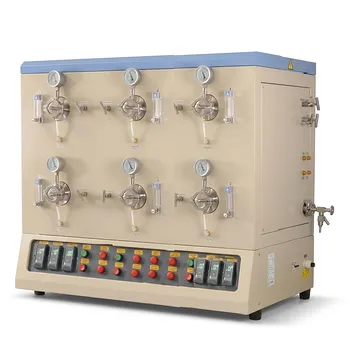
1200C High Throughput Multi Channel Tube Furnace with 50mm Quartz Tubes for Annealing and Material Phase Diagram Research

High Temperature 1700C Benchtop Tube Furnace with 5 Inch Heating Zone High Purity Alumina Tube and Vacuum Sealing Flanges
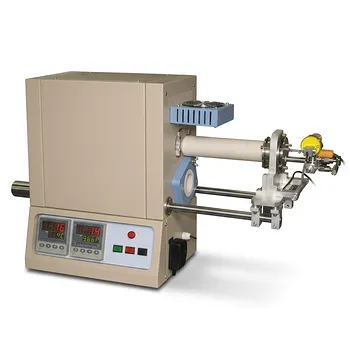
High Temperature Tube Furnace 1500C with Sliding Flanges and 50mm OD for Rapid Thermal Processing Fast Heating and Cooling

Compact High Temperature 1600C Tube Furnace with 50mm Alumina Tube and Vacuum Flanges for Material Sintering
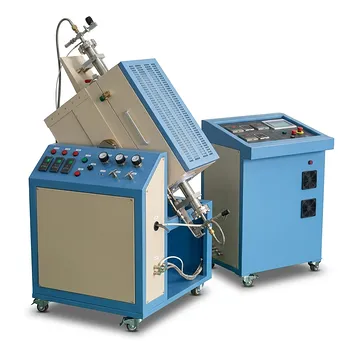
1100C High Pressure Rocking Tube Furnace with 2 Inch Super Alloy Processing Tube for Material Synthesis

High Temperature Automated 5 Inch Tube Furnace for Autonomous Material Research and Advanced Laboratory R&D
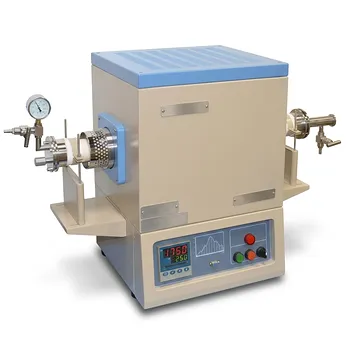
High Temperature Compact Vacuum Tube Furnace 1750C Max 60mm OD Alumina Tube

High Temperature 1700C Vertical Tube Furnace for Powder Spherification and Material Sintering

High Temperature 1700C Tube Furnace with High Vacuum Turbomolecular Pump System and Multi Channel Mass Flow Controller Gas Mixer
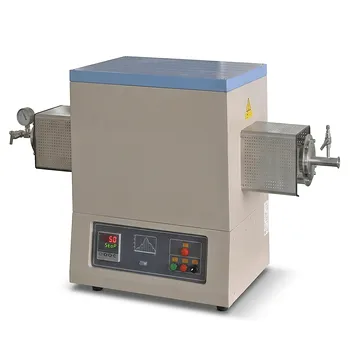
High Temperature 1700C Tube Furnace with 4 Inch OD Alumina Tube and Vacuum Sealing Flanges
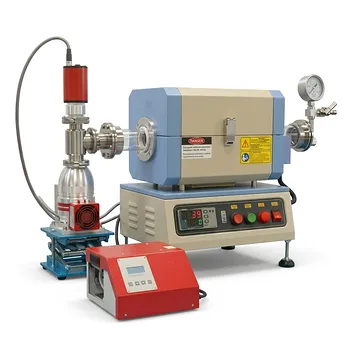
High Vacuum Compact Tube Furnace 1200C with Integrated Turbo Pump System and 8 Inch Heating Zone
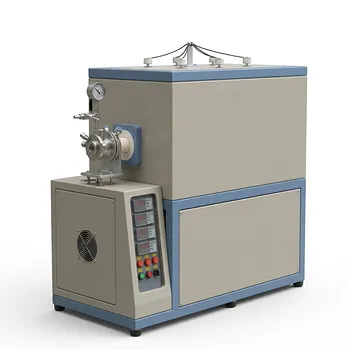
High Temperature 1700C Three Zone Tube Furnace with Alumina Tube 50mm 60mm 80mm OD for Material Research and Industrial Heat Treatment
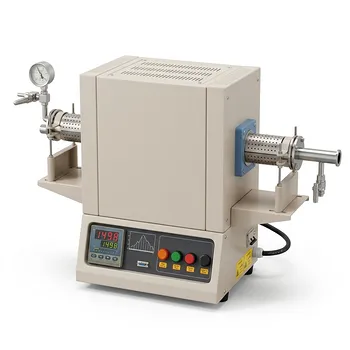
1500C High Temperature Compact Tube Furnace 2 Inch OD with Vacuum Flanges and Complete Accessories

1800C High Temperature Compact Vacuum Tube Furnace with 60mm OD Alumina Tube and Kanthal MoSi2 Heating Elements
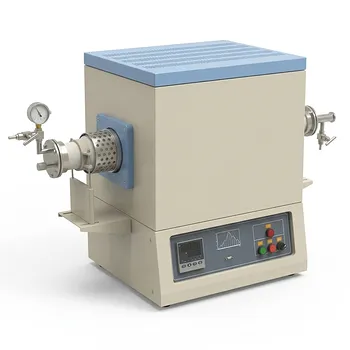
1750°C High Temperature Benchtop Vacuum Atmosphere Tube Furnace with Kanthal Super 1800 Heating Elements and 60mm Alumina Processing Tube
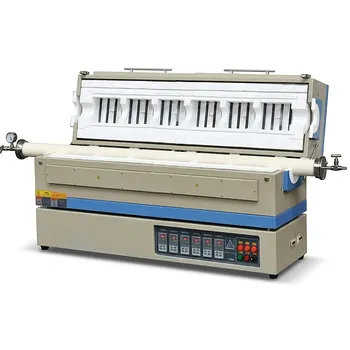
High Temperature 1700C Six Zone Split Tube Furnace with Alumina Tube and Water Cooled Flanges
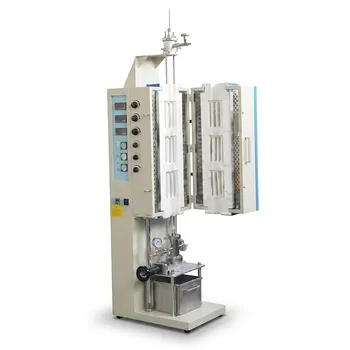
High Temperature Dual Zone Tube Furnace for Material Science Research and Professional Thermal Processing
High Temperature 1700C Vertical Split Tube Furnace for Material Quenching and Single Crystal Growth
High Temperature 1600C Split Tube Furnace Vacuum Flanges Valves Optional 60mm 80mm Alumina Tube