How does a high-vacuum tube furnace facilitate the reduction annealing of niobium oxide? Optimize Film Crystallinity
Updated 3 months ago
High-vacuum tube furnaces enable the reduction of niobium oxide by providing the precise thermal energy and controlled chemical environment required to transform $Nb_2O_5$ into $NbO_2$. By introducing a reducing forming gas—typically a hydrogen-nitrogen mixture—into a high-temperature environment (often reaching 900°C), the furnace facilitates the structural reorganization and crystallization necessary for the film to exhibit volatile threshold switching characteristics.
The core function of a high-vacuum tube furnace in this process is to act as a controlled reaction chamber that simultaneously manages oxygen extraction and crystal lattice formation. It provides the energy needed to drive chemical reduction while maintaining an environment that prevents re-oxidation and minimizes structural defects.
The Mechanism of Chemical Reduction
Creating the Reducing Environment
The furnace utilizes a controlled flow of forming gas (a mixture of $H_2$ and $N_2$) to create a chemically active atmosphere. The hydrogen reacts with the oxygen in the $Nb_2O_5$ thin film, effectively stripping away oxygen atoms to shift the stoichiometry toward $NbO_2$.
Maintaining Low Oxygen Partial Pressure
A high-vacuum environment is essential to keep the oxygen partial pressure extremely low. This ensures that the reduction process is not reversed by ambient oxygen and allows for the precise formation of oxygen vacancies, which are critical for the electrical properties of the resulting crystal.
Precision Thermal Field Control
Driving Solid-State Diffusion
The furnace provides a stable thermal field, often between 800°C and 1000°C, which supplies the activation energy required for atomic movement. This energy drives solid-state diffusion, allowing atoms to rearrange from an amorphous or disordered state into a stable crystalline structure.
Enhancing Crystallinity and Grain Size
Extended annealing durations in the furnace (sometimes up to 24 hours) improve the crystallinity of the thin films. This process increases grain size and reduces grain boundary defects, which significantly improves the stability and performance of the niobium dioxide crystals.
Ensuring Uniformity Across the Film
Advanced tube furnaces often feature multi-zone heating, where independent heating elements ensure extreme temperature uniformity across the length of the tube. This uniformity is vital to prevent localized variations in the reduction rate, which could lead to inconsistent electrical characteristics across the thin film.
Structural and Stress Management
Eliminating Internal Stresses
The high-temperature environment provides the energy needed for recrystallization, which helps eliminate internal stresses generated during the initial film deposition (such as sputtering). This stress relief is essential for preventing the film from peeling or cracking during subsequent processing or operation.
Optimizing Interfacial Charge Transfer
By inducing specific oxygen vacancy defects and creating a dense, well-ordered internal structure, the annealing process optimizes interfacial charge transfer. In niobium-based films, this refined microstructure is what allows the material to function effectively in applications like superconducting circuits or volatile memory.
Understanding the Trade-offs
Balancing Reduction and Over-Reduction
A primary risk in this process is over-reduction, where the film is stripped of too much oxygen, potentially turning the $NbO_2$ into metallic niobium. Precise control over the temperature, gas concentration, and time is required to stop the reaction at the desired oxide phase.
Contamination and Vacuum Integrity
At high temperatures, any leak in the vacuum system or impurity in the forming gas can lead to unwanted oxidation or contamination. This can introduce deep-level defects that trap charge carriers, negatively impacting the volatile threshold switching behavior that the process is designed to achieve.
How to Apply This to Your Project
Making the Right Choice for Your Goal
- If your primary focus is precise stoichiometry ($NbO_2$ phase purity): Prioritize a furnace with high-precision mass flow controllers for the forming gas and a high-integrity vacuum seal to maintain low oxygen partial pressure.
- If your primary focus is maximum electrical stability: Invest in a multi-zone heating system to ensure a uniform thermal field, which minimizes grain boundary defects across the entire film surface.
- If your primary focus is stress reduction in multi-layer coatings: Utilize a controlled cooling ramp (e.g., 5°C/min) post-annealing to prevent the formation of new thermal stresses during the transition to room temperature.
By mastering the balance between thermal energy and atmospheric chemistry, you can reliably transform niobium oxide thin films into high-performance crystalline structures.
Summary Table:
| Feature | Mechanism in Reduction Annealing | Benefit to Niobium Oxide Films |
|---|---|---|
| Forming Gas (H₂/N₂) | Chemical extraction of oxygen atoms | Precise stoichiometric shift from $Nb_2O_5$ to $NbO_2$ |
| High-Vacuum Environment | Maintains ultra-low oxygen partial pressure | Prevents re-oxidation and manages oxygen vacancies |
| Precision Thermal Field | Supplies activation energy for diffusion | Drives recrystallization and increases grain size |
| Multi-zone Heating | Ensures temperature uniformity across the tube | Prevents localized variations in electrical properties |
| Controlled Cooling | Manages thermal transition post-annealing | Reduces internal stresses and prevents film cracking |
Elevate Your Material Research with THERMUNITS Precision Furnaces
Achieving the perfect $NbO_2$ phase requires absolute control over vacuum integrity and thermal uniformity. THERMUNITS is a leading manufacturer of high-temperature laboratory equipment specifically designed for material science and industrial R&D. We empower researchers to master complex reduction annealing processes with our high-performance thermal solutions.
Our comprehensive range includes:
- Advanced Furnace Systems: Vacuum, Atmosphere, Tube, Muffle, Rotary, and Hot Press Furnaces.
- Specialized Systems: CVD/PECVD systems, Vacuum Induction Melting (VIM) furnaces, and Dental Furnaces.
- Components: High-quality Thermal Elements and tailored heat treatment accessories.
Whether you are working on superconducting circuits or next-generation volatile memory, THERMUNITS provides the reliability and precision your project demands. Contact our technical experts today to find the ideal thermal processing solution for your laboratory and ensure superior results for your thin-film applications.
References
- Zachary R. Robinson, Marc Currie. Measurement of the crystallization and phase transition of niobium dioxide thin-films using a tube furnace optical transmission system. DOI: 10.1063/5.0228400
Mentioned Products
- Vertical Openable Tube Furnace 0-1700c High Temperature Laboratory System for CVD and Vacuum Heat Treatment
- High Temperature 1000C Vacuum Furnace with 8 Inch ID Chamber for Material Sintering and Research Annealing
- High Temperature Dual Zone Vacuum Tube Furnace for Material Research and CVD Processing
- 950C Rapid Thermal Processing Furnace for 12 Inch Wafer CSS Coating with Rotating Substrate Holder
- High Temperature Cold Wall Vacuum Furnace for Advanced Material Sintering and Annealing 1600C Heating Area 200x200x300mm
People Also Ask
- Why is a Tube Furnace typically utilized for CVD? Achieve Precision in Graphene and 2D Material Synthesis
- What role does a high-temperature vertical tube furnace play in simulating high-carbon ferromanganese slag formation?
- What functions does a vertical high-temperature tube furnace perform? Master Industrial Sintering & R&D Simulation
- How does a vertical tube furnace facilitate thermoelectric alloy melting? Precision synthesis for material homogeneity.
- How is an industrial-grade vertical tube furnace utilized in smelting leaching residues? Enhance Metal Recovery Efficiency

Tech Team · ThermUnits
Last updated on Jun 03, 2026
Related Products
Vertical Openable Tube Furnace 0-1700c High Temperature Laboratory System for CVD and Vacuum Heat Treatment
High Temperature 1000C Vacuum Furnace with 8 Inch ID Chamber for Material Sintering and Research Annealing
High Temperature Dual Zone Vacuum Tube Furnace for Material Research and CVD Processing
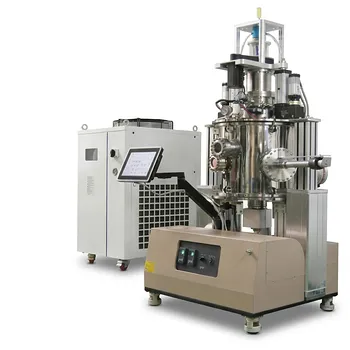
950C Rapid Thermal Processing Furnace for 12 Inch Wafer CSS Coating with Rotating Substrate Holder
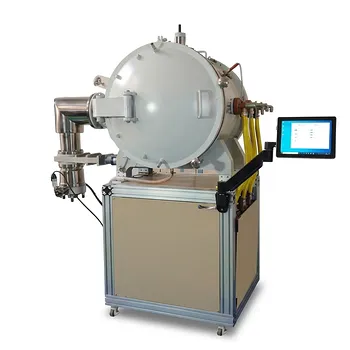
High Temperature Cold Wall Vacuum Furnace for Advanced Material Sintering and Annealing 1600C Heating Area 200x200x300mm

High Temperature 1700C Vertical Tube Furnace for Powder Spherification and Material Sintering
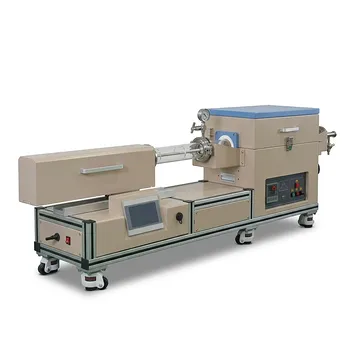
1200C Sliding Internal Crucible Tube Furnace for Controlled Atmosphere Thin Film Deposition and Material Sublimation Research

1800C High Temperature Compact Vacuum Tube Furnace with 60mm OD Alumina Tube and Kanthal MoSi2 Heating Elements

1750°C High Temperature Benchtop Vacuum Atmosphere Tube Furnace with Kanthal Super 1800 Heating Elements and 60mm Alumina Processing Tube

High Temperature 1700C Tube Furnace with High Vacuum Turbomolecular Pump System and Multi Channel Mass Flow Controller Gas Mixer

Compact High Temperature 1600C Tube Furnace with 50mm Alumina Tube and Vacuum Flanges for Material Sintering
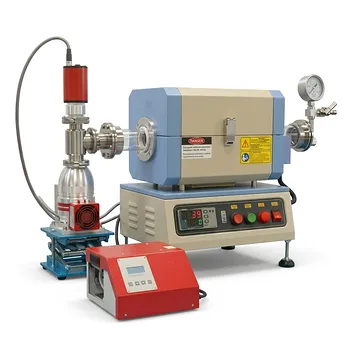
High Vacuum Compact Tube Furnace 1200C with Integrated Turbo Pump System and 8 Inch Heating Zone
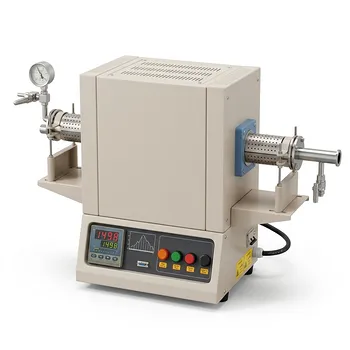
1500C High Temperature Compact Tube Furnace 2 Inch OD with Vacuum Flanges and Complete Accessories

High Temperature 1700C Benchtop Tube Furnace with 5 Inch Heating Zone High Purity Alumina Tube and Vacuum Sealing Flanges
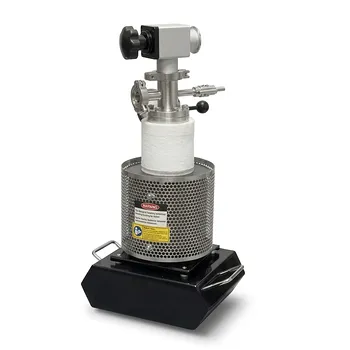
High Temperature 1100C Compact Top Loading Vertical Vacuum Tube Furnace for High Vacuum Noble Metal Melting and Material Research
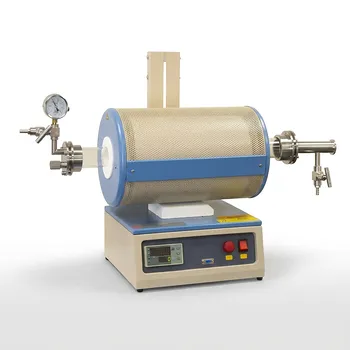
1100C Tube Furnace with Vacuum Flange and Programmable Temperature Controller for Material Science and Industrial Heat Treatment
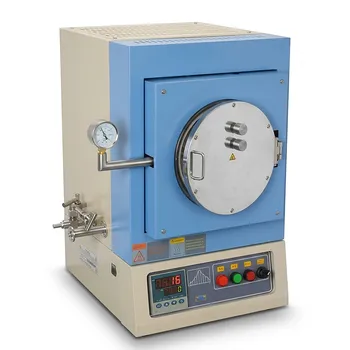
1100°C High Temperature Quartz Chamber Furnace 8 Inch OD with 7.6 Liter Capacity and Vacuum Atmosphere Capability
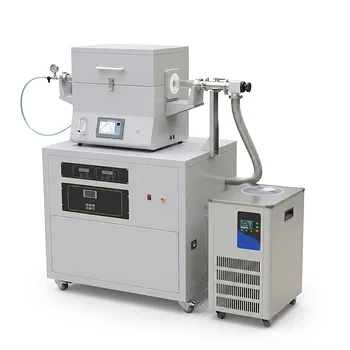
Split Chamber CVD Tube Furnace with Vacuum Station Chemical Vapor Deposition System Machine

Vertical 1700C Vacuum and Atmosphere Tube Furnace with 80mm Alumina Tube