How does CVD equipment facilitate MOF/MoS2 heterojunction growth? Achieve Atomically Clean, Transfer-Free Interfaces
Updated 3 months ago
CVD equipment enables the direct synthesis of MOF/MoS2 heterojunctions by acting as a high-precision gas-phase reactor. It facilitates the nucleation and growth of Metal-Organic Framework (MOF) molecules directly onto the surface of pre-positioned monolayer Molybdenum Disulfide (MoS2). By controlling the transport of precursors in a vapor state, the equipment eliminates the need for manual transfer processes, ensuring the resulting van der Waals interface is atomically clean and free from mechanical defects.
The core advantage of using Chemical Vapor Deposition (CVD) for MOF/MoS2 heterojunctions is the elimination of the "transfer" step, which traditionally introduces wrinkles and contaminants. By regulating gas-phase precursors within a controlled thermal environment, CVD creates a pristine, high-performance interface essential for advanced electronic and sensing applications.
Precision Control of Gas-Phase Precursors
Facilitating Direct Nucleation
CVD systems allow for the direct nucleation of MOF molecules on the MoS2 lattice by precisely managing the concentration of vapors. This direct growth approach ensures that the MOF layer adheres via weak van der Waals forces without disrupting the underlying MoS2 structure.
Eliminating Interfacial Contamination
Traditional heterojunction fabrication requires transferring one material onto another, often involving polymer scaffolds that leave residues. CVD bypasses this by growing the second material in situ, resulting in an atomically clean interface that maximizes charge transfer and device performance.
Carrier Gas and Flow Dynamics
The use of high-purity carrier gases, such as nitrogen or argon, is critical for transporting vaporized precursors to the substrate. Precise flow regulation ensures a uniform distribution of molecules, which is necessary for the growth of high-quality, continuous thin films.
Advanced Architectural Controls in CVD
Multi-Zone Thermal Regulation
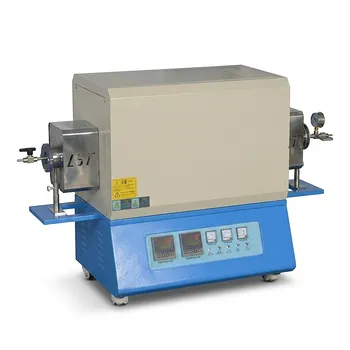
Modern CVD furnaces often utilize three-zone heating, allowing for independent temperature control of the sulfur source, the metal source, and the substrate. This independence is vital because MOFs and MoS2 require different vaporization and reaction temperatures to achieve optimal crystallinity.
Confined Space CVD Techniques
By implementing a confined space configuration—placing a small gap above the substrate—the system increases local precursor concentration. This technique limits the reaction volume, which effectively inhibits unwanted multi-layer growth and promotes the formation of large-area, uniform monolayers.
Vaporization Interval Management
The high-precision temperature systems in CVD equipment ensure that precursors reach their sublimation points at specific, synchronized intervals. This timing is essential for ensuring the MoS2 surface is in the correct thermal state to accept the incoming MOF precursors for epitaxial-like growth.
Understanding the Trade-offs
System Complexity and Cost
While CVD provides superior interface quality, it requires expensive specialized equipment and high-purity precursors. The complexity of managing multiple temperature zones and gas flow rates increases the barrier to entry compared to simple solution-based assembly methods.
Sensitivity to Precursor Ratios
The stoichiometry of the heterojunction is highly sensitive to the partial pressure of the precursor gases. Small fluctuations in temperature or carrier gas flow can lead to secondary phases or incomplete coverage, necessitating rigorous calibration for every growth cycle.
Thermal Stress and Compatibility
Growing MOFs directly on MoS2 requires a delicate balance of temperatures; if the thermal budget is too high, the organic ligands in the MOF may degrade. This limits the "growth window" and requires highly stable heating elements to prevent thermal fluctuations from ruining the heterostructure.
How to Apply This to Your Project
Making the Right Choice for Your Goal
- If your primary focus is maximizing electronic mobility: Utilize a multi-zone CVD furnace to ensure an atomically clean interface that minimizes scattering sites.
- If your primary focus is large-scale uniformity: Implement confined space CVD technology to regulate local precursor concentration and prevent multi-layer clusters.
- If your primary focus is rapid prototyping: Consider whether the high cost and calibration time of CVD are justified, or if a transfer-based method suffices for initial proof-of-concept.
By mastering the gas-phase dynamics of a CVD system, researchers can unlock the full potential of MOF/MoS2 heterojunctions through pristine, transfer-free material integration.
Summary Table:
| Feature | Function in MOF/MoS2 Growth | Key Benefit |
|---|---|---|
| Multi-Zone Heating | Independent control of source/substrate temps | Ensures optimal crystallinity for both materials |
| Gas-Phase Control | Regulated precursor vapor transport | Eliminates contamination from manual transfer |
| Confined Space CVD | Increases local precursor concentration | Promotes uniform, large-area monolayer growth |
| Carrier Gas Flow | High-purity N2/Ar regulation | Ensures uniform distribution of vapor molecules |
Optimize Your Material Synthesis with THERMUNITS
High-performance research requires high-precision equipment. As a leading manufacturer of high-temperature laboratory equipment, THERMUNITS provides the advanced thermal solutions necessary for cutting-edge material science and industrial R&D.
Whether you are developing MOF/MoS2 heterojunctions or specialized semiconductor films, our comprehensive range of equipment—including CVD/PECVD systems, Tube furnaces, Vacuum furnaces, Muffle furnaces, and Dental furnaces—delivers the thermal stability and gas-flow precision your project demands. We empower you to eliminate interfacial defects and achieve atomically clean results through superior engineering.
Ready to upgrade your laboratory's capabilities? Contact our experts today to find the perfect furnace for your specific research needs and experience the THERMUNITS advantage in high-temperature processing.
References
- Lingxin Luo, Jian Zheng. Self-condensation-assisted chemical vapour deposition growth of atomically two-dimensional MOF single-crystals. DOI: 10.1038/s41467-024-48050-5
Mentioned Products
- HFCVD Machine System for Nano Diamond Coating on Drawing Dies and Industrial Tools
- Chemical Vapor Deposition CVD System Slide PECVD Tube Furnace with Liquid Gasifier PECVD Machine
- Cylindrical Resonator MPCVD Machine System for Microwave Plasma Chemical Vapor Deposition and Lab Diamond Growth
- Multi Heating Zones CVD Tube Furnace System for Precision Chemical Vapor Deposition and Advanced Material Synthesis
- Vertical Openable Tube Furnace 0-1700c High Temperature Laboratory System for CVD and Vacuum Heat Treatment
People Also Ask
- What is the fundamental working principle of a Chemical Vapor Deposition (CVD) machine? Master Precision Film Growth
- What are the essential components and subsystems of a CVD machine? Master Core Technology for High-Purity Coatings
- How do Chemical Vapor Deposition (CVD) coatings enhance industrial tools? Boost Tool Life and Wear Resistance
- What technical advantages do CVD machines provide for the synthesis of nanomaterials? Precision Growth & Superior Quality
- What role do by-product desorption and evacuation play in CVD film quality? Key Factors for High-Purity Films

Tech Team · ThermUnits
Last updated on Jun 02, 2026
Related Products
HFCVD Machine System for Nano Diamond Coating on Drawing Dies and Industrial Tools
Chemical Vapor Deposition CVD System Slide PECVD Tube Furnace with Liquid Gasifier PECVD Machine
Cylindrical Resonator MPCVD Machine System for Microwave Plasma Chemical Vapor Deposition and Lab Diamond Growth
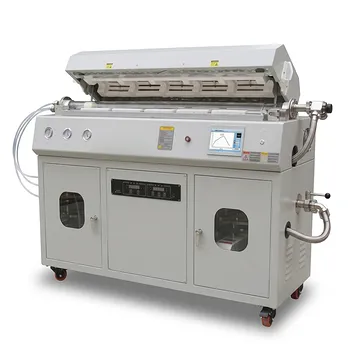
Multi Heating Zones CVD Tube Furnace System for Precision Chemical Vapor Deposition and Advanced Material Synthesis
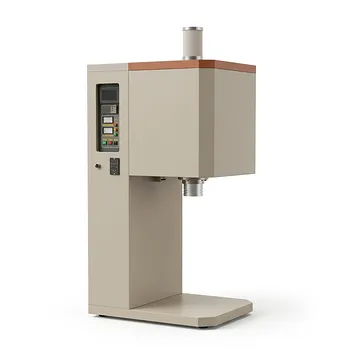
Vertical Openable Tube Furnace 0-1700c High Temperature Laboratory System for CVD and Vacuum Heat Treatment
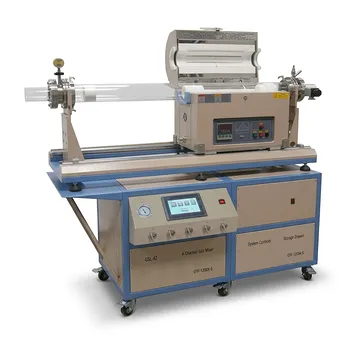
Dual Tube 100mm 80mm CVD Sliding Furnace with 4 Channel Gas Mixing and Vacuum System
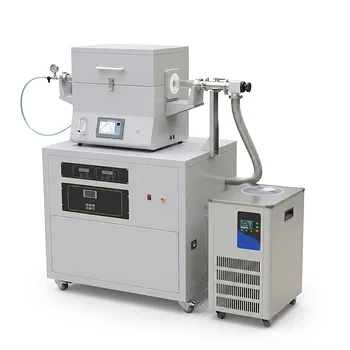
Split Chamber CVD Tube Furnace with Vacuum Station Chemical Vapor Deposition System Machine
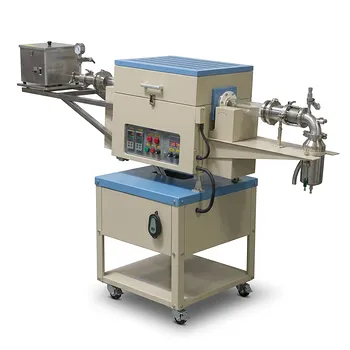
Two Zone Rotary CVD Furnace with Automatic Feeding and Receiving System for Powder Processing

High Temperature 1700C Tube Furnace with High Vacuum Turbomolecular Pump System and Multi Channel Mass Flow Controller Gas Mixer
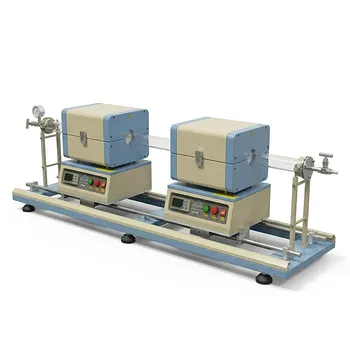
1200C Max Dual Sliding Tube Furnace with 50 mm Tube Flanges for CVD
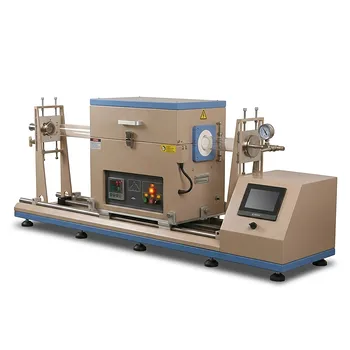
1200C Sliding Tube Furnace for Rapid Thermal Processing and CVD Graphene Growth with 100mm OD Capacity
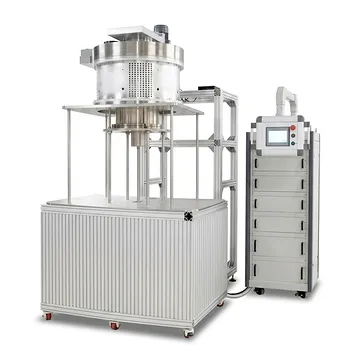
915MHz MPCVD Diamond Machine Microwave Plasma Chemical Vapor Deposition System Reactor
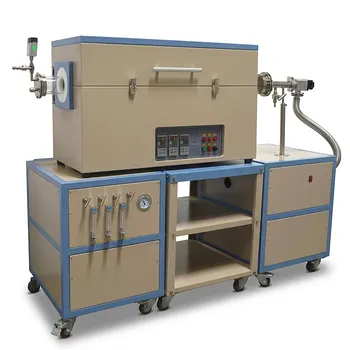
Three Zone Quartz Tube Furnace with 3 Channel Gas Mixer Vacuum Pump and Anti Corrosive Vacuum Gauge
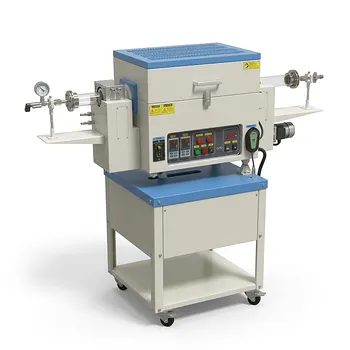
4 Inch Two Zone Rotary CVD Tube Furnace for High Temperature Battery Material Synthesis and Advanced Material Calcination
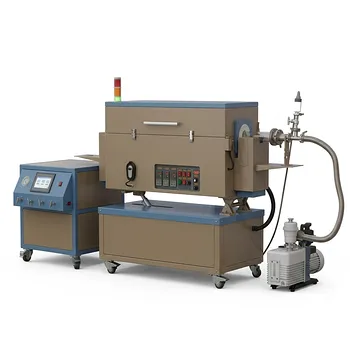
5 Inch Three Zone Rotary Tube Furnace with Integrated Gas Delivery System and 1200C Capability for Advanced Material CVD Processing
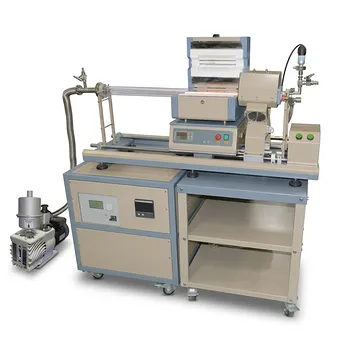
1200C Max Compact Auto-Sliding PECVD Furnace with 2 Inch Tube and Vacuum Pump
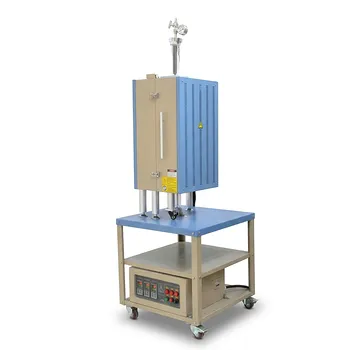
1200C Three Zone Vertical Tube Furnace with 2 Inch Quartz Tube and Vacuum Flanges
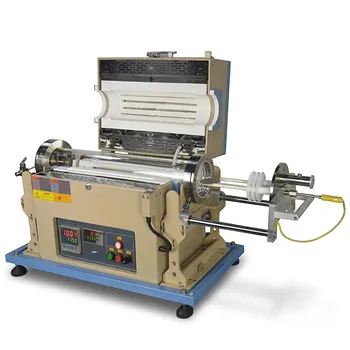
1200°C High Temperature 4 Inch Tube Furnace with Sliding Flange for CVD Systems
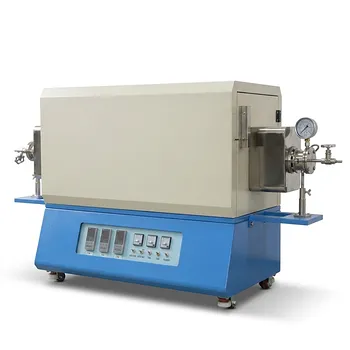
Three Temperature Zone High Temperature Vacuum Tube Furnace for CVD and Material Sintering