What are the primary functions of a high-precision tube furnace in chromium vapor reactive condensation experiments? Key Roles
Updated 3 months ago
In chromium vapor reactive condensation research, a high-precision tube furnace serves as the primary thermal engine that drives the reactive evaporation of chromium oxide sources and establishes a controlled temperature gradient for subsequent condensation. This specialized environment allows researchers to study how chromium species transform and deposit onto substrates under varying thermal conditions.
The high-precision tube furnace provides two critical functions: maintaining a stable 800 °C evaporation zone to generate chromium vapor and utilizing a controlled temperature gradient (800 °C to 160 °C) to facilitate diverse condensation environments. This dual-purpose thermal field is essential for achieving molecular-level control over the chemical transformation and morphology of chromium deposits.
The Dual Role of Thermal Control in Chromium Experiments
Evaporation Stability at 800 °C
The furnace provides a highly stable, high-temperature zone typically set at 800 °C to facilitate the reactive evaporation of chromium oxide. This stability ensures a consistent supply of vaporized chromium species, which is the foundational requirement for any downstream condensation study.
Harnessing the Natural Temperature Gradient
Beyond the core heating zone, the furnace utilizes the natural temperature transition at its outlet to create a "thermal staircase." As the temperature drops from 800 °C to approximately 160 °C, different sections of the furnace tube provide unique environments for studying how chromium interacts with samples like aluminum silicate fibers.
Precise Thermal Field Mapping
The ability to precisely map and maintain this thermal field allows for the observation of chemical transformations at specific temperature points. By placing substrates at different locations along the gradient, researchers can observe how temperature directly dictates the condensation behavior and resulting crystal structure of the material.
Technical Advantages of High-Precision Systems
Atmospheric Isolation and Chemical Purity
High-precision tube furnaces provide a controlled and sealed environment that isolates the reactive process from external contaminants. This is critical for ensuring that the precursors undergo transformation under specific physical and chemical conditions without interference from atmospheric oxygen or moisture.
Radial Heating Uniformity
The cylindrical geometry of the tube furnace ensures uniform radial heating, which prevents localized cold spots that could prematurely condense the chromium vapor. This uniformity is a physical foundation for controlling the growth rate and thickness of the resulting films or nanostructures.
Integration with Gas Flow Systems
To facilitate the transport of chromium vapor, these furnaces are often integrated with precision gas flow controls. By managing the mixing ratios and flow rates of carrier gases, the system ensures that the vaporized species are delivered to the condensation zones at a predictable velocity and concentration.
Understanding the Trade-offs
Gradient Limitations
While the natural temperature gradient is useful, it is inherently non-linear and can be sensitive to external room temperatures or gas flow rates. For experiments requiring extreme precision at the lower end of the gradient (e.g., exactly 200 °C), relying on a single-zone furnace can be challenging compared to a multi-zone system.
Thermal Lag and Stabilization Time
High-precision furnaces are designed for stability, which often means they have significant thermal mass. This results in longer wait times for the system to reach a steady state, requiring researchers to plan for stabilization periods before introducing reactive precursors.
Maintenance of the Reaction Vessel
Repeated evaporation of chromium oxide can lead to residual buildup on the interior of the furnace tube. If not cleaned or replaced regularly, this buildup can alter the thermal emissivity of the tube surface and introduce cross-contamination in subsequent experiments.
How to Apply This to Your Project
When selecting or operating a tube furnace for reactive condensation, your approach should vary based on your specific research objective:
- If your primary focus is precise morphology control: Prioritize a furnace with multi-zone heating capabilities to "stretch" the temperature gradient and create larger areas of a specific target temperature.
- If your primary focus is high-throughput screening: Utilize the entire natural gradient of the furnace outlet by placing multiple substrates at measured intervals to observe various condensation phases in a single run.
- If your primary focus is material purity: Ensure the system uses a high-quality quartz or ceramic tube and verify the integrity of the vacuum seals to prevent unwanted oxidation of the chromium species.
Mastering the thermal landscape within a high-precision tube furnace is the definitive step toward achieving predictable and repeatable results in chromium vapor research.
Summary Table:
| Function | Technical Specification | Benefit to Research |
|---|---|---|
| Evaporation Stability | Consistent 800 °C Heating Zone | Ensures a steady supply of reactive chromium species |
| Thermal Gradient Control | Range from 800 °C down to 160 °C | Allows study of morphology across various temperatures |
| Atmospheric Isolation | Sealed High-Purity Environment | Prevents contamination and unwanted oxidation |
| Radial Heating Uniformity | Cylindrical Heating Geometry | Prevents cold spots for consistent film growth rates |
| System Integration | Precision Gas Flow Compatibility | Enables controlled transport of vaporized species |
Elevate Your Material Research with THERMUNITS Precision Solutions
As a global leader in high-temperature laboratory equipment, THERMUNITS provides the advanced thermal engines required for complex reactive condensation and material science R&D. We understand that precision is the foundation of scientific breakthrough.
Our comprehensive range of thermal processing solutions includes:
- Tube & Rotary Furnaces for precise gradient control.
- Vacuum & Atmosphere Furnaces for high-purity processing.
- CVD/PECVD Systems for advanced film and nanostructure growth.
- Hot Press, Dental, & Vacuum Induction Melting (VIM) Furnaces for industrial-grade performance.
Ready to achieve molecular-level control in your laboratory? Contact THERMUNITS today to discuss your specific heat treatment requirements and discover how our expertise can accelerate your project success.
References
- Travis Kent van Leeuwen, Paul Gannon. Reactive Condensation of Cr Vapor on Aluminosilicates Containing Alkaline Oxides. DOI: 10.1149/1945-7111/ad7061
Mentioned Products
- 1200C High Throughput Multi Channel Tube Furnace with 50mm Quartz Tubes for Annealing and Material Phase Diagram Research
- High Temperature Tube Furnace 1500C with Sliding Flanges and 50mm OD for Rapid Thermal Processing Fast Heating and Cooling
- High Temperature 1700C Benchtop Tube Furnace with 5 Inch Heating Zone High Purity Alumina Tube and Vacuum Sealing Flanges
- Compact High Temperature 1600C Tube Furnace with 50mm Alumina Tube and Vacuum Flanges for Material Sintering
- 1100C High Pressure Rocking Tube Furnace with 2 Inch Super Alloy Processing Tube for Material Synthesis
People Also Ask
- Why is high-purity alumina selected for sample trays? Key to High-Throughput Sintering Success
- How does a high-throughput tube furnace achieve precise sulfurization? Expert Control for CoS2–Co(OH)F Nanostructures
- How does the precise temperature control of a tube furnace influence the formation of V2AlC MAX phase? Expert Insights.
- What is the function of argon gas flow within a tube furnace during the selenization of MOFs? Essential Process Guide
- What is the effect of introducing camphor as a carbon source in a tube furnace CVD? Boost CNT Density and Growth

Tech Team · ThermUnits
Last updated on Jun 02, 2026
Related Products
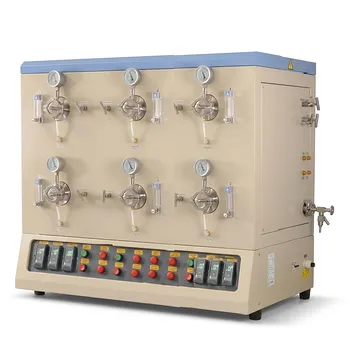
1200C High Throughput Multi Channel Tube Furnace with 50mm Quartz Tubes for Annealing and Material Phase Diagram Research
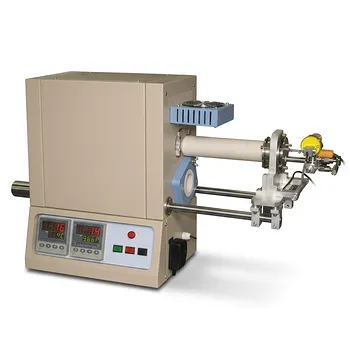
High Temperature Tube Furnace 1500C with Sliding Flanges and 50mm OD for Rapid Thermal Processing Fast Heating and Cooling

High Temperature 1700C Benchtop Tube Furnace with 5 Inch Heating Zone High Purity Alumina Tube and Vacuum Sealing Flanges

Compact High Temperature 1600C Tube Furnace with 50mm Alumina Tube and Vacuum Flanges for Material Sintering
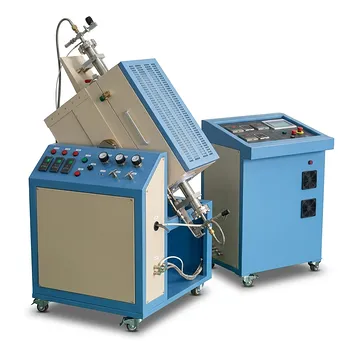
1100C High Pressure Rocking Tube Furnace with 2 Inch Super Alloy Processing Tube for Material Synthesis

High Temperature Automated 5 Inch Tube Furnace for Autonomous Material Research and Advanced Laboratory R&D
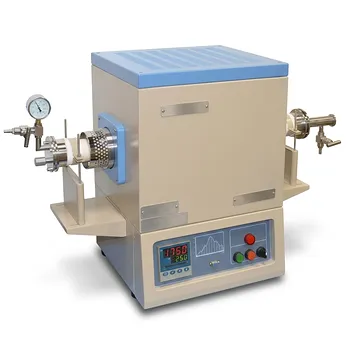
High Temperature Compact Vacuum Tube Furnace 1750C Max 60mm OD Alumina Tube

High Temperature 1700C Vertical Tube Furnace for Powder Spherification and Material Sintering
High Temperature 1700C Tube Furnace with 4 Inch OD Alumina Tube and Vacuum Sealing Flanges
High Temperature 1700C Three Zone Tube Furnace with Alumina Tube 50mm 60mm 80mm OD for Material Research and Industrial Heat Treatment

1800C High Temperature Compact Vacuum Tube Furnace with 60mm OD Alumina Tube and Kanthal MoSi2 Heating Elements
1500C High Temperature Compact Tube Furnace 2 Inch OD with Vacuum Flanges and Complete Accessories
1750°C High Temperature Benchtop Vacuum Atmosphere Tube Furnace with Kanthal Super 1800 Heating Elements and 60mm Alumina Processing Tube

High Temperature 1700C Six Zone Split Tube Furnace with Alumina Tube and Water Cooled Flanges
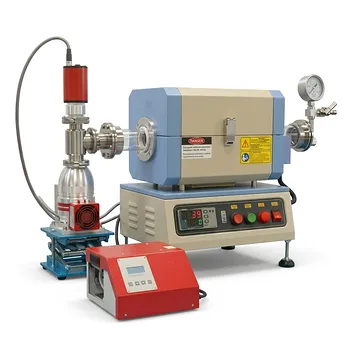
High Vacuum Compact Tube Furnace 1200C with Integrated Turbo Pump System and 8 Inch Heating Zone
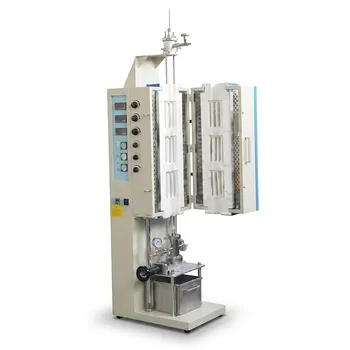
High Temperature Dual Zone Tube Furnace for Material Science Research and Professional Thermal Processing
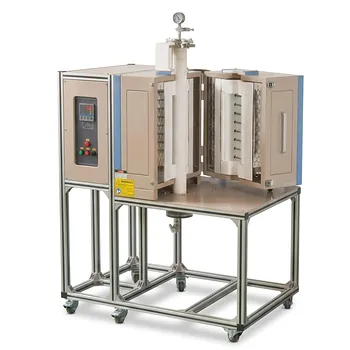
High Temperature 1700C Vertical Split Tube Furnace for Material Quenching and Single Crystal Growth
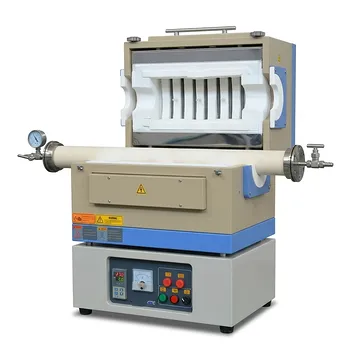
High Temperature 1600C Split Tube Furnace Vacuum Flanges Valves Optional 60mm 80mm Alumina Tube
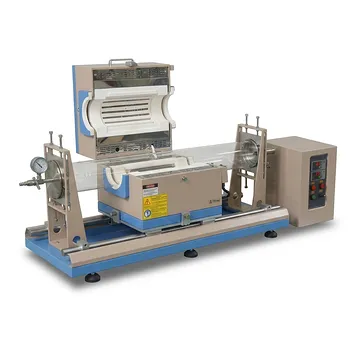
1200C High Temperature 5 Inch Sliding Tube Furnace for Rapid Thermal Processing RTP and Wafer Annealing
