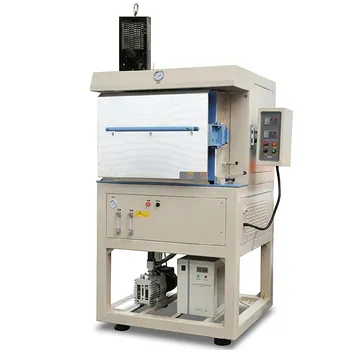
What are the primary functions of ammonia (NH3) atmosphere during 850°C annealing? Enhance N-Doping and Catalyst Stability
Updated 3 months ago
Ammonia ($NH_3$) functions as a reactive nitrogen source and a structural tuning agent during high-temperature annealing. In an 850°C tube furnace environment, it undergoes thermal decomposition to release active nitrogen atoms that are doped into the repairing carbon lattice while simultaneously facilitating the decomposition of cobalt precursors. This process allows for the precise optimization of the asymmetric coordination between metal atoms and the surrounding matrix, which is critical for maximizing catalytic activity.
The primary role of $NH_3$ at 850°C is to provide chemically active nitrogen for lattice doping and to act as a reducing atmosphere that transforms metal precursors into stable, highly active catalytic sites. This controlled environment ensures the simultaneous repair of the carbon support and the creation of specific metal-nitrogen coordination structures.
Facilitating Chemical Transformation and Nitrogen Doping
Provision of Active Nitrogen Atoms
Unlike molecular nitrogen ($N_2$), which is chemically stable and relatively inert, ammonia serves as a highly reactive source of nitrogen. At 850°C, $NH_3$ undergoes thermal decomposition, releasing nascent, active nitrogen atoms that can easily penetrate and react with the precursor material. This reactivity is essential for achieving high levels of nitrogen integration into the catalyst's molecular structure.
Simultaneous Carbon Lattice Repair
As the tube furnace provides the thermal energy required to repair defects in the carbon lattice, nitrogen doping occurs concurrently. The presence of $NH_3$ ensures that nitrogen atoms are available to occupy vacancies or substitute carbon atoms during this restructuring phase. This creates a stable, nitrogen-doped carbon matrix that serves as a robust support for the active catalytic centers.
Decomposition of Metal Precursors
The 850°C thermal environment, enriched with ammonia, facilitates the decomposition of metal precursors, such as cobalt compounds. The ammonia atmosphere assists in stripping away volatile ligands and oxygen, leaving behind the metal atoms. These atoms are then free to interact with the newly integrated nitrogen in the surrounding lattice.
Structural Optimization of Catalytic Sites
Tuning Asymmetric Coordination
The flow rate of $NH_3$ and the specific annealing temperature are used to precisely regulate the coordination environment of the metal atoms. By controlling these variables, researchers can optimize the asymmetric bonding between cobalt (or other metals) and nitrogen, oxygen, or carbon. This specific geometric and electronic arrangement is the primary driver for enhanced catalytic efficiency in the final product.
Phase Transition and Nitride Formation
At high temperatures, ammonia can drive the phase transition of metal oxides into interstitial nitrides or carbides. This transformation is crucial for creating specific active phases, such as ternary nitrides, which offer superior performance compared to their oxide counterparts. The controlled flow of $NH_3$ ensures that these reactions reach the desired stoichiometric ratios.
Encapsulation and Stability
The ammonia atmosphere contributes to the formation of protective carbon or nitride layers that encapsulate metal clusters. These layers prevent the leaching or sintering of active metal sites during demanding catalytic reactions. This encapsulation imparts both high electrocatalytic activity and long-term structural stability to the synthesized material.
Understanding the Trade-offs
Corrosivity and Equipment Wear
While $NH_3$ is a superior reactive source, it is highly corrosive to certain furnace components and sealing materials at 850°C. Maintaining a rigorous seal is necessary to prevent oxidation, but the chemical nature of ammonia requires specialized materials to prevent long-term degradation of the tube furnace.
Balancing Doping Levels and Surface Area
Increasing the ammonia flow can enhance nitrogen doping, but excessive reactivity at high temperatures may lead to the unintended loss of carbon through gasification. This can reduce the overall surface area and porosity of the catalyst, potentially negating the benefits of higher nitrogen content.
Safety and Gas Management
Operating at 850°C with ammonia requires sophisticated gas handling and scrubbing systems. Because ammonia is toxic and can be flammable under certain conditions, the experimental setup must include precise mass flow controllers and safety ventilation to manage the exhaust and maintain a stable reaction environment.
How to Apply This to Your Synthesis Goal
Recommendations for Catalyst Synthesis
To achieve the best results in your high-temperature furnace, align your $NH_3$ usage with your specific material objectives:
- If your primary focus is maximizing nitrogen doping density: Maintain a steady, high flow rate of $NH_3$ while ensuring the 850°C temperature is reached rapidly to capture nitrogen before the carbon lattice fully closes.
- If your primary focus is the formation of pure metal-nitride phases: Extend the residence time of the precursor in the $NH_3$ atmosphere to ensure complete ammonolysis and the full transition from oxide to nitride.
- If your primary focus is preserving high surface area: Use a diluted ammonia mixture (e.g., $NH_3/Ar$ or $NH_3/N_2$) to provide enough nitrogen for doping without triggering excessive carbon etching or gasification.
By precisely balancing the thermal energy of the furnace with the reactive chemistry of the ammonia atmosphere, you can engineer the specific atomic coordination required for high-performance catalysis.
Summary Table:
| Function | Key Mechanism | Benefit for Catalysis |
|---|---|---|
| Reactive N-Source | Thermal decomposition releases active nitrogen atoms | Achieves superior nitrogen doping density vs. inert N2 |
| Lattice Repair | Simultaneous carbon reconstruction at 850°C | Creates a robust and stable support structure |
| Metal Transformation | Strips volatile ligands from metal precursors | Forms highly active metal-nitrogen-carbon (M-N-C) sites |
| Structural Tuning | Optimizes asymmetric atomic coordination | Enhances electronic properties for improved efficiency |
| Phase Control | Facilitates transition from oxides to nitrides | Produces stable, high-performance interstitial nitrides |
Optimize Your Catalyst Synthesis with THERMUNITS Precision Technology
Achieving the perfect coordination between metal atoms and nitrogen-doped lattices requires ultra-stable thermal environments and precise gas control. THERMUNITS is a leading manufacturer of high-temperature laboratory equipment, specialized in empowering material science and industrial R&D.
Our comprehensive range of thermal solutions—including Atmosphere Tube Furnaces, CVD/PECVD systems, Vacuum Furnaces, and Rotary Kilns—is engineered to handle reactive atmospheres like ammonia with superior safety and temperature uniformity. Whether you are performing high-temperature annealing, lattice repair, or advanced nitridation, our equipment ensures reproducible results and long-term durability.
Ready to elevate your heat treatment process? Contact our experts today to discuss how THERMUNITS can provide the customized furnace technology your research demands.
References
- Longxiang Liu, Guanjie He. Atomically dispersed asymmetric cobalt electrocatalyst for efficient hydrogen peroxide production in neutral media. DOI: 10.1038/s41467-024-48209-0
Mentioned Products
- 1500C Max Dual Zone Rotary Tube Furnace with 60 mm OD Alumina Tube for High Temperature Material Synthesis
- High Temperature Dual Zone Rotating Tube Furnace 1500C Silicon Carbide Heating for Advanced Material Synthesis
- 1750°C High Temperature Benchtop Vacuum Atmosphere Tube Furnace with Kanthal Super 1800 Heating Elements and 60mm Alumina Processing Tube
- Compact High Temperature 1600C Tube Furnace with 50mm Alumina Tube and Vacuum Flanges for Material Sintering
- High Temperature Vertical Atmosphere Controlled Furnace with Automatic Bottom Loading and 1700°C Capacity for Advanced Material Research
People Also Ask
- How does a rotary tube furnace improve the processing of granular materials? Enhance Uniformity and Reaction Kinetics
- Why is the precise optimization of residence time essential in the catalyst calcination process? Maximize Your Yields.
- Why use a rotary tube furnace for FACS carbonization? Ensure uniform morphology and prevent sphere agglomeration.
- In what ways do rotary tube furnaces enhance chemical and specialty mineral processing? Drive Precision and Uniformity.
- What parameters must operators control to maintain product quality in a rotary furnace? Master Your Heat Treatment.

Tech Team · ThermUnits
Last updated on Jun 02, 2026
Related Products
1500C Max Dual Zone Rotary Tube Furnace with 60 mm OD Alumina Tube for High Temperature Material Synthesis
High Temperature Dual Zone Rotating Tube Furnace 1500C Silicon Carbide Heating for Advanced Material Synthesis
1750°C High Temperature Benchtop Vacuum Atmosphere Tube Furnace with Kanthal Super 1800 Heating Elements and 60mm Alumina Processing Tube

Compact High Temperature 1600C Tube Furnace with 50mm Alumina Tube and Vacuum Flanges for Material Sintering
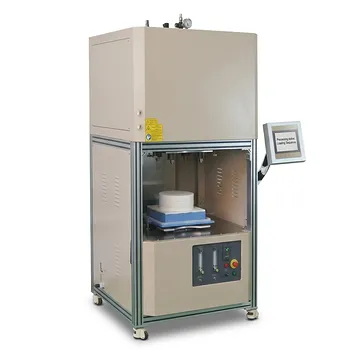
High Temperature Vertical Atmosphere Controlled Furnace with Automatic Bottom Loading and 1700°C Capacity for Advanced Material Research

High Temperature 1700C Vertical Tube Furnace for Powder Spherification and Material Sintering
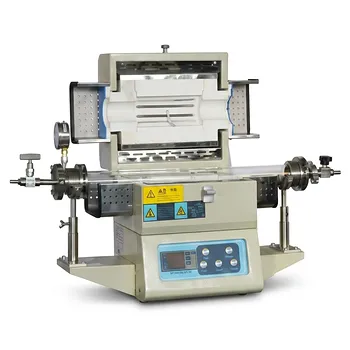
High Temperature 1200C Split Tube Furnace for CVD Research and Vacuum Atmosphere Heat Treatment
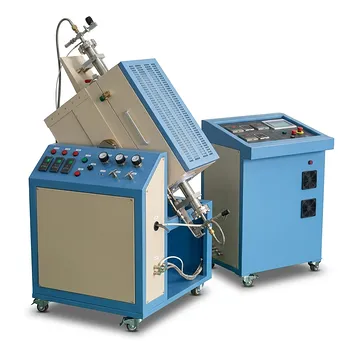
1100C High Pressure Rocking Tube Furnace with 2 Inch Super Alloy Processing Tube for Material Synthesis
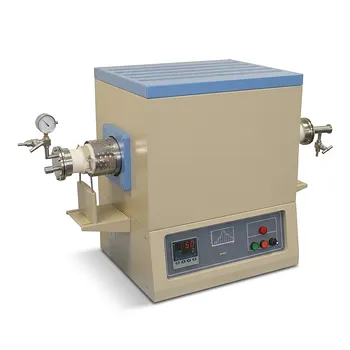
1700C High Temperature Alumina Tube Furnace with 18 Inch Heated Zone and Vacuum Sealing Flanges

High Temperature Automated 5 Inch Tube Furnace for Autonomous Material Research and Advanced Laboratory R&D
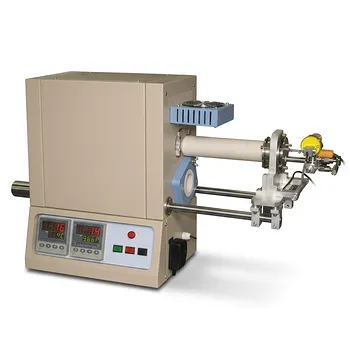
High Temperature Tube Furnace 1500C with Sliding Flanges and 50mm OD for Rapid Thermal Processing Fast Heating and Cooling

Vertical 1700C Vacuum and Atmosphere Tube Furnace with 80mm Alumina Tube
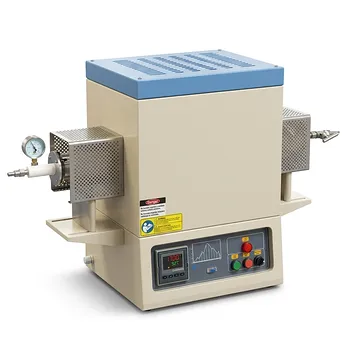
High Temperature Three Zone Tube Furnace 1700C with Alumina Tube and Water Cooled Flanges
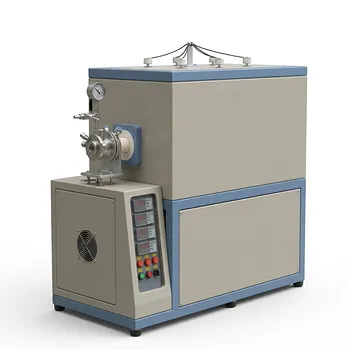
High Temperature 1700C Three Zone Tube Furnace with Alumina Tube 50mm 60mm 80mm OD for Material Research and Industrial Heat Treatment

High Temperature 1700C Tube Furnace with High Vacuum Turbomolecular Pump System and Multi Channel Mass Flow Controller Gas Mixer

1800C High Temperature Compact Vacuum Tube Furnace with 60mm OD Alumina Tube and Kanthal MoSi2 Heating Elements
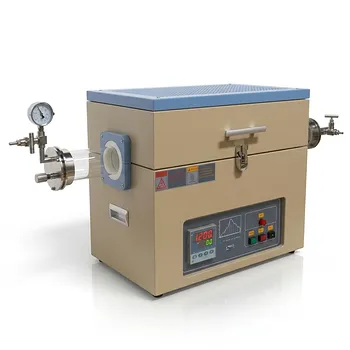
High Temperature 1200C Split Tube Furnace with Optional Quartz Tube Sizes and Vacuum Sealing Flanges for Material Science Research

High Temperature 1700C Benchtop Tube Furnace with 5 Inch Heating Zone High Purity Alumina Tube and Vacuum Sealing Flanges
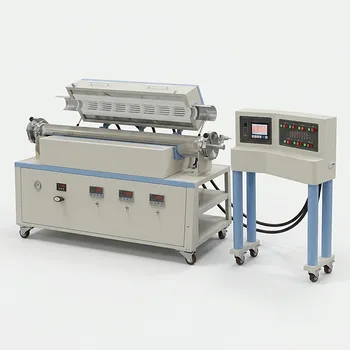
1100C Eight Zone High Pressure Super Alloy Tube Furnace with Integrated High Pressure Gas Control System