What are the technical advantages of using tube furnace evaporation coating processes? Precision PVD for Optical Films
Updated 3 months ago
Tube furnace evaporation coating processes provide a high-precision Physical Vapor Deposition (PVD) environment characterized by exceptional purity and superior structural uniformity. By combining industrial-grade evaporation with the controlled thermal environment of a tube furnace, engineers can achieve meticulous control over the thickness and composition of multi-layer optical stacks. This integration is particularly effective for depositing alternating layers of metals and oxides with minimal residual stress and high crystalline integrity.
The core advantage of this process lies in its ability to marry high-purity material deposition with precise atmospheric and thermal gradient control. This synergy ensures that nanoscale optical films maintain consistent spectral properties and structural durability across complex, multi-layer architectures.
Precision Control of Nanoscale Film Architecture
High Purity and Material Versatility
The process is a form of Physical Vapor Deposition (PVD), which is known for producing films of exceptionally high purity. This is critical for optical applications where even minor contaminants can alter refractive indices or increase absorption losses.
Precise Multi-Layer Thickness Management
This method allows for the precise control of the structure and thickness of individual layers within a stack. It is specifically optimized for alternating structures, such as combining metals like Titanium or Nickel with oxides like Alumina.
Minimization of Residual Stress
One of the most significant technical hurdles in thin-film coating is internal tension. Tube furnace evaporation generates low residual stress during the deposition process, which is vital for maintaining the structural integrity of complex, multi-layer optical filters.
Enhanced Morphology through Thermal Management
Precise Temperature Gradients
The elongated reaction space of a tube furnace allows for the establishment of stable temperature gradients. This environment is essential for controlling the residence time of reaction gases and ensuring uniform film growth across the entire substrate.
Inhibition of Nanoparticle Coarsening
Utilizing rapid heating and cooling capabilities, the tube furnace can effectively inhibit the coarsening of nanoparticles. This results in a much narrower particle size distribution compared to traditional heat treatment, which is essential for reducing light scattering in optical films.
Atmospheric Protection and Stoichiometry
Unlike standard ovens, a tube furnace provides strict atmospheric protection using inert gases like nitrogen. This prevents unwanted oxidation and inhibits the evaporation of volatile elements (like sulfur), allowing for the precise tuning of the material's band structure.
Optimization of Vapor Transport and Uniformity
Stabilization of Gas Flow Dynamics
The geometry of the tube furnace is engineered to manage dynamic gas flow environments. By controlling the flow direction and velocity of reaction gases, the process ensures that the vapor reaches the substrate in a consistent, predictable manner.
The Tube-in-Tube Advantage
Advanced configurations use a tube-in-tube design to stabilize flow and maintain high local vapor concentrations. This configuration effectively suppresses turbulence, ensuring superior consistency across large-area arrays and pixel-based optical components.
Large-Scale Thermal Uniformity
For larger optical components, a square tube furnace provides a uniform thermal field distribution. This ensures that the structural consistency of the film remains stable even over larger surface areas, preventing performance drift across the optic.
Understanding the Trade-offs and Challenges
Equipment Complexity and Calibration
While a tube furnace offers superior control, the complexity of the setup is higher than simple sputter systems. Achieving the perfect balance of temperature gradients and gas flow requires rigorous calibration and specialized tube geometries.
Throughput and Scalability Constraints
The batch-oriented nature of tube furnace processing can lead to lower throughput compared to continuous roll-to-roll PVD methods. Additionally, the size of the substrate is strictly limited by the internal diameter or dimensions of the furnace tube.
Material Volatility Risks
High-temperature processing within the furnace can lead to the unintended evaporation of certain dopants if atmospheric pressure is not perfectly maintained. While the system can protect against oxidation, managing the partial pressure of volatile components requires constant monitoring.
Applying These Advantages to Your Optical Project
How to Choose Based on Your Goals
- If your primary focus is high-performance interference filters: Prioritize the PVD aspects of the process to ensure high purity and low residual stress for multi-layer metal-oxide stacks.
- If your primary focus is tuning semiconductor bandgaps (e.g., CdS or Perovskites): Leverage the nitrogen atmospheric protection and high-temperature annealing capabilities to precisely control crystallinity and grain growth.
- If your primary focus is large-area consistency: Utilize a large-format square tube furnace or tube-in-tube design to suppress gas turbulence and maintain a uniform thermal field.
By masterfully balancing the purity of evaporation with the atmospheric precision of a tube furnace, you can achieve a level of optical film performance that traditional coating methods simply cannot match.
Summary Table:
| Technical Feature | Primary Benefit | Impact on Optical Performance |
|---|---|---|
| High Purity PVD | Minimizes material contaminants | Consistent refractive indices and low absorption |
| Thermal Management | Stable temperature gradients | Uniform film growth and suppressed nanoparticle coarsening |
| Atmospheric Protection | Inert gas (N2) environment | Prevention of oxidation and precise stoichiometry control |
| Low Residual Stress | Reduces internal film tension | Enhanced structural durability for multi-layer stacks |
| Vapor Flow Control | Suppresses gas turbulence | Superior consistency across large-area optical arrays |
Elevate Your Thin-Film Research with THERMUNITS
Are you looking to achieve superior precision in nanoscale material deposition? THERMUNITS is a leading manufacturer of high-performance thermal processing solutions designed for material science and industrial R&D. We specialize in providing the tools necessary for advanced applications like optical thin-film coating and semiconductor bandgap tuning.
Our comprehensive range of equipment includes:
- Tube Furnaces & CVD/PECVD Systems for high-precision evaporation and vapor transport.
- Vacuum, Atmosphere, and Muffle Furnaces for diverse heat treatment needs.
- Rotary & Hot Press Furnaces for specialized material synthesis.
- VIM (Vacuum Induction Melting) & Dental Furnaces.
By choosing THERMUNITS, you gain access to industry-leading thermal uniformity and atmospheric control, ensuring your research translates into high-quality, repeatable results. Contact our technical experts today to discuss how our thermal solutions can optimize your laboratory workflow!
References
- Cheng‐Fu Yang, Kuei‐Kuei Lai. Development and Fabrication of a Multi-Layer Planar Solar Light Absorber Achieving High Absorptivity and Ultra-Wideband Response from Visible Light to Infrared. DOI: 10.3390/nano14110930
Mentioned Products
- Two Zone Rotary Tube Furnace for Powder CVD Coating and Core Shell Material Synthesis 1100C
- 1200C Tube Furnace with Internal Magnetic Sample Sliding for Direct Vaporizing Deposition and Rapid Thermal Processing
- Double Temperature Zone Double Cover Tube Furnace for High Temperature CVD and Vacuum Annealing
- Chemical Vapor Deposition CVD System Slide PECVD Tube Furnace with Liquid Gasifier PECVD Machine
- 1200C Sliding Internal Crucible Tube Furnace for Controlled Atmosphere Thin Film Deposition and Material Sublimation Research
People Also Ask
- How does a two-zone tube furnace control the quality of Tungsten Diselenide (WSe2)? Optimize Your 2D Material Synthesis
- What is the function of a two-zone furnace in SCA-CVD? Mastering Thermal Gradients for Atomic-Scale MOF Crystals
- Why is a Tube Furnace typically utilized for CVD? Achieve Precision in Graphene and 2D Material Synthesis
- How does a rotary tube furnace improve the processing of granular materials? Enhance Uniformity and Reaction Kinetics
- Why is the precise optimization of residence time essential in the catalyst calcination process? Maximize Your Yields.

Tech Team · ThermUnits
Last updated on Jun 03, 2026
Related Products
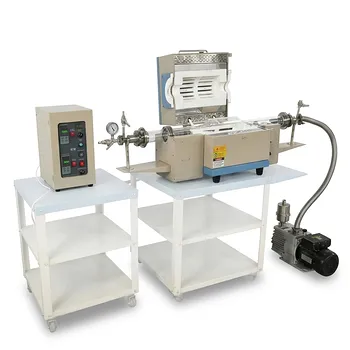
Two Zone Rotary Tube Furnace for Powder CVD Coating and Core Shell Material Synthesis 1100C
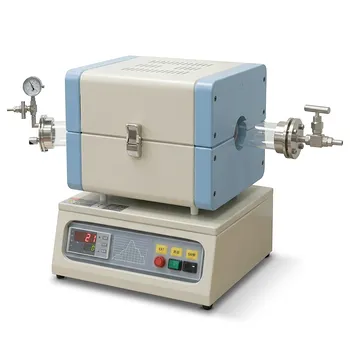
1200C Tube Furnace with Internal Magnetic Sample Sliding for Direct Vaporizing Deposition and Rapid Thermal Processing
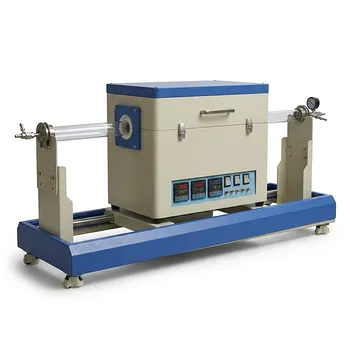
Double Temperature Zone Double Cover Tube Furnace for High Temperature CVD and Vacuum Annealing
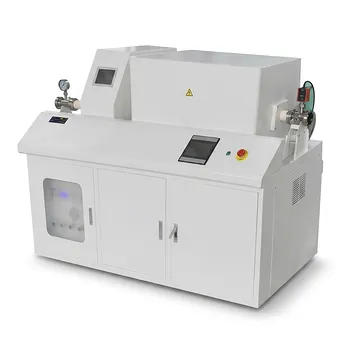
Chemical Vapor Deposition CVD System Slide PECVD Tube Furnace with Liquid Gasifier PECVD Machine
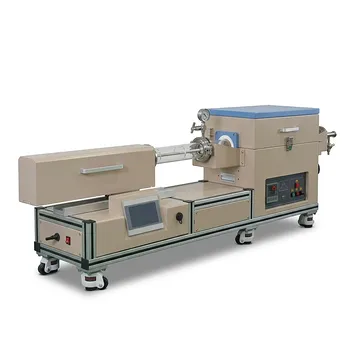
1200C Sliding Internal Crucible Tube Furnace for Controlled Atmosphere Thin Film Deposition and Material Sublimation Research

High Temperature 1700C Vertical Tube Furnace for Powder Spherification and Material Sintering

High Temperature 1700C Six Zone Split Tube Furnace with Alumina Tube and Water Cooled Flanges

Compact Vertical Split Quartz Tube Furnace with Stainless Steel Vacuum Flanges for Rapid Thermal Quenching and Controlled Atmosphere Material Processing

Vertical 1700C Vacuum and Atmosphere Tube Furnace with 80mm Alumina Tube
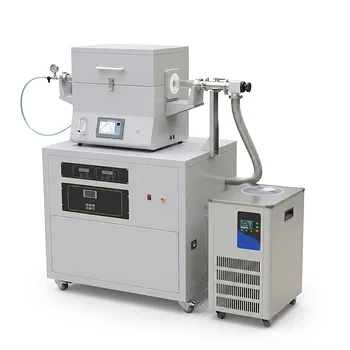
Split Chamber CVD Tube Furnace with Vacuum Station Chemical Vapor Deposition System Machine

High Temperature 1700C Benchtop Tube Furnace with 5 Inch Heating Zone High Purity Alumina Tube and Vacuum Sealing Flanges
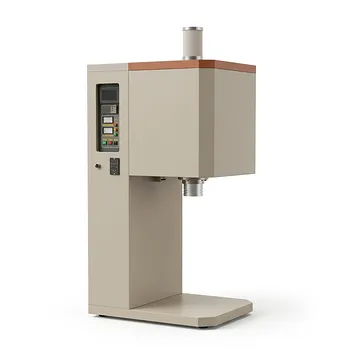
Vertical Openable Tube Furnace 0-1700c High Temperature Laboratory System for CVD and Vacuum Heat Treatment

1200°C 5 Inch Vertical Quartz Tube Furnace with Stainless Steel Vacuum Flanges
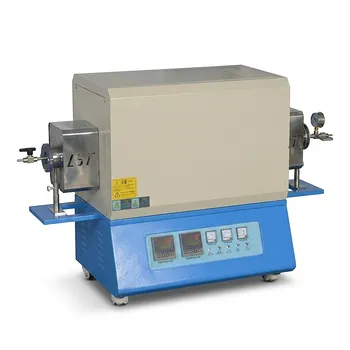
High Temperature Dual Zone Vacuum Tube Furnace for Material Research and CVD Processing
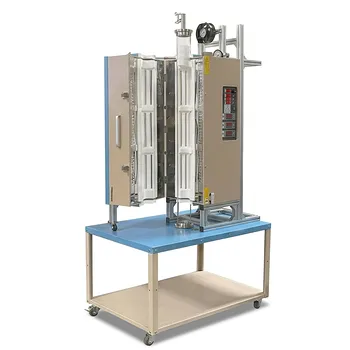
1200C Three Zone Split Vertical Tube Furnace 4 Inch Quartz Tube Stainless Steel Vacuum Flanges
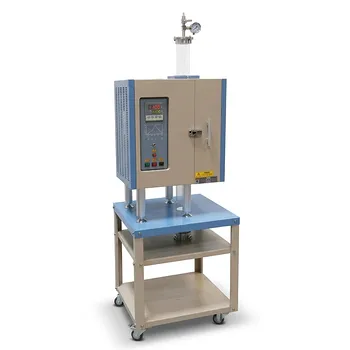
1100°C Split Vertical Tube Furnace with 80mm Quartz Tube and Stainless Steel Vacuum Flanges
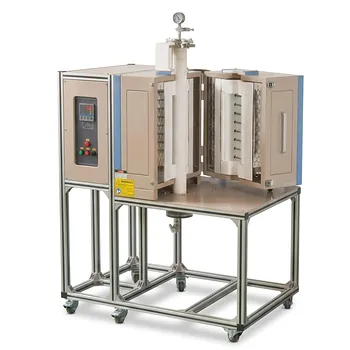
High Temperature 1700C Vertical Split Tube Furnace for Material Quenching and Single Crystal Growth
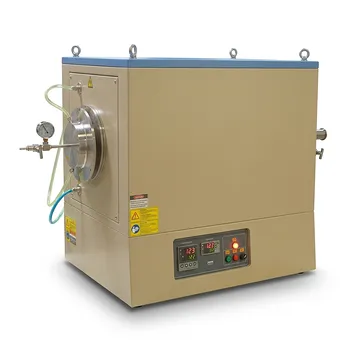
1100°C Large Diameter Quartz Tube Furnace with 24 Inch Heating Zone and Water Cooled Flanges

5 Inch Three Zone Rotary Tube Furnace with Integrated Gas Delivery System and 1200C Capability for Advanced Material CVD Processing