What are the technical characteristics of a Hot-Wall CVD system for hBN? Essential Guide for Large-Area Film Growth
Updated 3 months ago
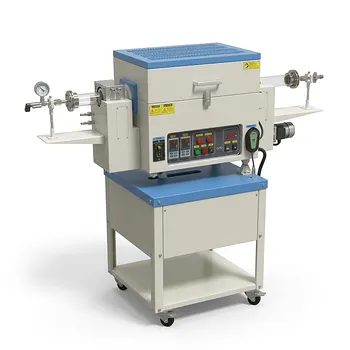
Hot-Wall Chemical Vapor Deposition (CVD) systems are defined by their ability to maintain a uniform thermal environment throughout the entire reaction chamber. This architecture, typically utilizing a tube furnace, ensures that both the precursor gases and the substrate are heated simultaneously. For hexagonal boron nitride (hBN) fabrication, this "all-zone" heating provides the necessary thermal energy for complete precursor decomposition and optimal atomic rearrangement, resulting in high-quality films with exceptional large-area uniformity.
Core Takeaway: A Hot-Wall CVD system utilizes a continuous temperature field to ensure both efficient gas-phase precursor decomposition and high-quality surface crystallization. This configuration is essential for producing large-area hBN thin films with precise thickness control and high structural integrity.
The Architecture of Uniformity
All-Zone Heating via Tube Furnaces
The defining characteristic of a Hot-Wall system is the tube furnace structure, which creates a continuous and uniform temperature distribution field. Unlike cold-wall systems that only heat the substrate, the Hot-Wall environment heats the entire reaction zone, including the chamber walls.
Facilitating Thermal Decomposition
The high-temperature environment throughout the chamber ensures the complete thermal decomposition of precursor molecules while they are still in the gas phase. This ensures that the reactive species reaching the substrate are fully prepared for deposition, which is critical for the synthesis of complex 2D materials like hBN.
Atomic Rearrangement and Surface Quality
By providing sufficient thermal energy at the substrate surface, Hot-Wall systems promote atomic rearrangement. This mobility allows atoms to find their lowest-energy lattice positions, which is the primary driver behind the excellent large-area uniformity and crystalline quality observed in CVD-grown hBN.
Gas Dynamics and Precursor Control
Precision Precursor Feeding
In hBN synthesis, precursors such as liquid borazine are often introduced using a hydrogen (H2) carrier gas through a bubbling system. This setup allows for stable and precise control over the concentration and flow rate of the vapor-phase precursor, ensuring repeatability across different growth runs.
Pressure Regulation and Mean Free Path
Operating under Low-Pressure (LP-CVD) conditions—typically between 10 Pa and 110 Pa—significantly increases the mean free path of precursor molecules. By extending this path from nanometers to meters, the system minimizes intermolecular collisions and suppresses unwanted side reactions in the gas phase.
Minimizing Environmental Contamination
The integration of high-vacuum systems is vital for reducing background pressure and removing environmental impurities like oxygen or moisture. This vacuum environment ensures that the deposited hBN achieves higher phase purity and a higher structural density, which are essential for its performance as a dielectric or protective layer.
Understanding the Trade-offs
Parasitic Gas-Phase Reactions
Because the entire chamber is heated, homogeneous nucleation (reactions occurring in the gas phase rather than on the substrate) is more likely in Hot-Wall systems compared to Cold-Wall systems. These reactions can lead to the formation of particulate byproducts that may settle on the film and affect microscopic texture.
Thermal Lag and Cooling Rates
The high thermal mass of the heated furnace walls means that Hot-Wall systems have slower heating and cooling cycles. While this promotes stable growth, it lacks the rapid thermal processing capabilities of induction-heated Cold-Wall systems, which can more easily regulate microscopic textures through rapid quenching.
Cleaning and Maintenance Challenges
Since deposition occurs on all heated surfaces, including the chamber walls, Hot-Wall systems require more frequent cleaning and maintenance. Over time, precursor buildup on the tube walls can flake off, potentially introducing contaminants into the growth process if not strictly managed through post-growth annealing or chemical cleaning.
How to Apply This to Your Project
Making the Right Choice for Your Goal
To achieve the best results with hBN fabrication, the system parameters must be aligned with the specific requirements of your final application.
- If your primary focus is large-area uniformity: Utilize a Hot-Wall tube furnace to ensure a stable thermal field that promotes consistent atomic rearrangement across the entire substrate.
- If your primary focus is high phase purity: Prioritize a Low-Pressure (LP-CVD) configuration with a high-vacuum system to maximize the mean free path and minimize environmental oxygen contamination.
- If your primary focus is precise thickness control: Implement a bubbling system with a hydrogen carrier gas to maintain a stable, repeatable concentration of borazine precursors.
- If your primary focus is electrical performance: Follow the growth process with a high-temperature anneal at 400 °C in an Argon/Oxygen atmosphere to remove any organic residues from the transfer process.
By mastering the balance between thermal uniformity and vacuum precision, researchers can reliably produce hBN thin films capable of supporting the next generation of high-performance optoelectronic devices.
Summary Table:
| Feature | Impact on hBN Fabrication | Technical Specification |
|---|---|---|
| All-Zone Heating | Ensures large-area uniformity & atomic rearrangement | Tube furnace architecture |
| Low-Pressure (LP) | Maximizes mean free path; reduces side reactions | 10 Pa to 110 Pa range |
| Bubbling System | Precise control of borazine concentration | H2 carrier gas delivery |
| High Vacuum | Enhances phase purity & structural density | Removal of O2 and moisture |
| Thermal Stability | Complete precursor decomposition in gas phase | Continuous temperature field |
Elevate Your Material Research with THERMUNITS
Are you looking to achieve high-quality hexagonal boron nitride (hBN) thin films with exceptional uniformity? THERMUNITS is a leading manufacturer of high-temperature laboratory equipment specifically designed for material science and industrial R&D.
We provide a comprehensive range of high-precision thermal processing solutions, including:
- Advanced CVD/PECVD Systems for 2D material synthesis.
- Tube & Vacuum Furnaces for uniform thermal environments.
- Muffle, Atmosphere, and Rotary Kilns for diverse heat treatments.
- Vacuum Induction Melting (VIM) & Hot Press Furnaces for specialized metallurgy.
From precise precursor control to high-vacuum integrity, our equipment is engineered to meet the rigorous demands of modern laboratory research.
Ready to optimize your thin film fabrication or heat treatment process? Contact our experts today for a customized solution!
References
- Anja Sutorius, Sanjay Mathur. Understanding vapor phase growth of hexagonal boron nitride. DOI: 10.1039/d4nr02624a
Mentioned Products
- Radio Frequency Plasma Enhanced Chemical Vapor Deposition RF PECVD System for Laboratory and Industrial Thin Film Growth
- HFCVD Machine System for Nano Diamond Coating on Drawing Dies and Industrial Tools
- Inclined Rotary Plasma Enhanced Chemical Vapor Deposition PECVD System for Thin Film Deposition and Nanomaterial Synthesis
- Versatile Chemical Vapor Deposition Tube Furnace System for Advanced Material Research and Industrial Coating Processes
- Chemical Vapor Deposition CVD System Slide PECVD Tube Furnace with Liquid Gasifier PECVD Machine
People Also Ask
- What are the advantages of PECVD systems for nano flame retardant films? Protect Heat-Sensitive Polymers with Precision
- How does PECVD differ from conventional thermal CVD? Key Advantages of Low-Temperature Deposition for R&D
- What is the role of CVD/PECVD systems in the research of optoelectronic materials and functional coatings? Expert Guide
- What are the benefits of using PECVD for optical and photonic coatings? Achieve High-Precision Thin-Film Deposition
- How do RF frequency and power settings influence the characteristics of a PECVD process? Master Quality & Efficiency

Tech Team · ThermUnits
Last updated on Jun 03, 2026
Related Products
Radio Frequency Plasma Enhanced Chemical Vapor Deposition RF PECVD System for Laboratory and Industrial Thin Film Growth
HFCVD Machine System for Nano Diamond Coating on Drawing Dies and Industrial Tools
Inclined Rotary Plasma Enhanced Chemical Vapor Deposition PECVD System for Thin Film Deposition and Nanomaterial Synthesis
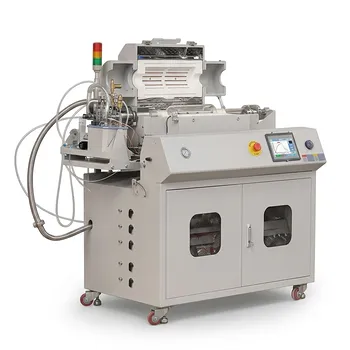
Versatile Chemical Vapor Deposition Tube Furnace System for Advanced Material Research and Industrial Coating Processes
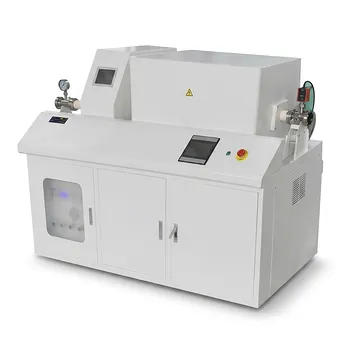
Chemical Vapor Deposition CVD System Slide PECVD Tube Furnace with Liquid Gasifier PECVD Machine
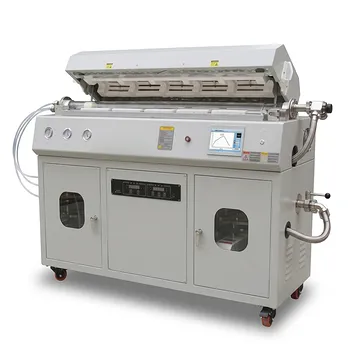
Multi Heating Zones CVD Tube Furnace System for Precision Chemical Vapor Deposition and Advanced Material Synthesis
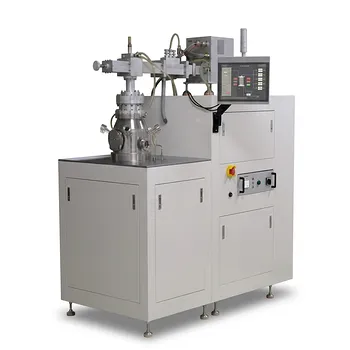
Cylindrical Resonator MPCVD Machine System for Microwave Plasma Chemical Vapor Deposition and Lab Diamond Growth
915MHz MPCVD Diamond Machine Microwave Plasma Chemical Vapor Deposition System Reactor
High Temperature 1700C Dual Zone Tube Furnace for Material Science and Industrial Chemical Vapor Deposition Research
950C Rapid Thermal Processing Furnace for 12 Inch Wafer CSS Coating with Rotating Substrate Holder
Split Chamber CVD Tube Furnace with Vacuum Station Chemical Vapor Deposition System Machine
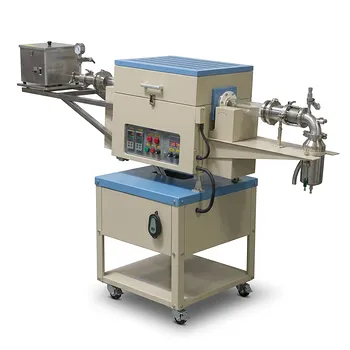
Two Zone Rotary CVD Furnace with Automatic Feeding and Receiving System for Powder Processing
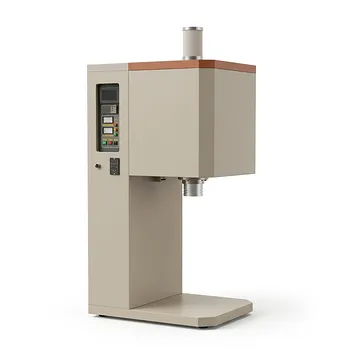
Vertical Openable Tube Furnace 0-1700c High Temperature Laboratory System for CVD and Vacuum Heat Treatment
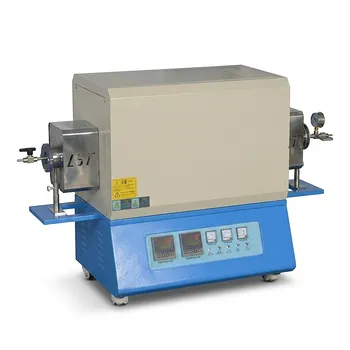
High Temperature Dual Zone Vacuum Tube Furnace for Material Research and CVD Processing
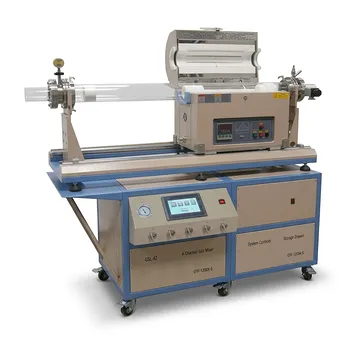
Dual Tube 100mm 80mm CVD Sliding Furnace with 4 Channel Gas Mixing and Vacuum System
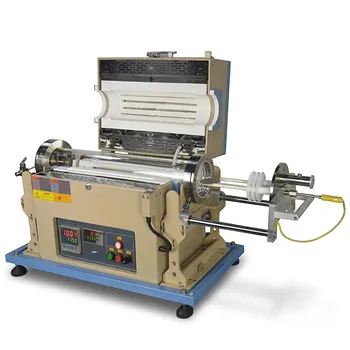
1200°C High Temperature 4 Inch Tube Furnace with Sliding Flange for CVD Systems
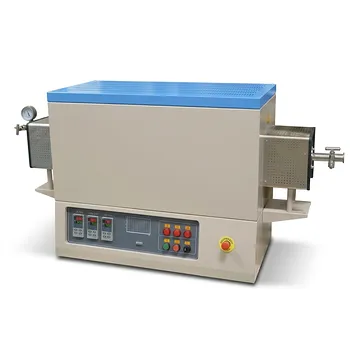
Three Zone Alumina Tube Furnace with Vacuum Flanges High Temperature 1700C Thermal Gradient CVD System
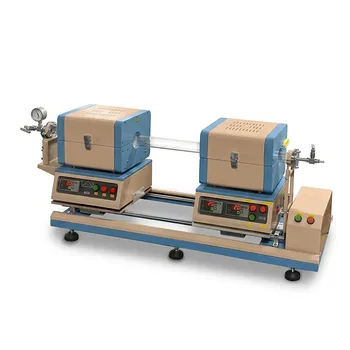
High Temperature 1200C Automatic Sliding Dual Zone Tube Furnace for 2D Transition Metal Dichalcogenides Growth and Material Sublimation Research

High Temperature 1700C Tube Furnace with High Vacuum Turbomolecular Pump System and Multi Channel Mass Flow Controller Gas Mixer