What conditions does a vacuum tube furnace provide for silica densification? Guide to 1300°C & 10^-6 Bar
Updated 5 months ago
For the final densification of silica glass, a high-vacuum high-temperature tube furnace provides a thermal environment reaching up to 1300°C and vacuum levels between $10^{-5}$ and $10^{-6}$ bar. This specific combination of extreme heat and low pressure enables silica nanoparticles to undergo viscous flow sintering. This process eliminates residual micropores and prevents the entrapment of gas bubbles, resulting in a fully dense glass with high optical transparency.
The core processing conditions required for silica densification are a temperature of 1300°C and a high vacuum of $10^{-5}$ to $10^{-6}$ bar. These conditions ensure the transition from a porous green body to a transparent, dense amorphous structure by facilitating viscous flow and removing interstitial gases.
The Role of Precise Thermal Management
Driving Viscous Flow Sintering
The furnace must provide a constant temperature environment, typically ranging from 1050°C to 1300°C, depending on the specific glass composition. At these temperatures, silica nanoparticles reach a state where they can undergo viscous flow.
This flow allows the particles to fuse together, gradually filling the gaps between them. This is the fundamental mechanism that transforms a fragile "green body" into a solid, amorphous fused silica structure.
Ensuring Chemical Homogenization
While the final sintering occurs at 1300°C, the furnace is often capable of even higher temperatures, such as 1450°C, for other glass-making stages. These high temperatures are necessary to ensure the complete melting and chemical homogenization of raw materials.
A uniform thermal field within the tube is critical. This ensures that every part of the silica body reaches the same density simultaneously, preventing internal stresses.
The Necessity of High-Vacuum Conditions
Preventing Gas Entrapment
The vacuum environment, maintained between $10^{-5}$ and $10^{-6}$ bar, is essential for removing residual gases trapped between particles. Without this vacuum, air or protective gases would become trapped as bubbles during the sintering process.
By excluding these gases, the furnace ensures the resulting silica glass achieves maximum optical transmittance. Even tiny amounts of trapped gas can scatter light, ruining the material's transparency.
Facilitating Dehydration and Outgassing
High-vacuum conditions assist in the diffusion and removal of interfacial moisture and other volatile products. For example, the furnace helps remove silanol groups (Si-OH) through dehydration reactions.
Removing this moisture is vital for the long-term stability of the glass. Residual water can lead to structural weaknesses or unwanted chemical reactions during the glass's service life.
Understanding the Trade-offs and Risks
Balancing Heating Rates and Structural Integrity
One of the primary challenges is managing the heating program to avoid cracking. While high temperatures are necessary for densification, heating too rapidly can cause thermal shock.
During earlier stages like pyrolysis, a very slow heating rate (such as 3°C per minute) is often required. This allows gaseous products to discharge gently without compromising the nanoparticle framework.
Vacuum vs. Atmospheric Pressure
While a vacuum is necessary for high-purity optical glass, it adds significant complexity to the equipment. Maintaining a stable vacuum of $10^{-6}$ bar at 1300°C requires advanced sealing and high-performance pumps.
In some specialized processes, like carbonization, a vacuum may be replaced by a protective atmosphere of nitrogen. However, for the specific goal of final densification into transparent silica, the vacuum remains the superior choice for bubble elimination.
Applying These Conditions to Your Project
Recommendations Based on Material Goals
To achieve the best results with a high-vacuum tube furnace, align your processing parameters with your final material requirements.
- If your primary focus is maximum optical clarity: Prioritize the highest vacuum possible ($10^{-6}$ bar) during the final 1300°C sintering stage to eliminate all micro-bubbles.
- If your primary focus is preventing structural cracks: Implement a multi-stage heating program with slow ramps below 850°C to allow for safe gas discharge before final densification.
- If your primary focus is chemical purity: Ensure the furnace environment is oxygen-deficient and utilize high-purity furnace tubes to prevent contamination at temperatures above 1000°C.
Achieving a fully dense, transparent silica glass requires the precise synchronization of high-vacuum gas removal and high-temperature viscous flow.
Summary Table:
| Process Condition | Parameter Value | Critical Role in Densification |
|---|---|---|
| Thermal Range | 1050°C - 1300°C | Facilitates viscous flow sintering and nanoparticle fusion |
| Vacuum Level | $10^{-5}$ to $10^{-6}$ bar | Eliminates gas entrapment to ensure maximum optical clarity |
| Heating Rate | ~3°C per minute | Prevents thermal shock and manages safe gas discharge |
| Atmosphere | High Vacuum / O2-Deficient | Removes silanol groups (Si-OH) and prevents contamination |
Elevate Your Material Research with THERMUNITS Precision Engineering
Achieving perfect densification and optical transparency in silica glass requires the highest standards of thermal and vacuum control. THERMUNITS is a leading manufacturer of high-temperature laboratory equipment, providing state-of-the-art solutions for material science and industrial R&D.
Our comprehensive range of thermal processing solutions includes:
- High-Performance Furnaces: Muffle, Vacuum, Atmosphere, Tube, Rotary, and Hot Press furnaces.
- Specialized Systems: CVD/PECVD systems, Dental Furnaces, and Vacuum Induction Melting (VIM) furnaces.
- Components & Kilns: Electric rotary kilns, advanced thermal elements, and custom heat treatment equipment.
Whether you are refining silica glass or developing next-generation ceramics, our equipment delivers the stable $10^{-6}$ bar vacuum and uniform 1300°C+ environments your project demands.
Ready to optimize your lab's thermal processing? Contact our expert team today to discuss a customized solution for your R&D needs!
References
- Lorenzo Barbera, André R. Studart. Multimaterial Volumetric Printing of Silica‐Based Glasses. DOI: 10.1002/admt.202202117
Mentioned Products
- High Temperature 1700C Tube Furnace with High Vacuum Turbomolecular Pump System and Multi Channel Mass Flow Controller Gas Mixer
- 1750°C High Temperature Benchtop Vacuum Atmosphere Tube Furnace with Kanthal Super 1800 Heating Elements and 60mm Alumina Processing Tube
- 1800C High Temperature Compact Vacuum Tube Furnace with 60mm OD Alumina Tube and Kanthal MoSi2 Heating Elements
- High Temperature 1100C Compact Top Loading Vertical Vacuum Tube Furnace for High Vacuum Noble Metal Melting and Material Research
- 1200C High Temperature 5 Inch Split Vacuum Tube Furnace with 12 Inch Heating Zone and Separated PID Controller
People Also Ask
- What is the role of a high-temperature tube furnace in the calcination process of ZnO/In2O3 nanocomposites?
- What impact does the heating rate of a tube furnace have on biochar microstructure? Optimize Your Material R&D.
- What is the function of a high-temperature tube furnace in the synthesis of g-C3N4? Optimize Thermal Polycondensation
- What is the function of a high-temperature tube furnace in Fe-BN-C pyrolysis? Optimize Catalyst Active Site Formation
- What are the primary functions of a high-temperature tube furnace for Inconel 718? Master Debinding & Pre-sintering.

Tech Team · ThermUnits
Last updated on Apr 14, 2026
Related Products

High Temperature 1700C Tube Furnace with High Vacuum Turbomolecular Pump System and Multi Channel Mass Flow Controller Gas Mixer

1750°C High Temperature Benchtop Vacuum Atmosphere Tube Furnace with Kanthal Super 1800 Heating Elements and 60mm Alumina Processing Tube

1800C High Temperature Compact Vacuum Tube Furnace with 60mm OD Alumina Tube and Kanthal MoSi2 Heating Elements
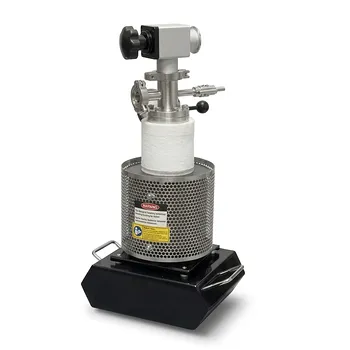
High Temperature 1100C Compact Top Loading Vertical Vacuum Tube Furnace for High Vacuum Noble Metal Melting and Material Research
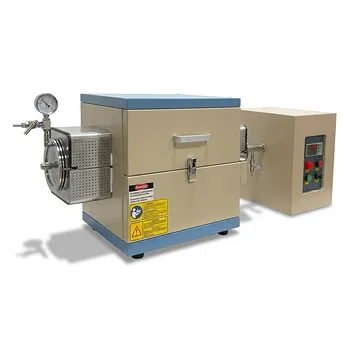
1200C High Temperature 5 Inch Split Vacuum Tube Furnace with 12 Inch Heating Zone and Separated PID Controller
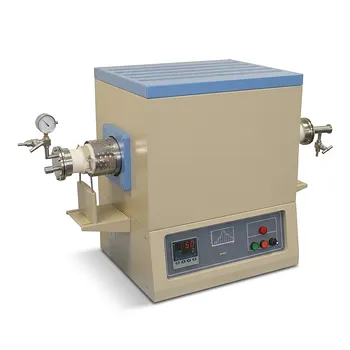
1700C High Temperature Alumina Tube Furnace with 18 Inch Heated Zone and Vacuum Sealing Flanges
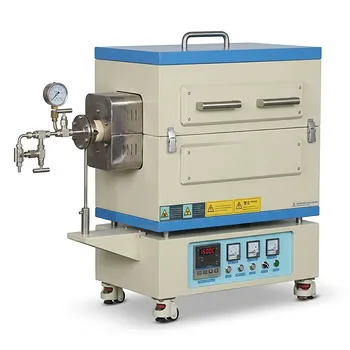
High Temperature Split Tube Furnace 1500C for Material Research Vacuum and Atmosphere Thermal Processing
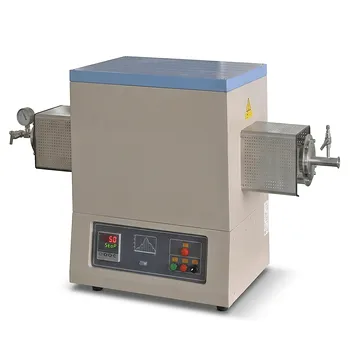
High Temperature 1700C Tube Furnace with 4 Inch OD Alumina Tube and Vacuum Sealing Flanges
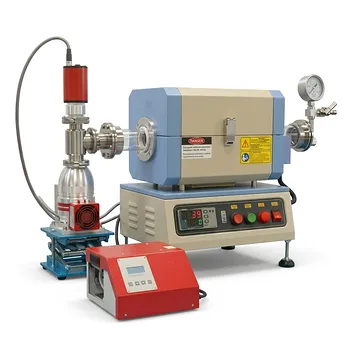
High Vacuum Compact Tube Furnace 1200C with Integrated Turbo Pump System and 8 Inch Heating Zone

High Temperature 1700C Benchtop Tube Furnace with 5 Inch Heating Zone High Purity Alumina Tube and Vacuum Sealing Flanges

1100C Tube Furnace with Vacuum Flange and Programmable Temperature Controller for Material Science and Industrial Heat Treatment

High Temperature 1700C Vertical Tube Furnace for Powder Spherification and Material Sintering
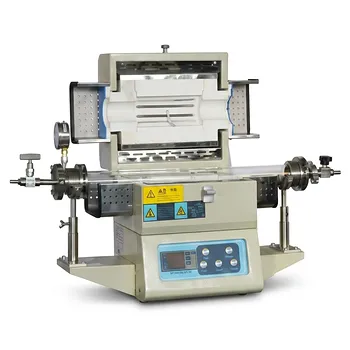
High Temperature 1200C Split Tube Furnace for CVD Research and Vacuum Atmosphere Heat Treatment

Compact High Temperature 1600C Tube Furnace with 50mm Alumina Tube and Vacuum Flanges for Material Sintering
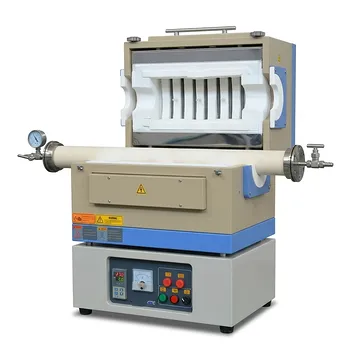
High Temperature 1600C Split Tube Furnace Vacuum Flanges Valves Optional 60mm 80mm Alumina Tube

High Temperature Automated 5 Inch Tube Furnace for Autonomous Material Research and Advanced Laboratory R&D

High Temperature 1700C Six Zone Split Tube Furnace with Alumina Tube and Water Cooled Flanges
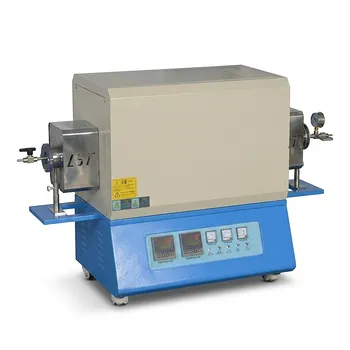
High Temperature Dual Zone Vacuum Tube Furnace for Material Research and CVD Processing
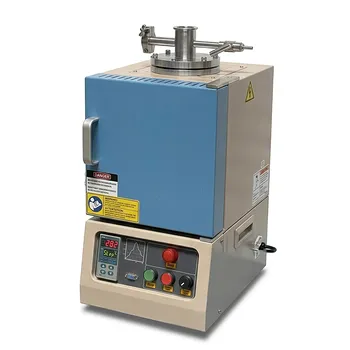
High Temperature Hybrid Muffle and Tube Furnace with Vacuum Capability and PID Control