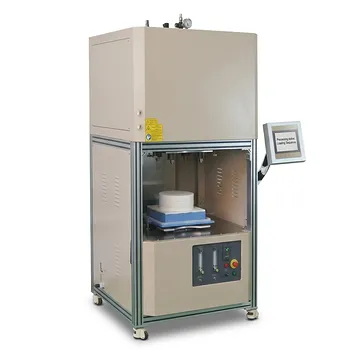
Function of N2 in Tube Furnace Carbonization? Achieve High-Yield Activated Carbon and Precise Pyrolysis
Updated 3 months ago
The nitrogen (N2) atmosphere in a high vacuum tube furnace serves as a critical protective shield that enables the thermal decomposition of biomass without burning. By displacing oxygen, the nitrogen environment ensures that the carbon source undergoes pyrolysis rather than combustion at high temperatures. This controlled environment is essential for preserving the material's yield, protecting its delicate physical structure, and facilitating the chemical rearrangement of atoms into a stable, porous carbon framework.
Core Takeaway: The primary function of a nitrogen atmosphere during carbonization is to create an inert environment that prevents oxidative combustion, allowing for the precise transformation of raw biomass into a structured, high-yield carbon material through oxygen-free pyrolysis.
Preventing Uncontrolled Oxidation and Combustion
The Displacement of Atmospheric Oxygen
Maintaining a continuous flow of high-purity nitrogen (often 99.99%) effectively removes all air from the furnace chamber. In the absence of oxygen, the organic precursors cannot ignite or burn, even when temperatures reach between 400°C and 700°C.
Protection of Material Yield and Morphology
By preventing direct combustion, the nitrogen atmosphere ensures that the organic matter is converted into a carbon-rich biochar rather than being lost as ash or CO2. This protective layer is vital for maintaining delicate structures, such as one-dimensional hollow tubes or two-dimensional nanosheets, which would otherwise be destroyed by thermal erosion.
Facilitating the Pyrolysis Process
Deoxygenation Through Pyrolysis
The inert environment allows for pyrolysis, a process where chemical compounds are decomposed by heat in the absence of oxygen. During this stage, the material undergoes deoxygenation, stripping away non-carbon elements to concentrate the carbon content of the final product.
Controlled Structural Rearrangement
As the furnace maintains a precise heating rate (such as 3 °C/min), the nitrogen atmosphere provides the stability needed for carbon elements to rearrange. This results in the formation of a well-developed carbon-based framework that serves as the foundation for the material's mechanical and chemical properties.
Optimizing Pore Structure and Functionalization
Precision Etching and Gasification
An inert atmosphere allows activating agents, like KOH, to perform selective surface etching rather than non-selective burning. This precision is what enables the construction of a complex network of micropores and mesopores, which are essential for high adsorption performance.
Integration of Functional Groups
In specific setups, the nitrogen atmosphere facilitates the successful integration of nitrogen atoms into the carbon skeleton. This can lead to the formation of quaternary nitrogen (N-Q) functional groups, which enhance the chemical reactivity and utility of the activated carbon.
Understanding the Trade-offs
Nitrogen Purity and Cost
The effectiveness of the inert atmosphere is entirely dependent on the purity of the gas and the integrity of the furnace seals. Using lower-grade nitrogen or having a minor leak can introduce trace oxygen, leading to localized combustion and a significant reduction in the quality of the pore structure.
Flow Rate Management
While a high flow rate (e.g., 150 mL/min) ensures oxygen exclusion, it can also lead to thermal gradients or the premature removal of beneficial volatile byproducts. Finding the balance between sufficient displacement and maintaining a stable thermal environment is a common challenge in large-scale production.
How to Apply This to Your Project
When utilizing a tube furnace for carbonization, your choice of atmosphere control should align with your specific material goals.
- If your primary focus is maximizing carbon yield: Ensure a high flow rate of high-purity nitrogen before heating begins to completely purge the chamber of residual oxygen.
- If your primary focus is developing specific pore sizes: Use the nitrogen atmosphere in conjunction with a slow, precise heating rate to allow activating agents to etch the carbon matrix uniformly.
- If your primary focus is structural integrity (nanosheets/tubes): Maintain a strictly controlled inert environment to prevent thermal erosion from destroying delicate one-dimensional or two-dimensional geometries.
By mastering the inert environment of a high vacuum tube furnace, you transform a simple heating process into a precise tool for engineering advanced carbon materials.
Summary Table:
| Function | Purpose | Key Benefit |
|---|---|---|
| Oxygen Displacement | Creates an inert environment | Prevents oxidative combustion and material loss |
| Yield Protection | Enables oxygen-free pyrolysis | Converts biomass to carbon-rich biochar instead of ash |
| Structural Control | Maintains stable thermal gradients | Preserves delicate morphology like nanosheets and tubes |
| Pore Engineering | Facilitates selective etching | Optimizes micropore and mesopore development via KOH/agents |
Elevate Your Material Research with THERMUNITS
At THERMUNITS, we specialize in providing high-performance thermal processing solutions designed for the most demanding R&D environments. As a leading manufacturer of high-temperature laboratory equipment, we understand that precision atmosphere control is the key to successful carbonization and material synthesis.
Our extensive range includes:
- Tube & Vacuum Furnaces: Perfect for precise N2/Ar atmosphere control during carbonization.
- Atmosphere & Muffle Furnaces: Engineered for uniform heat distribution and durability.
- CVD/PECVD & Hot Press Systems: Advanced solutions for next-generation material science.
- Rotary Kilns & VIM Furnaces: Scaling your research from lab to industrial R&D.
Whether you are developing activated carbon, advanced ceramics, or aerospace alloys, THERMUNITS delivers the reliability and accuracy your project requires.
Ready to optimize your heat treatment process? Contact our engineering team today to discuss your specific requirements and find the ideal furnace for your lab.
References
- Ibrahim Hotan Alsohaimi. Novel Synthesis of Polystyrenesulfonate@AC Based on Olive Tree Leaves Biomass for the Photo-Degradation of Methylene Blue from Aqueous Solution. DOI: 10.3390/polym16233321
Mentioned Products
- Vertical Openable Tube Furnace 0-1700c High Temperature Laboratory System for CVD and Vacuum Heat Treatment
- High Temperature Dual Zone Vacuum Tube Furnace for Material Research and CVD Processing
- 1800C High Temperature Compact Vacuum Tube Furnace with 60mm OD Alumina Tube and Kanthal MoSi2 Heating Elements
- High Vacuum Compact Tube Furnace 1200C with Integrated Turbo Pump System and 8 Inch Heating Zone
- High Temperature 1700C Tube Furnace with High Vacuum Turbomolecular Pump System and Multi Channel Mass Flow Controller Gas Mixer
People Also Ask
- Why is a Tube Furnace typically utilized for CVD? Achieve Precision in Graphene and 2D Material Synthesis
- What role does a high-temperature vertical tube furnace play in simulating high-carbon ferromanganese slag formation?
- What functions does a vertical high-temperature tube furnace perform? Master Industrial Sintering & R&D Simulation
- How does a vertical tube furnace facilitate thermoelectric alloy melting? Precision synthesis for material homogeneity.
- How is an industrial-grade vertical tube furnace utilized in smelting leaching residues? Enhance Metal Recovery Efficiency

Tech Team · ThermUnits
Last updated on Jun 02, 2026
Related Products
Vertical Openable Tube Furnace 0-1700c High Temperature Laboratory System for CVD and Vacuum Heat Treatment
High Temperature Dual Zone Vacuum Tube Furnace for Material Research and CVD Processing

1800C High Temperature Compact Vacuum Tube Furnace with 60mm OD Alumina Tube and Kanthal MoSi2 Heating Elements
High Vacuum Compact Tube Furnace 1200C with Integrated Turbo Pump System and 8 Inch Heating Zone

High Temperature 1700C Tube Furnace with High Vacuum Turbomolecular Pump System and Multi Channel Mass Flow Controller Gas Mixer
High Temperature 1100C Compact Top Loading Vertical Vacuum Tube Furnace for High Vacuum Noble Metal Melting and Material Research

Compact High Temperature 1600C Tube Furnace with 50mm Alumina Tube and Vacuum Flanges for Material Sintering

High Temperature 1700C Vertical Tube Furnace for Powder Spherification and Material Sintering
High Temperature Compact Vacuum Tube Furnace 1750C Max 60mm OD Alumina Tube

High Temperature Automated 5 Inch Tube Furnace for Autonomous Material Research and Advanced Laboratory R&D
1750°C High Temperature Benchtop Vacuum Atmosphere Tube Furnace with Kanthal Super 1800 Heating Elements and 60mm Alumina Processing Tube
1200C High Temperature 5 Inch Split Vacuum Tube Furnace with 12 Inch Heating Zone and Separated PID Controller
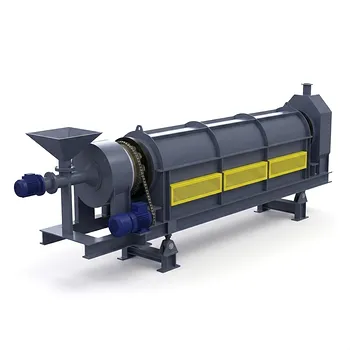
Electric Rotary Kiln Small Rotary Furnace for Activated Carbon Regeneration
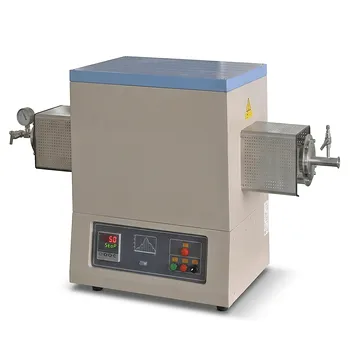
High Temperature 1700C Tube Furnace with 4 Inch OD Alumina Tube and Vacuum Sealing Flanges
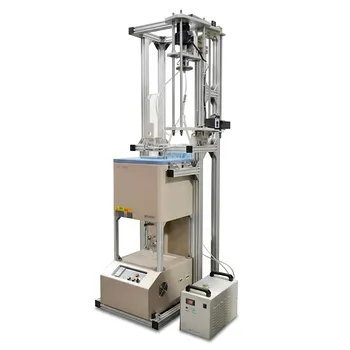
500C Vacuum Vertical Tube Furnace 84mm OD Sample Rotation Lifting System

High Temperature 1700C Benchtop Tube Furnace with 5 Inch Heating Zone High Purity Alumina Tube and Vacuum Sealing Flanges

1100C Tube Furnace with Vacuum Flange and Programmable Temperature Controller for Material Science and Industrial Heat Treatment
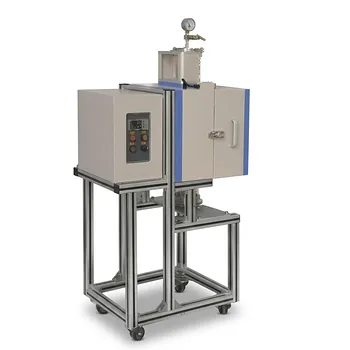
1200°C 5 Inch Vertical Quartz Tube Furnace with Stainless Steel Vacuum Flanges

Vertical 1700C Vacuum and Atmosphere Tube Furnace with 80mm Alumina Tube