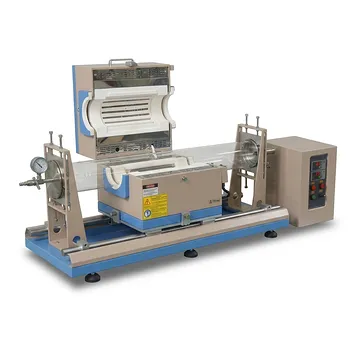
What is the function of a tube furnace in composite wettability testing? Precision Thermal Simulation & Analysis.
Updated 3 months ago
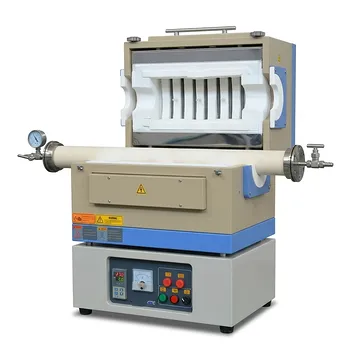
The primary function of a high-precision tube furnace in this configuration is to provide a strictly controlled, high-temperature environment that simulates the actual thermal conditions of material operation or processing. By reaching temperatures up to 1573 K, the furnace allows for the real-time recording of contact angle changes on a composite surface, which is essential for evaluating a material's hydrophobic performance and durability in corrosive environments.
This integration of a tube furnace with a sessile drop analyzer transforms a simple material sample into a dynamic model. It ensures that wettability data is captured under precise thermal and atmospheric conditions that mirror the real-world service life of the composite.
Simulating Real-World Operational Environments
Replicating Thermal Processing Conditions
The tube furnace acts as a specialized thermal chamber that mimics the high-heat scenarios encountered during the manufacturing or service of Al 6061 hybrid composites. This simulation is critical because wettability—the way a liquid interacts with a solid—can change significantly as temperatures fluctuate.
Maintaining Extreme Thermal Stability
With the capability to sustain temperatures up to 1573 K, the furnace provides the high-energy environment necessary for molten phase interactions. This stability ensures that the data gathered by the sessile drop analyzer is not skewed by unintended temperature fluctuations.
Enabling Precision Wettability Measurement
Integration with Imaging Systems
A high-precision tube furnace is designed to work in tandem with internal imaging systems and graphite substrates. This setup allows the sessile drop analyzer to visually capture and record the exact moment the droplet contacts the composite surface.
Quantitative Analysis of Hydrophobicity
By observing the contact angle changes within the furnace, researchers can calculate the material's hydrophobic properties. This data is vital for predicting how the composite will repel liquids or resist degradation when exposed to harsh, corrosive elements at high temperatures.
The Role of Controlled Atmospheres
Preventing Surface Oxidation
In many composite tests, the furnace must utilize a protective atmosphere, such as nitrogen or hydrogen, to prevent the sample from oxidizing. This ensures that the wettability being measured is a result of the material’s intrinsic properties rather than a layer of surface rust or scale.
Ensuring Radial Heating Uniformity
The cylindrical geometry of the tube furnace provides highly uniform radial heating. This uniformity is essential for sessile drop analysis, as any cold spots on the composite surface could lead to inconsistent droplet behavior and inaccurate contact angle readings.
Understanding the Trade-offs
The Challenge of Temperature Gradients
While the center of a tube furnace provides a stable "constant temperature zone," the temperature naturally drops toward the outlets. If the sample is not positioned perfectly within this zone, the resulting data may reflect a thermal environment that is lower than the intended test parameters.
Material Limitations and Contamination
High-temperature testing can lead to the "outgassing" of certain composite components, which may coat the furnace tube or the imaging windows. This buildup can eventually obscure the view of the sessile drop analyzer, requiring frequent maintenance and calibration to maintain accuracy.
How to Apply This to Your Project
Making the Right Choice for Your Goal
To maximize the effectiveness of your tube furnace and sessile drop analyzer setup, consider your specific research objectives:
- If your primary focus is Al 6061 hybrid composites: Ensure your furnace is rated for at least 1600 K to provide a safety margin above the 1573 K testing threshold.
- If your primary focus is corrosion resistance in harsh environments: Utilize a furnace with integrated gas inlet lines to simulate specific corrosive atmospheres during the wettability test.
- If your primary focus is precision surface kinetics: Prioritize a furnace with a long "constant temperature zone" to ensure the entire composite substrate remains at a perfectly uniform temperature.
Selecting the right thermal environment is the most critical step in ensuring that your composite wettability data is both accurate and transitionable to real-world applications.
Summary Table:
| Key Function | Benefit to Wettability Testing | Technical Detail |
|---|---|---|
| Thermal Simulation | Mimics real-world processing conditions | Temperatures up to 1573 K |
| Atmosphere Control | Prevents sample oxidation (N2/H2 support) | High-purity gas inlet lines |
| Radial Heating | Ensures uniform droplet contact angles | Cylindrical heating geometry |
| Imaging Integration | Allows real-time recording of kinetics | Compatible with graphite substrates |
Optimize Your Material Research with THERMUNITS
As a leading manufacturer of high-temperature laboratory equipment for material science and industrial R&D, THERMUNITS delivers the precision thermal solutions your research demands. Our extensive range of equipment—including Tube, Muffle, Vacuum, Atmosphere, Rotary, and Hot Press furnaces, as well as CVD/PECVD systems, Dental Furnaces, and Vacuum Induction Melting (VIM) furnaces—is engineered to ensure the radial uniformity and atmosphere stability required for advanced wettability analysis.
Ready to enhance your lab's capabilities? Contact us today to discuss how our thermal processing solutions can provide the accuracy your composites require.
References
- Vipin Sharma, Shalom Akhai. CHARACTERIZATION OF Al 6061/Al2O3/SiC COMPOSITES WITH CERIUM OXIDE: CORROSION ANALYSIS AND MICROSTRUCTURAL INSIGHTS. DOI: 10.62753/ctp.2024.07.1.1
Mentioned Products
- 1200C High Throughput Multi Channel Tube Furnace with 50mm Quartz Tubes for Annealing and Material Phase Diagram Research
- High Temperature Tube Furnace 1500C with Sliding Flanges and 50mm OD for Rapid Thermal Processing Fast Heating and Cooling
- High Temperature 1700C Benchtop Tube Furnace with 5 Inch Heating Zone High Purity Alumina Tube and Vacuum Sealing Flanges
- Compact High Temperature 1600C Tube Furnace with 50mm Alumina Tube and Vacuum Flanges for Material Sintering
- 1100C High Pressure Rocking Tube Furnace with 2 Inch Super Alloy Processing Tube for Material Synthesis
People Also Ask
- Why is high-purity alumina selected for sample trays? Key to High-Throughput Sintering Success
- How does a high-throughput tube furnace achieve precise sulfurization? Expert Control for CoS2–Co(OH)F Nanostructures
- How does the precise temperature control of a tube furnace influence the formation of V2AlC MAX phase? Expert Insights.
- What is the function of argon gas flow within a tube furnace during the selenization of MOFs? Essential Process Guide
- What is the effect of introducing camphor as a carbon source in a tube furnace CVD? Boost CNT Density and Growth

Tech Team · ThermUnits
Last updated on Jun 03, 2026
Related Products
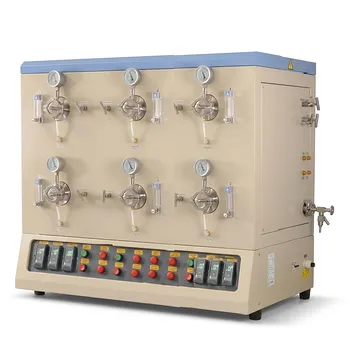
1200C High Throughput Multi Channel Tube Furnace with 50mm Quartz Tubes for Annealing and Material Phase Diagram Research
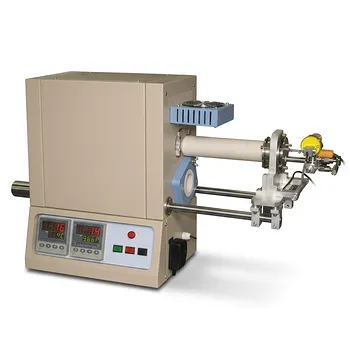
High Temperature Tube Furnace 1500C with Sliding Flanges and 50mm OD for Rapid Thermal Processing Fast Heating and Cooling

High Temperature 1700C Benchtop Tube Furnace with 5 Inch Heating Zone High Purity Alumina Tube and Vacuum Sealing Flanges

Compact High Temperature 1600C Tube Furnace with 50mm Alumina Tube and Vacuum Flanges for Material Sintering
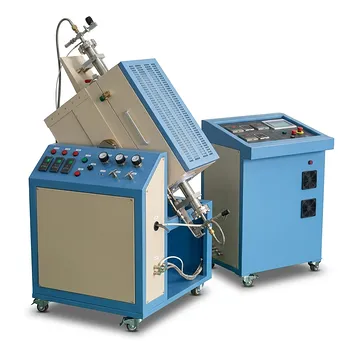
1100C High Pressure Rocking Tube Furnace with 2 Inch Super Alloy Processing Tube for Material Synthesis

High Temperature Automated 5 Inch Tube Furnace for Autonomous Material Research and Advanced Laboratory R&D
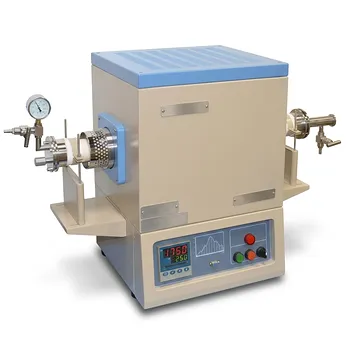
High Temperature Compact Vacuum Tube Furnace 1750C Max 60mm OD Alumina Tube

High Temperature 1700C Tube Furnace with High Vacuum Turbomolecular Pump System and Multi Channel Mass Flow Controller Gas Mixer

High Temperature 1700C Vertical Tube Furnace for Powder Spherification and Material Sintering
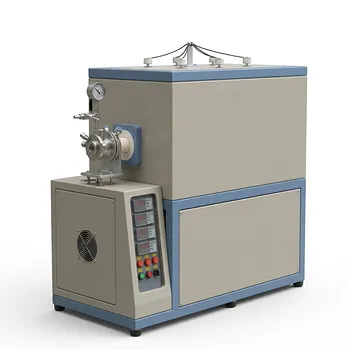
High Temperature 1700C Three Zone Tube Furnace with Alumina Tube 50mm 60mm 80mm OD for Material Research and Industrial Heat Treatment
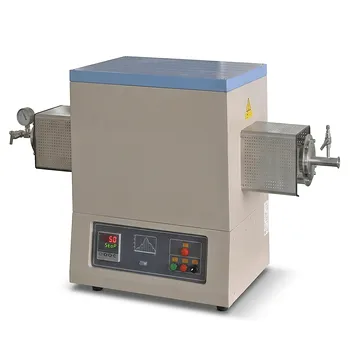
High Temperature 1700C Tube Furnace with 4 Inch OD Alumina Tube and Vacuum Sealing Flanges
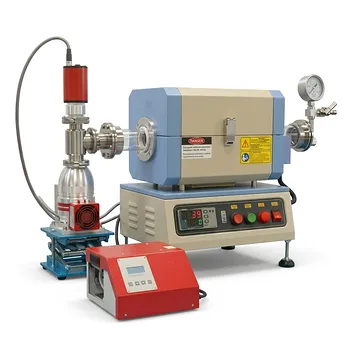
High Vacuum Compact Tube Furnace 1200C with Integrated Turbo Pump System and 8 Inch Heating Zone

1800C High Temperature Compact Vacuum Tube Furnace with 60mm OD Alumina Tube and Kanthal MoSi2 Heating Elements
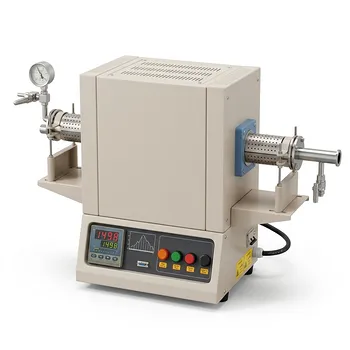
1500C High Temperature Compact Tube Furnace 2 Inch OD with Vacuum Flanges and Complete Accessories
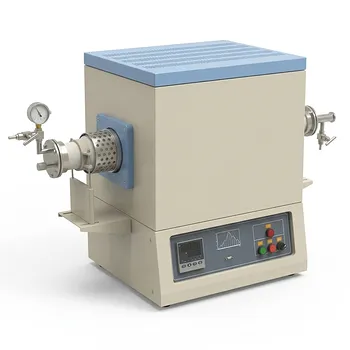
1750°C High Temperature Benchtop Vacuum Atmosphere Tube Furnace with Kanthal Super 1800 Heating Elements and 60mm Alumina Processing Tube

High Temperature 1700C Six Zone Split Tube Furnace with Alumina Tube and Water Cooled Flanges
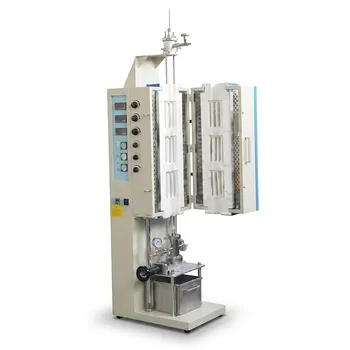
High Temperature Dual Zone Tube Furnace for Material Science Research and Professional Thermal Processing
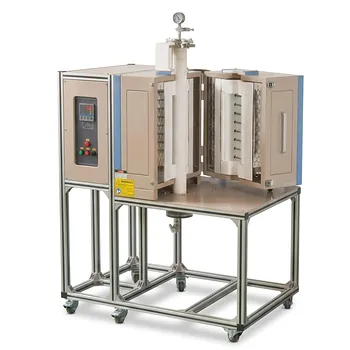
High Temperature 1700C Vertical Split Tube Furnace for Material Quenching and Single Crystal Growth
High Temperature 1600C Split Tube Furnace Vacuum Flanges Valves Optional 60mm 80mm Alumina Tube