What is the role of high-precision furnaces in Cu-In-Se OVC film prep? Driving Phase Transformation and Crystallinity
Updated 3 months ago
The high-precision heating furnace serves as the critical engine for phase transformation in solution-processed thin films. In the preparation of Cu-In-Se ordered vacancy compounds (OVCs), the furnace executes the post-annealing process by providing a stable thermal environment between 360°C and 450°C. This specific thermal energy drives the conversion of liquid-deposited precursors into a solid crystalline state, which is the foundational requirement for functional semiconductor behavior.
The furnace acts as a precision reactor that transforms amorphous chemical precursors into structured ordered vacancy compounds. Its primary role is to ensure high crystallinity, which directly determines the electrical mobility and threshold voltage of the resulting thin-film transistors.
Driving the Structural Evolution of Cu-In-Se
Facilitating the Phase Transformation
The primary role of the furnace is to provide the kinetic energy necessary for atoms to rearrange themselves.
In solution processing, the initial film is a mixture of precursors that lack the required semiconductor lattice.
The furnace facilitates the chemical transition into an ordered vacancy compound (OVC), a specific crystalline structure essential for the material's electronic identity.
Enhancing Crystallinity and Grain Growth
Precision heating at temperatures between 360°C and 450°C minimizes structural defects within the film.
By maintaining a steady thermal profile, the furnace allows for the growth of larger crystalline grains.
Improved crystallinity reduces the number of grain boundaries, which otherwise act as traps for charge carriers, thereby hindering performance.
The Impact on Electrical Performance
Optimizing Transistor Mobility
The furnace’s ability to reach and hold a specific temperature directly impacts how easily electrons move through the material.
High-precision control ensures that the channel layer achieves the necessary electronic density.
This results in higher field-effect mobility, which is a key metric for high-performance thin-film electronics.
Regulating Threshold Voltage
Inconsistent heating can lead to variations in the chemical state of the Cu-In-Se film.
The furnace provides the uniformity required to stabilize the threshold voltage of the resulting devices.
This stability is critical for ensuring that transistors turn on and off at predictable, repeatable voltage levels.
Understanding the Trade-offs
The Narrow Temperature Window
Operating outside the 360°C to 450°C range presents significant risks to the material integrity.
Temperatures below 360°C often result in incomplete phase transformation, leaving the film in a poorly conducting, amorphous state.
Conversely, exceeding 450°C can lead to the loss of volatile elements or damage to the underlying substrate, potentially degrading the semiconductor's stoichiometry.
Precision vs. Throughput
While high-precision furnaces offer superior control, they often require slower ramp-up and cool-down cycles to maintain uniformity.
Rapid thermal processing might increase throughput but risks introducing thermal stress and microscopic cracks in the Cu-In-Se layer.
Finding the balance between the soak time (duration at peak temperature) and the cooling rate is essential for preventing film peeling or delamination.
How to Apply This to Your Process
Maximizing Film Quality
- If your primary focus is maximizing charge carrier mobility: Prioritize a furnace with extremely high thermal stability to ensure the most complete crystalline transition possible.
- If your primary focus is device consistency across large areas: Utilize a multi-zone heating system to eliminate temperature gradients that cause variations in threshold voltage.
- If your primary focus is preventing film oxidation: Ensure your heating furnace is equipped with integrated gas flow controllers to maintain an inert atmosphere (like Nitrogen or Argon) during the annealing cycle.
By mastering the precise thermal window of the post-annealing stage, you can effectively bridge the gap between chemical solution precursors and high-performance semiconductor thin films.
Summary Table:
| Process Role | Temperature Range | Key Impact on Thin-Film Quality |
|---|---|---|
| Phase Transformation | 360°C - 450°C | Converts liquid precursors into solid crystalline structures. |
| Grain Growth | 360°C - 450°C | Reduces defects and grain boundaries to enhance mobility. |
| Electrical Regulation | 360°C - 450°C | Stabilizes threshold voltage and ensures device consistency. |
| Atmospheric Control | Process Dependent | Prevents oxidation and maintains material stoichiometry. |
Elevate Your Material Research with THERMUNITS
Achieving precise phase transformation in Cu-In-Se OVC thin films requires the world-class thermal stability offered by THERMUNITS. As a leading manufacturer of high-temperature laboratory equipment for material science and industrial R&D, we provide comprehensive thermal processing solutions including:
- Muffle, Vacuum, and Atmosphere Furnaces
- Tube, Rotary, and Hot Press Furnaces
- CVD/PECVD Systems & Dental Furnaces
- Electric Rotary Kilns & Vacuum Induction Melting (VIM)
- Thermal Elements and specialized heat treatment equipment
Our precision technology ensures the uniform heating and atmospheric control necessary for high-performance semiconductor development.
Ready to optimize your laboratory heat treatment? Contact THERMUNITS Today to discuss how our solutions can empower your next breakthrough!
References
- H.C. Wang, Qing Cao. Solution-processable ordered defect compound semiconductors for high-performance electronics. DOI: 10.1126/sciadv.adr8636
Mentioned Products
- High Temperature 800C Rapid Thermal Processing Furnace with Rotating Sample Holder for Close Spaced Sublimation and Thin Film Solar Cell Research
- 950C Rapid Thermal Processing Furnace for 12 Inch Wafer CSS Coating with Rotating Substrate Holder
- Two Zones CSS Furnace for Rapid Thermal Processing Thin Film Coating 3 Inch Diameter 650C
- High Temperature Mini Induction Heating Furnace 1600C Laboratory Material Melting System
- High Temperature Vertical Crucible Furnace with 22L Heating Chamber and 1200C Maximum Temperature
People Also Ask
- What role does a SiC-coated graphite susceptor play in H2Se selenization? Boost RTP Thermal Uniformity & Film Purity.
- What is the purpose of coating ceramic sheets with platinum paste? Achieve Stable High-Temp Ohmic Contacts
- What are the functional advantages of an RTP system for surface deposition? Enhance Heterojunction Interface Integrity
- What are the advantages of RTPR for Pd1/PU catalyst synthesis? Achieve superior single-atom dispersion and stability.
- How does a high-temperature tube furnace optimize palladium thin film pre-annealing? Improve Grain Growth & Stress Relief

Tech Team · ThermUnits
Last updated on Jun 03, 2026
Related Products
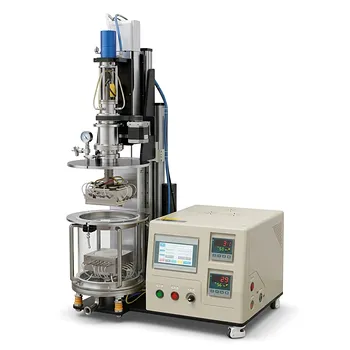
High Temperature 800C Rapid Thermal Processing Furnace with Rotating Sample Holder for Close Spaced Sublimation and Thin Film Solar Cell Research
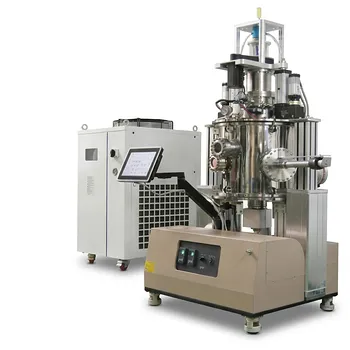
950C Rapid Thermal Processing Furnace for 12 Inch Wafer CSS Coating with Rotating Substrate Holder
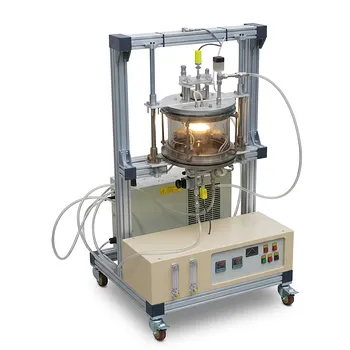
Two Zones CSS Furnace for Rapid Thermal Processing Thin Film Coating 3 Inch Diameter 650C
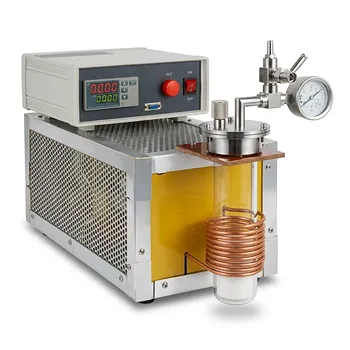
High Temperature Mini Induction Heating Furnace 1600C Laboratory Material Melting System
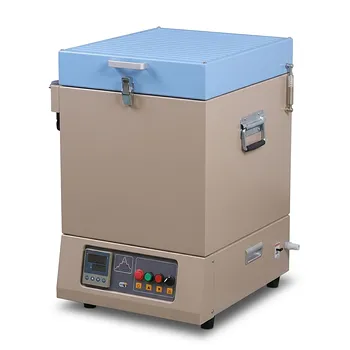
High Temperature Vertical Crucible Furnace with 22L Heating Chamber and 1200C Maximum Temperature
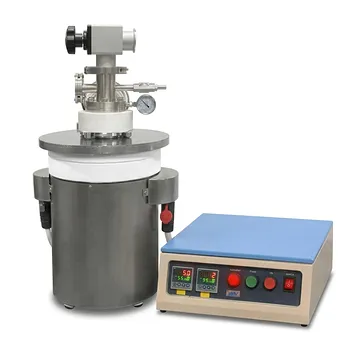
1100C High Temperature Vacuum Crucible Furnace with Quartz Chamber for Thermal Processing and Sintering
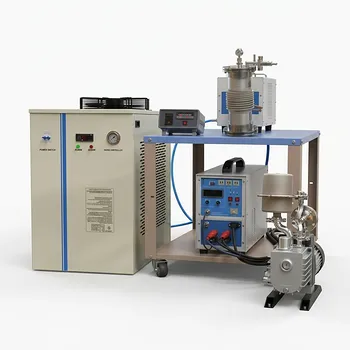
Induction Heating System with Temperature Control for High Temperature Vacuum Sintering and Melting
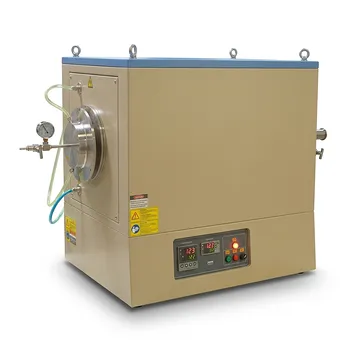
1100°C Large Diameter Quartz Tube Furnace with 24 Inch Heating Zone and Water Cooled Flanges
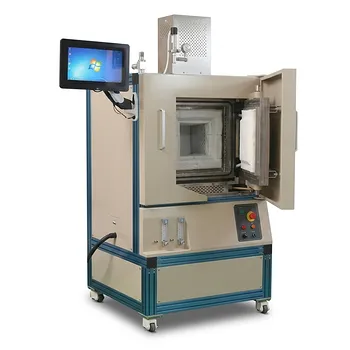
High Temperature Oxygen and Inert Atmosphere Controlled Furnace 8 Liter 1700C Sintering System for Advanced Materials RD
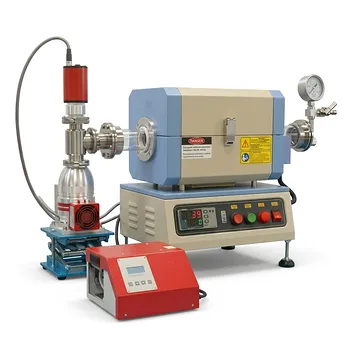
High Vacuum Compact Tube Furnace 1200C with Integrated Turbo Pump System and 8 Inch Heating Zone

High Temperature 1700C Benchtop Tube Furnace with 5 Inch Heating Zone High Purity Alumina Tube and Vacuum Sealing Flanges
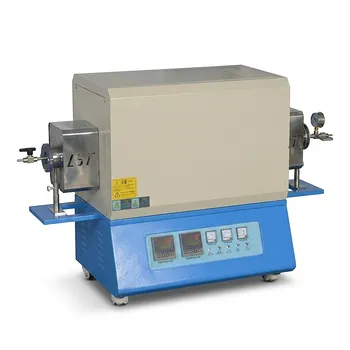
High Temperature Dual Zone Vacuum Tube Furnace for Material Research and CVD Processing

1100°C High Temperature Quartz Chamber Furnace 8 Inch OD with 7.6 Liter Capacity and Vacuum Atmosphere Capability
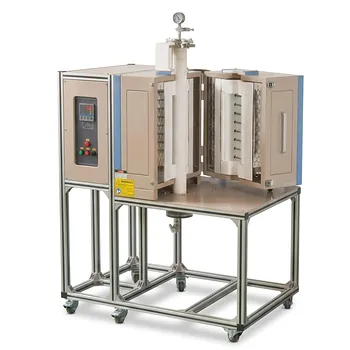
High Temperature 1700C Vertical Split Tube Furnace for Material Quenching and Single Crystal Growth
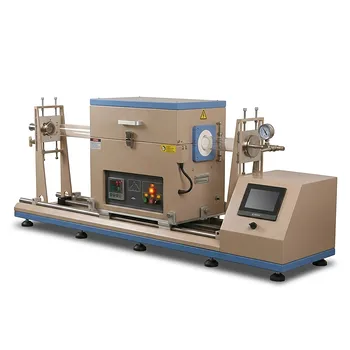
1200C Sliding Tube Furnace for Rapid Thermal Processing and CVD Graphene Growth with 100mm OD Capacity
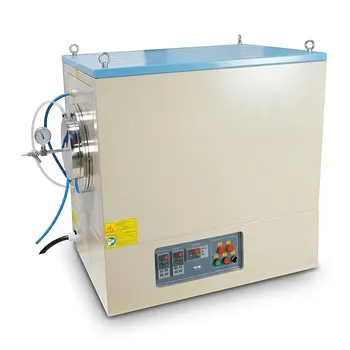
Dual Zone Tube Furnace 1100C with 11 Inch Quartz Tube and Vacuum Flanges for 8 Inch Wafer Processing
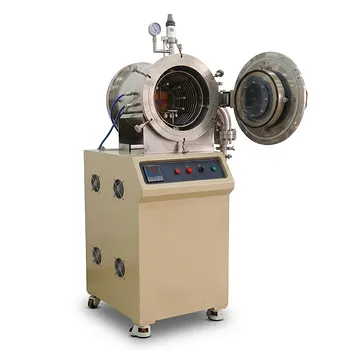
High Temperature Cold Wall High Vacuum Chamber Furnace 1400C for Advanced Material Processing
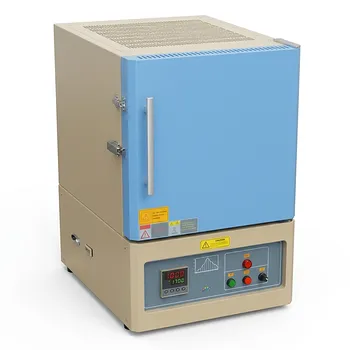
Large Bench Top 1700C High Temperature Muffle Furnace with 19L Chamber for Advanced Material Sintering and Annealing

High Temperature 1700C Tube Furnace with High Vacuum Turbomolecular Pump System and Multi Channel Mass Flow Controller Gas Mixer
