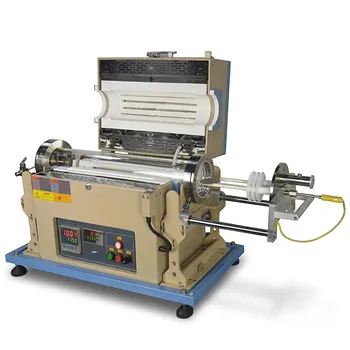
What is the primary role of an HFCVD system? Mastering Boron-Doped Polycrystalline Diamond Preparation
Updated 3 months ago
The Hot Filament Chemical Vapor Deposition (HFCVD) system serves as the primary process platform for decomposing gas precursors to synthesize diamond structures and precisely regulate boron incorporation. By utilizing high-temperature filaments to break down gases like methane, hydrogen, and diborane, the system ensures the formation of continuous polycrystalline films with uniform boron doping at the nanoscale.
The HFCVD system functions as a high-precision chemical reactor that converts gaseous precursors into solid-state boron-doped diamond. Its primary role is to provide the thermal energy necessary for gas decomposition while maintaining a stable environment for uniform crystal growth and controlled dopant integration.
The Mechanism of Precursor Decomposition
Thermal Activation via High-Temperature Filaments
The HFCVD system uses refractory metal filaments, typically tantalum or tungsten, heated to temperatures exceeding 2000°C. These filaments provide the extreme thermal energy required to crack molecular hydrogen (H2) into atomic hydrogen (H) and decompose methane (CH4) into reactive carbon radicals.
Activation of Boron Precursors
In the preparation of heavily boron-doped films, the system decomposes diborane (B2H6) or other boron-containing gases alongside the carbon source. The high-temperature environment ensures that boron atoms are released in a state that allows them to substitute carbon atoms within the growing diamond lattice.
Precision Doping and Film Growth
Regulating Boron Concentration
The HFCVD system allows for the meticulous control of the boron-to-carbon (B/C) ratio by adjusting the flow rates of the precursor gases. This precision is critical for achieving "heavy" doping levels, where the diamond transitions from a semiconductor to a metallic-like conductor.
Ensuring Nanoscale Uniformity
By maintaining a stable thermal field and constant gas flow, the system facilitates heteroepitaxial or polycrystalline growth. This stability ensures that boron atoms are distributed evenly across the film, preventing clusters or "dead zones" that would compromise the electrical properties of the diamond.
Growth Continuity and Surface Morphology
The system manages the nucleation density on the substrate, which is essential for forming a continuous thin film. This control prevents the formation of voids and ensures that the polycrystalline grains merge into a cohesive, high-quality layer.
Providing a Controlled Thermodynamic Environment
Stability of Flow and Pressure
The HFCVD system regulates the reaction chamber’s vacuum level and carrier gas flow to create a stable thermodynamic environment. This stability is a prerequisite for the gas-phase chemical reactions necessary to maintain a consistent growth rate over large areas.
Thermal Field Management
The arrangement and temperature of the filaments create a specific thermal gradient between the heat source and the substrate. This gradient influences the kinetic energy of the species reaching the surface, directly impacting the crystal quality and the efficiency of boron uptake.
Understanding the Trade-offs
Filament Degradation and Contamination
One of the primary challenges in HFCVD is the gradual carbonization or erosion of the filaments. Over time, filament material (such as tantalum or tungsten) can evaporate and incorporate into the diamond film as impurities, potentially affecting the material's intrinsic properties.
Temperature Gradient Limitations
Maintaining a perfectly uniform temperature across a large substrate is difficult because the heat originates from discrete wire filaments. This can lead to spatial variations in growth rate or doping concentration if the filament geometry is not optimized for the substrate size.
How to Apply This to Your Project
Selecting Parameters Based on Your Objectives
The success of BPD synthesis depends on aligning HFCVD settings with your specific material requirements.
- If your primary focus is maximum electrical conductivity: Increase the diborane flow rate while maintaining high filament temperatures to maximize the substitution of boron into the diamond lattice.
- If your primary focus is film purity and crystal quality: Optimize the filament-to-substrate distance and use tantalum filaments to minimize metallic contamination during long growth cycles.
- If your primary focus is large-area uniformity: Implement a multi-filament array with synchronized power control to ensure an even thermal and precursor distribution across the entire substrate.
The HFCVD system remains the definitive tool for BPD fabrication because it uniquely balances aggressive gas-phase activation with the delicate control required for nanoscale dopant engineering.
Summary Table:
| Key HFCVD Component | Primary Function in BPD Synthesis |
|---|---|
| High-Temp Filaments | Thermal activation to crack H2, CH4, and B2H6 precursors |
| Gas Flow Control | Meticulous regulation of B/C ratio for heavy doping |
| Vacuum Chamber | Provides a stable thermodynamic environment for growth |
| Thermal Gradient | Influences kinetic energy, crystal quality, and boron uptake |
| Multi-Filament Array | Ensures nanoscale uniformity across large substrate areas |
Advance Your Material Research with THERMUNITS
Are you looking to achieve superior precision in high-temperature synthesis? THERMUNITS is a leading manufacturer of high-temperature laboratory equipment for material science and industrial R&D. We provide specialized solutions for complex thermal processing, including advanced CVD/PECVD systems, Hot Press furnaces, and a wide range of Muffle, Vacuum, and Tube furnaces.
Whether you are developing boron-doped diamonds or optimizing semiconductor thin films, our equipment—including electric rotary kilns, VIM furnaces, and high-quality Thermal Elements—is engineered for reliability and performance.
Contact our technical team today to discuss your specific requirements and see how our thermal processing solutions can accelerate your R&D breakthroughs.
References
- Gufei Zhang, Paul May. Annealing-induced evolution of boron-doped polycrystalline diamond. DOI: 10.1103/physrevmaterials.8.044802
Mentioned Products
- HFCVD Machine System for Nano Diamond Coating on Drawing Dies and Industrial Tools
- Radio Frequency Plasma Enhanced Chemical Vapor Deposition RF PECVD System for Laboratory and Industrial Thin Film Growth
- Inclined Rotary Plasma Enhanced Chemical Vapor Deposition PECVD System for Thin Film Deposition and Nanomaterial Synthesis
- Versatile Chemical Vapor Deposition Tube Furnace System for Advanced Material Research and Industrial Coating Processes
- 915MHz MPCVD Diamond Machine Microwave Plasma Chemical Vapor Deposition System Reactor
People Also Ask
- What is the fundamental working principle of a Chemical Vapor Deposition (CVD) machine? Master Precision Film Growth
- What are the essential components and subsystems of a CVD machine? Master Core Technology for High-Purity Coatings
- How do Chemical Vapor Deposition (CVD) coatings enhance industrial tools? Boost Tool Life and Wear Resistance
- What technical advantages do CVD machines provide for the synthesis of nanomaterials? Precision Growth & Superior Quality
- What role do by-product desorption and evacuation play in CVD film quality? Key Factors for High-Purity Films

Tech Team · ThermUnits
Last updated on Jun 03, 2026
Related Products
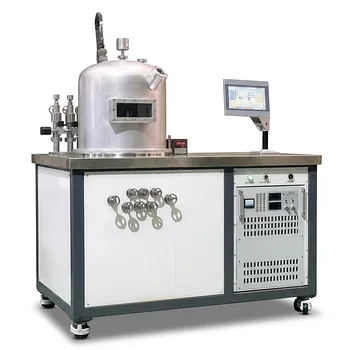
HFCVD Machine System for Nano Diamond Coating on Drawing Dies and Industrial Tools
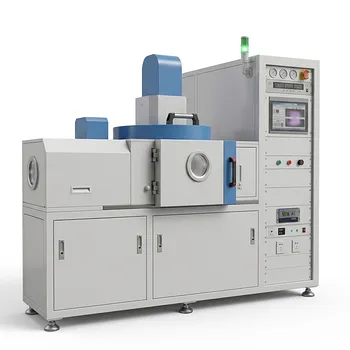
Radio Frequency Plasma Enhanced Chemical Vapor Deposition RF PECVD System for Laboratory and Industrial Thin Film Growth
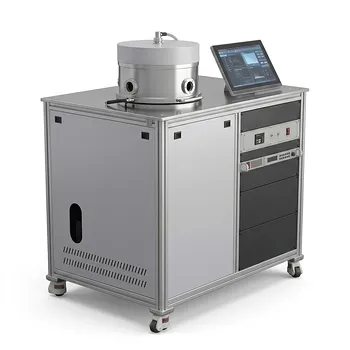
Inclined Rotary Plasma Enhanced Chemical Vapor Deposition PECVD System for Thin Film Deposition and Nanomaterial Synthesis
Versatile Chemical Vapor Deposition Tube Furnace System for Advanced Material Research and Industrial Coating Processes
915MHz MPCVD Diamond Machine Microwave Plasma Chemical Vapor Deposition System Reactor
Cylindrical Resonator MPCVD Machine System for Microwave Plasma Chemical Vapor Deposition and Lab Diamond Growth
950C Rapid Thermal Processing Furnace for 12 Inch Wafer CSS Coating with Rotating Substrate Holder
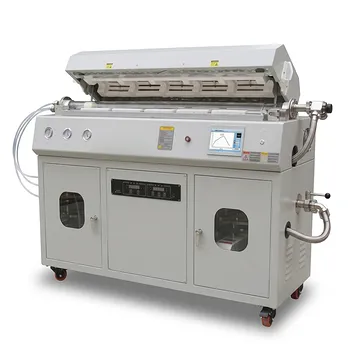
Multi Heating Zones CVD Tube Furnace System for Precision Chemical Vapor Deposition and Advanced Material Synthesis
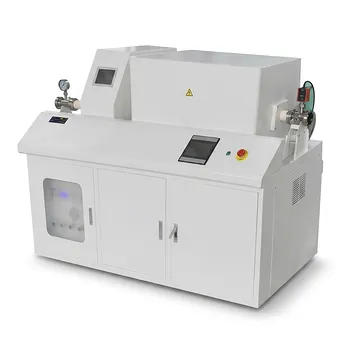
Chemical Vapor Deposition CVD System Slide PECVD Tube Furnace with Liquid Gasifier PECVD Machine
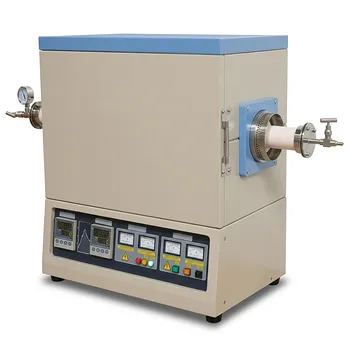
High Temperature 1700C Dual Zone Tube Furnace for Material Science and Industrial Chemical Vapor Deposition Research
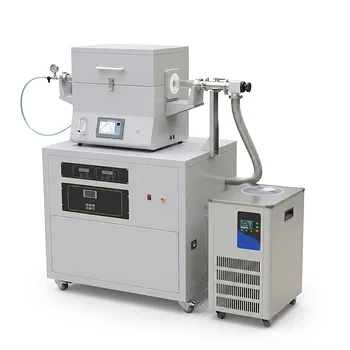
Split Chamber CVD Tube Furnace with Vacuum Station Chemical Vapor Deposition System Machine
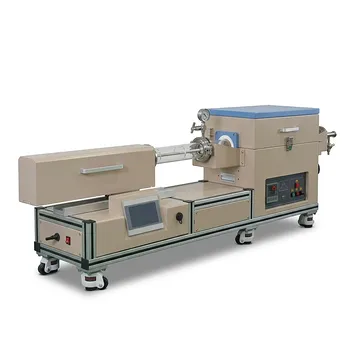
1200C Sliding Internal Crucible Tube Furnace for Controlled Atmosphere Thin Film Deposition and Material Sublimation Research
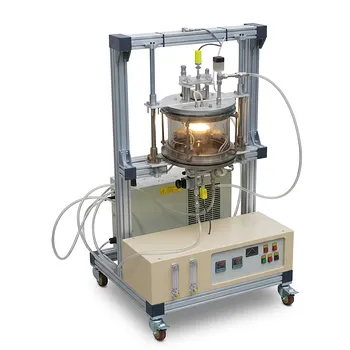
Two Zones CSS Furnace for Rapid Thermal Processing Thin Film Coating 3 Inch Diameter 650C
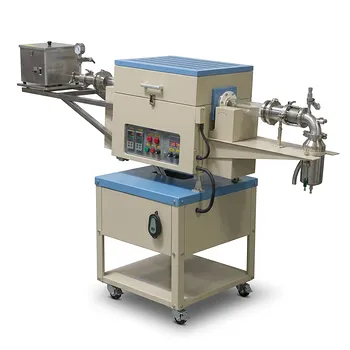
Two Zone Rotary CVD Furnace with Automatic Feeding and Receiving System for Powder Processing
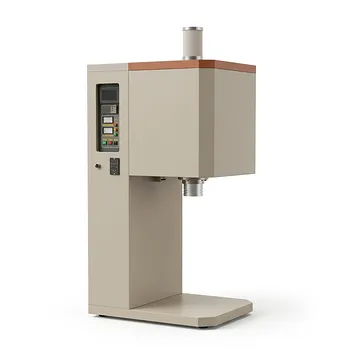
Vertical Openable Tube Furnace 0-1700c High Temperature Laboratory System for CVD and Vacuum Heat Treatment
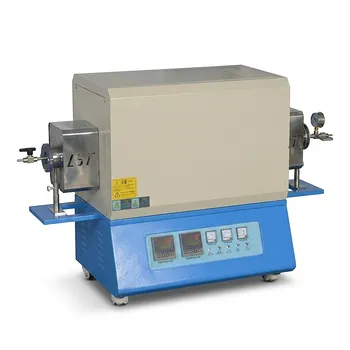
High Temperature Dual Zone Vacuum Tube Furnace for Material Research and CVD Processing
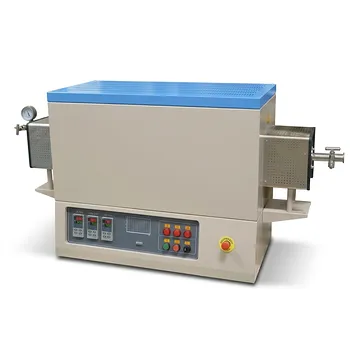
Three Zone Alumina Tube Furnace with Vacuum Flanges High Temperature 1700C Thermal Gradient CVD System