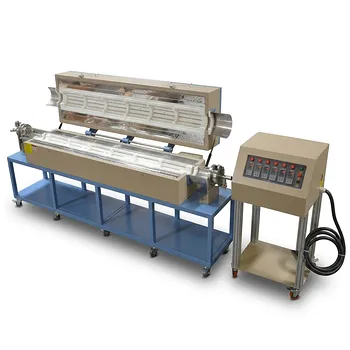
What is the role of a Gradient Tube Furnace in the preparation of rGO-NiO-ZnO sorbents? Optimize Sorbent Performance
Updated 3 months ago
The Gradient Tube Furnace is the essential thermal processing unit for the final annealing and phase transformation of rGO-NiO-ZnO sorbents. It provides a precisely controlled, high-temperature environment under an inert atmosphere to transform precursor materials into stable crystalline phases while simultaneously reducing graphene oxide. This dual-action thermal treatment is the foundational step in ensuring the sorbent's chemical stability and effectiveness in desulfurization applications.
The Gradient Tube Furnace acts as a specialized chemical reactor that simultaneously drives the crystallization of metal oxides and the thermal reduction of graphene oxide. This process is critical for creating a stable, high-performance material suitable for industrial desulfurization.
Facilitating Crystalline Phase Development
Conversion of Precursors
The furnace provides a stable thermal environment, typically around 400 degrees Celsius, to facilitate the decomposition of neutral oxide or hydroxide precursors. This thermal energy is required to organize atoms into the stable NiO and ZnO crystalline phases necessary for chemical reactivity.
Ensuring Structural Uniformity
Gradient furnaces allow for high-precision temperature control across the material bed. This ensures that the metal oxides achieve a uniform crystalline structure, preventing local inconsistencies that could compromise the sorbent's overall performance.
In-Situ Particle Stabilization
By heating the precursors in a controlled manner, the furnace promotes the in-situ conversion of metal components into nanoparticles. This process helps anchor the NiO and ZnO within the support matrix, preventing the particles from migrating or leaching during use.
Thermal Reduction of Graphene Oxide (GO)
Transformation to rGO
A primary role of the furnace is the thermal reduction of graphene oxide (GO) into reduced graphene oxide (rGO). High temperatures eliminate residual oxygen functional groups between carbon lattices, which significantly increases the material's chemical stability.
Inert Atmosphere Protection
Operating under an inert Argon (Ar) atmosphere is critical during the heating phase. The exclusion of oxygen prevents the oxidative combustion of the graphene layers, ensuring the carbon framework remains intact while its conductivity and stability are improved.
Enhancing Desulfurization Activity
The thermal treatment in the furnace directly impacts the desulfurization activity of the resulting sorbent. By optimizing the interface between the rGO and the metal oxides (NiO-ZnO), the furnace helps create a more reactive surface for capturing sulfur compounds.
Understanding the Trade-offs
Temperature Sensitivity
If temperatures are set too low, the precursor conversion may be incomplete, resulting in amorphous phases with low chemical activity. Conversely, excessive heat can lead to the agglomeration of nanoparticles, reducing the total surface area available for the desulfurization reaction.
Atmosphere Integrity
The purity of the Argon flow is non-negotiable. Any trace of oxygen leakage into the tube during high-temperature cycles can cause the graphene to burn off, effectively destroying the sorbent's structural matrix and rendering the material useless.
Heating and Cooling Rates
Rapid changes in temperature can induce thermal stress within the composite material. Controlled ramp rates (e.g., 5°C/min) are often required to ensure that the growth of the NiO and ZnO phases does not cause delamination or cracking of the rGO support.
How to Apply This to Your Project
- If your primary focus is maximum desulfurization activity: Prioritize precise temperature holding at 400°C to ensure full crystallization of NiO and ZnO without inducing particle growth.
- If your primary focus is long-term sorbent stability: Ensure a strictly monitored Argon flow to achieve complete thermal reduction of the graphene oxide framework without oxidative damage.
- If your primary focus is material conductivity: Utilize the highest safe annealing temperature within the inert environment to eliminate as many residual oxygen groups as possible from the carbon lattice.
Mastery of the thermal profile within the gradient tube furnace is the single most important factor in determining the final sorbent's efficacy and structural longevity.
Summary Table:
| Process Step | Furnace Function | Key Outcome |
|---|---|---|
| Precursor Conversion | Provides stable thermal energy (~400°C) | Transformation to crystalline NiO and ZnO phases |
| GO Reduction | Facilitates thermal oxygen group removal | Conversion of GO to stable, conductive rGO |
| Atmosphere Control | Maintains inert Argon (Ar) environment | Prevents oxidative combustion of the carbon framework |
| Phase Stabilization | Precise gradient temperature control | Uniform nanoparticle distribution and structural integrity |
Elevate Your Material Research with THERMUNITS
At THERMUNITS, we understand that precise thermal control is the backbone of material innovation. As a leading manufacturer of high-temperature laboratory equipment—including Tube, Atmosphere, Vacuum, and CVD/PECVD Furnaces—we provide the specialized tools required for critical processes like the synthesis of rGO-NiO-ZnO sorbents.
Whether your project demands precise gradient control for phase transformation or a strictly inert environment for graphene reduction, our solutions ensure repeatable, high-quality results for material science and industrial R&D.
Ready to optimize your heat treatment process? Contact our experts today to find your perfect furnace solution!
References
- Rodolfo Fernández-Martínez, J.M. Sánchez. Transformation of Graphite Recovered from Batteries into Functionalized Graphene-Based Sorbents and Application to Gas Desulfurization. DOI: 10.3390/molecules29153577
Mentioned Products
- Ten Zone Multi Orientation Laboratory Tube Furnace for 1200C High Temperature Gradient Thermal Processing
- 1500C Eight Zone Split Tube Furnace for Thermal Gradient Processing and Advanced Material Research
- 1200°C 10-Zone Split Tube Furnace with Horizontal and Vertical Mounting for Multi-Zone Thermal Gradients and Large Diameter Material Processing
- High Temperature 1700C Benchtop Tube Furnace with 5 Inch Heating Zone High Purity Alumina Tube and Vacuum Sealing Flanges
- High Temperature 1700C Six Zone Split Tube Furnace with Alumina Tube and Water Cooled Flanges
People Also Ask
- What are the technical advantages of using a multi-zone independently controlled tube furnace in the modified USP process?
- Role of multi-zone tube furnaces in CVD growth of 2D materials? Optimize Precise Single-Crystal Thermal Control.
- How does a multi-zone tube furnace facilitate the synthesis of two-dimensional alpha-Ga2Se3 crystals? Precision Growth
- What is the role of a multi-zone tube furnace in material science research? Mastering Precise Temperature Gradients
- What key role does a laboratory high-temperature tube furnace play in the production of carbon nanofibers? Guide

Tech Team · ThermUnits
Last updated on Jun 03, 2026
Related Products
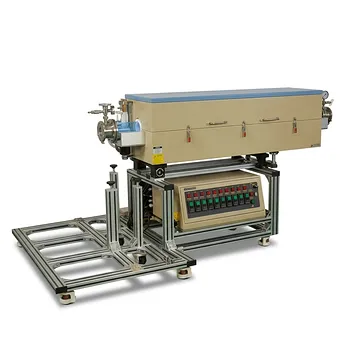
Ten Zone Multi Orientation Laboratory Tube Furnace for 1200C High Temperature Gradient Thermal Processing
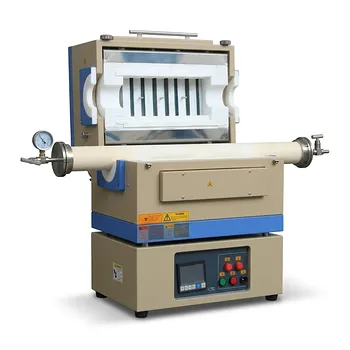
1500C Eight Zone Split Tube Furnace for Thermal Gradient Processing and Advanced Material Research
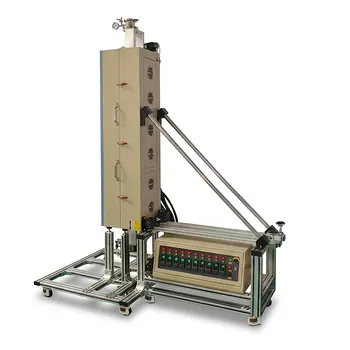
1200°C 10-Zone Split Tube Furnace with Horizontal and Vertical Mounting for Multi-Zone Thermal Gradients and Large Diameter Material Processing

High Temperature 1700C Benchtop Tube Furnace with 5 Inch Heating Zone High Purity Alumina Tube and Vacuum Sealing Flanges
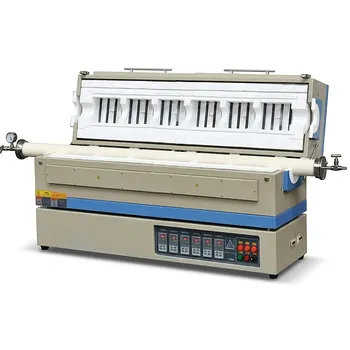
High Temperature 1700C Six Zone Split Tube Furnace with Alumina Tube and Water Cooled Flanges

1800C High Temperature Compact Vacuum Tube Furnace with 60mm OD Alumina Tube and Kanthal MoSi2 Heating Elements
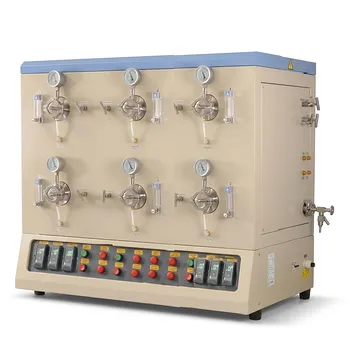
1200C High Throughput Multi Channel Tube Furnace with 50mm Quartz Tubes for Annealing and Material Phase Diagram Research

Vertical 1700C Vacuum and Atmosphere Tube Furnace with 80mm Alumina Tube
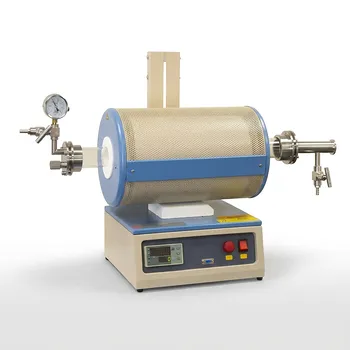
1100C Tube Furnace with Vacuum Flange and Programmable Temperature Controller for Material Science and Industrial Heat Treatment
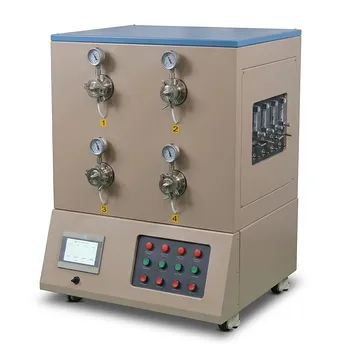
High Throughput 1200C Four Channel Tube Furnace with 3 Inch Quartz Tubes for Multi Zone Annealing and Material Research
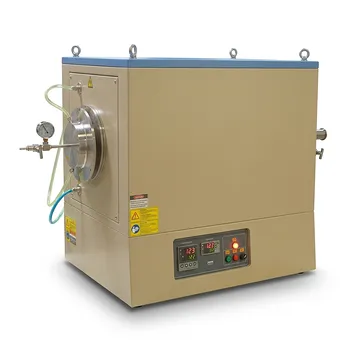
1100°C Large Diameter Quartz Tube Furnace with 24 Inch Heating Zone and Water Cooled Flanges
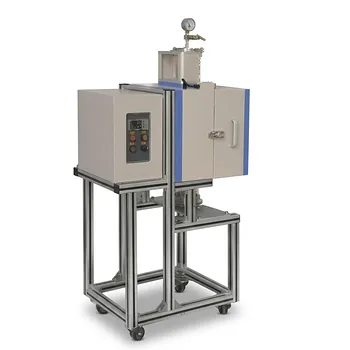
1200°C 5 Inch Vertical Quartz Tube Furnace with Stainless Steel Vacuum Flanges
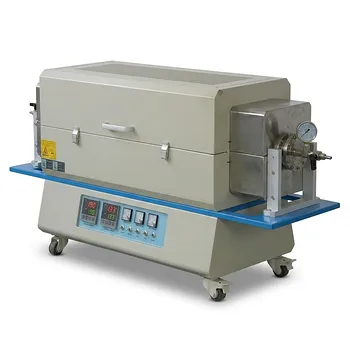
High Temperature Elongated Dual Zone Tube Furnace for Material Research and Industrial Heat Treatment
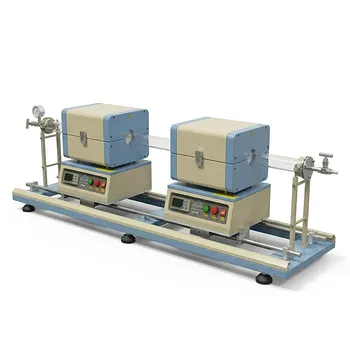
1200C Max Dual Sliding Tube Furnace with 50 mm Tube Flanges for CVD
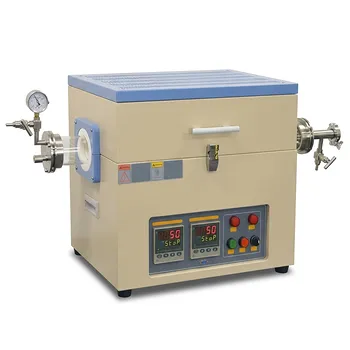
1200C Dual Zone Split Tube Furnace with Fused Quartz Tube and Vacuum Flanges Available in 60mm 80mm and 100mm Diameters
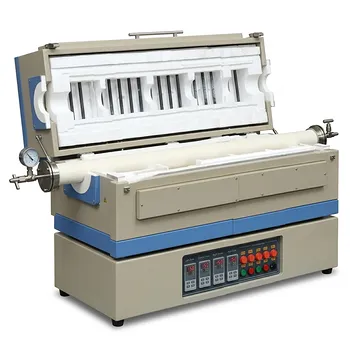
1500C Five Zone Split Tube Furnace with 84mm Mullite Tube and Vacuum Flanges
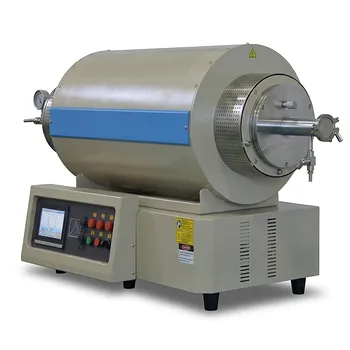
1200C Max Three Zone Tube Furnace 6 Inch OD Max with Tube and Flange
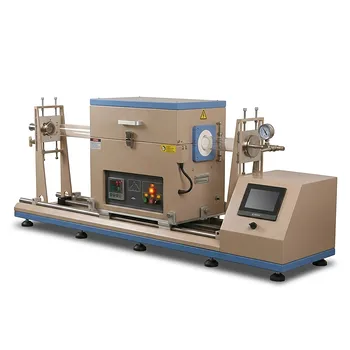
1200C Sliding Tube Furnace for Rapid Thermal Processing and CVD Graphene Growth with 100mm OD Capacity
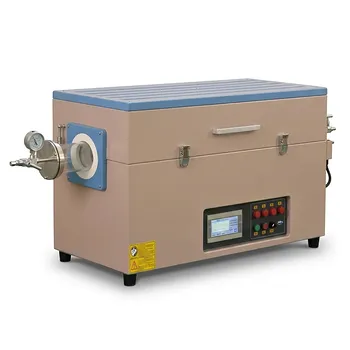
1200C Four Zone Split Tube Furnace with Touch Screen Control and High Purity Quartz Tube and Vacuum Sealing Flanges